

Phase 1: Empathy & The K-Culture Cold Open
Hello! I’m your Daily Hangul Editor.
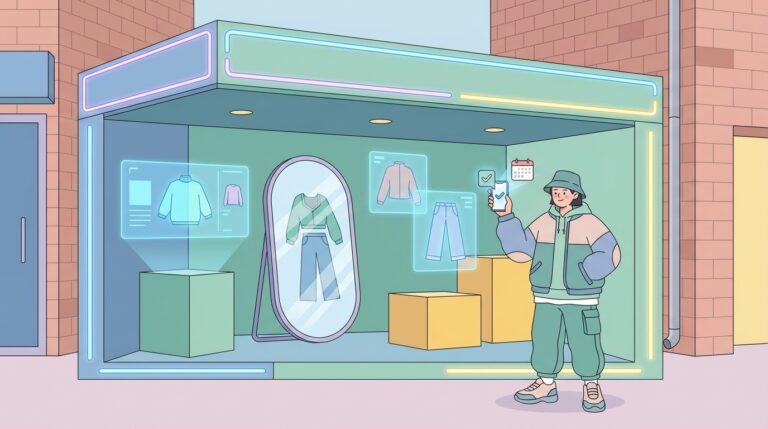
Imagine this: You are walking down the vibrant streets of Seongsu-dong (성수동), the Brooklyn of Seoul. You spot a breathtaking architectural marvel—a luxury brand’s pop-up store that looks like a futuristic digital art museum. Glowing screens, a virtual try-on mirror visible through the window, and incredibly stylish people queuing up. You confidently walk toward the entrance, ready to browse. But the stylish staff member stops you with a polite bow and asks, “앱으로 사전 예약 하셨나요?” (Did you make an advance reservation via the app?) You freeze. Wait, I can’t just walk in with my credit card?
Welcome to the C2 level of Korean fashion and trends: The Digital Transformation (DX) of Luxury Brands. In Korea, luxury isn’t just about spending money anymore; it’s about digital agility. South Korea is a global testbed for high-end brands. From Metaverse runways on Zepeto to NFTs that grant access to physical VIP parties in Cheongdam-dong, the digital and physical worlds are completely intertwined.
If you want to talk about fashion in Korea at an advanced level—whether you’re a marketer, a passionate consumer, or someone trying to score limited-edition drops—you need to understand this hybrid language. Today, we’re moving past textbook shopping phrases and diving deep into the sophisticated jargon of Korea’s luxury digital landscape.
Let’s upgrade your Korean to the VIP tier.
Phase 2: Core Expressions Deep Dive
Here are the top insider expressions you need to discuss luxury digital trends in Korea.
1. 피켓팅을 방불케 하다
- Pronunciation: [piketing-eul bangbulke hada] + [Pee-ket-ting-eul bang-bool-keh ha-da]
- Meaning: Literal: To resemble a blood-splattering ticketing process. / Real nuance: A digital reservation process that is so fiercely competitive it feels like a bloodbath.
- K-Culture Moment: You usually hear this in K-Pop when buying concert tickets, but now it’s heavily used in fashion. When a luxury brand opens an exclusive pop-up store reservation on KakaoTalk or Catchtable, all slots disappear in 3 seconds.
- Editor’s Insight: This is a fantastic C2-level phrase. ‘피켓팅’ is a portmanteau of 피 (blood) + 티켓팅 (ticketing). ‘~을/를 방불케 하다’ is an advanced literary expression meaning “to be reminiscent of” or “to closely resemble.” Combining Gen-Z slang with a high-level academic verb makes you sound incredibly fluent.
- Situation Spectrum:
- Casual with friends: ✅ (e.g., “샤넬 팝업 예약 완전 피켓팅이었어.”)
- Semi-formal (Colleagues): ✅ (e.g., “이번 컬렉션 드롭은 피켓팅을 방불케 했습니다.”)
- Formal (Seniors/Presentations): ⚠️ (Use with caution in very strict boardrooms, but widely accepted in marketing/fashion agencies).
- 🤔 Think About It: Why does Korean culture have such aggressive words (blood-ticketing, open-run) for shopping? How does Korea’s ‘Pali-pali’ (hurry up) culture intersect with the artificial scarcity created by luxury brands?
2. 오프라인 경험을 온라인으로 이식하다
- Pronunciation: [opeurain gyeongheomeul onraineuro isikada] + [Oh-peu-ra-in gyung-hum-eul on-ra-in-eu-ro ee-shik-ha-da]
- Meaning: Literal: To transplant the offline experience to online. / Real nuance: To seamlessly recreate a physical brand experience in a digital space (like the Metaverse or an app).
- K-Culture Moment: You are sitting in a strategic meeting at a Gangnam PR agency. The brand director wants to ensure that the feeling of trying on a luxury watch in a physical boutique translates perfectly into their new Augmented Reality (AR) app.
- Editor’s Insight: The verb 이식하다 (to transplant) is usually a medical term, but in Korean business and tech contexts, it beautifully describes moving a complex system or ‘vibe’ from one platform to another without losing its essence.
- Situation Spectrum:
- Casual with friends: 🚫 (Too formal)
- Semi-formal (Colleagues): ✅
- Formal (Seniors/Presentations): ✅✅✅ (A guaranteed applause-winner in business meetings).
- 🤔 Think About It: In an era where digital is everything, why do Korean brands still spend millions on physical pop-ups in Seongsu-dong just to make people use their apps? What is the true purpose of the physical space now?
3. 희소성을 자극하는 드롭 방식
- Pronunciation: [huiseoseong-eul jageukaneun deurop bangsik] + [Hee-so-sung-eul ja-geuk-ha-neun deu-rop bang-shik]
- Meaning: Literal: A drop method that stimulates scarcity. / Real nuance: Using limited-edition digital ‘drops’ to trigger the fear of missing out (FOMO) and exclusivity.
- K-Culture Moment: Your favorite streetwear-meets-luxury collaboration is launching. They aren’t just selling it; they are doing a ‘Raffle’ (드로우/래플) on their app. You have to enter a digital lottery just to win the right to buy the shoes.
- Editor’s Insight: English loanwords in Korean fashion are completely localized. ‘Drop’ (드롭) and ‘Draw/Raffle’ (드로우/래플) are used daily. 희소성 (Scarcity) is a C2-level vocabulary word that elevates your sentence.
- Situation Spectrum:
- Casual with friends: ✅ (Usually shortened: “오늘 한정판 드로우 한대!”)
- Semi-formal (Colleagues): ✅
- Formal (Seniors/Presentations): ✅
- 🤔 Think About It: Does the digital ‘Draw’ culture make luxury more democratic (everyone has an equal random chance) or more stressful?
Phase 3: Textbook vs. Real Korean
Let’s see how textbook Korean evolves into real-life industry jargon.
[Situation 1: Talking about selling limited editions online]
* 📖 Textbook Korean: 우리 브랜드는 한정판 상품을 인터넷에서 판매합니다. (Our brand sells limited edition products on the internet.)
* 🗣️ Real Korean: 이번 캡슐 컬렉션은 자사몰에서 익스클루시브 드롭으로 진행됩니다. (This capsule collection will proceed as an exclusive drop on our D2C mall.)
* 💡 Why the difference?: Fashion marketing relies heavily on ‘Konglish’ (자사몰 for D2C mall, 익스클루시브 for exclusive) to project a trendy, global, and elite image.
[Situation 2: Trying to enter a popular pop-up store]
* 📖 Textbook Korean: 가게에 들어가기 위해 줄을 서야 합니다. 예약이 매우 어렵습니다. (You must stand in line to enter the store. Reservations are very difficult.)
* 🗣️ Real Korean: 앱으로 사전 예약 안 하시면 워크인은 힘들어요. 이미 광클해서 다 마감됐거든요. (If you didn’t reserve in advance via the app, walk-ins are tough. People mad-clicked, so it’s already sold out.)
* 💡 Why the difference?: ‘워크인 (Walk-in)’ is the standard term for entering without a reservation. ‘광클 (Crazy clicking)’ reflects Korea’s hyper-fast digital culture.
Bottom Note: At the C2 level, your goal is to seamlessly blend high-level Sino-Korean words (사전 예약, 희소성) with industry-specific English loanwords (워크인, 드롭). That is the true mark of a fluent speaker in the business/fashion realm.
Phase 4: Cultural Context — K-Culture Deep Dive
4-1. Non-Verbal Elements: The Digital “Flex” and Nunchi
In Korea’s digital luxury space, Nunchi (눈치 – the ability to read the room) still applies, but it’s gone digital. When someone wins a highly coveted digital raffle for a luxury item, they don’t brag loudly. Instead, they subtly take a screenshot of the “Congratulations, your reservation is confirmed” screen and post it on their Instagram Story with a tiny, nonchalant caption like “드디어…” (Finally…).
4-2. K-Fashion & Travel: The Seongsu-dong Phenomenon
If you watch recent K-Dramas featuring young chaebols or fashion designers (think The Fabulous or Record of Youth), you’ll notice they rarely shop in traditional department stores. They go to immersive, digitally integrated pop-ups.
Critical Perspective: While media portrays these events as glamorous spaces where everyone is welcome, the reality is a stark digital divide. If you aren’t savvy enough to navigate complex Korean apps (which often require a Korean phone number for identity verification—본인인증), you are literally locked out of the offline experience. The luxury “open door” is actually guarded by a digital bouncer.
Phase 5: Practical Roleplay Scenario
Setting: It’s Tuesday afternoon in a sleek, glass-walled meeting room at a fashion digital marketing agency in Sinsa-dong (신사동). You are pitching a new digital campaign for a heritage luxury brand targeting Gen Z.
Characters:
– YOU (The Reader): The newly appointed Digital Strategy Director.
– Team Leader Choi (최 팀장 – 38): A sharp, trendy Korean executive who wants innovative ideas but worries about brand prestige.
Dialogue:
최 팀장: 이번 프로젝트, 오프라인 팝업만으로는 좀 부족한 것 같아요. Z세대 타겟이잖아요. 특별한 디지털 경험이 필요한데, 아이디어 있나요?
(Ibeon peurojekteu, opeurain pab-eommaneuro-neun jom bujokan geot gatayo. Z-sedae tage-sijanayo. Teukbyeolhan dijiteol gyeongheomi pilyohande, aidi-eo innayo?)
[English] For this project, I feel an offline pop-up alone isn’t enough. Our target is Gen Z. We need a special digital experience. Any ideas?
YOU: 네, 그래서 이번엔 가상 피팅(Virtual Fitting) 기술을 도입하려고 합니다.
(Ne, geuraeseo ibeon-en gasang piting gisur-eul doipalyeogo hamnida.)
[English] Yes, that’s why we plan to introduce virtual fitting technology this time.
최 팀장: 가상 피팅이요? 흔하지 않나요? 럭셔리 브랜드만의 ‘희소성’이 느껴져야 하는데.
(Gasang piting-iyo? Heunhaji annayo? Reoksyeori beuraendeu-man-ui ‘huiseoseong’-i neukkyeojyeoya hande.)
[English] Virtual fitting? Isn’t that common? We need to convey the ‘scarcity’ unique to a luxury brand.
🔀 Your Turn! How do you respond?
– A) “그럼 앱에서 할인 쿠폰을 뿌리는 건 어떨까요?” (How about scattering discount coupons on the app?)
– B) “오프라인 팝업 경험을 메타버스로 이식해서, 한정판 아바타 의상을 드롭하는 방식은 어떨까요? 예약은 피켓팅이 될 겁니다.”
– C) “대박! 그럼 인플루언서들한테 가방을 공짜로 주죠!” (Daebak! Then let’s give bags to influencers for free!)✅ Best Choice: B — Reason: This perfectly utilizes the C2 vocabulary we learned. It addresses the ‘scarcity’ issue by proposing a limited digital drop, transferring the offline experience online (이식하다), and confidently predicting high demand (피켓팅).
⚠️ Choice A & C Analysis: Luxury brands hate “discount coupons” (할인 쿠폰) or sounding too cheap. Choice C uses ‘대박’ which is way too informal for a strategic business meeting.
최 팀장: 오, 그거 좋네요. 오프라인과 온라인이 매끄럽게 연결되는 옴니채널 전략이군요. 진행해 봅시다!
(Oh, geugeo jonneyo. Opeuraingwa onraini maekkeureopge yeongyeoldeneun omnichaeneol jeollyagigunyo. Jinhaenghae bopsida!)
[English] Oh, I like that. It’s an omnichannel strategy where offline and online connect seamlessly. Let’s proceed!
Phase 6: 10-Second Shadowing Drill
Time to sound like a true Seoulite marketing director. Follow the intonation guides!
😤 단호하고 프로페셔널하게 (Firm and professional)
오프라인 팝업의 / 열기를 / 온라인으로 / 매끄럽게 / 이식해야 합니다.
(Opeurain pab-eob-ui / yeolgireul / onrain-euro / maekkeureopge / isikaeya hamnida.)
😊 기대감에 차서 (Excitedly)
이번 한정판 드로우는 / 완전히 / 피켓팅을 방불케 했어요!
(Ibeon hanjeongpan deu-ro-u-neun / wanjeonhi / piketing-eul / bangbulke haesseoyo!)
Phase 7: K-Culture Mini Dictionary
Here are the essential K-Culture keywords for navigating luxury digital trends:
1. 오픈런
* Romanization: Opeun-reon (Open Run)
* English: Sprinting into a store the moment it opens.
* Context: A massive cultural phenomenon in Korea where people wait outside luxury stores from 5 AM. Now, brands are shifting this offline chaos to digital ‘draws’ to manage their image.
2. 눈치 게임
* Romanization: Nunchi ge-im (Nunchi Game)
* English: A battle of wits/reading the room.
* Context: In digital reservations, it means guessing which timeslot or pop-up day will have the fewest people logging in, so you have a better chance of winning the digital ticket.
3. 광클
* Romanization: Gwang-keul (Mad-clicking)
* English: Clicking at the speed of light.
* Context: ‘광’ (crazy) + ‘클릭’ (click). What you must do when the digital reservation portal opens at exactly 12:00:00.
4. 팝업 성지
* Romanization: Pab-eop seongji (Pop-up Mecca)
* English: A holy site for pop-up stores.
* Context: Used to describe neighborhoods like Seongsu-dong or Hannam-dong, which are densely packed with experiential luxury spaces.
Phase 8: Traveler’s Survival Kit
As a foreigner in Korea, the high-tech luxury space can be daunting. Here is how you survive the digital gatekeeping.
🆘 Survival Phrases for Luxury Pop-ups
– 🇰🇷 “워크인 대기도 마감됐나요?” (Wokeu-in daegido magam-daennayo?)
– 🗣️ English: Has the walk-in waitlist also closed?
– 📍 Where to use: At the entrance of any pop-up store or trendy cafe.
– 💡 Pro Tip: Even if the app says ‘fully booked’, politely ask the staff this. Sometimes they have a tablet (Catchtable app) on-site for walk-in cancellations.📌 Editor’s Travel Note: The App Barrier
– The Big Hurdle: Many Korean luxury reservations use apps like KakaoTalk or Naver, which require ‘본인인증’ (Identity Verification via a Korean telecom provider).
– The Workaround: If you are a tourist without a Korean ARC (Alien Registration Card), look for their global websites or Instagram DMs. Alternatively, bring a Korean friend, or ask the concierge at your luxury hotel to assist with reservations.
Phase 9: Critical Thinking — “One Step Deeper”
Language & Power / Global Era: The Digital Exclusivity
🧠 Think Deeper:
Let’s analyze Korea’s hyper-digital luxury culture. Historically, luxury was about the physical touch—feeling the leather, sipping champagne in a boutique. Today, Korean brands have engineered a new form of power dynamics: Digital Gatekeeping. By using complex jargon (래플, 드롭, 피켓팅) and app-exclusive entry, brands aren’t just selling products; they are filtering their audience.If you know the digital slang and have the tech-savvy to navigate the apps, you belong to the ‘in-group’. If you don’t, you remain an outsider looking through the glass window in Seongsu-dong. This shift represents a fascinating evolution of the Korean language, where English loanwords (Konglish) merge with tech terms to create a new socio-economic dialect.
💬 Your Turn: In your home country, how are luxury brands handling the digital shift? Are people still queuing up physically, or has everything moved to ‘mad-clicking’ on apps? Share in the comments!
Phase 10: FAQ & Avoiding Misunderstandings
Q: Is it okay to use Konglish terms like ‘드롭’ (Drop) or ‘쇼룸’ (Showroom) with older executives?
* Yes, absolutely. In the fashion, tech, and marketing industries, these terms are standard business vocabulary regardless of age. Translating them into pure Korean might actually cause confusion.
Q: If the sign says ‘사전 예약’ (Advance Reservation), can I just beg to go in?
* No. Korean staff are usually very strict about rules. ‘눈치’ culture means respecting the system. However, you can ask if they have a ‘대기표’ (waiting ticket) for no-shows.
❌ Common Mistake #1: Asking “이거 살 수 있어요?” (Can I buy this?) at an experiential pop-up.
✅ Do this instead: Look around first. Many digital transformation spaces are strictly ‘Showrooms’ for experience, not for purchasing. Ask: “이 제품은 자사몰에서만 구매 가능한가요?” (Is this product only available for purchase on your official D2C mall?)
Phase 11: Summary & Action Items
- One-Liner Summary: Mastering Korea’s luxury digital landscape means blending sophisticated Korean verbs (이식하다) with rapid-fire digital slang (피켓팅, 드로우) to navigate the omnichannel world.
Action Mission 3 Steps:
– 🥉 Bronze (Solo): Look at your favorite luxury item and describe how you would ‘Drop’ it using the phrase “희소성을 자극하는 드롭 방식.”
– 🥈 Silver (Online): Go to a K-fashion Instagram account (like @musinsacom or @wdf_official) and find a post about a pop-up. Try to spot words like 예약, 워크인, or 한정판 in the comments!
– 🥇 Gold (Real World): Next time you are in Korea (or speaking to a Korean fashion enthusiast), ask them: “요즘 제일 핫한 팝업 성지가 어디예요? 예약은 빡센가요?” (Where is the hottest pop-up mecca these days? Are reservations tough?)
K-Culture Mission:
Download the Naver Map app, search for “팝업스토어” (Pop-up store) around the Seongsu (성수) station area via Street View, and imagine the digital strategies happening inside those buildings!
Phase 12: Interactive Challenge (Quiz)
1. Situational Judgment:
You are at a trendy fashion brand’s Metaverse strategy meeting. Which sentence will make you sound like a C2-level local expert?
* A) 비디오 게임을 만들어서 옷을 팔아요!
* B) 오프라인의 감각적인 경험을 메타버스로 완벽하게 이식해야 합니다.
* C) 워크인 손님을 많이 받아야 합니다.
2. Fill in the Blank:
“이번 나이키 X 디올 콜라보 신발 예약은 경쟁이 너무 심해서 정말 _________을 방불케 했어.”
(Hint: Blood + Ticketing)
3. True or False — K-Culture Edition:
“If you see a long line outside a pop-up store in Seongsu-dong, it always means you can just stand at the back of the line to get in.”
(Answers: 1. B (A is too simplistic, C ignores the digital aspect). 2. 피켓팅 (Piketing). 3. False. Many lines are just people who already have digital app reservations waiting for their specific entry timeslot!)
Frequently Asked Questions (FAQ)
Q: What does "피켓팅을 방불케 하다" mean in Korean and how do you pronounce it?
A: In Korean, "피켓팅을 방불케 하다" is pronounced [piketing-eul bangbulke hada] and means: Literal: To resemble a blood-splattering ticketing process. / Real nuance: A digital reservation process that is so fiercely competitive it feels like a bloodbath.
Q: What does "오프라인 경험을 온라인으로 이식하다" mean in Korean and how do you pronounce it?
A: In Korean, "오프라인 경험을 온라인으로 이식하다" is pronounced [opeurain gyeongheomeul onraineuro isikada] and means: Literal: To transplant the offline experience to online. / Real nuance: To seamlessly recreate a physical brand experience in a digital space (like the Metaverse or an app).
Q: What does "희소성을 자극하는 드롭 방식" mean in Korean and how do you pronounce it?
A: In Korean, "희소성을 자극하는 드롭 방식" is pronounced [huiseoseong-eul jageukaneun deurop bangsik] and means: Literal: A drop method that stimulates scarcity. / Real nuance: Using limited-edition digital 'drops' to trigger the fear of missing out (FOMO) and exclusivity.







