

Phase 1: Empathy (Immersive Opening)
Hello! I am the Senior Editor of Daily Hangul.
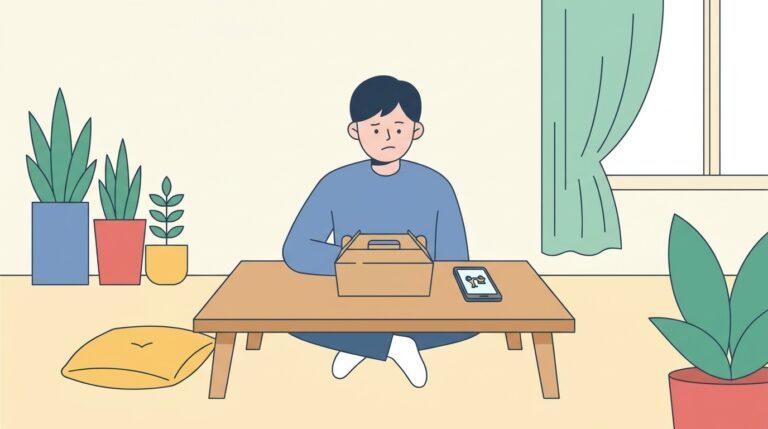
Imagine this: It is a rainy Friday night in Seoul. You have successfully navigated a Korean delivery app, finally ordering that crispy half-and-half Korean fried chicken you saw in your favorite K-Drama. The app chimes: Delivery Complete! You excitedly open the door, grab the box, and sit in front of the TV. But wait… you take a bite, and the chicken is stone cold. The melted cheese on your side dish has turned into a solid block.
In a country famous for its pali-pali (hurry up) culture, getting cold food is rare, but it definitely happens! When it does, your heart sinks. You want to complain, but how do you do it without sounding rude? If you just translate “I am angry, my food is cold” from English to Korean, you might unintentionally sound like a villain in a K-Drama.
Don’t worry! This guide is entirely based on real questions from my students who faced this exact Friday night tragedy. Today, we are going to learn how to politely but firmly express that your food arrived cold, getting you that refund or fresh meal like a true local!
Phase 2: Deep Dive into Core Expressions
- 음식이 다 식어서 왔어요.
- Pronunciation: eumsigi da sigeoseo wasseoyo. (eum-sheeg-ee dah sheeg-uh-suh wa-sso-yo.)
- Meaning: The food arrived completely cold. (Literal: The food came having all cooled down.)
- K-Culture Moment: This is the most common, polite, and natural way to inform a restaurant about the issue. Picture a scene in a drama where the main character calls the chicken shop. They don’t yell; they use a slightly disappointed, high-pitched voice. It shows you are sad about the food, not necessarily angry at the owner.
- Editor’s Insight: The key word here is 식다 (to cool down). We don’t say the food is 차갑다 (cold like ice water). We say it has lost its heat. Adding 다 (all/completely) emphasizes your disappointment.
- Situation Spectrum:
- Casual (to a friend who brought food): ✅
- Semi-formal (calling the restaurant): ✅
- Formal (to a strict boss): ⚠️ (You would use this to describe the food, but you wouldn’t blame the boss!)
- 🤔 Think About It: Why do Koreans say it cooled down rather than it is cold? It acknowledges that the restaurant cooked it hot, but something happened during delivery. It is a subtle way of not directly insulting the chef’s cooking!
- 배달이 너무 오래 걸려서 그런지 음식이 차가워요.
- Pronunciation: baedari neomu orae geollyeoseo geureonji eumsigi chagawayo. (bae-dal-ee neo-mu oh-rae geol-ryeo-suh geu-reon-jee eum-sheeg-ee cha-ga-wo-yo.)
- Meaning: Maybe because the delivery took too long, the food is cold.
- K-Culture Moment: Korean delivery apps show you the rider’s location in real-time. Sometimes, a rider takes multiple orders at once (called a bundle delivery). If you see the motorcycle icon wandering around your neighborhood for 30 minutes, this is the perfect phrase to use when calling customer service.
- Editor’s Insight: By saying ~서 그런지 (maybe because of ~), you are giving a logical reason for the problem. It softens the complaint. You are pointing at the delivery time as the culprit, not the restaurant itself.
- Situation Spectrum:
- Casual: ✅
- Semi-formal (to restaurant/app CS): ✅
- Formal: 🚫
- 🤔 Think About It: Indirect communication is highly valued in Korea. How does blaming the delivery time instead of the restaurant owner help save face (kibun) for the owner?
- 다시 가져다주실 수 있나요? / 환불해 주실 수 있나요?
- Pronunciation: dasi gajyeodajusil su innayo? / hwanbulhae jusil su innayo?
- Meaning: Can you deliver it again? / Can you give me a refund?
- K-Culture Moment: After you explain the food is cold, the restaurant will usually apologize profusely. But if they don’t offer a solution, you need to ask. This is how you firmly request a new batch or your money back without losing your cool.
- Editor’s Insight: Never say 다시 주세요 (Give it again). Using 주실 수 있나요? (Could you please give…) is the golden rule of polite Korean requests. It works like magic in any service situation.
- Situation Spectrum:
- Casual: 🚫
- Semi-formal (Customer to Staff): ✅
- Formal: ✅
Phase 3: Textbook vs. Real Korean
Let’s see how the language naturally evolves from textbook to real life.
[Situation 1: Informing them the food is cold]
– Textbook Korean: 이 음식의 온도가 너무 낮습니다. (The temperature of this food is too low.)
– Real Korean: 다 식어서 왔어요. (It arrived all cooled down.)
– Why the difference?: Textbooks teach direct translations of states (hot/cold), but real Korean focuses on the change of state (it became cold).
[Situation 2: Asking for a resolution]
– Textbook Korean: 저는 이 음식을 먹을 수 없습니다. 환불을 원합니다. (I cannot eat this food. I want a refund.)
– Real Korean: 못 먹을 정도라서요, 혹시 환불 가능할까요? (It’s to the point where I can’t eat it, by any chance is a refund possible?)
– Why the difference?: Adding 혹시 (by any chance) and phrasing it as a question (가능할까요?) softens the demand, fitting into Korea’s polite service culture.
Bottom Note: As a B1 learner, try to master adding 혹시 to your requests. It instantly makes you sound 50% more fluent and culturally aware!
Phase 4: Cultural Context — K-Culture Deep Dive
4-1. Non-verbal Cues: The Art of the Apologetic Tone
When making a complaint in Korea, your tone of voice is crucial. If you call the restaurant, do not use an angry, loud voice. Instead, use a slightly hesitant, soft tone. Start with 아, 저기요… (Ah, excuse me…) or 사장님, 죄송한데요… (Boss, I’m sorry but…). Apologizing before complaining is a classic Korean Nunchi move. It shows you understand they are working hard, but you still have a legitimate issue.
4-2. K-Food Connection: The Power of App Reviews
In Korea, delivery apps like Baemin (Baedal Minjok) or Coupang Eats rule the food industry. The lifeblood of a Korean restaurant is its star rating (별점). A 5-star rating with a good review is everything.
Because of this, restaurants are extremely sensitive to mistakes. If you call them politely to say the food is cold, 9 times out of 10, the owner will bend over backward to fix it (sending a new item, giving a refund, or offering free drinks) to prevent a 1-star review (known as 별점 테러 – star rating terrorism). Complaining directly but politely gives them a chance to fix it, which they highly appreciate!
Phase 5: Real-Life Roleplay Scenario
Scenario A: The Friday Night Chicken Crisis
– Setting: Friday night, 8 PM. Your apartment in Seoul. It is raining outside. You ordered fried chicken an hour ago. You open the box, and it’s cold and soggy. You find the restaurant’s number on the app and hit dial.
– Characters:
– YOU: A hungry foreigner who just wants hot chicken.
– Owner (사장님): A hardworking but stressed chicken shop owner.
Owner: 여보세요, 맛나 치킨입니다!
(yeoboseyo, manna chikinimnida!)
[Hello, this is Manna Chicken!]
YOU: 안녕하세요, 방금 배달받은 사람인데요.
(annyeonghaseyo, banggeum baedalbaneun saramindeyo.)
[Hello, I am the person who just received a delivery.]
Owner: 아, 네 고객님! 맛있게 드세요~
(a, ne gogaengnim! masitge deuseyo~)
[Ah, yes customer! Enjoy your meal~]
YOU: 그게 아니라… 음식이 다 식어서 왔어요.
(geuge anira… eumsigi da sigeoseo wasseoyo.)
[Actually… the food arrived completely cold.]
Owner: 헉! 정말요? 오늘 비가 와서 라이더 배차가 늦어졌나 봐요. 정말 죄송합니다.
(heok! jeongmallyo? oneul biga waseo raideo baechaga neujeojeonna bwayo. jeongmal joesonghamnida.)
[Gasp! Really? It’s raining today so the rider dispatch must have been delayed. I am so sorry.]
YOU: 치즈가 다 굳어서 못 먹을 정도예요.
(chijeuga da gudeoseo mot meogeul jeongdoyeyo.)
[The cheese is all hardened, to the point where I can’t eat it.]
Owner: 너무 죄송합니다. 바로 따뜻한 걸로 다시 보내드릴까요? 아니면 환불해 드릴까요?
(neomu joesonghamnida. baro ttatteuthan geollo dasi bonaedeurilkkayo? animyeon hwanbulhae deurilkkayo?)
[I am so sorry. Should I send a warm one right away? Or should I refund you?]
🔀 Your Turn! How should you respond?
– A) 무조건 환불해 주세요! 최악이에요! (Refund it no matter what! This is the worst!)
– B) 그럼 환불해 주실 수 있나요? (Then, could you give me a refund?)
– C) 괜찮아요, 그냥 전자레인지에 돌려 먹을게요. (It’s okay, I’ll just microwave it and eat it.)
✅ Best Choice: B. It is clear, polite, and uses the magic request form.
⚠️ Choice A Analysis: Saying 최악이에요 (It’s the worst) is incredibly aggressive and will make the owner defensive.
⚠️ Choice C Analysis: You can do this if you are an angel, but you paid for hot food! Don’t be afraid to politely ask for a refund or a remake.
Scenario B: The K-Culture Bonus Roleplay (Leaving a polite review)
If you decided to just eat it but want to leave feedback:
– YOU: 배달은 좀 늦어서 식었지만, 맛은 있어요. 다음에는 따뜻하게 부탁드려요.
(baedareun jom neujeoseo sigeotjiman, maseun isseoyo. daeumeneun ttatteuthage butakdeuryeoyo.)
[The delivery was a bit late so it cooled down, but it is tasty. Next time, please make sure it’s warm.]
– Owner Reply: 고객님, 불편을 드려 죄송합니다! 다음에는 꼭 빠르게 배달해 드리겠습니다! ㅠㅠ
[Customer, sorry for the inconvenience! Next time we will definitely deliver it quickly! T_T]
Phase 6: 10-Second Shadowing Drill
Practice this sentence out loud. Focus on the pauses (/) and the tone!
😢 사장님, / 음식이 / 다 식어서 / 왔어요.
(sajangnim, / eumsigi / da sigeoseo / wasseoyo.)
[Tone: Speak softly, with a slightly sad, trailing off voice at the end.]
Phase 7: K-Culture Mini Dictionary
- 배달앱
– Romanization: baedaraep
– English: Delivery application
– Context: The lifeline of Korean food culture. Baemin, Yogiyo, and Coupang Eats are the top three.
- 별점
– Romanization: byeoljeom
– English: Star rating
– Context: Koreans rely heavily on reviews. A restaurant dropping from 4.9 to 4.8 is a serious business emergency.
- 리뷰 이벤트
– Romanization: ribyu ibenteu
– English: Review event
– Context: Restaurants offer free cheese balls or cola if you promise to leave a 5-star review with a photo.
- 라이더
– Romanization: raideo
– English: Delivery rider
– Context: The hardworking people on motorcycles. When weather is bad, getting a rider is hard, which leads to cold food.
Phase 8: Traveler Survival Kit
Are you traveling to Korea soon? You might not be ordering delivery to an apartment, but you might order food to your hotel room or face issues at a restaurant. Here are your top survival phrases!
🆘 Survival Expression #1: Wrong Order
– 🇰🇷 주문한 메뉴랑 달라요.
– Pronunciation: jumunhan menyurang dallayo.
– English: It’s different from the menu I ordered.
– 📍 Where to use: Restaurants, cafes, or delivery.
🆘 Survival Expression #2: Missing Item
– 🇰🇷 콜라가 안 왔어요.
– Pronunciation: kollaga an wasseoyo.
– English: The cola didn’t arrive.
🆘 Survival Expression #3: Delivery Delay
– 🇰🇷 배달이 아직 안 왔어요.
– Pronunciation: baedari ajik an wasseoyo.
– English: The delivery hasn’t arrived yet.
📌 Editor’s Travel Note
– Useful Apps: To order delivery, you usually need a Korean phone number and card. As a traveler, use Shuttle Delivery (English friendly!) or ask your hotel concierge to order for you.
– The Empty Dish Rule: If you order delivery in real bowls (often for Chinese food like Jajangmyeon), you must leave the empty bowls outside your door later. But these days, mostly disposable containers are used.
Phase 9: Critical Thinking Corner — One Step Deeper
🧠 Think Deeper: Language & Power in Service Culture
In Korean service culture, the customer is historically treated like royalty (손님은 왕이다). Notice how the restaurant owner uses extremely honorific language (고객님, 죄송합니다 – Esteemed customer, I am sorry), while the customer can use standard polite form (식어서 왔어요). However, in recent years, this power dynamic is shifting. Younger generations believe in protecting workers’ rights. Thus, a good consumer in modern Korea is someone who claims their rights (like getting a refund for cold food) but does so with polite empathy, acknowledging the hard work of the owners and riders.
💬 Your Turn: In your country, how do you handle bad delivery food? Do you get angry, leave a bad review, or just quietly eat it? Share in the comments!
Phase 10: FAQ & Avoiding Misunderstandings
Q: “Will the rider come back to pick up the cold food if I get a refund?”
A: Yes, often! Do not throw the cold food away or eat it if you requested a refund or exchange. The restaurant usually asks the rider to retrieve the bad food as proof.
Q: “Can I use ‘다 식어서 왔어요’ at a dine-in restaurant?”
A: No! Since it means ‘arrived cold’, it only works for delivery. In a restaurant, simply say, 음식이 좀 식었는데, 데워주실 수 있나요? (The food is a bit cold, could you warm it up?)
❌ Common Mistake #1: Being aggressive to the restaurant owner.
✅ Do this instead: Remember that the delivery app or rider might be at fault, not the chef. Start with a polite, empathetic tone.
❌ Common Mistake #2: Throwing away the receipt.
✅ Do this instead: Always keep the receipt attached to the bag, as they might ask for your order number when you call.
Phase 11: Summary & Action Items
- One-Liner Summary: To politely complain about cold delivery food, say 음식이 다 식어서 왔어요 (The food arrived completely cold) in a gentle, apologetic tone.
Action Mission 3 Steps:
– 🥉 Bronze (Solo): Say 다 식어서 왔어요 out loud 3 times with a sad K-Drama face.
– 🥈 Silver (Online): Leave a comment on this blog using today’s phrase!
– 🥇 Gold (Real Life): Next time you are in Korea and your food is cold, muster your courage and call the restaurant using this exact phrase.
K-Culture Mission: Open YouTube and search for 한국 배달 브이로그 (Korean delivery vlog). Notice how the food is packaged to stay warm. Can you spot the review event stickers?
Engagement: What’s the worst delivery experience you’ve ever had? Let’s vent in the comments below!
Phase 12: Quiz — Interactive Challenge
- Situational Judgment: You ordered pizza. It arrives cold. What is the most natural way to tell the restaurant?
– A) 피자가 차가워요! (The pizza is cold!)
– B) 피자가 다 식어서 왔어요. (The pizza arrived completely cold.)
– C) 사장님 나빠요! (Boss is bad!)
- Fill in the Blank: To soften your request for a refund, you should add this word:
____ 환불 가능할까요?
– A) 빨리 (Quickly)
– B) 혹시 (By any chance)
– C) 무조건 (Unconditionally)
- True or False — K-Culture Edition:
– In Korea, it is common to leave a 1-star review without contacting the restaurant first if the food is bad. (True/False)
Answers:
1. B (A sounds like a literal translation, C is a comedy catchphrase!)
2. B (혹시 is the magic word for polite requests.)
3. False (While some do, it is considered poor manners. Most people try to resolve it with the owner first to protect the small business.)







