

Phase 1: Empathy & K-Culture Cold Open
Hello! I’m your Daily Hangul Editor.
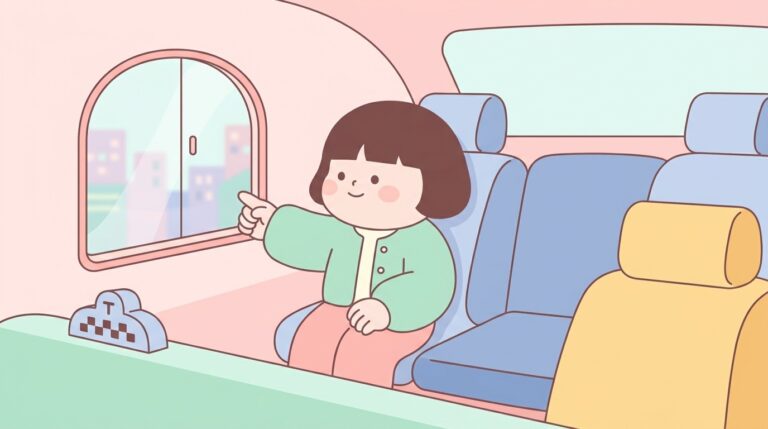
Picture this: You are riding a taxi in Seoul. It is the middle of winter, and the driver has the heater on blast. You are wearing a thick puffer jacket, and suddenly, you are sweating profusely. The window is right there, but you freeze. How do you ask the driver to open the window without sounding like a rude commander?
Or maybe you are at a bustling Korean BBQ restaurant. The exhaust pipe isn’t working well, and your eyes are tearing up from the pork belly smoke. You need fresh air now. In English, you might just say, “Could you open the window?” But in Korean, if you just translate “Open the window” literally, you might accidentally sound like a mob boss giving an order.
This guide is based on real moments of panic my beginner students have faced in Korea. Today, we are going to learn the absolute magic word that softens any request in Korean. Master this, and you will unlock the true ‘Insider’ (인싸) level of Korean politeness!
Phase 2: Core Expressions Deep Dive
Let’s break down the most essential phrases you need for making polite requests.
1. 창문 좀 열어주세요 (Please open the window)
- Pronunciation: chang-mun jom yeo-reo-ju-se-yo [Sounds like: chang-moon johm yo-ro-joo-say-yo]
- Meaning:
- Literal: Please open the window a little.
- Real nuance: Would you be so kind as to open the window for me?
- K-Culture Moment: You will hear this in K-Dramas whenever a character is in a stuffy car, or maybe feeling a bit motion sick. They gently tap their chest and say, “기사님, 창문 좀…” (Driver, the window please…).
- Editor’s Insight: The secret ingredient here is 좀 (jom). It literally means “a little,” but Koreans use it as a magic softening cushion. Without “좀”, the sentence feels too direct. With “좀”, it sounds polite, hesitant, and respectful.
- Situation Spectrum:
- Friends (Casual): ⚠️ (Too formal, just say “창문 좀 열어” to close friends)
- Coworkers (Semi-formal): ✅
- Strangers/Elders (Formal): ✅
- 🤔 Think About It: Why do Koreans love using “a little” (좀) when asking for things? Does making the request sound “small” make it easier for the other person to accept? How do you soften requests in your native language?
2. 에어컨 좀 켜주세요 (Please turn on the AC)
- Pronunciation: e-eo-keon jom kyeo-ju-se-yo [Sounds like: eh-oh-con johm kyo-joo-say-yo]
- Meaning:
- Literal: Please turn on the air conditioner a little.
- Real nuance: Could you turn on the AC, please?
- K-Culture Moment: Summer in Korea is incredibly humid. Walking into a small cafe or getting into a taxi during July, this phrase is a lifesaver.
- Editor’s Insight: Notice the pattern? [Noun] + 좀 + [Verb]-주세요 (Please do). “주세요” means “please give.” You are literally asking them to give you the action of turning on the AC.
- Situation Spectrum:
- Friends (Casual): ⚠️
- Coworkers (Semi-formal): ✅
- Strangers/Elders (Formal): ✅
3. 아, 제가 추위를 좀 타서요… (Ah, because I get cold easily…)
- Pronunciation: a, je-ga chu-wi-reul jom ta-seo-yo…
- Meaning:
- Literal: Ah, because I ride the cold a little…
- Real nuance: I’m sorry, but I’d rather keep the window closed because I get cold easily.
- K-Culture Moment: When someone asks to open the window, but you are freezing, you can’t just say “No!” (아니요!). Koreans hate flat-out refusals. Instead, they give an excuse with a trailing sentence ending in “~서요” (because…).
- Editor’s Insight: Refusing by stating your physical condition is the ultimate polite rejection. It means “It’s not that I hate your idea, it’s just my body can’t handle it.”
- Situation Spectrum:
- Friends (Casual): ✅
- Coworkers (Semi-formal): ✅
- Strangers/Elders (Formal): ✅
Phase 3: Textbook vs. Real Korean
Here is how textbooks teach you versus how Koreans actually speak on the streets of Seoul.
[Making a Request]
* 📖 Textbook Korean: 창문을 여십시오. (chang-mun-eul yeo-sip-si-o) – Please open the window.
* 🗣️ Real Korean: 창문 좀 열어주세요. (chang-mun jom yeo-reo-ju-se-yo)
* 💡 Why the difference?: The textbook version sounds like a robot or an airplane captain making a PA announcement. Real Koreans always use “좀” to make the request feel less demanding.
[Refusing a Request]
* 📖 Textbook Korean: 아니요, 안 됩니다. (a-ni-yo, an doem-ni-da) – No, you cannot.
* 🗣️ Real Korean: 아… 지금은 조금… (a… ji-geum-eun jo-geum…) – Ah… right now is a little…
* 💡 Why the difference?: Direct refusals damage “kibun” (mood/feelings). Trailing off and letting the other person read the room (Nunchi) is the Korean way of saying “No” without hurting feelings.
Bottom Note: For A1 beginners, don’t worry about complex grammar. Just remember: if you want something, say the noun, add “좀”, and end with “주세요” (ju-se-yo).
Phase 4: Cultural Context — K-Culture Deep Dive
4-1. The Non-Verbal “Nunchi” Check
Before you ask someone to open a window on a bus or subway, you must perform a quick Nunchi (눈치, reading the room) check. Are people wearing heavy coats? Is anyone shivering? In Korea, public transport etiquette leans heavily toward communal comfort. If you open a window without asking or checking your surroundings, you might get a few sharp glares. Always use a soft voice and a slight bow of the head when making a request to a stranger.
4-2. K-Food Connection: The BBQ Survival
If you’ve watched any K-Drama, you know the iconic Korean BBQ (Samgyeopsal) scenes. But the reality of a busy BBQ joint is smoke. Lots of it. When the smoke gets too thick, you’ll need to catch the busy staff’s attention.
Instead of just shouting “Open the window!” across the room, the polite Korean way is to raise your hand slightly, catch their eye, and say: “사장님! (Boss/Owner!), 여기 창문 좀 열어주세요~” (Could you please open the window here?). This perfectly balances the lively atmosphere with respectful language.
Phase 5: Real-World Roleplay Scenario
Setting: Friday night, 7 PM. A bustling pork belly (Samgyeopsal) restaurant near Gangnam Station. The room is filled with chatter, clinking soju glasses, and a lot of grill smoke.
Characters:
– YOU: A beginner in Korean, on your first business trip to Seoul.
– Minsu (32): Your friendly Korean coworker who is aggressively grilling meat for you.
Dialogue:
Minsu: 덥지 않아요? 연기가 너무 많네. 🥩
(deop-ji an-a-yo? yeon-gi-ga neo-mu man-ne.)
(English) Aren’t you hot? There’s too much smoke.
(🎭 Stage Direction: Minsu waves his hand in front of his face, coughing slightly)
YOU: 네, 조금 더워요.
(ne, jo-geum deo-wo-yo.)
(English) Yes, it’s a little hot.
Minsu: 저기 창문 열까요?
(jeo-gi chang-mun yeol-kka-yo?)
(English) Should we open that window over there?
(🎭 Stage Direction: Minsu gestures toward the closed window next to your table, but his hands are full of grilling tongs)
🔀 Your Turn! How do you ask the staff?
– A) “저기요! 창문!” (Excuse me! Window!)
– B) “저기요~ 사장님, 창문 좀 열어주세요~” (Excuse me~ Boss, please open the window~)
– C) “창문 열어라!” (Open the window!)✅ Best Choice: B — Calling the staff with “저기요” (Excuse me) or “사장님” (Boss) and using “좀 열어주세요” is the standard, polite way to survive K-BBQ.
⚠️ Choice A Analysis: It’s understandable for a beginner, but sounds a bit demanding.
🚫 Choice C Analysis: This is casual/commanding language. The staff might give you a very confused or angry look!
Minsu: 오~ 한국어 잘하는데요?
(o~ han-gu-geo ja-ra-neun-de-yo?)
(English) Oh~ Your Korean is good!
Phase 6: 10-Second Shadowing Drill
Let’s practice the rhythm! Pay attention to the pauses (/) and the feeling.
- 🥺 Politely asking: 기사님, / 창문 좀 / 열어주세요~
(gi-sa-nim, / chang-mun jom / yeo-reo-ju-se-yo~) - 😅 Making an excuse: 아… / 제가 추위를 좀 타서요…
(a… / je-ga chu-wi-reul / jom ta-seo-yo…) - 😊 Asking for AC: 사장님! / 여기 에어컨 좀 / 켜주세요!
(sa-jang-nim! / yeo-gi e-eo-keon jom / kyeo-ju-se-yo!)
Phase 7: K-Culture Mini Dictionary
1. 좀
* Romanization: jom
* English: A little / Please (softener)
* Context: The most important word for requests. It softens your sentence and prevents you from sounding aggressive.
2. 기사님
* Romanization: gi-sa-nim
* English: Driver (Respectful title)
* Context: Always use this to address taxi or bus drivers. Never just say “Hello driver” in casual Korean.
3. 사장님
* Romanization: sa-jang-nim
* English: Boss / Owner
* Context: Used to politely call restaurant or shop staff, even if you don’t know if they actually own the place.
4. 눈치
* Romanization: nunchi
* English: Reading the room
* Context: The social sense of gauging others’ feelings. Always use nunchi before opening a window on public transport!
Phase 8: Traveler’s Survival Kit
Are you taking a taxi or eating out in Seoul? Keep these top 3 phrases saved on your phone!
🆘 Survival Phrases for Requests
– 🇰🇷 “여기 좀 치워주세요.” (yeo-gi jom chi-wo-ju-se-yo)
– 🗣️ Meaning: Please clear this table/spot.
– 📍 Where to use: Busy cafes or restaurants where the previous customer’s cups are still there.
- 🇰🇷 “영수증 좀 주세요.” (yeong-su-jeung jom ju-se-yo)
- 🗣️ Meaning: Please give me the receipt.
- 📍 Where to use: Convenience stores or cafes.
🇰🇷 “문 좀 닫아주세요.” (mun jom da-da-ju-se-yo)
- 🗣️ Meaning: Please close the door.
- 📍 Where to use: Taxis (if the door didn’t close properly) or inside a cold shop.
📌 Editor’s Travel Note
– Korean Taxis: Many doors in standard taxis do not open automatically (unlike in Japan). However, some premium taxis do. Always wait a second to see, and use “창문 좀 열어주세요” if it gets stuffy inside!
– Air Quality: Sometimes Koreans keep windows closed because of ‘fine dust’ (미세먼지). If someone refuses your request to open a window, it might not be because of the cold, but because the air quality outside is bad that day!
Phase 9: Critical Thinking — “One Step Deeper”
Language & Power (주세요 – The Concept of Giving)
In English, we ask, “Can you open the window?” focusing on the other person’s ability. But in Korean, you say “열어주세요” (yeo-reo-ju-se-yo), which literally translates to “Please open and give it to me.”
Why “give”? In Korean culture, doing a favor is viewed as offering a gift of service. By using the verb “주다” (to give), you acknowledge that the other person is sacrificing their time and effort for you. It lowers yourself and elevates the person doing the favor. This reflects Korea’s deep-rooted respect for community and mutual assistance.
💬 Your Turn: Does your native language have a unique way of asking for favors? Do you use words like “give” or “receive” when asking for help? Let me know in the comments!
Phase 10: FAQ & Mistake Prevention
Q: Can I use “창문 좀 열어주세요” to an older person or my boss?
Yes! Because it ends in “~요” and uses “좀”, it is polite enough for everyday situations with elders or superiors.
Q: What if I don’t know the word for the object I want?
Just point to it and say: “이거 좀 해주세요” (i-geo jom hae-ju-se-yo – Please do this for me). “이거” means “this.”
❌ Common Mistake #1: Forgetting to say “좀” (jom).
Saying “창문 열어주세요” without “좀” isn’t horribly offensive, but it sounds a bit cold and direct, like placing a drive-thru order.
✅ Do this instead: Always sprinkle “좀” into your requests like salt on fries!
Phase 11: Summary & Action Items
One-Liner Summary: To make a polite request in Korean without sounding rude, just add the magic softening word “좀” (jom) before the verb.
Your Action Missions:
– 🥉 Bronze (Solo): Stand in front of your room’s window and say “창문 좀 열어주세요” three times out loud.
– 🥈 Silver (Online): Find a Korean study buddy or use a language exchange app, and text them a polite request using “좀”.
– 🥇 Gold (Real Life): The next time you are in a Korean taxi or restaurant, politely ask for something using “[Noun] + 좀 + 주세요”.
🎬 K-Culture Mission:
Next time you watch a K-Drama, listen closely during restaurant scenes or taxi scenes. I guarantee you will hear the word “좀” at least once! Count how many times they say it in one episode.
Phase 12: Quiz — Interactive Challenge
Test your new Nunchi and language skills!
1. Situational Judgment:
You are in a taxi, and the music is too loud. You want to ask the driver to turn it down a little. Which is the best phrase?
* A) 음악 내려! (eum-ak nae-ryeo!)
* B) 기사님, 음악 좀 줄여주세요~ (gi-sa-nim, eum-ak jom ju-ryeo-ju-se-yo~)
* C) 아니요, 싫습니다. (a-ni-yo, sil-seum-ni-da)
2. True or False – K-Culture Edition:
* In a Korean BBQ restaurant, it’s considered rude to call out “사장님!” (Boss!) to get the waiter’s attention. (True / False)
(Answers)
1. B is correct! It uses the respectful title (기사님), the magic word (좀), and the polite ending (주세요). A is extremely rude. C means “No, I hate it.”
2. False! Calling out “사장님” or “저기요” is the standard, culturally accepted way to get service in busy Korean restaurants.
Frequently Asked Questions (FAQ)
Q: What does "창문 좀 열어주세요 (Please open the window)" mean in Korean and how do you pronounce it?
A: In Korean, "창문 좀 열어주세요 (Please open the window)" is pronounced [chang-mun jom yeo-reo-ju-se-yo [Sounds like: chang-moon johm yo-ro-joo-say-yo] and means: Literal: Please open the window a little.
Q: What does "에어컨 좀 켜주세요 (Please turn on the AC)" mean in Korean and how do you pronounce it?
A: In Korean, "에어컨 좀 켜주세요 (Please turn on the AC)" is pronounced [e-eo-keon jom kyeo-ju-se-yo [Sounds like: eh-oh-con johm kyo-joo-say-yo] and means: Literal: Please turn on the air conditioner a little.
Q: What does "아, 제가 추위를 좀 타서요... (Ah, because I get cold easily...)" mean in Korean and how do you pronounce it?
A: In Korean, "아, 제가 추위를 좀 타서요... (Ah, because I get cold easily...)" is pronounced [a, je-ga chu-wi-reul jom ta-seo-yo...] and means: Literal: Ah, because I ride the cold a little...






