

Hello there! I’m your Chief Editor at Daily Hangul.
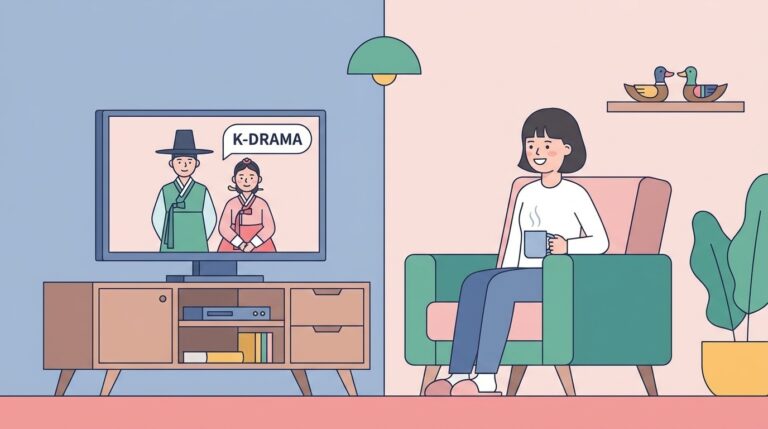
Picture this: You’re watching a cozy K-Drama. It’s the Chuseok holiday, and the main character walks through the door of their family home. The mood is tense. Within five minutes, an aunt leans in and asks the dreaded question: “When are you getting married?” The protagonist awkwardly smiles, grabs a piece of jeon (pancake), and changes the subject.
Or maybe you’ve experienced this in real life. You hop into a taxi in Seoul, and after asking where you’re from, the friendly 60-something driver asks, “Are you married?” You freeze. Why are they asking this? Are they being rude?
Welcome to one of the most fascinating cultural shifts in modern Korea. Today, we aren’t just talking about romantic wedding venues. We are diving into Bihon (비혼)—the rising trend of voluntary singlehood—and how Koreans are rewriting the script on marriage. By the end of this post, you’ll not only understand the cultural nuances behind these K-Drama tropes but also know exactly how to answer these personal questions like a true local!
Phase 2: Core Expressions Deep Dive
Here are the absolute must-know expressions when the topic of marriage comes up in Korea.
1. 저는 비혼주의자예요. (I am a voluntary single.)
- Pronunciation: [Jeoneun bihonjuuija-yeyo.] + [Juh-neun bee-hon-joo-ee-ja-yeh-yo.]
- Meaning: (Literal) I am an ideological non-marriage person. / (Real nuance) I have chosen not to get married.
- K-Culture Moment: You’ll see this in modern dramas like Because This Is My First Life or Work Later, Drink Now. When colleagues at a hoesik (company dinner) ask a young employee about marriage, confidently saying this changes the dynamic from “Oh, you’ll find someone!” to an acknowledgment of their personal life choice.
- Editor’s Insight: The word ‘비’ (bi) means ‘not’, and ‘혼’ (hon) means ‘marriage’. Notice it’s not ‘미혼’ (mihon – ‘not YET married’). It’s a deliberate, empowering choice. It feels firm but respectful.
- Situation Spectrum:
- Friends (Casual): ✅
- Coworkers (Semi-formal): ✅
- Older Relatives/Bosses (Formal): ⚠️ (Use with caution; older generations might still lecture you!)
- 🤔 Think About It: Why did Koreans create a specific word for choosing not to marry (비혼), distinct from simply not being married (미혼)? What does this say about the societal pressure to marry in the past?
2. 좋은 사람 있으면 소개시켜 줘. (Set me up if you know someone good.)
- Pronunciation: [Joeun saram isseumyeon sogaesikyeo jwo.] + [Joh-eun sah-ram iss-uh-myun so-gae-shee-kyuh jwo.]
- Meaning: (Literal) If there is a good person, introduce them to me. / (Real nuance) I’m open to blind dates (sogaeting), keep me in mind!
- K-Culture Moment: This is the classic line single people tell their married or dating friends over coffee. It’s the Korean equivalent of “I’m on the market.”
- Editor’s Insight: In Korea, blind dates arranged by friends (sogaeting) are incredibly common, much more so than just walking up to a stranger in a bar. Saying this shows you’re actively looking without sounding desperate.
- Situation Spectrum:
- Friends (Casual): ✅
- Coworkers (Semi-formal): ✅ (If you are close)
- Boss/Elders (Formal): 🚫
- 🤔 Think About It: Why do Koreans prefer meeting partners through mutual friends rather than meeting strangers organically? How does the concept of trust play into this?
3. 아직은 결혼 생각이 별로 없어요. (I don’t really have thoughts of marriage yet.)
- Pronunciation: [Ajigeun gyeolhon saenggagi byeollo eopseoyo.] + [Ah-jeeg-eun gyul-hon saeng-gah-ghee byul-lo uhp-suh-yo.]
- Meaning: (Literal) I don’t have much thought of marriage yet. / (Real nuance) I’m not planning to get married anytime soon (so please stop asking).
- K-Culture Moment: This is the ultimate “polite shield.” When an auntie at a family gathering or a taxi driver gets too nosy, this is your best defense.
- Editor’s Insight: The magic word here is ‘별로’ (not really/not much). It softens the blow. Instead of saying “I will never marry!” which might start an argument with traditional elders, this politely shuts down the conversation.
- Situation Spectrum:
- Friends (Casual): ✅
- Coworkers (Semi-formal): ✅
- Boss/Elders/Taxi Drivers (Formal): ✅ (Highly recommended!)
- 🤔 Think About It: Korean language has many “softening” words like 별로 (not really) or 좀 (a little). Why is indirectness valued when disagreeing or refusing something in Korea?
Phase 3: Textbook vs. Real Korean
Let’s look at how the textbook language compares to what you’ll actually hear in the trendy cafes of Hongdae or Seongsu-dong.
[Situation 1: Asking someone if they are married]
* 📖 Textbook Korean: 결혼하셨습니까? (Did you get married? – Very stiff)
* 🗣️ Real Korean: 만나는 사람 있어요? (Are you seeing anyone?)
* 💡 Why the difference?: Asking directly about marriage can feel too heavy or intrusive nowadays. Asking if they are seeing someone is lighter and more inclusive of different relationship statuses.
[Situation 2: Explaining you are single by choice]
* 📖 Textbook Korean: 저는 독신입니다. (I am a bachelor/spinster. – Sounds outdated)
* 🗣️ Real Korean: 전 비혼이에요. (I am “Bihon”.)
* 💡 Why the difference?: “Dokshin” (독신) implies you just happen to be alone, sometimes carrying a lonely or negative connotation. “Bihon” (비혼) is an active, modern lifestyle choice.
Bottom Note: For B2 learners, using words like 비혼 or 딩크 (DINK – Double Income, No Kids) will make you sound incredibly fluent and culturally aware!
Phase 4: Cultural Context — K-Culture Deep Dive
4-1. Non-Verbal Cues & Nunchi
When discussing marriage with older Koreans, Nunchi (눈치 – the ability to read the room) is crucial. If an older person asks why you aren’t married, maintain a pleasant smile. Do not cross your arms or look overly defensive. A polite laugh, a slight bow of the head, and a soft “아직은 생각이 없네요” (I haven’t thought about it yet) goes a long way. Aggressively defending your singlehood might be viewed as disrespectful rather than independent.
4-2. The K-Drama Shift
If you’ve watched K-Dramas for years, you’ve seen the evolution. Ten years ago, the ultimate happy ending was the poor female lead marrying the wealthy Chaebol heir (think Boys Over Flowers).
Today? Look at dramas like Search: WWW or Because This Is My First Life. The narratives have shifted drastically. Characters openly discuss the financial burden of buying a house (Jeonse), the sacrifice of women’s careers after childbirth, and the joy of living independently. When you tell a Korean friend you love the “Bihon” themes in modern dramas, they will instantly know you truly understand contemporary Korean society!
Phase 5: Real-Life Roleplay Scenario
Setting: A trendy cafe in Yeonnam-dong. Friday evening. You and two Korean colleagues, Min-su (32) and Ji-yoon (29), are drinking iced Americanos after work. Ji-yoon recently announced she is getting married.
Characters:
– YOU: An expat working in Seoul, navigating the local social scene.
– Min-su: Your friendly but slightly traditional older male colleague.
– Ji-yoon: Your younger, progressive female colleague.
Dialogue:
Ji-yoon: 저 다음 달에 웨딩 촬영해요! 너무 떨려요. 👰♀️
(Jeo daeum dare weding chwaryeonghaeyo! Neomu tteollyeoyo.)
[I’m doing my wedding photoshoot next month! I’m so nervous.]
YOU: 우와, 진짜 축하해요! 사진 기대할게요.
(Uwa, jinjja chukahaeyo! Sajin gidaehalgeyo.)
[Wow, congratulations! I’ll look forward to the photos.]
Min-su: 이제 지윤 씨도 가네. (Look at you) 씨는 결혼 생각 없어요? 한국에서 좋은 사람 만나야지.
(Ije Ji-yun ssido gane. [Name] ssineun gyeolhon saenggak eopseoyo? Hangugeseo joeun saram mannayeaji.)
[So Ji-yoon is finally going (getting married). Don’t you have thoughts of marriage? You should meet someone good in Korea.]
(🎭 Stage Direction: Min-su takes a sip of coffee, looking at you expectantly, meaning well but being a bit nosy.)
YOU: 저는 아직 결혼 준비가 안 된 것 같아요.
(Jeoneun ajik gyeolhon junbiga an doen geot gatayo.)
[I don’t think I’m ready for marriage yet.]
Ji-yoon: 에이, 민수 대리님. 요즘 누가 결혼 일찍 해요? 비혼주의도 얼마나 많은데요!
(Ei, Minsu daerinim. Yojeum nuga gyeolhon iljjik haeyo? Bihonjuuido eolmana maneundeyo!)
[Come on, Min-su. Who gets married early these days? There are so many people choosing Bihon!]
Min-su: 그래도 나중에 외로울 텐데… (Look at you) 씨는 비혼주의예요?
(Geuraedo najunge oeroul tende… [Name] ssineun bihonjuuiyeyo?)
[But you’ll be lonely later… Are you a ‘Bihon’?]
🔀 Your Turn! How will you answer?
– A) “네, 절대 결혼 안 할 거예요!” (Yes, I will NEVER get married!)
– B) “아니요, 비혼은 아니고 아직은 생각이 별로 없어요.”
– C) “대리님이나 신경 쓰세요!” (Mind your own business, Min-su!)✅ Best Choice: B — “No, I’m not strictly Bihon, but I just don’t have much thought about it yet.” This is the perfect, diplomatic “Nunchi” answer. It respects Min-su’s perspective while setting a gentle boundary.
⚠️ Choice C Analysis: While you might want to say this in your head, using this with a senior colleague (대리님) will absolutely destroy the office relationship. Save the sass for your closest friends!
Phase 6: 10-Second Shadowing Drill
Practice setting your boundaries politely but firmly! Pay attention to the pauses (/) and the intonation.
😊 저는 / 아직은 / 결혼 생각이 / 별~로 없어요.
(jeo-neun / a-ji-geun / gyeol-hon saeng-ga-gi / byeol~lo eop-seo-yo.)
“I don’t really have thoughts of marriage just yet.”
Tip: Drag out the ‘별~’ (byeol) just a tiny bit to sound more natural and thoughtful, rather than defensive.
Phase 7: K-Culture Mini Dictionary
| Korean | Romanization | English | Context |
|---|---|---|---|
| 비혼 | bihon | Voluntary singlehood | Choosing not to marry as a lifestyle choice. |
| 축의금 | chugigeum | Congratulatory money | The cash gift you MUST give when attending a Korean wedding. |
| 소개팅 | sogaeting | Blind date | A 1-on-1 date set up by a mutual friend. The most common way Koreans meet partners. |
| 딩크족 | dingkeujok | DINKs | Double Income, No Kids. Married couples who choose not to have children. |
| 눈치 | nunchi | Social intuition | The subtle art of reading the room, heavily used when navigating nosy family questions. |
Phase 8: Traveler’s Survival Kit
You might think, “I’m just visiting Korea, why do I need to know about marriage culture?” Because Koreans are incredibly warm, curious, and treat guests like family—which means taxi drivers, market vendors, and Airbnb hosts will ask about your marital status as a way of breaking the ice!
🆘 Survival Expressions #1: Deflecting the “Are you married?” Question
– 🇰🇷 “아직이요~” (Ajigiyo~)
– 🗣️ Pronunciation: [Ah-jeeg-ee-yo~]
– 📍 Where to use: Taxis, traditional markets, small restaurants.
– 💡 Pro Tip: It simply means “Not yet~” Said with a bright smile, it instantly satisfies the older generation’s curiosity without you having to explain your entire life philosophy!📌 Editor’s Travel Note: Attending a Korean Wedding
If you make Korean friends, you might get invited to a wedding!
– Dress Code: Do NOT wear white. Dark or muted colors are preferred so the bride stands out.
– The Money (Chugigeum): You don’t bring blenders or towels. You bring cash in a crisp white envelope. Usually, 50,000 KRW if you are an acquaintance, or 100,000+ KRW if you are close friends.
– The Vibe: Korean weddings are fast. The ceremony lasts about 30 minutes, followed immediately by a massive buffet where you use a meal ticket given to you in exchange for your cash envelope. Don’t be late!
Phase 9: Critical Thinking Corner — “A Step Deeper”
Media vs Reality: The Economics of Romance
🧠 Think Deeper:
K-Dramas often portray sweeping, romantic weddings at luxury hotels. However, the rise of Bihon in reality is heavily tied to economics. The staggering cost of housing in Seoul (Jeonse/buying), combined with the intense financial pressure of private education (hagwon) for children, makes marriage feel like a luxury rather than a given for many young Koreans. The language is shifting from “When will you marry?” to “Is marriage even necessary?” acknowledging that choosing Bihon is often a rational economic decision, not just a romantic rebellion.💬 Your Turn: How is the housing market or economy affecting marriage trends in your home country? Is there a similar word to Bihon in your language? Share in the comments!
Phase 10: FAQ & Avoiding Misunderstandings
Q: A taxi driver asked my age and if I was married within two minutes of meeting me. Are they being rude?
No! In Korean culture, asking age establishes the social hierarchy (so they know how respectfully they need to speak to you). Asking about marriage is traditionally a warm conversation starter, akin to asking “How is the weather?” in the West. Don’t take it personally.
Q: If I am invited to a wedding, can I just give a gift instead of cash?
Unless you are a very close friend and have specifically coordinated with the bride/groom, always give cash (Chugigeum). Giving a toaster will definitely cause confusion at the registry desk!
❌ Common Mistake #1: Arguing passionately with elders about your right to remain single.
✅ Do this instead: Use the “Nunchi shield.” Smile brightly and say “아직은 생각이 없어요” (I don’t have thoughts of it yet). It saves face for everyone and ends the conversation peacefully.
Phase 11: Summary & Action Items
- One-Liner Summary: Understanding Bihon and modern marriage expressions helps you navigate both K-Drama plots and real-life Korean social interactions with empathy and tact.
-
Action Mission 3 Steps:
- 🥉 Bronze (Solo): Look in the mirror and practice saying politely, “저는 아직 결혼 생각이 별로 없어요.” 3 times.
- 🥈 Silver (Online): Go to a K-Drama forum or YouTube comments and write about a character who represents the Bihon lifestyle.
- 🥇 Gold (Real World): Next time an older Korean person asks if you’re married, successfully deploy the “아직이요~” (Not yet~) deflection with a big smile!
- K-Culture Mission: Watch an episode of a modern, slice-of-life K-Drama (like Because This Is My First Life). Spot the scene where relatives nag the main character about marriage. Count how many times they sigh!
Phase 12: Quiz — Interactive Challenge
1. Situational Judgment:
You are at a company dinner. Your older boss asks, “You’re of marriageable age! Do you have a girlfriend/boyfriend?”
Which is the culturally smartest response if you want to politely avoid the topic?
– A) 내 알 바 아니잖아요. (None of your business.)
– B) 저는 비혼주의자라서 결혼 절대 안 합니다. (I am a Bihon, I will never marry.)
– C) 하하, 아직은 좋은 사람이 없네요. (Haha, there’s no one good around yet.)
👉 Click for Answer
Answer: C. It shifts the blame to “circumstances” rather than directly challenging your boss’s worldview. B might spark a 30-minute lecture, and A will likely get you fired!
2. True or False – K-Culture Edition:
If you attend a Korean wedding, wearing a beautiful white dress is considered a great compliment to the bride.
👉 Click for Answer
False! White is strictly reserved for the bride. Wearing white as a guest is considered extremely rude (known as a “민폐 하객” – nuisance guest). Stick to navy, beige, or black!
Did you enjoy today’s deep dive? Drop a comment below if you’ve ever had a funny experience with a nosy relative or taxi driver asking about your love life! Until next time, happy studying!
Frequently Asked Questions (FAQ)
Q: What does "저는 비혼주의자예요. (I am a voluntary single.)" mean in Korean and how do you pronounce it?
A: In Korean, "저는 비혼주의자예요. (I am a voluntary single.)" is pronounced [Jeoneun bihonjuuija-yeyo.] and means: (Literal) I am an ideological non-marriage person. / (Real nuance) I have chosen not to get married.
Q: What does "좋은 사람 있으면 소개시켜 줘. (Set me up if you know someone good.)" mean in Korean and how do you pronounce it?
A: In Korean, "좋은 사람 있으면 소개시켜 줘. (Set me up if you know someone good.)" is pronounced [Joeun saram isseumyeon sogaesikyeo jwo.] and means: (Literal) If there is a good person, introduce them to me. / (Real nuance) I'm open to blind dates (sogaeting), keep me in mind!
Q: What does "아직은 결혼 생각이 별로 없어요. (I don't really have thoughts of marriage yet.)" mean in Korean and how do you pronounce it?
A: In Korean, "아직은 결혼 생각이 별로 없어요. (I don't really have thoughts of marriage yet.)" is pronounced [Ajigeun gyeolhon saenggagi byeollo eopseoyo.] and means: (Literal) I don't have much thought of marriage yet. / (Real nuance) I'm not planning to get married anytime soon (so please stop asking).







