

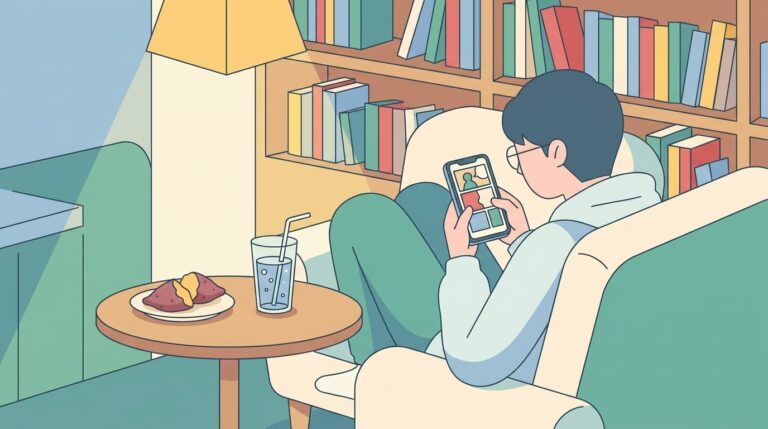
Hello there! I’m your lead editor at Daily Hangul.
Imagine this: You’re swiping through the latest episode of a smash-hit Korean webtoon—maybe a romance fantasy or an intense action thriller. The main character finally gets their glorious revenge after 50 chapters of suffering. The top comment in Korean just says, “아, 완전 사이다!” Wait… Sprite? Why are they talking about soda right now?
If you’ve ever felt lost reading the comments section of Naver Webtoons or watching K-Drama adaptations like Marry My Husband, you’re not alone. The Korean webtoon and web novel ecosystem has birthed an entirely new vocabulary. It’s a language of high emotions, fast-paced trends, and specific tropes.
Today, we are going to unlock the insider slang of Korean Webtoons & Web Novels. Knowing these terms won’t just help you read comments; it will give you a profound glimpse into the modern Korean mindset. Everything shared here is based on real questions from my B2-level students who wanted to sound less like a textbook and more like a true Korean netizen. Let’s dive in!
Phase 2: Deep Dive into Core Expressions
1. 사이다 (Saida)
- Pronunciation: [sa-i-da] (Sounds like the “cider” but means clear lemon-lime soda like Sprite)
- Meaning: Literal: Clear soda / Real nuance: A refreshing, satisfying situation or plot resolution (especially revenge).
- K-Culture Moment: Think of that moment in a K-Drama when the villain finally gets exposed in front of everyone. The frustration you felt for 15 episodes is suddenly washed away. That feeling of relief? That’s Saida.
- Editor’s Insight: We use this beyond webtoons! If your friend finally quits a toxic job or tells off a rude person, you can say, “완전 사이다!” It’s the ultimate catharsis.
- Situation Spectrum:
- Casual (Friends): ✅
- Semi-formal (Coworkers): ⚠️ (Fine during casual lunch chats)
- Formal (Boss/Elders): 🚫
- 🤔 Think About It: Why do Koreans relate emotional relief to a carbonated drink? Does your culture have a food or drink metaphor for a satisfying situation?
2. 고구마 (Goguma)
- Pronunciation: [go-gu-ma] (Sounds like ‘go’ + ‘goo’ + ‘ma’)
- Meaning: Literal: Sweet potato / Real nuance: A frustrating, slow, or stifling situation where nothing gets resolved.
- K-Culture Moment: The main character misunderstands the love interest for the 10th time, or the villain keeps getting away with crimes. You feel like you ate a dry, hot sweet potato without any water.
- Editor’s Insight: This is the exact opposite of Saida. In webtoons, readers despise a “고구마 전개” (goguma plot). They want the fast-paced resolution.
- Situation Spectrum:
- Casual (Friends): ✅
- Semi-formal (Coworkers): ⚠️
- Formal (Boss/Elders): 🚫
- 🤔 Think About It: How does the physical sensation of eating dry food perfectly mirror psychological frustration in storytelling?
3. 회빙환 (Hoe-bing-hwan)
- Pronunciation: [hoe-bing-hwan]
- Meaning: An acronym for 회귀 (Regression), 빙의 (Possession/Transmigration), and 환생 (Reincarnation).
- K-Culture Moment: This is the “holy trinity” of modern Korean web novel and webtoon tropes. Did the protagonist die and wake up 10 years in the past? Or wake up in the body of a villainess in a novel? That’s Hoe-bing-hwan.
- Editor’s Insight: This isn’t just a genre; it’s a massive cultural trend. If you walk into a bookstore in Korea, half the fantasy novels are based on this concept.
- Situation Spectrum:
- Casual (Friends/Fandom): ✅
- Semi-formal (Coworkers): 🚫 (Unless they are webtoon fans)
- Formal (Boss/Elders): 🚫
- 🤔 Think About It: Why are stories about getting a “second chance at life” or “starting over with past memories” dominating Korean media right now?
Phase 3: Textbook vs. Real Korean
[Describing a Frustrating Plot/Situation]
* 📖 Textbook Korean: 이 이야기는 너무 지루하고 답답해요. (This story is too boring and frustrating.)
* 🗣️ Real Korean: 아, 완전 고구마 전개야. 하차할래. (Ah, it’s a total goguma plot. I’m dropping it.)
* 💡 Why the difference?: Netizens prefer punchy, visual metaphors. “하차하다” literally means “getting off a train/bus,” but online, it means dropping a series.
[Describing a Satisfying Revenge]
* 📖 Textbook Korean: 주인공이 복수해서 기분이 통쾌해요. (I feel gratified because the main character took revenge.)
* 🗣️ Real Korean: 역시 사이다 결말! 속이 다 시원하네. (As expected, a Saida ending! My inside feels so refreshed.)
* 💡 Why the difference?: “속이 시원하다” is a deeply rooted Korean idiom connecting physical stomach comfort to emotional peace.
Phase 4: Cultural Context — K-Culture Deep Dive
4-1. Non-verbal Nuances
When using “고구마” (Goguma), Koreans often tap their upper chest lightly. Why? Because that’s where you feel the physical blockage when you eat something dry! When expressing “사이다” (Saida), you might hear people make a refreshing “캬~” (Kya~) sound, exactly like taking a gulp of ice-cold soda after a run.
4-2. The K-Drama & Webtoon Ecosystem
You’ve probably noticed that many recent hit K-Dramas (Itaewon Class, Business Proposal, Reborn Rich) were originally webtoons or web novels. The Saida (refreshing revenge) and Hoe-bing-hwan (second chance) tropes are universally loved because they offer an escape.
Critical View: In reality, dealing with a toxic boss or an unfair society takes years and is rarely resolved with a dramatic, instant “Saida.” Webtoons provide a fast-paced fantasy of justice that real life often lacks. That’s why the pacing of Korean webtoons is incredibly fast—readers have no patience for Goguma in their precious free time!
Phase 5: Real-Life Roleplay Scenario
Scenario A: The Comic Book Café (만화카페)
- Setting: A cozy Manhwa Café (만화카페) in Hongdae. It’s Sunday afternoon. You and your friend are lying in a small cave-like cubicle, reading webtoons on your phones while sipping iced Americanos.
- Characters:
- YOU: A webtoon enthusiast currently reading a trending romance-fantasy series.
- Minji (28): Your Korean friend who reads at lightning speed and loves spoiling the plot.
Minji: 야, 너 그거 아직도 읽어? 📱
(Ya, neo geugeo ajikdo ilgeo?)
[Hey, are you still reading that?]
(🎭 Stage Direction: Minji peers over at your phone screen)
YOU: 응, 근데 남주가 너무 바보 같아. 답답해 죽겠어.
(Eung, geunde namjuga neomu babo gata. dabdaphae jukgesseo.)
[Yeah, but the male lead is such an idiot. It’s so frustrating.]
Minji: 내 말이! 초반에 완전 고구마지?
(Nae mari! Chobane wanjeon gogumaji?)
[That’s what I’m saying! It’s total goguma in the beginning, right?]
YOU: 어, 숨 막혀. 악역은 왜 이렇게 똑똑한 거야?
(Eo, sum makyeo. Agyeogeun wae ireoke ttokttokhan geoya?)
[Yeah, I can’t breathe. Why is the villain so smart?]
🔀 Your Turn! Minji asks, “Want me to spoil it for you? (스포 해줄까?)” How do you reply?
– A) “네, 줄거리를 알려주세요.” (Polite, but sounds like an AI translating an email.)
– B) “아니! 절대 하지 마! 나 하차할 뻔했는데 참는 중이야.” (Natural, dramatic, uses webtoon slang perfectly.)
– C) “대박 사건!” (Out of context. This means “Huge incident!”)✅ Best Choice: B — Showing dramatic resistance to spoilers (스포) while using “하차하다” (dropping a series) makes you sound exactly like a native reader.
Minji: 알았어, 알았어. 근데 50화까지만 버텨봐.
(Arasseo, arasseo. Geunde osiphwakkajiman beotyeobwa.)
[Okay, okay. But just hold on until chapter 50.]
YOU: 50화? 그때 뭐 나오는데?
(Osiphwa? Geuttae mwo naoneunde?)
[Chapter 50? What happens then?]
Minji: 완전 역대급 사이다 터지니까 기대해!
(Wanjeon yeokdaegeup saida teojinikka gidaehae!)
[An all-time epic Saida drops, so look forward to it!]
YOU: 진짜? 그럼 오늘 밤새 정주행한다.
(Jinjja? Geureom oneul bamsae jeongjuhaenghanda.)
[Really? Then I’m binge-reading it all night tonight.]
Scenario B: Bonus K-Culture Scenario (Naver Webtoon App)
(You ran out of free episodes and need to know what happens next!)
YOU: 아… 다음 화 궁금한데 어떡하지?
(Ah… daeum hwa gunggeumhande eotteokhaji?)
[Ah… I’m so curious about the next chapter, what do I do?]
Minji: 뭘 어떡해, 쿠키 구워야지! 나 벌써 10개 구웠어.
(Mwol eotteokhae, kuki guwoyaji! Na beolsseo yeolge guwosseo.)
[What do you mean, you have to bake cookies! I already baked 10.]
(Note: “Baking cookies” is slang for buying digital currency on Naver Webtoons!)
Phase 6: 10-Second Shadowing Drill
Let’s practice the intonation to sound like a true fan!
😤 아, / 완전 / 고~~~구마 전개야! (Ah, / wanjeon / go~~~guma jeongaeya!)
(Sigh deeply at the beginning. Drag out the ‘go’ to show your prolonged frustration.)
😊 역시! / 사이다 결말이라서 / 너무 좋아! (Yeoksi! / Saida gyeolmariraseo / neomu joa!)
(Say ‘Yeoksi!’ brightly. Emphasize ‘Saida’ like you just took a refreshing sip.)
Phase 7: K-Culture Mini Dictionary
| Korean | Romanization | English | Context |
|---|---|---|---|
| 정주행 | jeongjuhaeng | Binge-watching/reading | Literally “driving straight forward.” Used when consuming a whole series at once. |
| 쿠키 굽다 | kuki gupda | To pay for webtoon episodes | Naver Webtoon’s digital currency is called ‘Cookies’. Buying them is ‘baking’. |
| 하차하다 | hachahada | To drop a series | Literally “to get off a vehicle.” If a plot is too goguma, readers “get off.” |
| 스포 | seupo | Spoiler | Short for 스포일러. “스포 금지” (seupo geumji) means “No Spoilers!” |
| 로판 | ropan | Romance Fantasy | Short for 로맨스 판타지. Often features princesses, dukes, and magic. |
Phase 8: Traveler’s Survival Kit — Manhwa Café Edition
If you love Korean webtoons, visiting a 만화카페 (Manhwa Cafe) in Korea is a must! Here’s how to survive.
🆘 Survival Phrases
– 🇰🇷 “기본 1시간에 얼마예요?” (gibon hansigane eolmayeyo?)
– 🗣️ Meaning: How much is it for the basic 1 hour?
– 🇰🇷 “짜파게티 하나 해주세요.” (jjapageti hana haejuseyo.)
– 🗣️ Meaning: Please make me one Chapagetti (instant noodles).
– 🇰🇷 “다 본 책은 어디에 둬요?” (da bon chaegeun eodie dwoyo?)
– 🗣️ Meaning: Where do I put the books I’ve finished reading?📌 Editor’s Travel Note
– Most Manhwa Cafes charge by the hour. You usually get a card or bracelet when you enter, and you pay for everything (time + food) at the end when you leave.
– Taking off your shoes is mandatory! You will swap them for slippers at the entrance lockers.
Phase 9: Critical Thinking — “One Step Deeper”
Media vs Reality: The “Hoe-bing-hwan” Phenomenon
Why is modern Korean literature and webtoon culture so obsessed with 회빙환 (Regression, Possession, Reincarnation)? Sociologists suggest it reflects the intense pressure of Korean society. In a highly competitive environment where a single mistake (in exams or career) feels like it dictates your whole life, the fantasy of “resetting” or “starting over with a cheat code” is incredibly appealing. It’s a bittersweet reflection of youth burnout; a desire to undo mistakes in a world that rarely gives second chances.
💬 Your Turn: Do stories in your culture also feature themes of starting over, or is the “reset” fantasy uniquely tied to highly competitive societies? Let me know in the comments!
Phase 10: FAQ & Avoiding Misunderstandings
Q: Can I use “고구마” or “사이다” in a business meeting?
No! If you tell your boss, “부장님 아이디어는 너무 고구마예요” (Your idea is too goguma), you might find yourself needing a new job. Keep these expressions for pop culture, friends, and casual venting.
Q: Do these terms only apply to webtoons?
Not at all! You can use them for sports (e.g., Korea scoring a last-minute goal is “완전 사이다”), news politics, or even your own daily life struggles.
❌ Common Mistake:
Going to a restaurant and saying, “사이다 결말 주세요!” (Give me a Saida ending!).
✅ Do this instead:
If you want the drink, just say, “사이다 하나 주세요” (One Sprite/Cider, please). Context is everything!
Phase 11: Summary & Action Items
One-Liner Summary: Use 고구마 (Goguma) to complain about frustrating slowness, and 사이다 (Saida) to celebrate refreshing, satisfying moments in webtoons and life!
Action Mission:
– 🥉 Bronze: Look in the mirror, sigh heavily, and say “아, 완전 고구마야…” 3 times.
– 🥈 Silver: Leave a comment on an English webtoon platform (like Line Webtoon) using Romanized Korean: “This chapter is total GOGUMA!”
– 🥇 Gold: Download the Naver Webtoon app (Korean version), find a top-ranking series, and try to spot the words 사이다 or 고구마 in the best comments!
K-Culture Mission: Next time you eat a sweet potato or drink a Sprite, take a picture, post it on your study gram, and tag #DailyHangul with the meaning you learned today!
Phase 12: Quiz — Interactive Challenge
1. Situational Judgment:
You are watching a K-Drama. The rich, evil mother-in-law throws a glass of water at the heroine. But the heroine catches the glass, drinks the water, and smiles brightly. What is the best comment to leave?
A) 너무 고구마예요!
B) 완전 사이다!!
C) 스포 금지!!
2. Fill in the Blank:
“I can’t wait for next week’s episode. I’m going to (____) and buy the preview chapters!”
Hint: What do we “bake” on Naver Webtoons?
3. True or False:
“Hoe-bing-hwan” refers to a traditional Korean dessert often eaten while reading webtoons.
(Check your answers by highlighting the invisible text below!)
Answers: 1. B (It’s a refreshing twist!) / 2. 쿠키를 굽다 (bake cookies) / 3. False (It means Regression, Possession, Reincarnation).
Loved this lesson? Drop a comment below with your favorite webtoon and tell me if the plot is currently Saida or Goguma!
Frequently Asked Questions (FAQ)
Q: What does "사이다 (Saida)" mean in Korean and how do you pronounce it?
A: In Korean, "사이다 (Saida)" is pronounced [sa-i-da] and means: Literal: Clear soda / Real nuance: A refreshing, satisfying situation or plot resolution (especially revenge).
Q: What does "고구마 (Goguma)" mean in Korean and how do you pronounce it?
A: In Korean, "고구마 (Goguma)" is pronounced [go-gu-ma] and means: Literal: Sweet potato / Real nuance: A frustrating, slow, or stifling situation where nothing gets resolved.
Q: What does "회빙환 (Hoe-bing-hwan)" mean in Korean and how do you pronounce it?
A: In Korean, "회빙환 (Hoe-bing-hwan)" is pronounced [hoe-bing-hwan] and means: An acronym for 회귀 (Regression), 빙의 (Possession/Transmigration), and 환생 (Reincarnation).







