

How to Say Someone is “Funny” in Korean (Hint: It’s Not What Textbooks Teach!)
Phase 1: Empathy & The “Why”
Hello! I’m your Daily Hangul Editor, your veteran tutor and local Korean culture navigator.
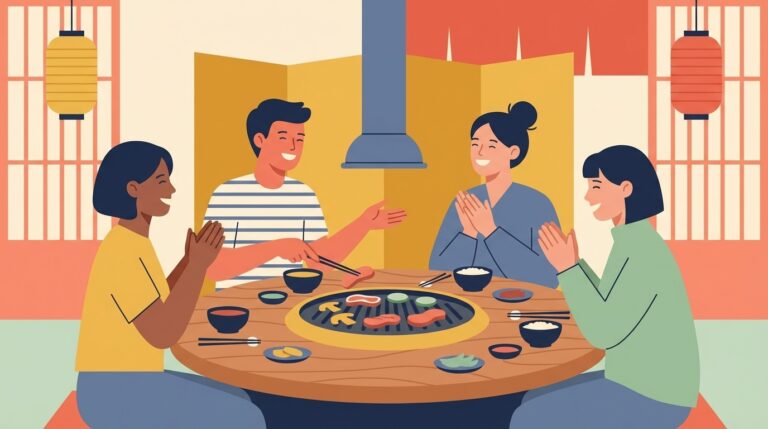
Picture this: You are watching a popular Korean variety show, or maybe you’re at a lively Korean BBQ dinner (hoesik) with locals. There is always that one person. The one who tells the best jokes, does the funniest impressions, and makes the whole table roar with laughter.
You want to point at them and say to your Korean friend, “Wow, they are so funny!”
If you learned Korean from a traditional textbook, you might pause and try to construct a robotic sentence. But in real life, Koreans have quick, expressive, and culturally rich ways to react to a funny person. Knowing these phrases doesn’t just help you describe someone’s personality—it makes you a part of the fun! Let’s dive into the words that will make you sound like a true insider.
Phase 2: Core Expressions Deep Dive
Here are the top 3 ways to describe a funny person in Korean, tailored for A1 beginners.
1. 재미있어요 (Fun / Interesting)
- Pronunciation: jae-mi-i-sseo-yo [Sounds like: “Jamie is-so-yo”]
- Meaning: Literal: “It has fun/interest.” | Real nuance: “They are a fun person” or “This is fun.”
- K-Culture Moment: You’ll hear this all the time in K-Dramas when a character goes on a good blind date. “그 사람 재미있어요” (That person is fun to be around).
- Editor’s Insight: This is your safest, most versatile word. It means someone is entertaining, interesting, or just good company. It’s not just “haha” funny; it’s an overall positive vibe.
- Situation Spectrum:
- Casual (Friends): ✅ (Say: 재미있어! – jaemiisseo!)
- Semi-formal (Co-workers): ✅
- Formal (Boss/Elders): ✅
- 🤔 Think About It: In Korean, the word for “fun” (재미) and “to exist” (있다) combine to mean “interesting.” Why do you think Koreans describe fun as something you “have” rather than something you “are”?
2. 웃겨요 (Funny / Hilarious)
- Pronunciation: ut-gyeo-yo [Sounds like: “oot-gyuh-yo”]
- Meaning: Literal: “To make laugh.” | Real nuance: “Hilarious / Crack me up.”
- K-Culture Moment: When a K-Pop idol does a ridiculous dance on a variety show, the captions will flash “웃겨!” in big, bold letters.
- Editor’s Insight: Use this when someone literally makes you laugh out loud. If jae-mi-i-sseo-yo is a smile, ut-gyeo-yo is a belly laugh.
- Situation Spectrum:
- Casual (Friends): ✅ (Say: 진짜 웃겨! – jinja utgyeo!)
- Semi-formal (Co-workers): ✅
- Formal (Boss/Elders): ⚠️ (Can sound a bit too casual or like you don’t take them seriously.)
- 🤔 Think About It: Is there a difference in your native language between being “fun” and being “funny”?
3. 분위기 메이커예요 (Mood Maker)
- Pronunciation: bun-wi-gi me-i-keo-ye-yo [Sounds like: “boon-wee-gee may-ee-ko-yeh-yo”]
- Meaning: Literal & Real nuance: “They are the mood maker.”
- K-Culture Moment: Every K-Pop group has an official “Mood Maker.” It’s the member who keeps the energy high when everyone is tired from practice.
- Editor’s Insight: This is a Konglish (Korean-English) word! It describes someone whose personality naturally brightens the room.
- Situation Spectrum:
- Casual (Friends): ✅
- Semi-formal (Co-workers): ✅
- Formal (Boss/Elders): ✅
- 🤔 Think About It: Why do Koreans use English loan words (Konglish) for certain social roles?
Phase 3: Textbook vs. Real Korean
Let’s see how native speakers actually talk in the wild.
[Situation 1: Reacting to a friend’s joke]
* 📖 Textbook Korean: 이 사람은 정말 재미있습니다. (This person is very funny.)
* 🗣️ Real Korean: 아 ㅋㅋㅋ 진짜 웃겨! (Ah lol, so hilarious!)
* 💡 Why the difference?: Textbooks teach formal grammar first, but in a fun setting, emotions take over! We drop the formal endings with friends and use “진짜” (really) for emphasis.
[Situation 2: Describing a coworker who keeps morale high]
* 📖 Textbook Korean: 성격이 좋습니다. (Their personality is good.)
* 🗣️ Real Korean: 우리 팀 분위기 메이커예요. (They are our team’s mood maker.)
* 💡 Why the difference?: “Good personality” is too vague. Koreans love specific labels for group dynamics, valuing the person’s impact on the collective mood.
Bottom Note: As an A1 learner, sticking to “진짜 재미있어요” (Really fun) or “완전 웃겨요” (Totally funny) is perfectly polite and natural for daily use!
Phase 4: Cultural Context — K-Culture Deep Dive
4-1. Non-Verbal Communication: The “Clap Laugh”
When describing a funny person, or reacting to them, words are only half the battle. In Korea, if someone is truly ut-gyeo-yo (hilarious), you don’t just laugh—you clap!
Notice this next time you watch a K-Drama or variety show: when a joke lands, Koreans often lean forward, clap their hands enthusiastically, and sometimes lightly pat the arm of the person next to them. It’s a physical way of showing, “You got me, that was a great joke!”
4-2. The “Variety Show” Persona
In K-Pop and K-Media, describing someone’s personality as “funny” is a massive compliment. Historically, idols were supposed to be mysterious and perfect. Today, being the funny one (the 예능캐 – variety character) means you are relatable and charming. This reflects a shift in modern Korean society: humor and approachability are now highly valued traits in both social and professional settings.
Phase 5: Real-Life Roleplay Scenario
Setting: Friday night, 7:00 PM. A smoky Korean BBQ restaurant near Gangnam Station. Green soju bottles line the table. You are sitting with your Korean language exchange partners.
Characters:
– YOU: A beginner Korean learner, visiting Seoul.
– Minho (28): Your Korean language partner. Energetic, loud, and constantly telling funny stories about his day.
Dialogue:
Minho: 그리고 내가 뛰어가다가, 지하철 문에 가방이 딱! 끼인 거야! 🚇
(geurigo naega ttwieogadaga, jihaecheol mune gabangi ttak! kkiin geoya!)
[Translation: And as I was running, my bag got perfectly stuck in the subway doors!]
(🎭 Stage Direction: Minho acts out pulling a stuck bag, making a silly face.)
🔀 Your Turn! How do you react to his funny story?
– A) “재미있습니다.” (jaemiitseumnida.)
– B) (Clapping hands) “아! 진짜 웃겨요!” (Ah! jinjja utgyeoyo!)
– C) “노잼이에요.” (nojaemieyo. – Slang for “Not funny”)✅ Best Choice: B — Why? Clapping your hands and saying “진짜 웃겨요” (It’s really hilarious) with the polite “-yo” ending shows you understood the joke, appreciate his humor, and know Korean body language!
⚠️ Choice A Analysis: This sounds like a robot evaluating a performance. Too stiff!
⚠️ Choice C Analysis: “No-jam” means boring/not funny. It’s a great slang word, but only use it if you want to sarcastically tease a very close friend!
Phase 6: 10-Second Shadowing Drill
Let’s practice speaking! Repeat these sentences out loud, focusing on the emotion and pauses.
- 😊 “민호 씨는 / 정~~~말 / 재미있어요!”
(Minho ssi-neun / jeong~~~mal / jae-mi-i-sseo-yo!)
(Minho is reeeally fun! – Say it with a bright smile) -
😂 “아 ㅋㅋㅋ / 진짜 / 웃겨요!”
(Ah / jin-jja / ut-gyeo-yo!)
(Ah lol / really / hilarious! – Say it while laughing) -
🌟 “완전 / 분위기 / 메이커예요.”
(wan-jeon / bun-wi-gi / me-i-keo-ye-yo.)
(They are a total / mood / maker. – Say it with admiration)
Phase 7: K-Culture Mini Dictionary
| Korean | Romanization | English | Contextual Meaning |
|---|---|---|---|
| 눈치 | nunchi | Nunchi | The Korean superpower of “reading the room.” A funny person usually has good nunchi to know when to joke. |
| 분위기 메이커 | bunwigi meikeo | Mood maker | The person who brightens the atmosphere in a group. |
| 노잼 | nojaem | No jam (Not fun) | Slang combining “No” + “Jaemi” (fun). Used to tease someone for a bad joke. |
| 회식 | hoesik | Company dinner | A team gathering where the “mood maker” usually shines brightest! |
Phase 8: Traveler Survival Kit
Even as a traveler, you’ll meet funny tour guides, friendly guesthouse owners, or taxi drivers who try to joke with you. Here is your survival kit for those moments!
🆘 Survival Phrases for Meeting Locals
– 🇰🇷 “진짜 재미있어요!” (jinjja jaemiisseoyo!)
– 🗣️ Meaning: You/This is really fun!
– 📍 Where to use: Reacting to a tour guide, chatting at a guesthouse.
- 🇰🇷 “한국말 잘 못해요.” (hangungmal jal motaeyo.)
- 🗣️ Meaning: I can’t speak Korean well.
- 📍 Where to use: When the funny person talks too fast because they think you are fluent!
📌 Editor’s Travel Note
– Body Language: If you don’t understand the joke, just smile and do the “clap laugh.” Koreans appreciate the positive reaction!
– Names: Don’t call an older person “You.” Say their title, like “기사님” (gisanim – Driver) or “사장님” (sajangnim – Owner), plus “재미있어요!”
Phase 9: Critical Thinking — “One Step Deeper”
Language & Power: Laughing Respectfully
In English, when everyone is laughing, social hierarchies briefly disappear. But in Korean, grammar never sleeps! Even if your boss tells the funniest joke in the world and you are crying from laughter, you must still attach the polite “~요” (-yo) to the end of your sentence (e.g., “진짜 웃겨요!”). The tone is casual and joyful, but the grammar remains respectful. This shows that in Korea, intimacy and respect can perfectly coexist in the same breath.
💬 Your Turn: Does your language change depending on who tells a joke? Or is laughter the great equalizer? Let us know in the comments!
Phase 10: FAQ & Avoiding Misunderstandings
Q: Can I tell my older boss “웃겨요” (utgyeoyo)?
Maybe, but be careful. While it means “funny,” it can sometimes carry a nuance of “laughable” or “ridiculous” if directed at an elder. It’s much safer to tell an elder “말씀을 재미있게 하세요” (You speak in a fun way) or just stick to “재미있으세요” (You are fun/interesting).
Q: Can I use “노잼” (No-jam) with strangers?
No! “No-jam” is strictly for close friends. Saying it to a stranger who tried to make a joke will instantly ruin the mood (and their feelings!).
❌ Common Mistake #1: Confusing 재미있어요 (fun/funny) with 행복해요 (happy).
✅ Do this instead: If a friend is making you laugh, they are 재미있어요. If your heart is full of joy because you are in Korea, you are 행복해요 (haengbokaeyo).
Phase 11: Summary & Action Items
One-Liner Summary: To call someone funny in Korean, use 재미있어요 (fun/interesting) for their overall vibe, or 웃겨요 (hilarious) for laugh-out-loud moments!
Action Mission:
– 🥉 Bronze: Stand in front of a mirror, do the Korean “clap laugh,” and say “아 진짜 웃겨요!”
– 🥈 Silver: Leave a comment on your favorite K-Pop idol’s funny YouTube video using “완전 분위기 메이커예요!”
– 🥇 Gold: Next time you chat with a Korean friend, wait for them to make a joke and react with “진짜 재미있어요!”
K-Culture Mission: Watch a clip of a Korean variety show (like Running Man or Knowing Bros). Count how many times you hear the word “웃겨” (ut-gyeo) or see the cast clapping while laughing!
Phase 12: Quiz — Interactive Challenge
1. Fill in the Blank:
Your Korean friend Minji just tripped over her own feet and made a funny face. You laugh out loud and say:
“아, 민지 씨 진짜 [ ]!”
* A) 행복해요 (Happy)
* B) 웃겨요 (Hilarious)
* C) 슬퍼요 (Sad)
2. True or False — K-Culture Edition:
In Korea, it is polite to point at someone directly when laughing at their joke.
* A) True
* B) False
3. Situational Judgment:
You are at a K-Pop concert, and the group’s “Mood Maker” tells a joke. What is the most natural way the Korean fans will react?
* A) Sit silently and nod.
* B) Clap their hands, laugh, and yell “웃겨!”
* C) Say “재미있습니다” very formally.
(Answers: 1: B, 2: False – Pointing is generally rude, clapping is better!, 3: B)
Did you enjoy today’s lesson? Who is the ‘Mood Maker’ in your friend group? Share your thoughts below!
Frequently Asked Questions (FAQ)
Q: What does "재미있어요 (Fun / Interesting)" mean in Korean and how do you pronounce it?
A: In Korean, "재미있어요 (Fun / Interesting)" is pronounced [jae-mi-i-sseo-yo [Sounds like: "Jamie is-so-yo"] and means: Literal: "It has fun/interest." | Real nuance: "They are a fun person" or "This is fun."
Q: What does "웃겨요 (Funny / Hilarious)" mean in Korean and how do you pronounce it?
A: In Korean, "웃겨요 (Funny / Hilarious)" is pronounced [ut-gyeo-yo [Sounds like: "oot-gyuh-yo"] and means: Literal: "To make laugh." | Real nuance: "Hilarious / Crack me up."
Q: What does "분위기 메이커예요 (Mood Maker)" mean in Korean and how do you pronounce it?
A: In Korean, "분위기 메이커예요 (Mood Maker)" is pronounced [bun-wi-gi me-i-keo-ye-yo [Sounds like: "boon-wee-gee may-ee-ko-yeh-yo"] and means: Literal & Real nuance: "They are the mood maker."







