

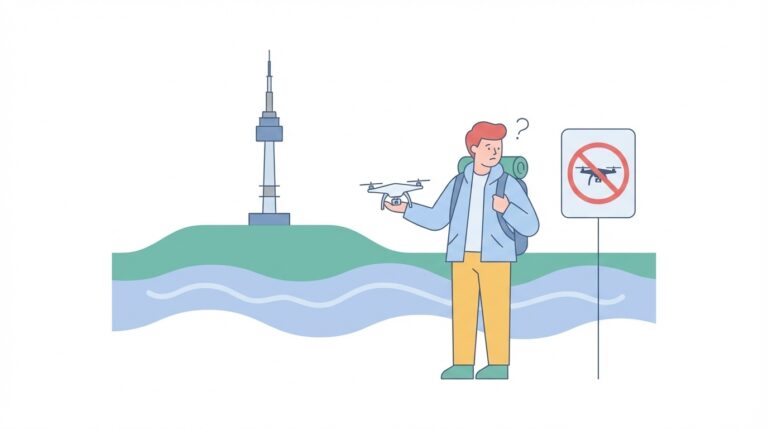
Phase 1: Empathy & The K-Culture Cold Open
Hello! This is your Lead Editor from Daily Hangul.
Imagine this: You’re standing by the beautiful Han River at golden hour. The sunlight is shimmering on the water, and N Seoul Tower stands proudly in the distance. You want to capture that epic, sweeping, cinematic drone shot you’ve seen in countless K-Dramas like Crash Landing on You or Queen of Tears. You power up your drone, the propellers start spinning, and suddenly—a security guard rushes over, waving his hands in an “X” shape, shouting, “안 됩니다! (An doemnida!)”
Your K-Drama moment is ruined, and you’re left wondering what you did wrong.
Here’s the truth: While K-Dramas make Seoul look like a drone-photographer’s paradise, Korea has some of the strictest drone regulations in the world. Knowing how to ask for permission and understanding the rules isn’t just about avoiding a hefty fine (which can be millions of won!); it’s about understanding Korea’s unique geopolitical situation and its strict privacy laws.
Today, we are going to learn the essential B2-level expressions you need to navigate drone photography in Korea like a true insider. Let’s dive in!
Phase 2: Core Expressions Deep Dive
1. 여기 드론 띄워도 돼요?
- Pronunciation: [yeogi deuron tti-wo-do dwae-yo?] (tti-wo sounds like “tee-woah”)
- Meaning: (Lit.) Is it okay to float a drone here? / (Real) Can I fly my drone here?
- K-Culture Moment: You approach a park management office (관리사무소) or a security guard before turning on your device to ensure you’re in the clear.
- Editor’s Insight: Notice we use 띄우다 (to float/launch) rather than 날리다 (to fly). In Korean, you “float” a ship or a drone. Also, the grammatical structure
~아/어도 되다is the most natural way to ask for permission. It literally means “Even if I do X, is it okay?”—which inherently shows politeness and deference to the rules. - Situation Spectrum:
- Friends/Casual: ✅ (Drop the ‘요’: 드론 띄워도 돼?)
- Park Staff/Strangers (Semi-formal): ✅
- Police/Government (Formal): ⚠️ (Better to use: 드론을 띄워도 되겠습니까?)
- 🤔 Think About It: Why do Koreans prefer asking “Is it okay even if I…” instead of a direct “Can I…?” How does this reflect the Korean cultural emphasis on social harmony over individual rights?
2. 비행 금지 구역입니다.
- Pronunciation: [bihaeng geumji guyeogimnida.] (geumji sounds like the ‘gum’ in chewing gum + ‘jee’)
- Meaning: It is a no-fly zone.
- K-Culture Moment: The automated voice on your Korean drone app, or the strict response from a police officer near the Blue House or Yongsan.
- Editor’s Insight: 금지 (Geumji) means “prohibited.” You will see this word everywhere in Korea—주차 금지 (No Parking), 흡연 금지 (No Smoking), 촬영 금지 (No Filming). If you hear “geumji,” stop whatever you are doing immediately.
- Situation Spectrum:
- Friends/Casual: 🚫 (Friends wouldn’t talk like a legal document)
- Park Staff/Strangers (Semi-formal): ✅
- Signs/Announcements (Formal): ✅
- 🤔 Think About It: Seoul is packed with “Geumji” zones. Knowing that Seoul is only about 50km from the North Korean border, how does this change your perspective on these strict regulations?
3. 초상권 침해
- Pronunciation: [chosang-gwon chimhae] (cho-sang-gwon sounds like “cho-sang-gwun”)
- Meaning: Invasion of portrait rights.
- K-Culture Moment: You post a vlog on Instagram or YouTube, and a Korean person messages you angrily because their face is visible in the background of your drone footage.
- Editor’s Insight: 초상권 (Portrait Rights) is a massive deal in Korea. Unlike in some Western countries where recording in a public space is generally free game, in Korea, publishing someone’s face without permission can lead to civil lawsuits. This is why on Korean TV shows, the faces of random pedestrians are heavily blurred.
- Situation Spectrum:
- Friends/Casual: ✅ (Used playfully: “Hey, don’t upload that, protect my chosang-gwon!”)
- Semi-formal/Formal: ✅ (Legal terminology)
- 🤔 Think About It: How does the concept of “Chosang-gwon” reflect the high value Koreans place on personal reputation and privacy in a hyper-connected society?
Phase 3: Textbook vs. Real Korean
[Situation 1: Asking to use your drone]
* 📖 Textbook: 드론을 조종할 수 있습니까? (Can I operate a drone?)
* 🗣️ Real Korean: 여기 드론 띄워도 돼요? (Can I fly/float a drone here?)
* 💡 Why the difference?: “조종하다” (operate/pilot) sounds like you are flying a Boeing 747. For consumer drones, Koreans use “띄우다” (float) or “날리다” (fly) for a more natural, everyday feel.
[Situation 2: When you are caught flying in a restricted area]
* 📖 Textbook: 죄송합니다. 규정을 몰랐습니다. (I am sorry. I did not know the regulations.)
* 🗣️ Real Korean: 아, 죄송합니다! 바로 내릴게요. (Ah, I’m sorry! I will bring it down right away.)
* 💡 Why the difference?: Actions speak louder than legal excuses. Acknowledging the mistake and immediately offering the solution (bringing the drone down) is the Korean way to de-escalate.
Bottom Note: For B2 learners, focusing on action verbs like “내리다” (to bring down/land) instead of just apologizing makes you sound incredibly fluent and situationally aware.
Phase 4: Cultural Context — K-Culture Deep Dive
4-1. The Non-Verbal Nunchi (눈치)
When confronted by a security guard or a local official about your drone, your Nunchi (the subtle art of reading the room) must activate.
* Do not argue back loudly. Public confrontation causes people to “lose face” (체면).
* A slight bow of the head and a quick “아, 몰랐습니다. 죄송합니다” (Ah, I didn’t know. I’m sorry) will magically defuse 90% of situations.
4-2. K-Travel & Geopolitical Reality
Why is Seoul so strict? It’s not just to annoy content creators. South Korea is technically still in a state of ceasefire. Key areas in Seoul, especially around government buildings, military bases (which are often hidden on mountainsides), and the Han River, are highly sensitive.
K-Dramas often use special commercial permits and heavy CGI to get those sweeping Seoul cityscapes. Don’t be fooled by the media—always check the “Ready to Fly” app (the official drone map in Korea) before turning your controller on.
Phase 5: Real-Life Roleplay Scenario
Setting: Friday afternoon, 5:30 PM. You are at Yeouido Hangang Park with your Korean friend, Minji. The sunset is gorgeous. You want to get a quick drone shot for your Instagram Reels.
Characters:
* YOU: An intermediate Korean learner and photography enthusiast.
* Minji (28): Your Korean friend, local Seoulite, always cautious but supportive.
* 경비원 (Security Guard, 50s): Wearing a neon vest, holding a glowing baton.
Dialogue:
YOU: 와, 노을 진짜 예쁘다. 인스타용으로 드론 한번 띄울까? 🌅
(Wa, noeul jinjja yeppeuda. Inseutayong-euro deuron hambeon ttiulkka?)
[Wow, the sunset is so pretty. Should I fly the drone once for Instagram?]
Minji: 어? 여기 비행 금지 구역 아닐걸? 그래도 혹시 모르니까 저기 관리인 아저씨한테 물어봐.
(Eo? Yeogi bihaeng geumji guyeok anilgeol? Geuraedo hoksi moreunikka jeogi gwalliin ajeossihante mureoba.)
[Huh? I don’t think it’s a no-fly zone here. But just in case, ask the management guy over there.]
(🎭 Stage Direction: You walk up to the security guard who is patrolling the bike lane.)
YOU: 아저씨, 안녕하세요! 혹시 여기 드론 띄워도 돼요?
(Ajeossi, annyeonghaseyo! Hoksi yeogi deuron ttiwodo dwaeyo?)
[Excuse me sir, hello! By any chance, can I fly a drone here?]
경비원: 드론이요? 어디 봅시다… 아, 여긴 허가 없으면 안 돼요. 다리 근처라서 위험해요.
(Deuron-iyo? Eodi bopsida… A, yeogin heoga eopseumyeon an dwaeyo. Dari geuncheoraseo wiheomhaeyo.)
[A drone? Let’s see… Ah, it’s not allowed here without permission. It’s dangerous because it’s near the bridge.]
YOU: 아, 정말요? 촬영 허가는 어디서 받아요?
(A, jeongmallyo? Chwaryeong heoganeun eodiseo badayo?)
[Ah, really? Where do I get filming permission?]
경비원: 인터넷에 ‘드론원스탑’ 들어가서 신청해야 해요. 최소 일주일은 걸릴걸요?
(Inteonese ‘deuron-wonseutap’ deureogaseo sincheonghaeya haeyo. Choeso iljuireun geollilgeollyo?)
[You have to go on the internet to ‘Drone One-Stop’ and apply. It’ll probably take at least a week.]
🔀 Your Turn! How do you reply?
* A) “에이, 잠깐만 띄우면 안 돼요?” (Come on, can’t I just fly it for a second?)
* B) “아, 그렇군요. 알겠습니다. 수고하세요!” (Ah, I see. Understood. Keep up the good work!)
* C) “왜 안 돼요? 법이 이상하네요.” (Why not? The law is weird.)✅ Best Choice: B — Acknowledging the rule politely and thanking them for their hard work (“수고하세요”) is the ultimate Korean flex. It leaves a great impression.
⚠️ Choice A & C Analysis: Arguing (C) or pleading (A) with a Korean security guard is a massive cultural faux pas. Rules are rules in Korean public spaces.
Phase 6: 10-Second Shadowing Drill
Practice your flow, intonation, and emotional delivery! Read aloud following the slashes for pauses.
- 🥺 Asking politely: 혹시 / 여기서 / 드론 띄워도 / 돼요?
(Hoksi / yeogiseo / deuron tti-wo-do / dwae-yo?) - 😢 Apologizing: 아, / 죄송합니다! / 지금 바로 / 내릴게요.
(A, / joesonghamnida! / jigeum baro / naerilgeyo.) - 😤 Firm statement: 타인의 / 얼굴이 나오면 / 초상권 침해입니다.
(Tainui / eolguri naomyeon / chosang-gwon chimhae-imnida.)
Phase 7: K-Culture Mini Dictionary
| 한국어 | Romanization | English | Context / Meaning |
|---|---|---|---|
| 드론원스탑 | deuron-wonseutap | Drone One-Stop | The official Korean government portal where you MUST apply for flight and filming permits. |
| 초상권 | chosang-gwon | Portrait Rights | The legal right to control the commercial/public use of one’s face. Crucial for street photography. |
| 인생샷 | insaeng-syat | Shot of a lifetime | A slang word for a perfect, Instagram-worthy photo. (인생 = life, 샷 = shot) |
| 눈치 | nunchi | Social awareness | The ability to read the room. e.g., Not flying a drone when people are having a quiet picnic. |
Phase 8: Traveler Survival Kit
Flying a drone in Korea? Keep these phrases in your back pocket.
🆘 Survival Phrases for Content Creators
* 🇰🇷 “제 얼굴은 모자이크 처리해 주세요.” (Je eolgureun mojaikeu cheorihae juseyo.)
* 🗣️ English: Please blur my face (mosaic).
* 📍 Where to use: If someone is filming a vlog and you don’t want to be in it.
- 🇰🇷 “여기 비행 가능 구역인가요?” (Yeogi bihaeng ganeung guyeogingayo?)
- 🗣️ English: Is this a flyable zone?
- 📍 Where to use: Asking tourist info centers before flying.
📌 Editor’s Travel Note: Apps You Need
* Ready to Fly (레디투플라이): The holy grail app for drone pilots in Korea. It shows you the map of no-fly zones in real-time.
* Drone One-Stop (드론원스탑): The website to get permits. Yes, you need both a flight permit and a filming permit (from the Ministry of Defense) if you are in a restricted area!
Phase 9: Critical Thinking Corner — “A Step Deeper”
🧠 Think Deeper: Media vs. Reality
If you watch a modern K-Drama, you’d think Seoul is a futuristic playground where drones weave between skyscrapers effortlessly. But the reality is the opposite. Because technically, the Korean War never officially ended (it’s an armistice), airspace security is a matter of national defense. A small drone could be a security threat to government facilities hidden across the capital. This creates a fascinating paradox: the Korean media heavily utilizes cutting-edge drone technology to export a glamorous image of Seoul globally, while locally, strict laws prevent everyday citizens from doing the same. It’s a perfect example of how media creates an idealized version of a country that differs sharply from the lived reality of its residents.
💬 Your Turn: Have you ever experienced a “culture shock” where the country you visited was entirely different from how it was portrayed in movies or TV shows? Share your experience in the comments!
Phase 10: FAQ & Avoiding Mistakes
Q1. I have a tiny drone (under 250g) like a DJI Mini. Do I still need permission?
A: Yes! While weight classes matter for licenses, in highly restricted airspace like most of Seoul, the “under 250g” rule does not exempt you. If it has a camera and flies in a restricted zone, you need permission.
Q2. Can I fly it if I promise not to record anything?
A: No. The act of flying (비행) and the act of filming (촬영) require separate permissions in Korea. Even just flying without recording is illegal in a no-fly zone.
❌ Common Mistake #1: Arguing that “There are no signs here!”
✅ Do this instead: In Korea, ignorance of the no-fly map is not an excuse. Say “바로 내리겠습니다” (I will land it immediately) and pack it up.❌ Common Mistake #2: Assuming open parks (like the Han River) are free zones.
✅ Do this instead: Look for specific “드론 공원” (Drone Parks) like the Gwangnaru Hangang Drone Park, which is one of the few places in Seoul specifically designated for free drone flying.
Phase 11: Summary & Action Items
✨ One-Liner Summary: Drone flying in Korea requires navigating strict security laws and “Nunchi” regarding privacy—always ask “여기 드론 띄워도 돼요?” before you fly!
🎬 Action Missions:
* 🥉 Bronze (Solo): Stand in front of your mirror and practice the apology: “아, 죄송합니다! 바로 내릴게요.” with a slight bow.
* 🥈 Silver (Online): Download the Korean app “Ready to Fly” and search for Namsan Tower. See what color the airspace is!
* 🥇 Gold (Real Life): Next time you want to take a photo in a cafe or public space in Korea, ask the staff: “여기서 사진 촬영해도 돼요?” (Is it okay to take photos here?) to practice asking for permission.
📸 K-Culture Mission: Watch an episode of a Korean variety show or vlog. Notice how pedestrian faces and license plates are meticulously blurred out. That’s Chosang-gwon (portrait rights) in action!
Let’s chat: Where is your dream location in Korea to take photos or videos? Let me know below!
Phase 12: Interactive Quiz
1. Situational Judgment: A park ranger runs up to you while you’re flying a drone and yells, “비행 금지 구역입니다!” What is the most culturally appropriate B2-level response?
* A) “왜요? 다른 사람들도 하던데요.” (Why? Other people were doing it.)
* B) “아, 죄송합니다! 바로 내릴게요.”
* C) “드론원스탑에서 예약할게요.”
2. Fill in the Blank:
To ask if you can fly a drone naturally, you should say: “여기 드론 _______ 돼요?”
* A) 날아도 (nal-a-do)
* B) 띄워도 (tti-wo-do)
* C) 운전해도 (un-jeon-hae-do)
3. True or False – K-Culture Edition:
If you are filming a street vlog in Hongdae and capture someone’s face clearly without permission, you could theoretically be sued for invading their 초상권 (portrait rights).
* True / False
(Check your answers by highlighting the blank space below!)
Answers: 1. B (Never argue, apologize and land it.), 2. B (띄우다 is the natural verb for floating/launching a drone.), 3. True (Koreans take portrait rights very seriously!)
Frequently Asked Questions (FAQ)
Q: What does "여기 드론 띄워도 돼요?" mean in Korean and how do you pronounce it?
A: In Korean, "여기 드론 띄워도 돼요?" is pronounced [yeogi deuron tti-wo-do dwae-yo?] and means: (Lit.) Is it okay to float a drone here? / (Real) Can I fly my drone here?
Q: What does "비행 금지 구역입니다." mean in Korean and how do you pronounce it?
A: In Korean, "비행 금지 구역입니다." is pronounced [bihaeng geumji guyeogimnida.] and means: It is a no-fly zone.
Q: What does "초상권 침해" mean in Korean and how do you pronounce it?
A: In Korean, "초상권 침해" is pronounced [chosang-gwon chimhae] and means: Invasion of portrait rights.







