

Hello, fellow Korean learners! This is your Lead Editor from Daily Hangul.
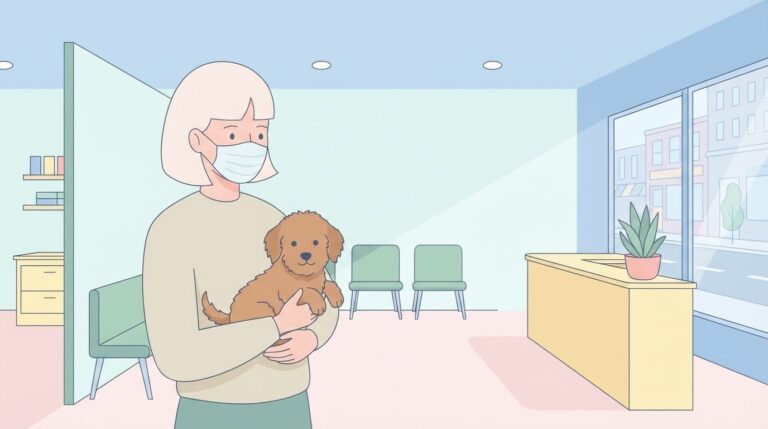
Imagine this: You’re living in Korea, and it’s time for your furry best friend’s annual shots. You walk into a spotless, brightly lit animal clinic in Seoul. Soft K-Pop is playing in the background, and there’s a dog casually rolling by in a luxury pet stroller (yes, that’s a thing here!). The receptionist smiles at you and asks a question in rapid-fire Korean. Your heart drops. You know the word for ‘dog’ (개), but how do you say ‘vaccination’?
Taking your pet to the vet (동물병원 – dongmul byeongwon) can be incredibly stressful in a foreign country. But don’t worry! Today, I’m going to teach you the exact phrases you need to sound like a caring, local ‘pet parent.’ Knowing these will not only get your pet the right care but also earn you a warm smile from the Korean vet staff. Let’s dive in!
Phase 2: Deep Dive into Key Expressions
Here are the top three expressions you absolutely need at a Korean veterinary clinic.
1. 예방 접종 하러 왔어요.
- Pronunciation: yebang jeopjong ha-reo wasseoyo. (Yeah-bang jup-jong ha-ruh wah-ssuh-yo)
- Meaning: I came for a vaccination. (Literal: To do a preventative inoculation, I came.)
- K-Culture Moment: This is the magic phrase to use at the front desk. You’ll often see Korean pet owners holding their pets like precious babies while saying this to the nurse with a worried expression.
- Editor’s Insight: ‘예방 접종’ (vaccination) sounds like a tough medical term, but it’s used by everyone. The grammar pattern ‘~(으)러 왔어요’ (came in order to do ~) is a B1 essential for explaining your purpose!
- Situation Spectrum:
- Close friends (Casual): 🚫 (You wouldn’t say this to a friend unless you add ‘내 강아지’ (my dog))
- Vet Staff (Semi-formal/Formal): ✅
- 🤔 Think About It: In Korean, we say “I came to do a vaccination” rather than “My dog needs a shot.” What does this action-oriented phrasing tell you about the Korean communication style?
2. 오늘 목욕시켜도 되나요?
- Pronunciation: oneul mogyok-sikyeodo doenayo? (Oh-neul mo-gyok-shee-kyuh-doh dweh-nah-yo?)
- Meaning: Can I bathe them today?
- K-Culture Moment: After a shot, Korean vets are highly attentive to aftercare. They will give you a list of ‘don’ts.’ This is the #1 question pet parents ask to ensure their ‘baby’ doesn’t catch a cold or get an infection.
- Editor’s Insight: Pay attention to ‘시켜도’ (to make/let them do). You don’t take a bath yourself; you give the pet a bath. Using the ‘-아/어도 되다’ (Is it okay if…?) grammar makes you sound incredibly natural.
- Situation Spectrum:
- Vet Staff (Semi-formal): ✅
- Vet Doctor (Formal): ✅
- 🤔 Think About It: Koreans are very cautious about temperature changes after medical procedures (even for humans!). Does your culture have similar strict rules after getting a vaccine?
3. 우리 애기 많이 아팠어요?
- Pronunciation: uri aegi mani apasseoyo? (Ooh-ree ae-gee mah-nee ah-pah-ssuh-yo?)
- Meaning: Did our baby hurt a lot? (Did the shot hurt them?)
- K-Culture Moment: The nurse brings your dog out from the treatment room. A Korean owner will immediately rush over, use a high-pitched voice, and ask this question while petting them.
- Editor’s Insight: Notice the word 애기 (baby). In Korea, pets are absolutely considered family. Calling your dog ‘개’ (dog) at the vet sounds very cold. We call them ‘우리 애기’ (our baby) or ‘강아지’ (puppy), regardless of their age.
- Situation Spectrum:
- Speaking to your pet/vet staff (Affectionate): ✅
- Speaking in a serious medical context: ⚠️ (Use the pet’s actual name instead)
Phase 3: Textbook vs. Real Korean
| Situation | 📖 Textbook Korean | 🗣️ Real Korean | 💡 Why the difference? |
|---|---|---|---|
| Checking in | 저는 개의 백신을 원합니다. (I want a dog’s vaccine.) | 예방 접종 하러 왔어요. (I came for a vaccination.) | Textbooks translate directly from English; locals focus on the purpose of the visit. |
| Talking about your pet | 제 개는 아픕니다. (My dog is sick.) | 우리 애기가 좀 아파서요. (Our baby is a bit sick.) | ‘우리 애기’ (our baby) reflects the deep emotional bond and ‘Pet-fam’ culture. |
| Asking about side effects | 부작용이 있습니까? (Are there side effects?) | 오늘 조심해야 할 거 있어요? (Is there anything to be careful of today?) | Using ‘조심하다’ (to be careful) sounds much softer and more natural than strict medical terms. |
Bottom Note: Stick to the “Real Korean” phrases. Using textbook phrases at the vet might make you sound like a robot in a place that requires a lot of empathy!
Phase 4: Cultural Context — K-Culture Deep Dive
4-1. Non-verbal Communication: The “Concerned Parent” Look
When taking your pet to the vet in Korea, your body language should show care. Hand over the leash or carrier gently with two hands. It’s also common to use Nunchi (눈치)—if the waiting room is crowded with other nervous pets, keep yours close to you or on your lap, not wandering around.
4-2. The “Pet-fam” (펫팸족) Phenomenon in K-Society
If you walk around any nice park in Seoul or watch recent K-Dramas, you’ll notice something fascinating: Pet Strollers (개모차 – Gaemocha).
Because Korea has one of the lowest birth rates in the world, many young Koreans are choosing to raise pets instead of having children. They call themselves the Pet-fam (Pet + Family).
Because of this, Korean veterinary clinics are often designed to look like high-end human pediatric clinics. The language used by the vets is extremely polite, empathetic, and gentle, just like a doctor talking to a mother about her newborn child.
Phase 5: Real-Life Roleplay Scenario
Setting: A bright, pristine animal clinic in Gangnam, Seoul. It’s Saturday morning. You are holding your dog, Max, in your arms.
Characters:
– YOU: An expat living in Seoul, trying your best to take care of Max.
– Nurse Minji: A friendly Korean vet nurse in cute scrubs.
Minji: 안녕하세요! 오늘 어떻게 오셨어요?
(Annyeonghaseyo! oneul eotteoke osyeosseoyo?)
[Hello! What brings you in today?]
YOU: 안녕하세요. 맥스 예방 접종 하러 왔어요.
(Annyeonghaseyo. Maekseu yebang jeopjong ha-reo wasseoyo.)
[Hello. I came for Max’s vaccination.]
Minji: 아, 네! 맥스 보호자님 맞으시죠? 잠시 대기석에 앉아 계시면 이름 불러드릴게요.
(A, ne! Maekseu bohojanim majeushijyo? jamshi daegiseoge anja gyeshimyeon ireum bulleo-deurilgeyo.)
[Ah, yes! You are Max’s guardian, right? If you sit in the waiting area, I’ll call your name.]
(🎭 Stage Direction: 15 minutes later, Max gets his shot and Minji brings him back to you.)
Minji: 맥스 주사 아주 잘 맞았어요! 오늘 하루는 무리하게 산책하지 마시고요.
(Maekseu jusa aju jal majasseoyo! oneul haruneun murihage sanchaekaji mashigoyo.)
[Max took the shot very well! Please don’t take him on a strenuous walk today.]
🔀 Your Turn! How do you respond?
– A) “알겠습니다. 오늘 목욕시켜도 되나요?”
– B) “왜 안 돼요?”
– C) “대박! 맥스 짱!”✅ Best Choice: A — “Understood. Can I bathe him today?” This shows you listened to her warning and logically followed up with another essential aftercare question.
⚠️ Choice B Analysis: “Why not?” (wae an dwaeyo?) sounds a bit aggressive or challenging to a medical professional.
⚠️ Choice C Analysis: “Awesome! Max is the best!” is funny, but ignores the nurse’s medical advice.
YOU: 알겠습니다. 그럼 오늘 목욕시켜도 되나요?
(Algetseumnida. Geureom oneul mogyoksikyeodo doenayo?)
[Understood. Then, can I bathe him today?]
Minji: 아니요, 오늘은 피해주시고, 내일 저녁부터 가능합니다!
(Aniyo, oneureun pihae-jusigo, naeil jeonyeokbuteo ganeunghamnida!)
[No, please avoid it today. It’s possible starting tomorrow evening!]
YOU: 네, 감사합니다. 우리 애기 고생했어~
(Ne, gamsahamnida. Uri aegi gosaenghaesseo~)
[Yes, thank you. You worked hard, our baby~]
Phase 6: 10-Second Shadowing Drill
Practice this until it flows naturally. Pay attention to the pauses (/) and the emotion!
🥺 선생님 / 우리 애기 / 오늘 / 목욕시켜도 / 되나요?
(seonsaengnim / uri aegi / oneul / mogyok-sikyeodo / doenayo?)
Phase 7: K-Culture Mini Dictionary
| Korean | Romanization | English | Cultural Context |
|---|---|---|---|
| 보호자 | bohoja | Guardian | Vets won’t call you ‘owner’ (주인). They call you ‘guardian’ (보호자) out of respect. |
| 댕댕이 | daengdaengi | Doggo / Puppy | A popular internet slang for dogs. The letters 댕 look like 멍 (the sound a dog makes). |
| 냥이 | nyangi | Kitty | Cute slang for a cat (고양이). |
| 개모차 | gaemocha | Dog Stroller | A portmanteau of 개 (dog) and 유모차 (baby stroller). Very common in Korea! |
| 펫팸족 | petpaemjok | Pet-fam | People who treat their pets as actual family members. |
Phase 8: Traveler Survival Kit
Even if you aren’t living in Korea, you will definitely encounter cute pets while traveling around Seoul or visiting a Dog/Cat Cafe!
🆘 Survival Expressions for Pet Lovers
– 🇰🇷 “만져봐도 돼요?” (manjyeobwado dwaeyo?)
– 🗣️ Pronunciation: [Mahn-jyuh-bwah-doh dweh-yo?]
– 📍 Where to use: Parks, cafes, on the street when you see a cute dog.
– 💡 Pro Tip: In Korea, it is considered very rude to touch someone’s dog without asking first. Always ask “만져봐도 돼요?” (Can I touch/pet them?). If the owner says “네” (yes), approach slowly!
📌 Editor’s Travel Note:
– Pet Cafes: Korea has amazing pet cafes (raccoons, meerkats, dogs, cats!). You usually have to buy a drink as an entrance fee.
– Public Transport: Pets are allowed on subways and buses only if they are fully enclosed in a pet carrier.
Phase 9: Critical Thinking Corner — “Going Deeper”
Language & Power: The Rise of the “Guardian” (보호자)
🧠 Think Deeper:
In the past, Koreans referred to themselves as the “owner” (주인 – ju-in) of a pet. But today, if you go to a Korean vet, they will exclusively call you the “guardian” (보호자 – bohoja). For example, “맥스 보호자님!” (Max’s guardian!). This shift in language perfectly mirrors the shift in societal values. A pet is no longer property; it is a dependent that requires protection, love, and guardianship. Language shapes our reality, and by changing the vocabulary, Korean society has elevated the status of animals.💬 Your Turn:
What do you call yourself in relation to your pet in your home country? “Owner,” “Mom/Dad,” or something else? Let us know in the comments!
Phase 10: FAQ & Avoiding Misunderstandings
- Q: Can I use “애기” (baby) even if my dog is 15 years old?
- A: YES! In Korea, your pet is always your ‘애기’ no matter how gray their muzzle is.
- Q: Do I need to make an appointment for a vet in Korea?
- A: Usually, yes. While walk-ins are accepted for emergencies, it’s best to call ahead and say, “오늘 예약 되나요?” (Can I make a reservation for today?).
❌ Common Mistake #1: Asking “얼마예요?” (How much is it?) immediately before the vet examines the pet.
✅ Do this instead: Let the vet examine the pet and explain the treatment plan first. Vet care in Korea is generally very affordable compared to Western countries, and they usually give you an itemized estimate before doing anything expensive.
Phase 11: Summary & Action Items
One-Liner Summary: When taking your pet to a Korean vet, use empathetic language like “우리 애기” (our baby) and clearly state your purpose with “예방 접종 하러 왔어요” (I came for a vaccination).
Your Action Missions:
– 🥉 Bronze: Say “예방 접종 하러 왔어요” out loud 3 times right now.
– 🥈 Silver: Leave a comment below telling us what kind of pet you have using Korean! (e.g., 저는 강아지가 있어요 – I have a dog).
– 🥇 Gold: Next time you pass by a vet clinic in Korea, look at the signs on the window and try to spot the word 예방접종!
K-Culture Mission:
Go to YouTube and search “강아지 예방접종 브이로그” (Puppy vaccination vlog). Watch a Korean pet vlog and listen carefully—I guarantee you will hear the exact phrases we learned today!
Phase 12: Quiz — Interactive Challenge
1. Situational Judgment: The vet just finished giving your cat a vaccine. What is the most culturally appropriate and responsible question to ask?
– A) “고양이 밥 주세요.” (Give the cat food.)
– B) “오늘 목욕시켜도 되나요?” (Can I bathe them today?)
– C) “이제 집에 가요?” (Are we going home now?)
2. True or False — K-Culture Edition:
It is perfectly acceptable to pet a stranger’s dog on the streets of Seoul without asking, as long as the dog looks friendly. (T/F)
3. Fill in the Blank:
You walk up to the vet reception desk. “안녕하세요, ________________ 왔어요.” (Hello, I came for a vaccination.)
(Answers below!)
Click here for Answers
1. B (Always ask about aftercare like bathing!)
2. False (Always ask “만져봐도 돼요?” first. Unsolicited petting is frowned upon.)
3. 예방 접종 하러 (yebang jeopjong ha-reo)
Did you find this helpful? Share your pet stories in the comments below! See you in the next lesson! 🐾
Frequently Asked Questions (FAQ)
Q: What does "예방 접종 하러 왔어요." mean in Korean and how do you pronounce it?
A: In Korean, "예방 접종 하러 왔어요." is pronounced [yebang jeopjong ha-reo wasseoyo. (Yeah-bang jup-jong ha-ruh wah-ssuh-yo] and means: I came for a vaccination. (Literal: To do a preventative inoculation, I came.)
Q: What does "오늘 목욕시켜도 되나요?" mean in Korean and how do you pronounce it?
A: In Korean, "오늘 목욕시켜도 되나요?" is pronounced [oneul mogyok-sikyeodo doenayo? (Oh-neul mo-gyok-shee-kyuh-doh dweh-nah-yo?] and means: Can I bathe them today?
Q: What does "우리 애기 많이 아팠어요?" mean in Korean and how do you pronounce it?
A: In Korean, "우리 애기 많이 아팠어요?" is pronounced [uri aegi mani apasseoyo? (Ooh-ree ae-gee mah-nee ah-pah-ssuh-yo?] and means: Did our baby hurt a lot? (Did the shot hurt them?)







