

Phase 1: Empathy (Immersion into K-Culture)
Hello there! This is your Lead Editor at Daily Hangul.
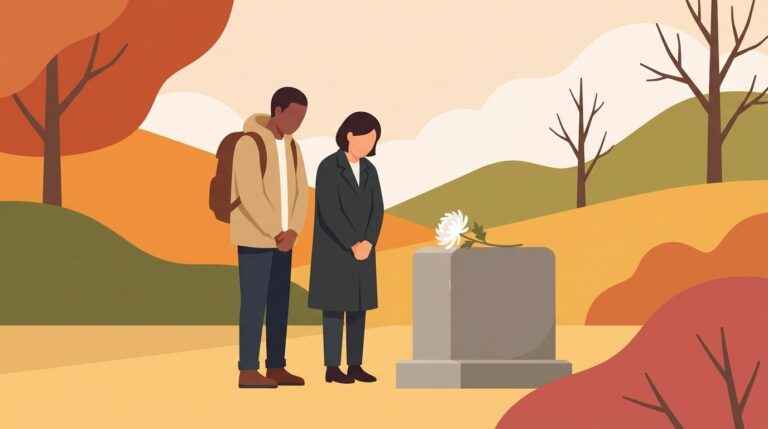
Imagine this: You are watching a popular historical K-Drama like Mr. Sunshine or Youth of May. The main character stands in front of a grave or a monument. They place a single white chrysanthemum down, close their eyes, and bow their head in complete silence. Fast forward to real life—you are traveling in Seoul, visiting the awe-inspiring War Memorial of Korea or the Seodaemun Prison History Hall. Suddenly, a guide says a phrase, and everyone around you stops, bows their heads, and closes their eyes.
If you don’t know what’s going on, you might accidentally start taking photos, talking loudly, or just standing there feeling completely out of place.
Don’t worry! As your Korean friend and tutor, I’ve seen many travelers feel overwhelmed by the solemn atmosphere at Korea’s historical sites (역사 유적지). Today, we are going to learn how to navigate these respectful moments like a true local. By the end of this guide, you won’t just understand the words—you’ll understand the deep cultural heartbeat of Korea.
Phase 2: Deep Dive into Core Expressions
Let’s look at the most important phrases you’ll hear and use when paying respects.
1. 묵념 (Moment of Silence)
- Pronunciation: [mung-nyeom]
- Sound-alike guide: ‘moong’ (like moon but ending in ng) + ‘nyum’ (like yum with an n in front).
- Meaning: Literal: Silent thought. / Real nuance: A moment of silence to honor the deceased.
- K-Culture Moment: Every year on June 6th (Memorial Day in Korea), a siren rings across the entire country at 10:00 AM. Cars stop, pedestrians halt, and the whole nation does a 1-minute mungnyeom. You’ll also see this in K-Dramas when detectives honor a fallen colleague.
- Editor’s Insight: This isn’t just “being quiet.” It’s an active verb in Korean culture. People will say “묵념하겠습니다” (We will now observe a moment of silence). It’s a heavy, respectful word.
- Situation Spectrum:
- Casual with friends: 🚫 (Too heavy for daily chats)
- Formal ceremonies: ✅
- Historical sites/Memorials: ✅
- 🤔 Think About It: Why does Korea have a nationwide siren for a moment of silence? How does your country honor its history collectively?
2. 잊지 않겠습니다 (I will not forget)
- Pronunciation: [it-ji an-get-sseum-ni-da]
- Sound-alike guide: ‘Eet-jee’ + ‘ahn-get-soom-nee-da’ (‘으’ sounds like the disgusted sound you make when stepping in gum, so ‘sseum’ sounds like ‘soom’ but with that flat ‘eu’ sound).
- Meaning: Literal: I will not forget. / Real nuance: I will honor your memory forever.
- K-Culture Moment: If you visit a memorial site in Korea, you will see walls covered in yellow ribbons or sticky notes. 90% of them end with this exact phrase: 잊지 않겠습니다.
- Editor’s Insight: This phrase carries the weight of Korean history. It is a promise to the past generations that their sacrifices built the modern Korea we enjoy today.
- Situation Spectrum:
- Casual (about forgetting keys): 🚫 (Too dramatic!)
- Writing a note at a memorial: ✅
- Showing respect to a veteran: ✅
- 🤔 Think About It: In English, we say “Rest in peace.” In Korean, the focus is often on “I will remember you.” Why do you think memory is so crucial in Korean culture?
Phase 3: Textbook vs. Real Korean
| Situation | 📖 Textbook Korean | 🗣️ Real Korean | 💡 Why the difference? |
|---|---|---|---|
| Writing a memorial note | 고인의 명복을 빕니다 (May their souls rest in peace) | 잊지 않을게요 (I won’t forget) | The textbook phrase is very formal (used in news or funerals). “잊지 않을게요” feels more personal and emotional. |
| Asking someone to be quiet | 정숙해 주십시오 (Please keep quiet) | 저기요, 조금만 조용히 해주세요 (Excuse me, please be a little quiet) | “정숙” is a formal written word you see on signs. Spoken Korean uses softer, indirect requests to maintain harmony. |
Bottom Note for A2 Learners: If you want to leave a nice note at a historical site, simply writing “감사합니다. 기억할게요.” (Thank you. I will remember.) is perfectly natural and deeply appreciated!
Phase 4: Cultural Context — K-Culture Deep Dive
4-1. Non-verbal Elements (Nunchi at Memorials)
When participating in mungnyeom (묵념), your body language speaks louder than words. Use your nunchi (눈치 – the ability to read the room).
– Stand up straight.
– Clasp your hands quietly in front of you (usually the right hand over the left).
– Bow your head slightly (about 15-30 degrees) and close your eyes.
– Never take selfies with a ‘V-sign’ right in front of a memorial plaque. It’s considered highly disrespectful.
4-2. K-Travel Connection: Finding the Balance
Korea is a vibrant, loud, and fast-paced country. But its historical sites—like the Seodaemun Prison History Hall or the War Memorial of Korea—are pockets of deep reflection. Tourists often get caught up in the excitement of traveling and forget to shift their energy. When you enter a space marked ‘추모관’ (Memorial Hall), you’ll notice Koreans naturally lower their voices. This is the perfect place to practice respectful observation.
Phase 5: Real-life Roleplay Scenario
Scenario A: The Nationwide Siren
- Setting: June 6th (Memorial Day), 10:00 AM. You are walking near Gwanghwamun Square with your Korean friend, Minji. Suddenly, a loud, deep siren starts echoing across the entire city. Cars stop.
- Characters:
- YOU: A traveler exploring Seoul.
- Minji (28): Your local friend, usually very bubbly, but suddenly looking very serious.
Minji: 어? 10시 정각이네. 묵념하자.
(eo? yeol-si jeong-gagi-ne. mung-nyeom-ha-ja.)
[Oh? It’s exactly 10 o’clock. Let’s observe a moment of silence.]
(🎭 Stage Direction: Minji stops walking, closes her eyes, and bows her head right in the middle of the sidewalk.)
🔀 Your Turn! How do you react?
– A) Tap Minji’s shoulder and ask loudly: “What’s that sound? An ambulance?”
– B) Quickly pull out your phone to film a vlog about the crazy siren.
– C) Stop walking, stand quietly beside Minji, and bow your head until the siren stops.✅ Best Choice: C — This shows excellent nunchi. Wait until the 1-minute siren ends, and then ask her what it was about!
⚠️ Choice A & B Analysis: It disrupts a nationally observed moment of respect. Minji might feel extremely embarrassed!
Scenario B: Bonus K-Drama Moment
Let’s say you visit a historical filming location from a drama. You want to buy a white chrysanthemum (the traditional flower for mourning in Korea) from a nearby shop to place at the monument.
You: 사장님, 흰 국화 한 송이 주세요.
(sa-jang-nim, huin guk-hwa han song-i ju-se-yo.)
[Boss, please give me one white chrysanthemum.]
Shop Owner: 네, 여기 있습니다. 좋은 마음씨를 가지셨네요.
(ne, yeo-gi it-seum-ni-da. joeun ma-eum-ssi-reul ga-ji-syeon-ne-yo.)
[Yes, here you go. You have a kind heart.]
You: 감사합니다. 잊지 않으려고요.
(gam-sa-ham-ni-da. it-ji an-eu-ryeo-go-yo.)
[Thank you. Because I don’t want to forget.]
Phase 6: 10-Second Shadowing Drill
Let’s practice the perfect tone for a memorial site. It should be slow, quiet, and sincere.
😔 저는 / 이 장소를 / 영원히 / 기억하겠습니다.
(jeo-neun / i jang-so-reul / yeong-won-hi / gi-eok-ha-get-seum-ni-da.)
[I will remember this place forever.]
Tip: Pause where the slashes (/) are. Keep your pitch slightly lower than your normal speaking voice to sound respectful.
Phase 7: K-Culture Mini Dictionary
| Korean | Romanization | English | Cultural Context |
|---|---|---|---|
| 묵념 | mung-nyeom | Moment of silence | The act of bowing one’s head in silent tribute. |
| 추모 | chu-mo | Mourning / Memorial | Used in compound words like 추모관 (Memorial Hall). |
| 국화 | guk-hwa | Chrysanthemum | White ones are used at funerals and memorials in Korea. |
| 희생 | hui-saeng | Sacrifice | A common word you will read on English translations at historical monuments. |
Phase 8: Traveler Survival Kit
If you are visiting a historical site in Korea, here are the absolute must-know survival phrases.
🆘 Survival Phrase #1: Navigating the Site
– 🇰🇷 “영어 오디오 가이드 있나요?” (yeong-eo o-di-o ga-i-deu in-na-yo?)
– 🗣️ Pronunciation: [Young-eo oh-dee-oh gah-ee-deu een-nah-yo?]
– 📍 Where to use: Ticket booth or information desk.
– 💡 Pro Tip: Almost all major Korean historical sites have excellent, often free, English audio guides. Just ask!🆘 Survival Phrase #2: Asking for Permission
– 🇰🇷 “여기 사진 찍어도 돼요?” (yeo-gi sa-jin jji-geo-do dwae-yo?)
– 🗣️ Pronunciation: [Yeo-gee sah-jeen jjee-geo-do dwae-yo?]
– 📍 Where to use: Inside museums or near specific monuments.
– 💡 Pro Tip: Look for signs with a camera and a red slash (촬영 금지 – No Photography). When in doubt, always ask!📌 Editor’s Travel Note
– Apps to use: Naver Map (Google Maps doesn’t work well for walking directions in Korea!).
– Dress Code: You don’t need a suit! Casual wear is fine, but avoid beachwear or overly loud graphic tees at sad historical sites like Seodaemun Prison.
– Tickets: Many historical sites (like the War Memorial) are completely FREE!
Phase 9: Critical Thinking Corner — “One Step Deeper”
🧠 Think Deeper: History & Identity (Han – 한)
When you see phrases like “잊지 않겠습니다” (I will not forget) everywhere in Korea, it reflects a deep cultural concept called Han (한). Han is a collective feeling of sorrow, injustice, and resilience born from Korea’s painful history of invasions, colonization, and war. But instead of just crying, Koreans use this shared memory as fuel to build a better future. Remembering the past together is what binds the nation. It’s why modern, high-tech Seoul meticulously preserves its tragic historical sites right in the middle of skyscrapers.
💬 Your Turn: Does your culture have a specific way to mourn or remember historical events collectively? Share your thoughts in the comments!
Phase 10: FAQ & Common Mistakes
Q: “Can I wear bright colors to a memorial site as a tourist?”
A: Yes, tourists are not expected to wear all black unless they are attending an actual funeral. However, dressing modestly (avoiding extremely revealing clothes) is appreciated at deeply solemn places.
Q: “Do I have to do mungnyeom if I’m not Korean?”
A: It is completely your choice! But standing quietly out of respect while others do it is the polite thing to do.
❌ Common Mistake #1: Speaking loudly on the phone or laughing loudly inside a ‘추모관’ (Memorial Hall).
✅ Do this instead: Put your phone on silent and speak in hushed whispers, just like you would in a library.❌ Common Mistake #2: Making peace signs (V-signs) or silly poses next to the statues of historical martyrs or the names of fallen soldiers.
✅ Do this instead: Take respectfully posed photos without flashy hand gestures.
Phase 11: Summary & Action Items
One-Liner Summary: When visiting Korean historical sites, remember the power of silent respect (mungnyeom) and the cultural importance of promising to remember (itji angetseumnida).
Action Mission:
– 🥉 Bronze (Solo): Stand in front of a mirror, bow your head slightly, and practice saying “기억하겠습니다” (I will remember) with a sincere tone.
– 🥈 Silver (Online): Look up the “War Memorial of Korea” on Google Images. Write a comment on our blog saying what you would write on a memorial sticky note there!
– 🥇 Gold (Real World): When you travel to Korea, visit a historical site, rent the English audio guide, and practice the etiquette you learned today.
K-Culture Mission: Watch an episode of a Korean historical drama (like Mr. Sunshine). Look out for the white chrysanthemum flowers and the way characters bow their heads in respect!
Phase 12: Interactive Quiz
1. Fill in the Blank:
When the Memorial Day siren rings, people stop to do ________ (a moment of silence).
Hint: It starts with an ‘M’.
2. True or False – K-Culture Edition:
It is totally fine to take a fun, jumping selfie in front of the Memorial Wall at a historical site, as long as you post it with good hashtags. (T / F)
3. Situational Judgment:
You are writing a sticky note at a historical site to leave your respects. Which phrase is the MOST natural and culturally appropriate?
A) 파이팅! (Fighting!)
B) 잊지 않겠습니다. (I will not forget.)
C) 배고파요. (I’m hungry.)
(Answers: 1. Mungnyeom (묵념), 2. False! Keep poses respectful, 3. B)
Frequently Asked Questions (FAQ)
Q: What does "묵념 (Moment of Silence)" mean in Korean and how do you pronounce it?
A: In Korean, "묵념 (Moment of Silence)" is pronounced [mung-nyeom] and means: a key conversational Korean expression covered in this lesson.
Q: What does "잊지 않겠습니다 (I will not forget)" mean in Korean and how do you pronounce it?
A: In Korean, "잊지 않겠습니다 (I will not forget)" is pronounced [it-ji an-get-sseum-ni-da] and means: a key conversational Korean expression covered in this lesson.







