

Hello! I’m the Lead Editor of Daily Hangul, your veteran tutor and local cultural navigator in Seoul.
Picture this: You’re watching a K-Drama. The setting is a noisy BBQ restaurant. The 50-something boss clears his throat, pours a shot of Soju, and says, “Na-tte-neun mariya…” Suddenly, the 20-something junior employees roll their eyes. The English subtitle simply says, “Back in my day…”
But wait, why did he say the word “Latte”? And why is the younger generation so annoyed by it?
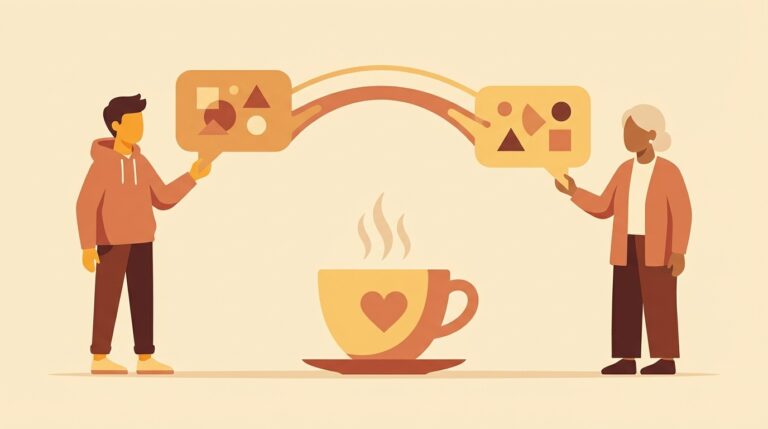
If you’re studying Korean at a C1 level, you already know your basic grammar and vocabulary. But the real boss-level challenge in Korea isn’t passing the TOPIK exam—it’s navigating the intense generational language gap. Korea is a society deeply rooted in age-based hierarchy, but the current “MZ Generation” (Gen Z and Millennials) is actively rebelling against it.
Today, we aren’t just looking at vocabulary; we are decoding the social battlefield of modern Korea. Knowing how to bridge this gap won’t just prevent misunderstandings; it will make Koreans view you as an absolute “In-ssa” (Insider).
Let’s dive into the real Korean language that textbooks are too afraid to teach you!
Phase 2: Core Expressions Deep Dive
Here are the top three expressions you need to survive the generational clash.
1. 라떼는 말이야 (Latte-neun mariya)
- Pronunciation: [ra-tte-neun ma-ri-ya] -> Sounds exactly like “Latte is a horse” in English.
- Meaning: (Literal) Latte is a horse. / (Real Nuance) Back in my day…
- K-Culture Moment: You’ll hear this in almost every office-based K-Drama. An older manager starts giving unsolicited life advice to younger staff.
- Editor’s Insight: The original phrase is “나 때는 말이야” (Na-tte-neun mariya) meaning “In my time…”. Younger people started mocking this boomer phrase because “Na-tte” sounds like “Latte.” It became such a massive meme that even older generations now use it self-deprecatingly, saying, “Let me serve you a cup of Latte…” before telling a story from the past.
- Situation Spectrum:
- Close friends (Casual): ✅ (Used sarcastically)
- Coworkers (Semi-formal): ⚠️ (Only if the atmosphere is playful)
- Boss/Elders (Formal): 🚫 (Never say this to an elder unless they joke about it first!)
- 🤔 Think About It: Why is “the past” such a common topic for Korean elders? How does your culture handle older generations giving unsolicited advice to the youth?
2. 폼 미쳤다 (Pom mi-chyeot-da)
- Pronunciation: [pom mi-chyeot-da] -> ‘Pom’ sounds like ‘form’, ‘michyeotda’ sounds like a sneeze ‘achoo’ but ‘mi-chyeot’.
- Meaning: (Literal) Form is crazy. / (Real Nuance) Your form is insane! / You are absolutely killing it!
- K-Culture Moment: Scroll through any Korean TikTok or YouTube Shorts comments under a K-Pop idol’s dance cover. You’ll see this everywhere.
- Editor’s Insight: Textbook learners say “정말 대단해요” (It’s really amazing). Older millennials say “대박” (Daebak). But Gen Z/Alpha? They say “폼 미쳤다.” It’s the ultimate hype phrase right now.
- Situation Spectrum:
- Close friends (Casual): ✅
- Coworkers (Semi-formal): ⚠️ (Okay with close peers)
- Boss/Elders (Formal): 🚫
- 🤔 Think About It: Slang in Korea evolves at lightspeed due to internet culture. Does your native language cycle through slang as quickly?
3. 말씀 편하게 하세요 (Mal-sseum pyeon-ha-ge ha-se-yo)
- Pronunciation: [mal-sseum pyeon-ha-ge ha-se-yo]
- Meaning: (Literal) Please speak your words comfortably. / (Real Nuance) You can use casual language (Banmal) with me.
- K-Culture Moment: You meet your Korean friend’s parents for the first time. They are using highly polite language (Jondaemal) because you are a guest, but it feels a bit distant. You drop this line, and their faces instantly light up with warmth.
- Editor’s Insight: This is your C1 superpower phrase. As a foreigner, older Koreans might use formal language with you to be polite. Offering them the permission to drop the formalities shows deep cultural empathy and bridges the gap instantly.
- Situation Spectrum:
- To a younger person: 🚫 (They should ask you first)
- To a much older person/Elder: ✅ (Shows respect and friendliness)
Phase 3: Textbook vs Real Korean
How do different generations express the same thought? Let’s look at the evolution.
| Situation | 📖 Boomer/Textbook | 🗣️ MZ Gen Real Korean | 💡 Why is it different? |
|---|---|---|---|
| Agreeing | 동의합니다 (I agree) | 완전 인정 (Total acknowledgment) | MZ prefers dramatic, absolute expressions (완전, 찐). |
| “It’s amazing!” | 정말 훌륭하네요 | 폼 미쳤다 / 찢었다 (Tore it up) | Internet gaming and meme culture heavily influence modern slang. |
| Apologizing | 죄송합니다 | 앗, ㅈㅅㅈㅅ (Oops, sry sry) | Efficiency in text messaging led to extreme consonant abbreviations. |
| Expressing fatigue | 피곤하네요 | 기빨린다 (My energy is sucked dry) | Emphasizes the emotional/social drain, not just physical tiredness. |
Bottom Note: At the C1 level, you don’t need to speak entirely in slang. The goal is comprehension. Understand what the Gen Z newbie is saying, but reply with polite, witty standard Korean.
Phase 4: Cultural Context — K-Culture Deep Dive
4-1. The Art of “Nunchi” Across Generations
When older and younger Koreans interact, 눈치 (Nunchi)—the ability to read the room—is in overdrive. For older generations, Nunchi means showing visible respect (bowing slightly when drinking, not eating before the elder). For the younger MZ generation, Nunchi is about maintaining personal boundaries. As a foreign speaker, simply demonstrating that you are aware of these tensions makes you highly respected.
4-2. The “MZ Office” K-Drama Trope
If you watch comedy shows like SNL Korea, you’ll see the famous “MZ Office” sketches. They perfectly satirize the clash between the “Kkondae” (꼰대 – a condescending older person who demands absolute respect) and the MZ generation (who wear AirPods at work and refuse to do unpaid overtime).
Critical Viewpoint: While media portrays this as a hilarious war, reality is more nuanced. Many older Koreans are actively trying to drop their “Kkondae” habits, and young Koreans still deeply respect their seniors. Don’t assume every older boss is a Kkondae!
Phase 5: Real-life Roleplay Scenario
Setting: Friday, 7:00 PM. A smoky Samgyeopsal (pork belly) joint near Gangnam Station. Green Soju bottles line the table. You are attending your team’s dinner (회식).
Characters:
– YOU: A foreign expat working in Seoul, level-headed and culturally aware.
– Manager Kim (55): Your boss. Loves a good drink, very traditional, but means well.
– Ji-ah (24): The Gen Z new hire. Always on Instagram, uses the latest slang.
Dialogue:
Manager Kim: 아유, 우리 팀원들 고생 많았어! 건배! 🍻
(Ayu, uri timwondeul gosaeng manasseo! Geonbae!)
(English) Ah, our team worked so hard! Cheers!
YOU: 부장님도 수고 많으셨습니다!
(Bujangnimdo sugo maneusyeotseumnida!)
(English) You worked hard too, Boss!
Manager Kim: (Sighs nostalgically) 나 때는 말이야… 신입사원이 무조건 고기를 구웠는데 말이야. 요즘은 세상이 참 좋아졌어, 허허.
(Na-tte-neun mariya… sinipsawoni mujogeon gogireul guwonneunde mariya…)
(English) Back in my day… the new hires always had to grill the meat. The world has gotten so much better these days, haha.
Ji-ah: (Whispering to you) 와, 부장님 또 라떼 시작이네요. 기빨려요…
(Wa, bujangnim tto ratte sijagineyo. Gippallyeoyo…)
(English) Wow, the boss is starting his ‘Latte’ story again. It’s so draining…
🔀 YOUR TURN! How do you respond to Manager Kim to keep the peace?
- A) “맞아요, 요즘 MZ세대들은 폼 미쳤어요!” (That’s right, MZ generation’s form is crazy!)
- B) “에이 부장님, 요즘 그런 말씀 하시면 꼰대 소리 들어요~ 제가 구울게요!” (Oh Boss, you’ll be called a Kkondae if you say that these days~ I’ll grill!)
- C) “아, 정말요? 옛날에는 어땠는데요?” (Oh, really? What was it like in the past?)
✅ Best Choice: B or C
– Why B works: If said with a bright smile, it playfully calls him out while offering a polite action (grilling). Koreans love this kind of witty “tiki-taka.”
– Why C works: The safest, textbook “Nunchi” response. Elders love talking about the past. Just ask and let him talk!
– ⚠️ Choice A Analysis: Mixing a boomer topic with heavy Gen Z slang (“폼 미쳤다”) to your boss is a recipe for extreme awkwardness. He won’t understand you, and Ji-ah will cringe.
Bonus Mini-Roleplay: The Market Grandma
You are at Gwangjang Market. An 80-year-old vendor hands you a massive plate of Mandu (dumplings).
Grandma: 학생, 이거 좀 먹어봐. 많이 줬어!
(Haksaeng, igeo jom meogeobwa. Mani jwosseo!)
(English) Student, try this. I gave you a lot! (Notice she uses Banmal and calls you ‘Student’ even if you’re 35!)
YOU: 우와, 할머니 폼 미쳤다! 감사합니다!
(Uwa, halmeoni pom michyeotda! Gamsahamnida!)
(English) Wow, Grandma, your form is crazy! Thank you! (She might not know what ‘pom michyeotda’ means, but your bright energy will make her day.)
Phase 6: 10-Second Shadowing Drill
Let’s practice the magic bridging phrase! Focus on the pauses (/) and intonation.
😊 부장님, / 저희한테는 / 말씀 편~하게 / 하셔도 됩니다!
(bu-jang-nim, / jeo-hui-han-te-neun / mal-sseum pyeon~ha-ge / ha-syeo-do doem-ni-da!)
Translation: Boss, you can speak comfortably (use Banmal) with us!
(Editor’s Tip: Stretch the “pyeon~” slightly to sound extra warm and friendly!)
Phase 7: K-Culture Mini Dictionary
| Korean | Romanization | English | Contextual Meaning |
|---|---|---|---|
| 꼰대 | kkondae | Boomer / Condescending elder | Originally slang for an old teacher, now describes anyone who forces their outdated views on others. (Yes, “young kkondaes” exist too!) |
| 눈치 | nunchi | Social situational awareness | The subtle art of reading the room. “눈치가 빠르다” means you catch on quickly. |
| 회식 | hoesik | Company dinner | A core part of Korean corporate life, often involving lots of alcohol, though MZ generations are successfully pushing to reduce them. |
| 신조어 | sinjoeo | Neologism / New slang | Newly coined words, mostly created online. If you don’t know the latest sinjoeo, you might be considered out of touch. |
Phase 8: Traveler’s Survival Kit
Even if you don’t work in a Korean office, you will experience the generation gap while traveling, especially with older taxi drivers or market vendors who use heavy dialects or informal speech.
🆘 Survival Phrases for Encounters with Elders
– 🇰🇷 “기사님, 천천히 가주셔도 괜찮아요.” (gisanim, cheoncheonhi gajusyeodo gwaenchannayo.)
– 🗣️ Meaning: Driver, it’s okay to go slowly.
– 📍 Where to use: In a taxi when an older driver is driving like he’s in Fast & Furious.
– 💡 Pro Tip: Don’t yell “Stop!” If an older driver is talkative and asks personal questions (like “Are you married?”), remember it’s usually just their way of showing affection (정 – Jeong), not an interrogation.📌 Editor’s Travel Note
– Jeong (정): If an older restaurant owner gives you extra side dishes and says “다 먹어!” (Eat it all! – in Banmal), do not be offended by the lack of honorifics. In this context, Banmal implies you are like family.
Phase 9: Critical Thinking Corner — “Going Deeper”
🧠 Think Deeper: Language & Power in Korea
Korean isn’t just a language of grammar; it’s a language of power and coordinates. When two Koreans meet, they subtly figure out their respective “ranks” through age, job title, and social status to determine whether to use Jondaemal (polite) or Banmal (casual).However, as Korea rapidly globalizes, the MZ generation is challenging this. They advocate for horizontal communication, using English names at startups or avoiding age questions altogether. Yet, the traditional hierarchical language structure remains deeply embedded. It’s a fascinating tug-of-war between Confucian tradition and modern individualism.
💬 Your Turn: Does your native language have built-in markers for respect or hierarchy? How do different generations in your country navigate power dynamics through language? Share in the comments!
Phase 10: FAQ & Avoiding Common Mistakes
Q: An older Korean person asked my age within 2 minutes of meeting me. Did I do something wrong?
No! This is standard procedure. They need to know your age to figure out what level of speech (honorifics) to use. It’s a linguistic necessity, not them being nosy.
Q: Can I use “폼 미쳤다” in a formal email to my professor?
Absolutely not! Slang and neologisms should never enter formal written communication. Stick to textbook Korean for emails.
❌ Common Mistake: Forcing slang to sound “fluent.”
✅ Do this instead: Fluency at the C1 level isn’t about using the most slang; it’s about appropriateness. Knowing when to use “라떼는 말이야” is much more impressive than just knowing what it means.
Phase 11: Summary & Action Items
One-Liner Summary: To survive the Korean generation gap, respect the elders with traditional politeness while understanding the MZ slang that surrounds you!
Action Mission:
– 🥉 Bronze (Solo): Stand in front of a mirror and practice the phrase, “부장님, 말씀 편하게 하세요!” with a warm smile.
– 🥈 Silver (Online): Go to a YouTube video of a K-Pop idol’s performance and leave a comment saying, “오늘 무대 폼 미쳤다!”
– 🥇 Gold (Real World): Next time an older Korean uses formal language with you in a friendly setting, gently invite them to speak comfortably: “말씀 편하게 하셔도 됩니다!”
K-Culture Mission: Watch a clip of SNL Korea’s MZ Office on YouTube. See if you can spot the body language differences between the “Kkondae” manager and the MZ newbie!
Phase 12: Interactive Quiz
1. Situational Judgment: Your 50-year-old manager is telling a long story about how hard his 20s were. What is the most culturally intelligent response?
– A) “라떼는 말이야~”
– B) “아, 정말 힘드셨겠네요.”
– C) “부장님 폼 미쳤다!”
(Answer: B. It shows empathy. A is mocking, and C is inappropriate slang for a serious story.)
2. T/F – K-Culture Edition: If an 80-year-old market vendor speaks to you in Banmal (casual speech), she is disrespecting you because you are a foreigner.
(Answer: False! It’s highly likely an expression of ‘Jeong’ (affection) and closeness.)
3. Fill in the blank: To invite an older person to use casual language with you, you should say: “말씀 ______ 하세요.”
(Answer: 편하게 – comfortably)
Did you learn something new today? Which generation do you relate to more: The traditional “Latte” boomer or the “MZ” rebel? Let us know!
Frequently Asked Questions (FAQ)
Q: What does "라떼는 말이야 (Latte-neun mariya)" mean in Korean and how do you pronounce it?
A: In Korean, "라떼는 말이야 (Latte-neun mariya)" is pronounced [ra-tte-neun ma-ri-ya] and means: (Literal) Latte is a horse. / (Real Nuance) Back in my day...
Q: What does "폼 미쳤다 (Pom mi-chyeot-da)" mean in Korean and how do you pronounce it?
A: In Korean, "폼 미쳤다 (Pom mi-chyeot-da)" is pronounced [pom mi-chyeot-da] and means: (Literal) Form is crazy. / (Real Nuance) Your form is insane! / You are absolutely killing it!
Q: What does "말씀 편하게 하세요 (Mal-sseum pyeon-ha-ge ha-se-yo)" mean in Korean and how do you pronounce it?
A: In Korean, "말씀 편하게 하세요 (Mal-sseum pyeon-ha-ge ha-se-yo)" is pronounced [mal-sseum pyeon-ha-ge ha-se-yo] and means: (Literal) Please speak your words comfortably. / (Real Nuance) You can use casual language (Banmal) with me.







