

Phase 1: Empathy (The “Wait, Why is My Cake Burnt?” Moment)
Hello there! I’m the Lead Editor at Daily Hangul.
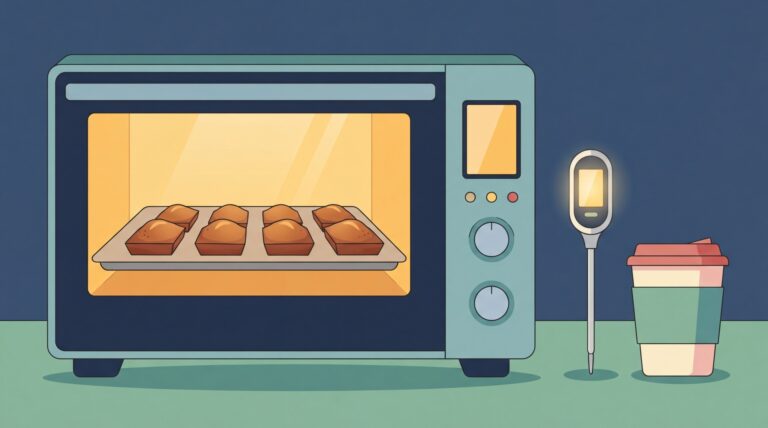
Picture this: You’re watching a wildly aesthetic Korean Homecafe (홈카페) vlog. The gentle lo-fi beats are playing, the sunlight is hitting the kitchen counter just right, and the vlogger is making the trendiest Hwang-chi-zeu (yellow cheese) pound cake. The English subtitles say, “Bake at 180 degrees for 20 minutes.” You follow it exactly. But when your timer goes off… your cake is a crispy, charred tragedy.
Then, you look closer at the Korean caption on the screen: “각자 오븐 사양에 따라 온도를 가감해 주세요.”
Wait, what? The dictionary says “가감” means “addition and subtraction.” Add and subtract the temperature?
If you’re at a C1 level, you already know your basics. But Korean baking vocabulary—especially regarding oven temperature and textures—is a whole different beast filled with hanja-based jargon and hyper-specific descriptive words. If you want to take a baking class in Seongsu-dong, buy supplies at Bangsan Market, or just successfully follow a Korean recipe without setting off your smoke alarm, you need the real vocab.
Don’t worry. This guide is built from the literal ashes of my own baking failures in a tiny Seoul apartment. Let’s dive in!
Phase 2: Core Expressions Deep Dive
1. 오븐 사양에 따라 온도를 가감해 주세요.
- Pronunciation: [obeun sayang-e ttara ondo-reul gagamhae juseyo] + [o-beun sa-yang-eh ttah-rah on-do-reul gah-gahm-hae joo-seh-yo]
- Meaning:
- Literal: Please add or subtract the temperature according to your oven’s specifications.
- Real Nuance: Every oven runs differently, so adjust the heat and time based on how yours behaves.
- K-Culture Moment: You will see this disclaimer on literally every single Korean baking vlog or recipe blog (like Naver Blogs). Because many Koreans use compact “combo microwave/ovens” (광파오븐) due to small apartment sizes, the heat distribution is notoriously unpredictable.
- Editor’s Insight: The word 가감하다 (加減 – to add and subtract) is a high-level, elegant way to say “adjust” (조절하다). It shows you have an advanced grasp of formal instructional Korean.
- Situation Spectrum:
- 친구 사이 (Casual): ⚠️ (Too formal. Friends would say “니 오븐에 맞춰서 온도 조절해”)
- 직장 동료 / 동호회 (Semi-formal): ✅
- 전문가 / 레시피 설명 (Formal): ✅
- 🤔 Think About It: Why do Korean recipes rely so heavily on the user’s discretion rather than absolute numbers? How does this reflect the high-context nature of Korean communication, where you are expected to “read the room” (or in this case, “read the oven”)?
2. 구움색을 보면서 꺼내주세요.
- Pronunciation: [guumsaeg-eul bomyeonseo kkeonaejuseyo] + [goo-oom-sek-eul bo-myun-suh kkuh-nae-joo-seh-yo]
- Meaning:
- Literal: Please take it out while watching the baking color.
- Real Nuance: Don’t just trust the timer. Keep an eye on how beautifully brown it’s getting, and pull it out when it looks right.
- K-Culture Moment: You’re at a One-Day Baking Class in Hongdae. The instructor tells you to watch the oven closely. They don’t just say “brown”; they say 구움색 (baking color)—a specialized noun exclusively used in baking to describe that perfect, golden-brown Maillard reaction.
- Editor’s Insight: If you drop the word “구움색” instead of just “갈색” (brown) or “익은 정도” (doneness), native Korean bakers will instantly respect you. It proves you’re an insider.
- Situation Spectrum:
- 친구 사이 (Casual): ✅ (“구움색 미쳤다!” – The browning is insane!)
- 베이킹 클래스 (Semi-formal): ✅
- 직장 상사/어른 (Formal): ✅
- 🤔 Think About It: Korean has countless words for color variations depending on the state of the object (e.g., 노릇노릇하다 for golden-crispy). Do you have a specific word in your language just for the “color of baked goods”?
3. 겉바속촉이 관건이에요.
- Pronunciation: [geotbasokchog-i gwangeon-ieyo] + [gut-bah-sok-chok-ee gwan-gun-ee-eh-yo]
- Meaning:
- Literal: Outside crispy inside moist is the key.
- Real Nuance: The ultimate goal here is to get that perfect crispy exterior and soft, fluffy interior.
- K-Culture Moment: Biting into a fresh salt bread (소금빵) at a trendy Seongsu bakery. “겉바속촉” is the Holy Grail of Korean food textures, applied to everything from fried chicken to canelés.
- Editor’s Insight: 관건 (關鍵) is a brilliant C1 vocabulary word meaning “the key” or “the crux of the matter.” Combining a trendy slang acronym (겉바속촉) with a sophisticated hanja word (관건) makes you sound incredibly fluent and witty.
- Situation Spectrum:
- 친구 사이 (Casual): ✅
- SNS 리뷰 (Semi-formal): ✅
- 격식 있는 발표 (Formal): ⚠️ (Slang is okay as an ice-breaker, but use with caution)
- 🤔 Think About It: Why are Koreans so obsessed with contrasting textures (crispy vs. chewy/moist) rather than just flavor?
Phase 3: Textbook vs. Real Korean
| Situation | 📖 Textbook Korean | 🗣️ Real Korean | 💡 Why the difference? |
|---|---|---|---|
| Adjusting temp | 온도를 바꾸세요. (Change the temp) | 사양에 맞게 가감해 주세요. | Uses professional Hanja-based terms to sound like a legitimate recipe. |
| Checking doneness | 갈색이 되면 꺼내세요. (Take it out when brown) | 구움색 보면서 빼주세요. | Specialized baking jargon; “빼다” (pull out) is used more often than “꺼내다” in fast-paced kitchens. |
| Crispy texture | 밖은 바삭하고 안은 촉촉해요. | 완전 겉바속촉이에요! | Koreans love 4-syllable acronyms (줄임말) for efficiency and rhythm in speech. |
| The oven is hot | 오븐이 뜨거우니 조심하세요. | 잔열이 남아있으니까 조심하세요. | Emphasizes “잔열” (residual heat) which is crucial for baking and safety. |
Bottom Note: At the C1 level, your goal is precision. Using words like
잔열(residual heat) and가감하다elevates your Korean from “someone who learned from a book” to “someone who actually lives and breathes the culture.”
Phase 4: Cultural Context — K-Culture Deep Dive
4-1. Non-verbal cues in the Kitchen
When attending a baking class in Korea, you’ll notice a strong emphasis on 눈치 (Nunchi). When the instructor says, “구움색을 한번 볼까요?” (Shall we check the browning color?), it’s not a direct command. It’s a gentle, polite suggestion meant for you to take the initiative, turn on the oven light, and evaluate your own pastry. Don’t wait for them to do it for you!
4-2. The “Homecafe” (홈카페) & Smart Oven Phenomenon
If you watch K-Dramas or Korean lifestyle vlogs, you’ve seen the “Homecafe.” It’s not just making coffee; it’s a highly curated, aesthetic experience.
But there’s a practical reality behind this: Space. Most young Koreans live in small officetels (studio apartments). They don’t have built-in, massive convection ovens like in Western homes. They use 광파오븐 (Lightwave oven/combo microwaves) or small tabletop air fryers.
Because these small ovens lose heat the second you open the door, Korean recipes often call for high preheating temperatures (예열 온도). If a recipe says “예열 200도, 굽기 180도” (Preheat 200°C, Bake 180°C), it’s specifically to combat the heat loss of a tiny apartment oven. Understanding this mechanical context makes understanding the language so much easier!
Phase 5: Real-life Roleplay Scenario
Setting: Saturday afternoon. A bright, aesthetically pleasing one-day baking class in Seongsu-dong. You are taking a “Financier Masterclass.” The aroma of brown butter fills the air. You are standing in front of a row of small smart ovens with your instructor.
Characters:
* YOU: An expat living in Seoul, passionate about baking, trying to perfect your French pastries.
* Somin (28): The baking instructor. Friendly, precise, and uses a lot of professional baking vocab.
Dialogue:
Somin: 자, 이제 반죽을 오븐에 넣을 건데요. 우리 학원 오븐은 화력이 좀 센 편이에요.
(Ja, ije banjug-eul obeun-e noeul geondeyo. Uri hagwon obeun-eun hwaryeog-i jom sen pyeon-ieyo.)
[Now, we’re going to put the batter into the oven. The ovens at our studio have pretty strong heat.]
( 🎭 Stage Direction: Somin points to the temperature dial )
YOU: 아, 그럼 레시피에 있는 190도보다 좀 낮춰야 할까요?
(Ah, geureom resipi-e inneun baek-gusip-doboda jom natchwoya halkkayo?)
[Ah, then should I lower it from the 190 degrees in the recipe?]
Somin: 네, 맞아요. 사양에 따라 온도를 가감해야 하거든요. 일단 180도로 세팅해 주시고요.
(Ne, majayo. Sayang-e ttara ondo-reul gagamhaeya hageodeunyo. Ildan baek-palsip-doro setinghae jusigoyo.)
[Yes, exactly. You have to adjust the temperature according to the specs. For now, please set it to 180 degrees.]
YOU: 예열은 이미 충분히 된 상태죠?
(Yeyeol-eun imi chungbunhi doen sangtaejo?)
[The preheating is already fully done, right?]
Somin: 네! 들어가고 나서 한 10분쯤 뒤부터 배꼽이 예쁘게 올라오는지 봐주세요.
(Ne! Deureogago naseo han sip-bunjjeum dwibuteo baekkob-i yeppeuge ollaoneunji bwajuseyo.)
[Yes! About 10 minutes after they go in, please check if the ‘belly buttons’ (humps) are rising nicely.]
YOU: 네, 알겠습니다. 구움색 보면서 시간 조절할게요.
(Ne, algetseumnida. Guumsaek bomyeonseo sigan jojeolhalgeyo.)
[Understood. I’ll adjust the time while watching the baking color.]
Somin: 오, ‘구움색’이라는 단어도 아세요? 베이킹 진짜 많이 해보셨나 봐요!
(O, ‘guumsaek’-iraneun dan-eodo aseyo? Beiking jinjja mani haebosyeonna bwayo!)
[Oh, you even know the word ‘guumsaek’? You must have baked a lot!]
🔀 Your Turn! How do you reply to her compliment?
* A) “네, 저는 베이킹 전문가입니다.” (Too literal and arrogant!)
* B) “아니에요, 아직 초보예요. 홈카페 영상 보면서 조금 배웠어요.” (Humble, drops a cultural keyword)
* C) “대박! 제가 좀 하죠.” (Too informal for a class setting)✅ Best Choice: B — Modesty (겸손) is a core Korean virtue. Downplaying your skills while mentioning a popular trend like “Homecafe” instantly builds rapport!
Bonus Roleplay: The Homecafe Flex
Setting: You brought your freshly baked goods to the office.
Colleague: 우와, 이거 직접 구우신 거예요? 파는 것 같아요!
[Wow, did you bake this yourself? It looks like it’s from a store!]
YOU: 에이, 아니에요. 광파오븐이라 온도 맞추기 진짜 힘들었어요. 그래도 겉바속촉으로 잘 나와서 다행이에요.
[Oh, not at all. It was so hard getting the temperature right because it’s a lightwave oven. But I’m glad it came out crispy on the outside and soft on the inside.]
Colleague: (Gasps in respect) 어머, 한국인인 줄 알았어요!
[Oh my, I thought you were Korean!]
Phase 6: 10-Second Shadowing Drill
Time to sound like a native. Pay attention to the pauses (/) and the intonation!
👩🍳 전문적으로 (Professionally):
오븐 사양에 따라 / 온도를 / 약간씩 가감해 주시고요, / 구움색을 보면서 / 꺼내주세요.
(obeun sayang-e ttara / ondo-reul / yakganssik gagamhae jusigoyo, / guumsaeg-eul bomyeonseo / kkeonaejuseyo.)
- Tip: Stretch the “약~간씩” slightly to emphasize “just a little bit.” Keep your tone calm and instructional, like a professional YouTuber.
Phase 7: K-Culture Mini Dictionary (Baking Edition)
| 한국어 | Romanization | English | Context / Editor’s Note |
|---|---|---|---|
| 홈카페 | hom-ka-pe | Home Cafe | The trend of creating cafe-quality drinks and desserts at home. Huge on Instagram/YouTube. |
| 구움색 | gu-um-saek | Baking color | The golden-brown color achieved in the oven. The ultimate indicator of success. |
| 가감하다 | ga-gam-ha-da | To adjust (add/subtract) | Advanced vocab used in recipes to tell you to tweak temps/amounts. |
| 배꼽 | bae-kkop | Belly button | Baking slang for the signature bump that rises on madeleines and financiers. |
| 광파오븐 | gwang-pa-o-beun | Lightwave oven | A combo microwave/convection oven standard in Korean apartments. Notorious for uneven heat. |
Phase 8: Traveler Survival Kit (Bangsan Baking Market)
If you love baking, you must visit Bangsan Market (방산시장) in Seoul—the mecca for baking tools and packaging. But it’s old-school, fast-paced, and intimidating.
🆘 Survival Expressions TOP 3
1. 🇰🇷 “이거 광파오븐에 들어가나요?” (igeo gwangpaobeun-e deureoganayo?)
🗣️ Will this fit in a lightwave oven? (Crucial, because Korean ovens are small!)
2. 🇰🇷 “이 틀은 열 전도율이 어때요?” (i teul-eun yeol jeondoyul-i eottaeyo?)
🗣️ How is the heat conductivity of this mold? (Sounds incredibly professional!)
3. 🇰🇷 “소량 구매도 되나요?” (soryang gumedo doenayo?)
🗣️ Can I buy in small quantities? (Many shops sell strictly wholesale/대량).📌 Editor’s Travel Note
* Navigation: Use Naver Map, but inside the market alleys, GPS gets bouncy. Look for the store’s unique “호” (suite number) above the doors.
* Payment: While Korea is a card-heavy country, having a quick bank transfer app (계좌이체) or cash will often get you “service” (덤 – extra freebies) at traditional markets.
Phase 9: Critical Thinking — “One Step Deeper”
🧠 Think Deeper: Food, Space, and Identity (음식과 정체성)
Why has the “Homecafe” and meticulous home baking culture exploded in Korea? On the surface, it’s about aesthetics. But sociologically, it’s deeply tied to space and control. Many young Koreans live in compact, rented spaces (원룸) where they have little control over the architecture or interior. However, mastering a difficult French pastry in a finicky tiny oven, plating it perfectly, and sharing it online (or with friends) offers a profound sense of achievement, control, and “소확행” (small but certain happiness). It’s a modern evolution of “정” (Jeong – affection/sharing)—baking a batch of perfectly colored financiers to hand out in cute little bags to your office colleagues.
💬 Your Turn: In your culture, do people bake to share at work, or is it mostly for family holidays? Does living space dictate what kind of food people cook at home? Let me know in the comments!
Phase 10: FAQ & Mistake Prevention
- Q: Can I set my oven to Fahrenheit in Korea?
- A: No! Korea operates strictly on Celsius. If you tell a Korean friend you baked something at 350 degrees, they will think you cremated it.
- Q: Is “오븐렌지” (Oven-range) safe for metal pans?
- A: Be careful! These are combo units. If it is set to “Oven” mode, metal is fine. If it accidentally switches to “Microwave” (전자레인지) mode, metal will cause sparks and fire. Always double-check!
❌ Common Mistake: Translating “My oven runs hot” directly to “내 오븐은 뜨겁게 달려요.” (Literally: My oven runs fast while being hot).
✅ Do This Instead: Say “저희 집 오븐은 화력이 센 편이에요” (My house’s oven has strong fire power/heat).
Phase 11: Summary & Action Items
✨ One-Liner Summary: To master Korean baking conversations, don’t just “change” the temperature; 가감하다 (adjust) it based on the 사양 (specs), and always keep an eye on the 구움색 (baking color) for that perfect 겉바속촉 (crispy-soft) texture!
🎯 Action Mission 3 Steps:
* 🥉 Bronze (Solo): Stand in your kitchen, point at your oven, and say out loud: “오븐 사양에 따라 온도를 가감해 주세요.”
* 🥈 Silver (Online): Find a Korean Homecafe vlog on YouTube. Leave a comment saying: “구움색이 너무 예뻐요! 겉바속촉일 것 같아요.” (The browning is so pretty! It looks like it’ll be crispy outside, soft inside.)
* 🥇 Gold (Real World): Visit a bakery (or Korean cafe) and compliment them using the word “겉바속촉” when describing their pastries.
🍰 K-Culture Mission:
Search “휘낭시에 배꼽” (Financier belly button) on Instagram or YouTube. See how Koreans obsess over the perfect aesthetic bump on their baked goods. It’s an entire subculture!
Phase 12: Interactive Quiz
1. Situational Judgment: You are watching your cookies bake. They are getting perfectly brown on the edges. What is the most C1-appropriate, native-sounding way to describe this?
* A) 색깔이 갈색이에요. (The color is brown.)
* B) 오븐이 뜨거워요. (The oven is hot.)
* C) 구움색이 잘 나왔어요. (The baking color came out well.)
* D) 겉바속촉이에요. (It is crispy outside, soft inside.)
2. Fill in the Blank:
“각자 오븐 ______에 따라 온도를 ______해 주세요.”
(Please adjust the temperature according to each oven’s specifications.)
3. True or False – K-Culture Edition:
“Most young Koreans living in Seoul apartments use massive, built-in Western-style convection ovens for their Homecafe setups.”
👉 Click here for Answers!
- C (A is too basic, B is irrelevant, D describes texture after biting, not the visual browning process while baking.)
- 사양 (specs) / 가감 (adjust/add-subtract)
- False. Most use compact “광파오븐” (combo lightwave ovens) or air fryers due to space constraints, which is exactly why adjusting temps is so heavily emphasized in Korean recipes!
Frequently Asked Questions (FAQ)
Q: What does "오븐 사양에 따라 온도를 가감해 주세요." mean in Korean and how do you pronounce it?
A: In Korean, "오븐 사양에 따라 온도를 가감해 주세요." is pronounced [obeun sayang-e ttara ondo-reul gagamhae juseyo] and means: Literal: Please add or subtract the temperature according to your oven's specifications.
Q: What does "구움색을 보면서 꺼내주세요." mean in Korean and how do you pronounce it?
A: In Korean, "구움색을 보면서 꺼내주세요." is pronounced [guumsaeg-eul bomyeonseo kkeonaejuseyo] and means: Literal: Please take it out while watching the baking color.
Q: What does "겉바속촉이 관건이에요." mean in Korean and how do you pronounce it?
A: In Korean, "겉바속촉이 관건이에요." is pronounced [geotbasokchog-i gwangeon-ieyo] and means: Literal: Outside crispy inside moist is the key.







