

The Secret Behind Korea’s 7 AM Magic: Mastering Logistics and Rocket Delivery Vocabulary!
Hello there! It’s your Lead Editor from Daily Hangul.
Picture this: It’s 11:45 PM in Seoul. You’re packing for a weekend trip to Jeju Island and suddenly realize your camera battery charger is broken. Panic sets in. But your Korean friend just casually taps their phone screen a few times, smiles, and says, “Don’t worry, it’ll be at your door by 7 AM.”
And exactly at 6:30 AM, you get a text with a photo of a box sitting quietly in front of your door.
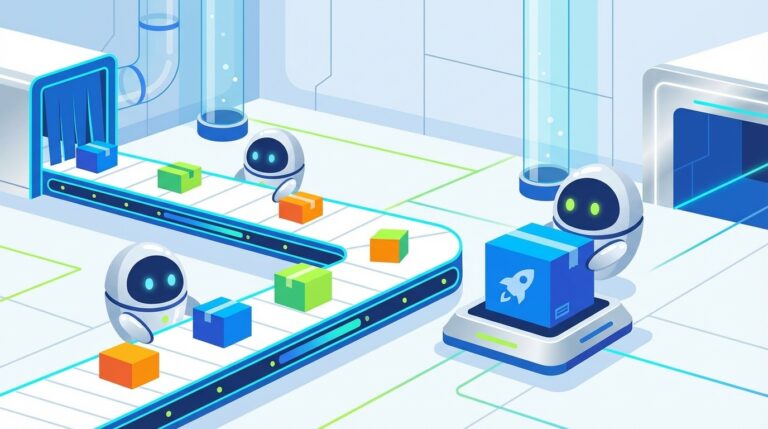
Welcome to the magic of Korea’s 새벽 배송 (Dawn Delivery) system. But behind this modern-day miracle isn’t just a speedy driver—it’s a mind-blowing, sci-fi reality of 물류 센터 자동화 (Fulfillment Center Automation) driven by AI algorithms and fleets of robots. As an advanced (C2) Korean learner, going beyond “Where is my package?” and understanding the vocabulary of this hyper-efficient ecosystem will give you incredible insight into modern Korean society.
Today, we are diving deep into the vocabulary of the Korean logistics revolution. Let’s decode the system!
Phase 2: Core Expressions Deep Dive
Let’s look at the heavy-hitting vocabulary you’ll encounter in news articles, business reports, and even everyday complaints about online shopping.
1. 새벽 배송 (Dawn Delivery) / 당일 배송 (Same-day Delivery)
- Pronunciation: [sae-byeok bae-song] / [dang-il bae-song]
- Sound-alike guide: ‘sae’ (like sad) + ‘byeok’ (like b + yuck).
- Meaning: Delivery that arrives by dawn (usually before 7 AM) / Delivery that arrives on the exact same day you order it.
- K-Culture Moment: You’ll see this everywhere in K-Dramas where a busy professional orders meal kits or groceries right before falling asleep, and wakes up to fresh food. It is the ultimate manifestation of Korea’s Pali-pali (hurry up) culture.
- Editor’s Insight: This isn’t just a service; it’s a lifestyle standard. If a platform doesn’t offer at least “next-day delivery,” Korean consumers might abandon their carts.
- Situation Spectrum:
[🚫 절대 금지] ———— [⚠️ 주의] ———— [✅ 자유롭게]
- Casual with friends: ✅
- Business/Formal: ✅ (It’s standard terminology)
- 🤔 Think About It: Why does a society demand their groceries at 7 AM? How does this reflect the intense working hours and dual-income household structures in metropolitan Seoul?
2. 물류 센터 (Fulfillment Center / Logistics Center) & 집품 (Picking)
- Pronunciation: [mul-ryu sen-teo] & [jip-pum]
- Sound-alike guide: ‘mul’ (like mull) + ‘ryu’ (roll the R, sounds like ryoo).
- Meaning: Logistics Center / The act of collecting (picking) items from warehouse shelves to fulfill an order.
- K-Culture Moment: In news documentaries or corporate PR videos for giants like Cou팡 (Coupang), you’ll hear the narrator talk about how AI robots have revolutionized the 집품 (picking) process, replacing miles of walking for human workers.
- Editor’s Insight: Most beginners know “창고” (warehouse). But using 물류 센터 shows you understand modern supply chains. 집품 is a highly specific industry jargon that has entered the mainstream because many college students take part-time jobs doing “picking” during vacations.
- Situation Spectrum:
[🚫 절대 금지] ———— [⚠️ 주의] ———— [✅ 자유롭게]
- Everyday conversation: ⚠️ (A bit technical, but understood)
- Business environment: ✅
- 🤔 Think About It: Notice the Sino-Korean root 집 (集 – to gather) and 품 (品 – item). How does knowing Hanja elevate your ability to guess C2-level vocabulary?
3. 상하차 (Loading and Unloading) & 무인 운반차 (AGV)
- Pronunciation: [sang-ha-cha] & [mu-in un-ban-cha]
- Sound-alike guide: ‘sang’ (sung) + ‘ha’ (ha) + ‘cha’ (cha).
- Meaning: Loading and unloading cargo / Automated Guided Vehicles (Robots).
- K-Culture Moment: “상하차 알바 (Loading/unloading part-time job)” is infamously known among Korean youth as the “most grueling, back-breaking job on earth.” However, the narrative is shifting as 무인 운반차 (AGVs—robots that carry shelves to the workers) take over these tasks in automated mega-hubs.
- Editor’s Insight: If you tell a Korean friend you did 상하차, they will immediately buy you a drink out of sheer pity. It’s a cultural meme for “extreme hardship.”
- Situation Spectrum:
[🚫 절대 금지] ———— [⚠️ 주의] ———— [✅ 자유롭게]
- Casual chatting: ✅
- Industry discussion: ✅
- 🤔 Think About It: As logistics become heavily automated (자동화), what happens to the thousands of youth who relied on 상하차 for quick cash?
Phase 3: Textbook vs. Real Korean
When tracking a package, textbooks teach you polite, full sentences. But real logistics vocabulary is all about brutal efficiency and app interfaces.
| Situation | 📖 Textbook Korean | 🗣️ Real Korean (App/Tracking) | 💡 Why the difference? |
|---|---|---|---|
| Item has left the seller | 판매자가 소포를 보냈습니다. | 집화 처리 (Picked up by courier) | Apps use condensed Sino-Korean (Hanja) jargon for status updates. |
| Moving between centers | 물건이 다른 도시로 이동 중입니다. | 간선 상차 / 하차 (Line-haul loading/unloading) | 간선 (Line-haul) is the artery of the logistics network. This means it’s on a massive highway truck. |
| Stuck in a sorting hub | 우체국에서 물건을 분류하고 있습니다. | 옥천 허브에 갇힘 (Trapped in Okcheon Hub) | Okcheon/Gonjiam Hubs are notorious bottlenecks. Saying “it’s trapped in the Hub Bermuda Triangle” is a native-level inside joke. |
Bottom Note: At a C2 level, you shouldn’t just say “배송 중이에요” (It’s delivering). Check your app and say, “아, 아직 간선 하차 상태네요.” (Ah, it’s still in the line-haul unloading phase.) Your Korean colleagues will be stunned by your native-like fluency!
Phase 4: Cultural Context — K-Culture Deep Dive
4-1. The Non-Verbal “Proof of Delivery”
In Western countries, a delivery driver might knock, ask for a signature, or chat with you. In Korea’s 새벽 배송 (Dawn Delivery) ecosystem, interaction is zero. The unspoken rule—driven by the cultural concept of 눈치 (Nunchi) and respect for privacy during ungodly hours—is absolute silence. The driver simply places the box, snaps a photo of your door, and texts it to you. That photo is the conversation.
4-2. The “Hub Bermuda Triangle” (K-Internet Culture)
If you engage with Korean internet communities or talk to young professionals, you will inevitably hear about the “Hub Bermuda Triangle” (usually the Okcheon Hub or Gonjiam Hub). Before mega-centers were fully automated with AI algorithms, millions of packages would pile up in these central geographic hubs, getting delayed for days.
Even today, if a Korean friend is waiting anxiously for an online shopping item, joking about it being “블랙홀 같은 옥천 허브에 빠졌다” (Sucked into the black hole of Okcheon Hub) is a guaranteed way to bond.
Phase 5: Real-life Roleplay Scenario
Setting: It’s 2 PM on a Tuesday in the office breakroom. You and your Korean colleague, Min-su, are having a coffee. You ordered a limited-edition K-Pop merchandise item yesterday, and you’re constantly checking your phone.
Characters:
– YOU: A C2-level Korean learner, working at a tech firm in Seoul.
– Min-su (34): Your friendly, tech-savvy colleague who loves talking about stocks and business trends.
Dialogue:
Min-su: 뭐 그렇게 핸드폰을 뚫어져라 봐요? 주식 떨어졌어요? 📉
(mwo geureoke haendeuponeul ttureojyeora bwayo? jusik tteoreojyeosseoyo?)
[What are you staring at your phone so hard for? Did your stocks drop?]
(🎭 Stage Direction: Min-su takes a sip of his iced Americano and leans in)
YOU: 아, 어제 주문한 한정판 굿즈 배송 조회하고 있어요. 📦
(a, eoje jumunhan hanjeongpan gutjeu baesong johoehago isseoyo.)
[Ah, I’m checking the tracking for a limited-edition merch I ordered yesterday.]
Min-su: 요즘은 물류 센터가 다 자동화돼서 어지간하면 다음 날 오지 않나요? 로켓 배송 아니에요?
(yojeumeun mullyu senteoga da jadonghwadwaeseo eojiganhamyeon daeum nal oji annayo? roket baesong anieyo?)
[Nowadays, fulfillment centers are all automated, so mostly everything arrives the next day, right? Isn’t it Rocket Delivery?]
YOU: 일반 택배인데… 아, 상태가 안 변하네요.
(ilban taekbae-inde… a, sangtaega an byeonhaneyo.)
[It’s standard delivery… Ah, the status isn’t changing.]
Min-su: 어디 볼까요? 헉… 이거 옥천 허브에 들어갔네요.
(eodi bolkkayo? heok… igeo okcheon heobue deureoganneyo.)
[Let me see? Gasp… It’s entered the Okcheon Hub.]
🔀 Your Turn! How do you reply to show off your native-like C2 wit?
– A) “옥천 허브가 뭐예요?” (What is Okcheon Hub? – Too beginner!)
– B) “아, 간선 상차 중인가 봐요.” (Ah, I guess it’s being line-haul loaded. – Good, technical.)
– C) “아… 내 물건 버뮤다 삼각지대에 갇혔네. 이번 주엔 못 받겠네요.”✅ Best Choice: C — Why? You immediately recognize the cultural joke! “My item is trapped in the Bermuda Triangle. I guess I won’t get it this week.” Min-su will likely burst out laughing and completely respect your deep understanding of Korean internet culture and logistics woes.
Phase 6: 10-Second Shadowing Drill
Let’s practice a highly advanced sentence you might use during a business meeting regarding supply chains. Pay attention to the pauses!
😤 최신 / 물류 센터는 / AI 알고리즘을 통해 / 집품 동선을 / 획기적으로 / 줄였습니다.
(choesin / mullyu senteoneun / AI algorijeumeul tonghae / jippum dongseoneul / hoekgijeogeuro / juryeotseumnida.)
[The newest / fulfillment centers / through AI algorithms / the picking routes / dramatically / have reduced.]
Rhythm tip: Stress the first syllable of AI and 획(hoek) to sound highly professional and persuasive.
Phase 7: K-Culture Mini Dictionary
| 한국어 (Korean) | Romanization | English | Contextual Meaning |
|---|---|---|---|
| 빨리빨리 | ppalli-ppalli | Hurry-hurry | The core philosophy driving Korea’s extreme delivery speed. |
| 로켓 배송 | roket baesong | Rocket Delivery | Coined by Coupang, now a generic term for overnight/same-day delivery. |
| 지옥의 알바 | jiogui alba | Job from Hell | Slang for 상하차 (Loading/Unloading hubs) due to the intense physical labor. |
| 문 앞 | mun ap | Front of the door | The default delivery location in Korea. Zero theft risk! |
| 택배 테러 | taekbae tereo | Delivery terror | When you order too many things and your front door is barricaded by boxes. |
Phase 8: Traveler Survival Kit
Even if you’re just visiting Korea, you can use apps like Baemin (food) or Coupang (goods) to order things to your hotel or Airbnb. But the automated system relies on exact instructions!
🆘 Survival Phrases for App Delivery
– 🇰🇷 “공동현관 비밀번호는 종소리 1234 별표 입니다.”
(gongdong hyeongwan bimilbeonhoneun jongsori il-i-sam-sa byeolpyo imnida)
– 🗣️ Meaning: The communal entrance password is [Bell] 1234 [Star].
– 📍 Where to use: In the “Delivery Instructions (배송 요청사항)” box.
– 💡 Pro Tip: Korean apartments and villas have secure automated lobby doors. If you don’t provide the password, the driver cannot reach your door, and your delivery will be delayed or left outside on the street.
📌 Editor’s Travel Note:
– App Choice: For tourists without an ARC (Alien Registration Card), standard Coupang might be hard to verify. Look into services like “Shuttle Delivery” or use convenience store pickup options (편의점 픽업).
– Porch Piracy? Korea has virtually no package theft. You can leave a laptop box in front of your apartment for three days, and nobody will touch it. CCTV is everywhere!
Phase 9: Critical Thinking Corner — “한 발 더 깊이”
🧠 Think Deeper: Media vs Reality & Language of Power
The terminology of logistics—새벽 배송 (Dawn delivery), 로켓 (Rocket), 총알 (Bullet)—all highlight hyper-efficiency. However, the contrast between the sleek, user-friendly app interface and the grueling reality of human labor (상하차) has been a major social issue in Korea. This is exactly why mega-corporations are investing billions into 물류 자동화 (Logistics Automation) and AI. By replacing human labor with 무인 운반차 (AGVs), companies aim to satisfy the relentless 빨리빨리 consumer demand without the human cost. Language evolves with this: we are shifting from talking about the “sweat of the delivery driver” to the “efficiency of the AI algorithm.”
💬 Your Turn: Does your country have a culture of overnight delivery? How does society balance consumer convenience with the rights of logistics workers? Share your thoughts in the comments!
Phase 10: FAQ & Common Mistakes
Q: When I track my package, it says “배송 완료 (Delivery Complete)”, but nobody rang the bell! Is it lost?
No! In Korea, ringing the bell is actually frowned upon unless specifically requested, because it might wake up a baby or a pet. Check your text messages or the app—you’ll find a photo of the box sitting at your front door.
Q: Can I tip the delivery driver in Korea?
No. Do not offer tips to delivery drivers (or anyone in Korea, really). They might feel confused or even offended. If you want to show appreciation, especially during hot summers, taping a small canned coffee to your door with a post-it note saying “기사님, 감사합니다 (Thank you, driver)” is deeply appreciated.
❌ Common Mistake: Writing only your street address without your specific apartment/room number (동/호수).
✅ Do this instead: The automated sorting system (AI) routes packages exactly to the building block. Always format it as: [Street Address] + [Building Name] + [동/호 – Block/Room Number]. Without the specific room, the robotic system rejects the label!
Phase 11: Summary & Action Items
One-Liner Summary: Korea’s mind-blowing dawn delivery is powered by advanced 물류 센터 자동화 (fulfillment automation), moving from extreme human labor to AI-driven efficiency.
Action Mission 3-Step:
– 🥉 Bronze: Say “AI 알고리즘이 집품을 자동화합니다” out loud 3 times to practice your corporate Korean.
– 🥈 Silver: Next time you buy something online (anywhere in the world), look at the tracking steps and try translating them into Korean (e.g., 간선상차, 배송출발).
– 🥇 Gold: Live in Korea? Order an item via an app and successfully write your 공동현관 비밀번호 (communal door password) in the memo block!
K-Culture Mission: Go to YouTube and search “쿠팡 물류센터 자동화” (Coupang Fulfillment Center Automation). Watch the AGV robots moving like a synchronized dance. See if you can spot the vocabulary we learned today in the video!
Got a story about a package getting stuck in the “Hub Bermuda Triangle”? Let’s chat in the comments! 👇
Phase 12: Quiz — Interactive Challenge
1. Situational Judgment: You are looking at your delivery tracking app. It says [간선 하차]. What does this actually mean?
– A) The driver is walking to my front door.
– B) The massive line-haul truck has unloaded the goods at the local distribution center.
– C) The item is out of stock.
Answer: B! It’s one step closer to your local delivery driver picking it up.
2. Fill in the Blank (Advanced):
최근 물류 기업들은 극심한 노동 강도를 줄이기 위해 로봇을 활용한 ( _________ ) 시스템을 도입하고 있다.
(Recently, logistics companies are introducing robot-utilizing ( _________ ) systems to reduce extreme labor intensity.)
Answer: 물류 자동화 (Logistics Automation)
3. True or False – K-Culture Edition:
If you order food or a parcel to your apartment, it is considered polite to wait by the door and personally hand a cash tip to the driver. (T/F)
Answer: False! Contactless delivery (비대면 배송) is the absolute standard. Giving a tip is culturally awkward.
Frequently Asked Questions (FAQ)
Q: What does "새벽 배송 (Dawn Delivery) / 당일 배송 (Same-day Delivery)" mean in Korean and how do you pronounce it?
A: In Korean, "새벽 배송 (Dawn Delivery) / 당일 배송 (Same-day Delivery)" is pronounced [sae-byeok bae-song] and means: Delivery that arrives by dawn (usually before 7 AM) / Delivery that arrives on the exact same day you order it.
Q: What does "물류 센터 (Fulfillment Center / Logistics Center) & 집품 (Picking)" mean in Korean and how do you pronounce it?
A: In Korean, "물류 센터 (Fulfillment Center / Logistics Center) & 집품 (Picking)" is pronounced [mul-ryu sen-teo] and means: Logistics Center / The act of collecting (picking) items from warehouse shelves to fulfill an order.
Q: What does "상하차 (Loading and Unloading) & 무인 운반차 (AGV)" mean in Korean and how do you pronounce it?
A: In Korean, "상하차 (Loading and Unloading) & 무인 운반차 (AGV)" is pronounced [sang-ha-cha] and means: Loading and unloading cargo / Automated Guided Vehicles (Robots).







