

Phase 1: Empathy (Immersive Opening)
Hello there! I’m your Daily Hangul Editor.
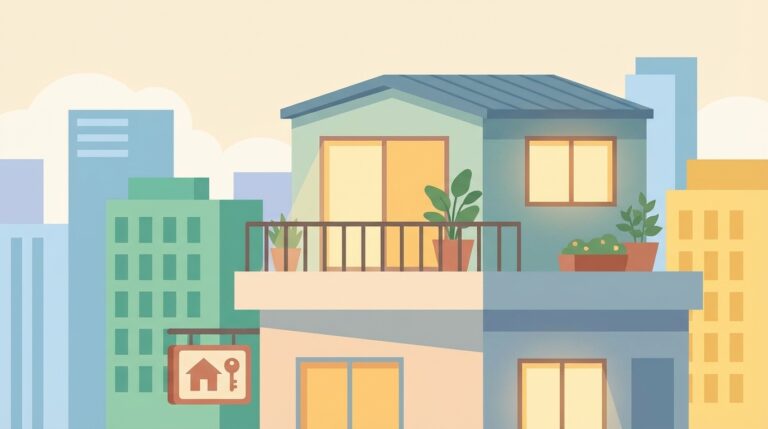
Picture this: You’re watching your favorite K-Drama. The hardworking protagonist, after saving up for years, finally moves into a cozy Oktapbang (rooftop room) with a breathtaking view of the Seoul skyline. They celebrate with a can of beer, looking out over the city. But behind that romantic scene lies a uniquely Korean financial reality that often makes foreigners’ jaws drop when they first move here: the housing deposit.
Whether you’re planning to study in Seoul, move for a job, or you’re just a K-Drama fan wondering why characters are always stressing out over ‘losing their deposit,’ understanding the Korean housing system—specifically Jeonse (전세) and Wolse (월세)—is crucial.
At first glance, the Korean real estate market can feel like a completely different universe. You might look at a property listing and think, “Wait, they want a $100,000 deposit for a studio apartment?!” Don’t panic. Today, I’m going to walk you through this unique system, step by step, based on the real questions and panics my expat students have shared with me. Let’s decode the secret language of Korean housing together!
Phase 2: Core Expressions Deep Dive
Let’s break down the essential terms you’ll encounter at any Korean real estate agency.
1. 전세 (Lump-sum Deposit Lease)
- Pronunciation: jeon-se [Sounds like: ‘jeon’ (rhymes with ‘done’) + ‘seh’ (like the start of ‘say’)]
- Meaning: Literal = Exclusive rent; Real nuance = A unique Korean lease system where you pay a massive lump-sum deposit (usually 50-80% of the property’s value) instead of monthly rent. You get the full amount back when you move out.
- K-Culture Moment: This is the ultimate K-Drama plot device. When a villain wants to ruin the protagonist’s life, they scam them out of their Jeonse deposit. Losing your Jeonse means losing your entire life savings.
- Editor’s Insight: It feels terrifying to hand over that much cash to a landlord you just met, but it’s a deeply ingrained system built on trust and the landlord’s ability to invest that money to make a profit during your stay.
- Situation Spectrum:
[🚫 Never] ———— [⚠️ Be Careful] ———— [✅ Freely]
- Casual conversation: ✅
- Formal contracts: ✅
- Asking a stranger their Jeonse amount: 🚫 (Too personal!)
- 🤔 Think About It: Why would a system like Jeonse only exist in Korea? How does it reflect the country’s past era of rapid economic growth and high bank interest rates?
2. 월세 (Monthly Rent)
- Pronunciation: wol-se [Sounds like: ‘wall’ + ‘seh’]
- Meaning: Monthly rent.
- K-Culture Moment: In K-Pop lyrics about the hustle and struggle of trainee days, you’ll often hear references to struggling to pay the Wolse for a tiny basement studio.
- Editor’s Insight: Even with Wolse, the security deposit in Korea is much higher than in the West. While you might pay $1,000 a month in rent, the deposit could easily be $10,000. It’s often written as 1000/100 (Deposit/Rent).
- Situation Spectrum:
[🚫 Never] ———— [⚠️ Be Careful] ———— [✅ Freely]
- Everyday use: ✅
- 🤔 Think About It: In many Western countries, a deposit is just 1-2 months’ rent. Why do you think Korean landlords demand such high deposits even for monthly rentals?
3. 보증금 (Security Deposit)
- Pronunciation: bo-jeung-geum [Sounds like: ‘bow’ + ‘juhng’ + ‘gum’ (like stepping in gum)]
- Meaning: Security deposit.
- K-Culture Moment: When K-Drama characters get a promotion, the first thing they do is try to increase their Bojeunggeum so they can lower their monthly rent and move out of their semi-basement.
- Editor’s Insight: In Korea, rent and deposits are on a sliding scale. If you can increase your Bojeunggeum, the landlord will usually lower your Wolse. It’s a negotiation!
- Situation Spectrum:
[🚫 Never] ———— [⚠️ Be Careful] ———— [✅ Freely]
- Real estate negotiation: ✅
4. 관리비 (Maintenance / Management Fee)
- Pronunciation: gwal-li-bi [Sounds like: ‘gwah-lee-bee’]
- Meaning: Maintenance fee (covers building cleaning, elevator, sometimes internet or water).
- Editor’s Insight: The hidden trap for many expats! You might find a cheap Wolse, but the Gwallibi could be an extra $150 a month. Always ask what’s included in the Gwallibi!
- Situation Spectrum:
[🚫 Never] ———— [⚠️ Be Careful] ———— [✅ Freely]
- Asking the landlord/agent: ✅
Phase 3: Textbook vs. Real Korean
When you step into a real estate agency (Budongsan), you won’t hear textbook phrases. Here’s what they actually say.
| Situation | 📖 Textbook Korean | 🗣️ Real Korean | 💡 Why the difference? |
|---|---|---|---|
| Looking for a fully furnished place | 가구가 다 있는 방을 찾습니다. (I’m looking for a room with all furniture.) | 풀옵션 있나요? (Do you have ‘Full Option’?) | Konglish (‘Full Option’) is universally used to mean fully furnished (AC, fridge, washing machine). |
| Mixing Jeonse and Wolse | 보증금을 높이고 월세를 낮출 수 있나요? | 반전세 되나요? (Is ‘Half-Jeonse’ possible?) | ‘Ban-jeonse’ is a modern compromise: a huge deposit but with a small monthly rent due to changing economic times. |
| Asking about extra costs | 유지비는 얼마입니까? (How much is the maintenance cost?) | 관리비는 얼마예요? 뭐뭐 포함이에요? (How much is the maintenance fee? What’s included?) | Practicality! Renters immediately need to know if internet or water is included in the fee. |
Phase 4: Cultural Context — K-Culture Deep Dive
4-1. Non-Verbal Cues: The Budongsan Vibe
When you visit a real estate agency (부동산 – Budongsan) in Korea, it’s an experience. You’ll usually be greeted by an older agent (Ahjussi or Ahjumma) offering you sweet mixed instant coffee (맥심 커피).
* Pro Tip: Accept the coffee! Building a good relationship (Nunchi) with the agent is key. They often have ‘hidden’ properties they only show to clients they like and trust. When signing the contract, always hand over your ID or pen with two hands as a sign of respect.
4-2. K-Drama Connection: The Romanticized Reality
If you’ve watched Fight For My Way or Parasite, you are familiar with the Oktapbang (옥탑방 – Rooftop room) and the Banjihan (반지하 – Semi-basement).
* The K-Drama Illusion: Dramas make rooftop rooms look incredibly romantic—strings of fairy lights, BBQ parties with friends, and overlooking the city.
* The Reality: Koreans will tell you that rooftop rooms are freezing in the winter (poor insulation) and literal ovens in the summer. Semi-basements, while cheap, suffer from humidity and lack of sunlight. Yet, they remain a symbol of youth, struggle, and dreams in Korean pop culture.
Phase 5: Real-Life Roleplay Scenario
Setting: Saturday afternoon in Sinchon, a bustling university district. You are sitting inside a “Budongsan” (Real Estate Agency). There’s a giant map of the neighborhood on the wall, and Mr. Kim, the friendly agent, hands you a paper cup of sweet instant coffee.
Characters:
– YOU: An international student/expat looking for your first studio apartment (원룸 – One-room).
– Mr. Kim (55): A veteran real estate agent who speaks a little English but prefers Korean.
Dialogue:
Mr. Kim: 어서 오세요! 어떤 방 찾으세요? 학생이신가요?
(Eoseo oseyo! Eotteon bang chajeuseyo? Haksaeng-isingayo?)
[Welcome! What kind of room are you looking for? Are you a student?]
YOU: 네, 신촌역 근처에 원룸 구하고 있어요.
(Ne, Sinchon-yeok geuncheoe wollum guhago isseoyo.)
[Yes, I’m looking for a studio near Sinchon Station.]
Mr. Kim: 예산이 어떻게 되나요? 보증금이랑 월세 생각하신 거 있어요?
(Yesani eotteoke doenayo? Bojeunggeum-irang wolse saenggakasin geo isseoyo?)
[What’s your budget? Do you have a deposit and monthly rent in mind?]
YOU: 보증금 천만 원에, 월세 60만 원 정도 생각해요.
(Bojeunggeum cheonman won-e, wolse yuksipman won jeongdo saenggakaeyo.)
[I’m thinking around a 10 million won deposit and 600,000 won for rent.]
Mr. Kim: 아, 그 정도면 괜찮은 방 보여줄 수 있어요. 풀옵션 원하시죠?
(Ah, geu jeongdomyeon gwaenchaneun bang boyeojul su isseoyo. Puropsyeon wonhasijyo?)
[Ah, for that amount, I can show you a good room. You want a fully furnished one, right?]
(🎭 Stage Direction: Mr. Kim prints out a listing and points to it with his pen.)
Mr. Kim: 이 방 어때요? 방도 넓고 깨끗해요. 근데 관리비가 10만 원이에요.
(I bang eottaeyo? Bangdo neolgo kkaekkeutaeyo. Geunde gwallibiga simman won-ieyo.)
[How about this room? It’s spacious and clean. But the maintenance fee is 100,000 won.]
🔀 Your Turn! How do you respond to the maintenance fee?
– A) “아, 너무 비싸요. 안 할래요.” (Ah, it’s too expensive. I won’t do it.)
– B) “관리비에 뭐가 포함되어 있나요?” (What is included in the maintenance fee?)
– C) “대박! 진짜요?” (Daebak! Really?)✅ Best Choice: B — Always ask what’s included! In Korea, Gwallibi might include internet, cable TV, and water, which saves you money. But usually, gas and electricity are separate.
⚠️ Choice A Analysis: Too blunt. It’s better to negotiate gently.
⚠️ Choice C Analysis: “Daebak” is fun for friends, but a bit too casual for a business transaction.
YOU (Choosing B): 관리비에 뭐가 포함되어 있나요?
(Gwallibie mwoga pohamdoeeo innayo?)
[What is included in the maintenance fee?]
Mr. Kim: 인터넷이랑 수도세 포함이에요. 전기랑 가스만 따로 내면 돼요.
(Inteones-irang sudose poham-ieyo. Jeongi-rang gaseu-man ttaro naemyeon dwaeyo.)
[Internet and water are included. You just pay for electricity and gas separately.]
Phase 6: 10-Second Shadowing Drill
Let’s practice a crucial question for your house-hunting journey. Pay attention to the pauses and intonation!
🧐 Curiously and politely:
관리비에 / 뭐가 / 포함되어 있나요?
(Gwallibie / mwoga / poham-doeeo innayo?)
What is included / in the maintenance fee?
Phase 7: K-Culture Mini Dictionary
| Korean | Romanization | English | Context |
|---|---|---|---|
| 부동산 | budongsan | Real Estate Agency | Literally means ‘immovable property’. Look for the 🏢 signs everywhere. |
| 원룸 | won-rum | Studio Apartment | Konglish for ‘One Room’. A single room combining bedroom, kitchen, and living space. |
| 옥탑방 | oktapbang | Rooftop Room | Cheap, romanticized in K-Dramas, but extreme temperatures in reality. |
| 고시원 | gosiwon | Micro-room / Study room | Extremely tiny, cheap rooms initially for students studying for state exams. No deposit required! |
| 풀옵션 | pul-opsyeon | Fully Furnished | Means it comes with a bed, AC, fridge, and washing machine. |
Phase 8: Traveler & Expat Survival Kit
Even if you’re just staying at a Korean Airbnb for a week, you’ll need these essential housing phrases!
🆘 Survival Phrases for Accommodations
– 🇰🇷 “보일러 어떻게 켜요?” (boilleo eotteoke kyeoyo?)
– 🗣️ Meaning: “How do I turn on the boiler (floor heating)?”
– 📍 Where to use: Airbnb, Guesthouse, your new apartment.
– 💡 Pro Tip: Korea uses Ondol (underfloor heating). The control panel is usually on the wall, and mastering it is essential for surviving Korean winters!📌 Editor’s Travel Note
– Trash Sorting: Korea has strict recycling and food waste rules. Always ask your host: “쓰레기는 어디에 버려요?” (Where do I throw away the trash?). You MUST buy specific district trash bags from the convenience store!
– No Shoes: Never wear shoes past the entryway (현관 – hyungwan) of a Korean home. It’s considered extremely unhygienic and disrespectful.
Phase 9: Critical Thinking — “One Step Deeper”
Language & Economy: The Story Behind Jeonse
To foreigners, handing over $100,000 to a landlord as a deposit (Jeonse) sounds like a recipe for getting scammed. So why does Korea have this unique system?
During Korea’s rapid economic growth in the 1970s and 80s, bank interest rates were incredibly high (sometimes over 10%). Landlords would take a tenant’s huge lump-sum deposit and put it in the bank or invest it to make a massive profit. The tenant got to live “rent-free” and got their full money back at the end of the contract to buy their own home. It was a win-win system built during an economic boom. Today, with low interest rates, landlords prefer Wolse (monthly rent), but Jeonse remains a deep-rooted cultural norm reflecting a high-trust society.
💬 Your Turn: Does your country have any unique housing or rental customs that might surprise a foreigner? Share it in the comments below!
Phase 10: FAQ & Avoiding Mistakes
Q: “Can foreigners get a Jeonse loan from a Korean bank?”
Yes, but it’s complicated. You usually need an F-series visa (like F-2, F-4, F-5, F-6) or a specific work visa with a proven income history in Korea. It requires a lot of paperwork!
Q: “Is it okay to negotiate the rent or deposit?”
Absolutely! It’s very common to ask, “보증금을 올리고 월세를 낮출 수 있나요?” (Can I increase the deposit and lower the rent?).
❌ Common Mistake #1: Forgetting to budget for Gwallibi (Maintenance fee).
✅ How to fix it: Always ask “관리비 포함이에요?” (Is the maintenance fee included?). A cheap rent can suddenly become expensive if the Gwallibi is unusually high.❌ Common Mistake #2: Assuming apartments come with ovens.
✅ How to fix it: Korean apartments rarely have built-in ovens. If you love baking, you’ll likely need to buy a countertop air-fryer/oven combo!
Phase 11: Summary & Action Items
- One-Liner Summary: Jeonse is a unique lump-sum deposit system, while Wolse is standard monthly rent—but both require navigating large deposits and maintenance fees (Gwallibi)!
-
Action Mission:
- 🥉 Bronze: Say “관리비에 뭐가 포함되어 있나요?” out loud 3 times today.
- 🥈 Silver: Go on a Korean real estate app (like Zigbang 직방 or Dabang 다방) and browse the listings to see the Bojeunggeum / Wolse ratios.
- 🥇 Gold: Use these terms with a Korean friend and ask them if they prefer Jeonse or Wolse!
- 🎬 K-Culture Mission:
Watch an episode of Because This Is My First Life or Reply 1988. Pay close attention to how the characters talk about their housing deposits or their struggles with rent. It will make so much more sense now!
Phase 12: Quiz — Interactive Challenge
1. Situational Judgment: You found a great apartment. The listing says “1000/50”. What does this mean?
– A) The rent is 1000 won and the deposit is 50 won.
– B) The deposit is 10 million won (1,000만 원) and the monthly rent is 500,000 won (50만 원).
– C) The maintenance fee is 1000 won.
2. Fill in the Blank: “방이 맘에 들어요. 그런데 _______에 인터넷이 포함되어 있나요?”
(I like the room. But is internet included in the _______?)
– A) 전세 (Jeonse)
– B) 보증금 (Bojeunggeum)
– C) 관리비 (Gwallibi)
3. True or False – K-Culture Edition: “Oktapbang (Rooftop rooms) are the most luxurious and expensive housing option in Korea because of the romantic views.”
– [ T / F ]
(Answers: 1. B, 2. C, 3. False – They are often the cheapest option due to poor insulation and lack of elevators!)
Frequently Asked Questions (FAQ)
Q: What does "전세 (Lump-sum Deposit Lease)" mean in Korean and how do you pronounce it?
A: In Korean, "전세 (Lump-sum Deposit Lease)" is pronounced [jeon-se [Sounds like: 'jeon' (rhymes with 'done'] and means: Literal = Exclusive rent; Real nuance = A unique Korean lease system where you pay a massive lump-sum deposit (usually 50-80% of the property's value) instead of monthly rent. You get the full amount back when you move out.
Q: What does "월세 (Monthly Rent)" mean in Korean and how do you pronounce it?
A: In Korean, "월세 (Monthly Rent)" is pronounced [wol-se [Sounds like: 'wall' + 'seh'] and means: Monthly rent.
Q: What does "보증금 (Security Deposit)" mean in Korean and how do you pronounce it?
A: In Korean, "보증금 (Security Deposit)" is pronounced [bo-jeung-geum [Sounds like: 'bow' + 'juhng' + 'gum' (like stepping in gum] and means: Security deposit.
Q: What does "관리비 (Maintenance / Management Fee)" mean in Korean and how do you pronounce it?
A: In Korean, "관리비 (Maintenance / Management Fee)" is pronounced [gwal-li-bi [Sounds like: 'gwah-lee-bee'] and means: Maintenance fee (covers building cleaning, elevator, sometimes internet or water).







