

Phase 1: Empathy (Immersive Open)
Hello! Daily Hangul Editor here. 👋
Imagine this: You’re in Busan, sitting by the ocean at a bustling seafood restaurant (hoetjib). The sea breeze is perfect, and a massive plate of shimmering, freshly sliced raw fish (hoe) is placed before you. Your Korean colleagues are already clinking their soju glasses.
But wait—you recently read an international news article about ocean pollution and radiation concerns. You want to eat, but you have a lingering, unspoken question: “Is this safe?”
If you simply ask, “Is this radioactive?” you might freeze the entire room and offend the restaurant owner. But what if you knew exactly how to navigate this delicate, highly relevant social issue with the elegance of a true local? At the C2 level, language isn’t just about ordering food; it’s about engaging in contemporary social discourse. Today, we’re diving into the deep sea of Korean food safety, specifically Seafood Traceability (수산물 이력제) and how to dispel safety concerns. Knowing these expressions won’t just keep your stomach safe—it will elevate your Korean from “textbook fluent” to “cultural insider.”
(Note: This guide is based on real questions from advanced learners who live and work in Korea, navigating daily life amidst global environmental news.)
Phase 2: Core Expressions Deep Dive
Let’s unpack the critical vocabulary you need for these high-level conversations.
1. 수산물 이력제 (Seafood Traceability System)
- Pronunciation: susanmul iryeokje [soo-san-mool ee-ryeok-jeh]
- Meaning: Literal: Marine products history system / Real nuance: The national seafood traceability system.
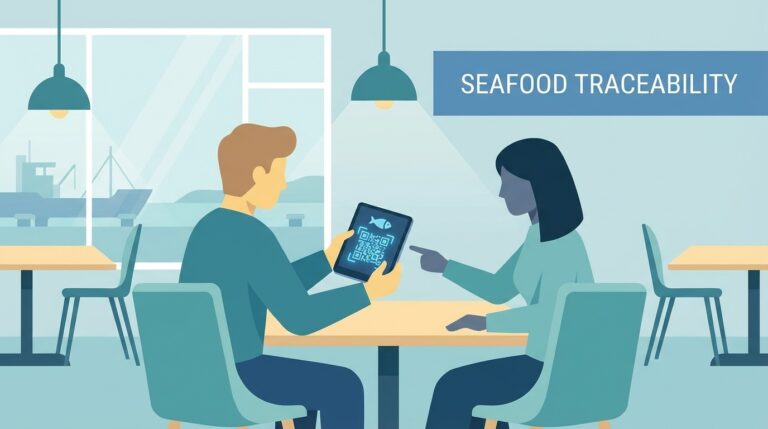
- K-Culture Moment: You’ll see this everywhere from high-end sushi bars in Gangnam to the stalls at Noryangjin Fish Market. It’s often accompanied by a blue sticker and a QR code. When a Korean host wants to impress and reassure you, they will explicitly point this out.
- Editor’s Insight: Think of “이력” as a “resume.” Just like you’d check a job applicant’s resume, you’re checking the fish’s “resume” from ocean to table.
- Situation Spectrum:
[🚫 절대 금지] ———— [⚠️ 주의] ———— [✅ 자유롭게]
- Casual friends: ✅
- Colleagues (Semi-formal): ✅
- Boss/Elders (Formal): ✅
- 🤔 Think About It: Korea has similar systems for beef (Hanwoo). Why do you think Korean society places such a massive emphasis on government-certified food origin systems? Is it about premium quality, or a deeper need for collective trust?
2. 방사능 검사를 거치다 (To go through radiation inspection)
- Pronunciation: bangsaneung geomsareul geochida [bang-sa-neung geum-sa-reul geo-chee-da]
- Meaning: To undergo/pass radioactive testing.
- K-Culture Moment: On modern restaurant menus or delivery apps (like Baedal Minjok), owners write “방사능 검사를 거친 안전한 수산물입니다” (Safe seafood that has passed radiation inspection) in bold letters to calm public anxiety.
- Editor’s Insight: Using “거치다” (to pass through a process) sounds much more advanced and professional than simply saying “받다” (to receive). It shows you understand administrative procedures.
- Situation Spectrum:
[🚫 절대 금지] ———— [⚠️ 주의] ———— [✅ 자유롭게]
- Casual friends: ⚠️ (A bit too formal; friends would say “검사 다 한 거래”)
- Colleagues (Semi-formal): ✅
- Boss/Elders (Formal): ✅
- 🤔 Think About It: How does language adapt to environmental crises? Notice how a highly scientific word like “방사능” (radiation) has become common restaurant vocabulary.
3. 우려를 불식시키다 (To dispel concerns)
- Pronunciation: uryeoreul bulsiksikida [oo-ryeo-reul bool-sheek-shee-kee-da]
- Meaning: Literal: To wipe away concerns / Real nuance: To put worries to rest, to clear up doubts completely.
- K-Culture Moment: This is prime K-Drama boardroom vocabulary. When a CEO is facing a PR crisis regarding food safety, they will slam their hand on the table and say, “소비자들의 우려를 불식시킬 방안을 찾아!” (Find a way to dispel consumers’ concerns!)
- Editor’s Insight: “불식” (拂拭) literally means to wipe away dust. It’s a brilliant C2-level idiom to use when discussing how transparent traceability systems “wipe away” the public’s fear.
- Situation Spectrum:
[🚫 절대 금지] ———— [⚠️ 주의] ———— [✅ 자유롭게]
- Casual friends: 🚫 (Too dramatic and news-like)
- Colleagues (Semi-formal): ⚠️ (Good for meetings, too stiff for drinking)
- Boss/Elders (Formal): ✅ (Excellent for professional presentations)
Phase 3: Textbook vs. Real Korean
How do we shift from stiff textbook Korean to natural, advanced conversational Korean when discussing food safety?
| Situation | 📖 Textbook Korean | 🗣️ Real Korean | 💡 Why the difference? |
|---|---|---|---|
| Reassuring a friend about safety | 이 해산물은 방사능 오염의 우려가 없습니다. (There is no concern of radioactive contamination for this seafood.) | 이거 이력제 확인 다 된 거라 안심하고 먹어도 돼. (This got its traceability all checked out, so eat with peace of mind.) | Koreans prefer focusing on the system of trust (이력제) and emotional comfort (안심) rather than explicitly stating the scary hazard (방사능) during a meal. |
| Asking the restaurant owner | 이 물고기는 어디에서 왔습니까? (Where did this fish come from?) | 사장님, 이거 산지 직송인가요? 원산지가 어디예요? (Boss, is this direct from the source? Where is the origin?) | “산지 직송” (direct from the source) implies freshness and safety, a highly favored concept in K-Food. |
| Discussing the news | 사람들이 방사능을 무서워합니다. (People are afraid of radiation.) | 요즘 워낙 말이 많아서 다들 깐깐하게 따지더라고요. (There’s so much talk lately, so everyone is being really meticulous/picky.) | Using “말이 많다” (much talk/controversy) and “깐깐하게 따지다” (meticulously checking) reflects the social atmosphere without sounding clinical. |
Phase 4: Cultural Context — K-Culture Deep Dive
4-1. Non-Verbal Nuance: The “Nunchi” of Dining Anxiety
If you are worried about food safety, directly confronting a Korean host or a restaurant owner is a major faux pas. Korean Nunchi (눈치) dictates that you read the room. Instead of pointing at the fish with a worried face, glance casually at the 원산지 표시판 (Country of Origin Board) hanging on the wall. It’s a legal requirement in Korea. If you must ask, use a soft, curious tone rather than an accusatory one, and hold your chopsticks down while asking.
4-2. The K-Food Connection: Collective Trust
In Korean culture, eating is profoundly communal. We share stews (jjigae), and we share massive platters of raw fish. When environmental anxieties (like radiation in the ocean) threaten the safety of the food, it threatens the communal bond itself. That is why the government’s Seafood Traceability System (수산물 이력제) isn’t just an administrative tool; it’s a social band-aid.
In K-Dramas, you’ll often see scenes where a team dinner (hoesik) goes awry because someone refuses to eat. By understanding these systems and the vocabulary around them, you show that you respect the Korean emphasis on collective well-being and trust.
Phase 5: Real-World Roleplay Scenario
Let’s put you in the director’s chair.
Setting: Friday, 7 PM. A premium seafood restaurant near Yeouido. Private room. You are having dinner with your Korean business partners. The centerpiece is a stunning platter of sashimi.
Characters:
– YOU: An expat director who loves K-food but stays updated on global environmental news.
– Min-su (40s): Your Korean counterpart, eager to treat you to the best local delicacies.
– Waiter: Professional and quick.
Dialogue:
Min-su: 우리 이사님 오셨으니까, 오늘 특별히 자연산 돔으로 준비했습니다! 🐟
(uri isanim osyeosseunikka, oneul teukbyeolhi jayeonsan domeuro junbihaetseumnida!)
[Since our Director is here, I prepared a special wild-caught snapper today!]
YOU: 아, 정말 감사합니다. 빛깔이 아주 좋네요. 그런데 요즘 바다 환경 문제 때문에 해산물 드시기 걱정하는 분들도 꽤 있지 않나요?
(a, jeongmal gamsahamnida. bitkkari aju jonneyo. geureonde yojeum bada hwangyeong munje ttaemune haesanmul deusigi geokjeonghaneun bundeuldo kkwae itji annayo?)
[Ah, thank you so much. The color is beautiful. But aren’t there quite a few people worried about eating seafood lately due to ocean environment issues?]
Min-su: 아유, 이사님. 뉴스 많이 보시는구나. 사실 저희도 처음엔 우려가 좀 있었죠.
(ayu, isanim. nyuseu mani bosineunguna. sasil jeohuido cheoumen uryeoga jom isseotjyo.)
[Ah, Director. You watch the news a lot. Actually, we had some concerns at first too.]
Min-su: 여기 사장님! 이거 이력제 확인 다 된 거죠?
(yeogi sajangnim! igeo iryeokje hwagin da doen geojyo?)
[Owner here! This has been fully checked through the traceability system, right?]
Waiter: 그럼요! 저희는 수산물 이력제는 물론이고, 매일 아침 방사능 검사를 통과한 식자재만 산지 직송으로 받습니다.
(geureomyo! jeohuineun susanmul iryeokjeneun mullonigo, maeil achim bangsaneung geomsareul tonggwahan sikjajaeman sanji jiksongeuro batseumnida.)
[Of course! Not only the seafood traceability system, but we only receive ingredients direct from the source that have passed radiation inspections every morning.]
Waiter: (Points to a QR code on the table tent) 여기 QR코드 찍어보시면 유통 경로까지 다 나옵니다.
(yeogi QR-kodeu jjigeobosimyeon yutong gyeongrokkaji da naomnida.)
[If you scan this QR code here, the entire distribution route will show up.]
YOU: 오, 시스템이 정말 철저하게 되어 있네요. 이렇게 투명하게 관리되니 소비자들의 우려가 확실히 불식되겠어요.
(o, siseutemi jeongmal cheoljeohage doeo inneyo. ireoke tumyeonghage gwanridoeni sobijadeurui uryeoga hwaksilhi bulsikdoegesseoyo.)
[Oh, the system is really thorough. Being managed this transparently will definitely dispel consumers’ concerns.]
Min-su: 맞습니다. 나라에서 검증한 거니까 이사님도 안심하고 드셔도 됩니다! 자, 한 점 드시죠.
(matseumnida. naraeseo geomjeunghan geonikka isanimdo ansimhago deusyeodo doemnida! ja, han jeom deusijyo.)
[Exactly. Since it’s verified by the country, you can rest assured and eat, Director! Here, have a piece.]
🔀 Your Turn! How do you respond to Min-su’s reassurance?
– A) “방사능 수치가 0이라는 증명서를 직접 볼 수 있을까요?” (Can I see the certificate showing the radiation level is 0?)
– B) “네, 덕분에 마음이 놓이네요. 잘 먹겠습니다!” (Yes, my mind is at ease thanks to you. I will enjoy the food!)
– C) “그래도 전 고기가 더 좋은데…” (I still prefer meat though…)✅ Best Choice: B — Reason: At the C2 level, you know how to accept a host’s hospitality. Acknowledging their effort to reassure you (“마음이 놓이네요”) maintains social harmony.
⚠️ Choice A Analysis: While logically sound, demanding hard proof at a social dinner after the host and waiter have already vouched for the system will destroy the mood (bunwigi 파악 실패).
Phase 6: 10-Second Shadowing Drill
Practice this advanced polite phrasing. Pay attention to the pauses (/) and the emotional tone!
😊 사장님, / 이거 / 수산물 이력제 / 확인 가능한가요?
(sajangnim, / igeo / susanmul iryeokje / hwagin ganeunghangayo?)
Boss, is it possible to verify the seafood traceability for this?
Phase 7: K-Culture Mini Dictionary
| Korean | Romanization | English | Contextual Nuance |
|---|---|---|---|
| 수산물 이력제 | susanmul iryeokje | Seafood Traceability System | The QR-code based system tracking seafood from ocean to table. |
| 산지 직송 | sanji jiksong | Direct delivery from the source | A buzzword for freshness. “Straight from the ocean to you.” |
| 안심하다 | ansimhada | To feel relieved / rest assured | The psychological goal of food safety regulations in Korea. |
| 원산지 표시 | wonsanji pyosi | Country of Origin labeling | The mandatory signs in all Korean eateries stating where ingredients are from. |
| 깐깐하다 | kkankkanhada | Strict / Fastidious / Meticulous | How Korean consumers behave when food safety is concerned. |
Phase 8: Traveler’s Survival Kit
Even if you’re just visiting the famous Noryangjin Fish Market or Jagalchi Market in Busan, knowing how to verify food safety is a superpower.
🆘 Survival Expressions for the Fish Market
– 🇰🇷 “원산지가 어디예요?” (wonsanjiga eodiyeyo?)
– Where is the country of origin? (The most natural way to ask if it’s domestic or imported).
– 🇰🇷 “이거 국내산인가요?” (igeo gungnaesan-ingayo?)
– Is this domestically produced? (Korean-caught seafood is generally trusted more locally).
– 🇰🇷 “오늘 들어온 거예요?” (oneul deureoon geoyeyo?)
– Did this come in today? (To check freshness).📌 Editor’s Travel Note
– QR Codes: Look for the blue government sticker with a fish logo and a QR code at stalls. You can actually scan it with your phone’s camera!
– The Board: Every restaurant MUST have a “원산지 표시판” (Origin Board). Usually, it says something like: 광어 (Flatfish) – 국내산 (Domestic), 연어 (Salmon) – 노르웨이산 (Norway).
Phase 9: Critical Thinking Corner — “One Step Deeper”
Food & Identity: The Fragility of the Shared Table
🧠 Think Deeper:
Korean food culture is fundamentally communal. Eating from the same pot and sharing plates is a profound expression of jeong (정, affection/bonding). However, when environmental issues like ocean radiation make headlines, this communal trust is deeply shaken. The rise of meticulous systems like the Seafood Traceability System isn’t merely about administrative transparency; it is a vital tool to preserve the cultural identity of eating together. By certifying safety, the government and restaurants provide the “social permission” needed for people to relax, clink their soju glasses, and maintain their relationships without the shadow of fear.💬 Your Turn: How does your culture handle collective anxiety over food safety? Is it left to individual choice, or does the government step in to reassure the public? Share your thoughts in the comments!
Phase 10: FAQ & Avoiding Misunderstandings
Q: Is it rude to ask a restaurant owner if the food is radioactive?
Yes. Directly asking “방사능 없어요?” (Is there no radiation?) can sound accusatory. Always default to asking about the origin (“어디산이에요?”) or the system (“이력제 확인 되나요?”).
Q: Can I refuse to eat seafood at a company dinner (hoesik) due to safety concerns?
At the C2 level of cultural understanding, a flat “No, it’s unsafe” is harsh. Instead, politely excuse yourself by citing a health preference or allergy: “제가 장이 좀 예민해서 날것은 피하고 있습니다” (My stomach is a bit sensitive, so I’m avoiding raw food).
❌ Common Mistake: Using aggressive news vocabulary at the dinner table (e.g., “오염수” – contaminated water).
✅ Do This Instead: Focus on positive vocabulary like “안전성” (safety) and “신선도” (freshness).
Phase 11: Summary & Action Items
💡 One-Liner Summary: To navigate seafood safety concerns in Korea like a true insider, focus on systems of trust (수산물 이력제) rather than the hazard itself.
🎬 Action Mission 3-Steps:
– 🥉 Bronze (Solo): Read a Korean news article about “수산물 이력제” and underline the advanced vocabulary.
– 🥈 Silver (Online): Look up a famous Korean sushi restaurant on Naver Maps and check if their reviews mention “원산지” or “안심.”
– 🥇 Gold (Real World): Next time you are at a Korean restaurant, find the “원산지 표시판” (Origin Board) and read it before ordering!
🌊 K-Culture Mission: Watch a K-Drama scene involving a corporate dinner at a seafood restaurant. Observe how the characters express hospitality by highlighting the quality and origin of the food!
Did you find this deep dive helpful? Have you ever had to navigate a tricky food safety conversation in a foreign language? Let me know below! ⬇️
Phase 12: Quiz — Interactive Challenge
1. Situational Judgment: You are treating a skeptical foreign client to a premium seafood dinner in Seoul. Which phrase best puts their mind at ease?
– A) “이 식당은 방사능 오염수를 절대 쓰지 않습니다.”
– B) “여기 해산물은 모두 이력제 확인이 끝나서 안심하고 드셔도 됩니다.”
– C) “방사능 검사 결과지를 보여달라고 할까요?”
2. Fill in the Blank:
“정부는 소비자들의 ( _______ )를 불식시키기 위해 검사를 강화했습니다.”
– A) 안심 (Relief)
– B) 이력 (History)
– C) 우려 (Concern)
3. True or False:
“In Korea, it is culturally acceptable to loudly demand proof of radiation testing from a busy fish market vendor.”
(Answers: 1. B, 2. C, 3. False – Always use Nunchi and look for the QR code or Origin board first!)
Frequently Asked Questions (FAQ)
Q: What does "수산물 이력제 (Seafood Traceability System)" mean in Korean and how do you pronounce it?
A: In Korean, "수산물 이력제 (Seafood Traceability System)" is pronounced [susanmul iryeokje [soo-san-mool ee-ryeok-jeh] and means: Literal: Marine products history system / Real nuance: The national seafood traceability system.
Q: What does "방사능 검사를 거치다 (To go through radiation inspection)" mean in Korean and how do you pronounce it?
A: In Korean, "방사능 검사를 거치다 (To go through radiation inspection)" is pronounced [bangsaneung geomsareul geochida [bang-sa-neung geum-sa-reul geo-chee-da] and means: To undergo/pass radioactive testing.
Q: What does "우려를 불식시키다 (To dispel concerns)" mean in Korean and how do you pronounce it?
A: In Korean, "우려를 불식시키다 (To dispel concerns)" is pronounced [uryeoreul bulsiksikida [oo-ryeo-reul bool-sheek-shee-kee-da] and means: Literal: To wipe away concerns / Real nuance: To put worries to rest, to clear up doubts completely.







