

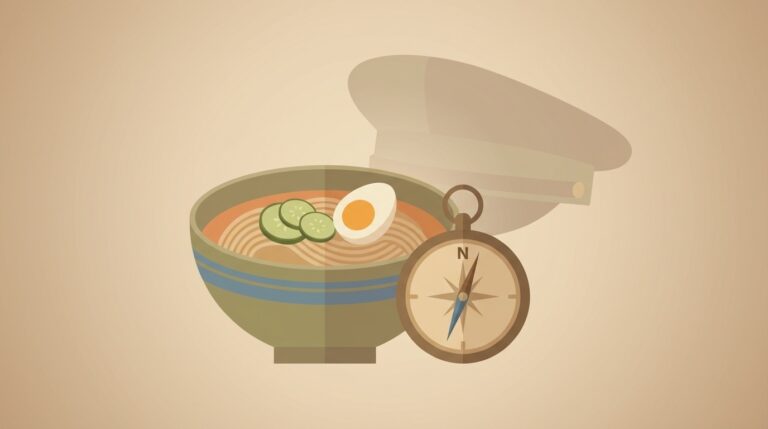
Phase 1: The Empathy & K-Culture Cold Open
Hello! This is your Daily Hangul Editor.
You’re binge-watching a K-Drama, and the star-crossed lovers are tragically separated by an invisible border. Or perhaps you’re scrolling through social media, feeling that familiar pang of heartbreak because your favorite K-Pop idol just posted a photo with a buzz cut, announcing their mandatory military enlistment.
To the world, these are dramatic plotlines or brief fandom hiatuses. But in Korea, they are echoes of a very real, unresolved history: The Korean War and the pain of national division.
When you visit Korea, this history isn’t just locked away in museums. It’s in the food you eat, the sudden emergency alert drills on your phone, and the way men bond over their military stories over a bottle of Soju. As a B2 learner, understanding this context will elevate you from a mere tourist to someone who truly grasps the soul of modern Korea. Today, we’re going to bridge the gap between textbook history and everyday life. Ready to dive deep?
Phase 2: Core Expressions Deep Dive
Here are the essential expressions that carry the weight of Korea’s divided history.
1. 6.25 전쟁
- Pronunciation: [Yug-i-o jeonjaeng] Sounds like: Yoo-gee-oh jeon-jaeng
- Meaning: The Korean War (Literal: June 25th War)
- K-Culture Moment: If you watch a documentary or talk to an elderly Korean, they rarely say “한국 전쟁” (Korean War). They call it “Yug-i-o,” marking the exact date the war broke out (June 25, 1950). It feels much more personal and visceral.
- Editor’s Insight: Using “6.25” instead of the academic term shows that you understand the emotional impact of the event from a Korean perspective. It’s a day etched into the national memory.
- Situation Spectrum:
[🚫 절대 금지] ———— [⚠️ 주의] ———— [✅ 자유롭게]
- Casual friends: ✅
- Formal/Elders: ✅ (Very appropriate)
- 🤔 Think About It: Why do Koreans name this war after its starting date rather than the nations involved? What does this say about the sudden, shocking nature of the conflict?
2. 이산가족
- Pronunciation: [Isan-gajok] Sounds like: Ee-sahn ga-joke
- Meaning: Separated families
- K-Culture Moment: You might have seen heart-wrenching news clips of elderly people weeping as they hug relatives they haven’t seen in 70 years during the brief, government-arranged “reunions.”
- Editor’s Insight: “이산” means dispersed or scattered. This isn’t just a vocabulary word; it’s a profound national tragedy. Use it with deep respect.
- Situation Spectrum:
[🚫 절대 금지] ———— [⚠️ 주의] ———— [✅ 자유롭게]
- Casual friends: ⚠️ (Only if the topic naturally arises)
- Formal/Elders: ✅ (When discussing history respectfully)
- 🤔 Think About It: In your culture, is there a historical event that physically tore families apart? How does language reflect that trauma?
3. 군대 가다 / 입대하다
- Pronunciation: [Gundae gada / Ipdaehada] Sounds like: Goon-dae gah-dah / Eep-dae-hah-dah
- Meaning: To go to the military / To enlist
- K-Culture Moment: “오빠 군대 가요 ㅠㅠ” (Oppa is going to the army TT). The moment a male K-Pop idol turns 28-30, this phrase floods the internet. Because technically, South Korea is still at war (armistice), military service is mandatory for all able-bodied men.
- Editor’s Insight: “입대하다” is the formal news term. But in real life, everyone just sighs and says “나 다음 달에 군대 가…” (I’m going to the military next month).
- Situation Spectrum:
[🚫 절대 금지] ———— [⚠️ 주의] ———— [✅ 자유롭게]
- Casual friends: ✅
- Formal/Workplace: ✅
Phase 3: Textbook vs. Real Korean
| Situation | 📖 Textbook Korean | 🗣️ Real Korean | 💡 Why is it different? |
|---|---|---|---|
| Naming the war | 한국 전쟁 (Korean War) | 6.25 (육이오) | Naming it by the date emphasizes the trauma of the sudden invasion. |
| Naming the North | 조선민주주의인민공화국 | 북한 (North Korea) / 북쪽 (The North) | The formal name is too long and politically loaded; “북쪽” is softer when referring to a grandparent’s hometown. |
| Mandatory duty | 병역의 의무를 다하다 | 군대 끌려가다 (Being dragged to the army) | Slang among young men expressing reluctance about their mandatory 18-month pause in life. |
Bottom Note: For B2 learners, saying “군대 가다” is perfectly natural. “군대 끌려가다” is very slangy and best used by Korean men joking amongst themselves—you might sound a bit unnatural using it yourself!
Phase 4: Cultural Context — K-Culture Deep Dive
4-1. Non-Verbal Elements: The Nuance of “Nunchi” (눈치)
When discussing the North or the war with older Koreans, maintain a respectful, listening posture. Do not treat the Kim regime as a lighthearted joke. For many elderly people, the North is where they lost their siblings or parents. Your Nunchi should tell you to nod empathetically and use honorifics if they mention their hometown.
4-2. K-Culture Link: K-Food & The Taste of Survival 🍜
Let’s talk about a delicious consequence of a tragic history: Milmyeon (밀면) and Naengmyeon (냉면).
If you travel to Busan, you must eat Milmyeon (wheat noodles in a cold broth). But did you know this is refugee food? During the Korean War, millions fled to Busan, the southernmost city. Refugees from the North craved their traditional Naengmyeon (made with buckwheat), but buckwheat was scarce. Instead, they used the wheat flour provided by US aid to recreate their soul food.
Every time you slurp a bowl of Milmyeon in Busan, or Pyongyang-style Naengmyeon in Seoul, you are literally tasting the history of the division and the resilience of the Korean people.
Phase 5: Real-Life Roleplay Scenario
Scenario A: The K-Food History Lesson
Setting: A bustling Milmyeon restaurant in Busan. It’s summer, the AC is blasting, and you’re eating with your Korean coworker, Min-su (32, friendly and loves sharing local facts).
Characters:
– YOU: A foreign professional visiting Busan for a project.
– Min-su: Your Korean guide for the day.
Dialogue:
Min-su: 어때요? 밀면 처음 먹어보죠? 부산 오면 무조건 먹어야 돼요. 🍜
(Eottaeyo? Milmyeon cheoeum meogeobojyo? Busan omyeon mujogeon meogeoya dwaeyo.)
[How is it? First time trying Milmyeon, right? If you come to Busan, you absolutely have to eat it.]
YOU: 네, 진짜 시원하고 맛있어요! 근데 냉면이랑 뭐가 달라요?
(Ne, jinjja siwonhago masisseoyo! Geunde naengmyeon-irang mwoga dallayo?)
[Yes, it’s really refreshing and delicious! But how is it different from Naengmyeon?]
Min-su: 아, 이게 원래 6.25 전쟁 때 피난민들이 만든 음식이에요. 메밀이 없어서 밀가루로 만든 거죠.
(Ah, ige wonrae Yug-i-o jeonjaeng ttae pinanmindeul-i mandeun eumsigieyo. Memil-i eopseoseo milgaru-ro mandeun geojyo.)
[Ah, this is originally food made by refugees during the Korean War. They didn’t have buckwheat, so they made it with wheat flour.]
YOU: 아… 그런 슬픈 역사가 있었군요.
(Ah… geureon seulpeun yeoksaga isseotgunyo.)
[Ah… I didn’t realize it had such a sad history.]
Min-su: 맞아요. 우리 할아버지도 고향이 북쪽이신데, 그때 부산으로 내려오셨거든요.
(Majayo. Uri harabeojido gohyang-i bukjjog-isinde, geuttae Busan-euro naeryeo-osyeotgeodeunyo.)
[Right. My grandfather’s hometown is also in the North, and he came down to Busan back then.]
🔀 Your Turn! How do you respond to Min-su?
– A) “와, 북한 사람이에요? 신기하네요!” (Wow, he’s North Korean? Fascinating!)
– B) “정말 고생 많으셨겠어요… 이산가족이신가요?”
– C) “그래서 군대 다녀오셨어요?”✅ Best Choice: B — “He must have gone through so much… Is he part of a separated family?” This shows deep empathy and high-level vocabulary (고생 많으셨겠어요 + 이산가족).
⚠️ Choice A Analysis: Calling someone who fled the war “North Korean” (북한 사람) in a modern context can sound politically insensitive. They consider themselves Koreans who lost their hometowns.
Scenario B: The Military Talk Bonus (K-Pop context)
(At a cafe, your Korean friend is sighing while looking at her phone)
Friend: 아… 우리 오빠 내일 입대해. 머리 깎은 사진 올라왔어. 😭
(Ah… uri oppa naeil ipdaehae. Meori kkakkeun sajin ollawasseo.)
[Ah… my bias (oppa) is enlisting tomorrow. He posted a picture with his head shaved.]
YOU: 헐! 건강하게 잘 다녀오길 바랄 수밖에 없네. 면회 갈 거야?
(Heol! Geonganghage jal danyeo-ogil baral subakke eomne. Myeonhoe gal geoya?)
[OMG! We can only hope he returns safely. Are you going to visit him?]
Friend: 아이돌인데 어떻게 면회를 가… 그냥 기다려야지.
(Idol-inde eotteoke myeonhoe-reul ga… geunyang gidaryeoyaji.)
[He’s an idol, how can I visit him… I just have to wait.]
Phase 6: 10-Second Shadowing Drill
Practice your tone and pausing! When discussing this topic, keep your tone steady and empathetic.
🥺 아... / 그런 슬픈 역사가 / 있었군요.
(Ah… / geureon seulpeun yeoksaga / isseotgunyo.)
[Ah… I didn’t realize there was such a sad history.]
😊 건강하게 / 잘 다녀오세요!
(Geonganghage / jal danyeo-oseyo!)
[Return safely in good health!] (Use this to a friend or idol going to the army)
Phase 7: K-Culture Mini Dictionary
| Korean | Romanization | English | Context |
|---|---|---|---|
| 휴전선 | hujeonseon | Armistice Line | The actual border dividing the two Koreas, replacing the 38th parallel. |
| 통일 | tongil | Unification | The political and social goal of reuniting the peninsula. |
| 민방위 | minbangwi | Civil Defense | Men who finished active duty still do civil defense drills. You might hear sirens in Korea—don’t panic, it’s a drill! |
| 탈북민 | talbungmin | North Korean Defectors | A respectful term for people who have fled North Korea to live in the South. |
Phase 8: Traveler’s Survival Kit (DMZ Tour Edition)
Many foreigners want to visit the DMZ (Demilitarized Zone). Here is what you absolutely must know.
🆘 Survival Expressions for the DMZ
– 🇰🇷 “여권 꼭 가져가야 해요?” (Yeogwon kkok gajyeogaya haeyo?)
– 🗣️ Do I really need to bring my passport?
– 📍 Use: When booking your DMZ tour.
– 💡 Pro Tip: YES! You cannot enter the DMZ without your physical passport. Also, there is a strict dress code (no ripped jeans, sandals, or camouflage).📌 Editor’s Travel Note
– Photography Restrictions: At the DMZ, military personnel will tell you exactly when and where you can take photos. Do not point your camera where they say no. “사진 찍으면 안 됩니다!” (Sajin jjigeumyeon an deumnida! – No photography!).
– Transportation: You cannot just take a taxi to the JSA (Joint Security Area). You must book an official tour bus from Seoul.
Phase 9: Critical Thinking Corner — “One Step Deeper”
Media vs Reality: The Romance of the Border
🧠 Think Deeper:
Global hit K-Dramas often use the North-South division as a backdrop for high-stakes romance or thrilling action. While these shows are beautiful, they often gloss over the stark, heartbreaking reality. In reality, communicating with anyone in the North is strictly illegal under South Korea’s National Security Act. There is no paragliding back and forth. The division isn’t just a dramatic plot device; it’s a 70-year trauma that continues to separate families and requires young men to pause their lives to prepare for potential war.💬 Your Turn: Have you ever watched a movie or drama about your country’s history that romanticized a deeply painful event? How did locals react to it? Share your thoughts below!
Phase 10: FAQ & Avoiding Misunderstandings
- “Can I ask a Korean man about his military service?”
- Yes, but read the room. For many Korean men, military stories (군대 이야기) are a source of pride and a way to bond. However, asking “Did you kill anyone?” or treating it like an action movie is highly inappropriate. Ask instead: “군대에서 어떤 보직이었어요?” (What was your role in the military?).
- “Is it safe to travel to Korea with the North so close?”
- Yes! Koreans go about their daily lives safely. The media often amplifies the danger abroad, but locally, it’s just a part of the geopolitical reality they are used to.
❌ Common Mistake #1: Joking about the North Korean leadership or the threat of war with Koreans.
✅ Do this instead: Keep your curiosity respectful. Treat the topic of the Korean War as you would treat WWII in Europe—as serious, lived history.
Phase 11: Summary & Action Items
One-Liner Summary: The Korean War and division aren’t just history book chapters; they are actively woven into the food (Milmyeon), culture (Idol enlistments), and daily language of modern Korea.
Action Mission 3 Steps:
– 🥉 Bronze: Say “건강하게 잘 다녀오세요!” out loud 3 times, imagining you’re sending off your favorite idol or friend.
– 🥈 Silver: Search for a picture of “밀면” (Milmyeon) on Instagram and practice explaining its history in your head in Korean.
– 🥇 Gold: The next time you visit a Korean restaurant, look closely at the menu. Do they serve 평양냉면 (Pyongyang Naengmyeon)? Order it and appreciate the history!
K-Culture Mission:
Watch one episode of a K-Drama featuring the military or the North-South dynamic (e.g., Crash Landing on You or D.P.), but this time, watch it while thinking about the reality of the “휴전선” (Armistice line) and mandatory enlistment.
Got a favorite K-Pop idol who recently enlisted? Leave a comment sending them a message using today’s expressions! 💌
Phase 12: Quiz — Interactive Challenge
1. Situational Judgment: Your 20-year-old Korean friend sighs and says, “나 다음 달에 군대 가…” What is the most culturally appropriate B2-level response?
– A) 축하해! (Congratulations!)
– B) 파이팅! 건강하게 잘 다녀와. (Fighting! Come back safely and healthy.)
– C) 6.25 전쟁은 슬픈 역사야. (The Korean War is a sad history.)
2. True or False — K-Culture Edition:
– “Milmyeon (밀면) was originally an expensive royal dish from the Joseon Dynasty.” (T/F)
3. Fill in the blank:
– 할아버지 _____이/가 북쪽이세요. (Grandpa’s hometown is in the North.)
(Answers: 1: B (Korean men usually aren’t ‘congratulated’ for mandatory service, empathy is best), 2: False (It’s refugee food made from wheat flour during the war), 3: 고향)
Frequently Asked Questions (FAQ)
Q: What does "6.25 전쟁" mean in Korean and how do you pronounce it?
A: In Korean, "6.25 전쟁" is pronounced [Yug-i-o jeonjaeng] and means: The Korean War (Literal: June 25th War)
Q: What does "이산가족" mean in Korean and how do you pronounce it?
A: In Korean, "이산가족" is pronounced [Isan-gajok] and means: Separated families
Q: What does "군대 가다 / 입대하다" mean in Korean and how do you pronounce it?
A: In Korean, "군대 가다 / 입대하다" is pronounced [Gundae gada / Ipdaehada] and means: To go to the military / To enlist







