

Phase 1: 공감 — 몰입형 오프닝 (Immersive Hook)
Hello there! Welcome back to Daily Hangul. I’m your editor and friendly neighborhood K-Culture navigator.
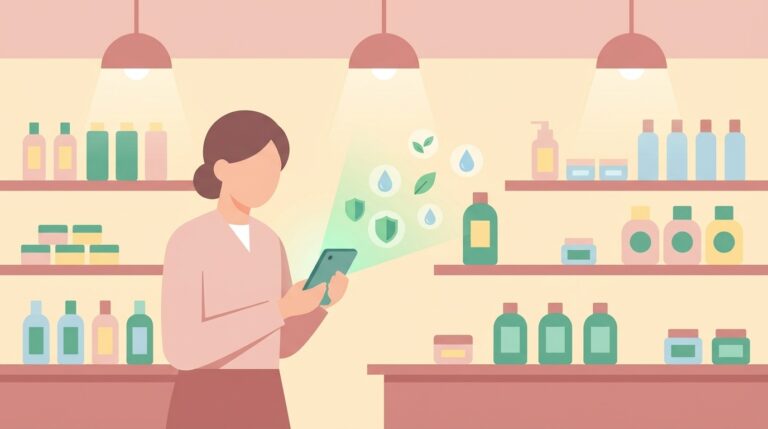
Picture this: You’re standing in the middle of Olive Young in Gangnam. It’s a Friday evening, the K-Pop music is blasting, and you’re surrounded by walls of beautifully packaged serums, toners, and creams. You want to buy that viral serum you saw your favorite idol holding on Instagram. But wait—you have sensitive skin. You look to your right, and a Korean shopper is intensely scanning the barcode of a moisturizer with her phone, frowning, and then putting it back on the shelf.
What is she looking at? Welcome to the ultimate K-Beauty matrix: Cosmetic Ingredient Analysis Apps (화장품 성분 분석 앱) like Hwahae (화해) or Glowpick (글로우픽).
In Korea, having flawless, “glass skin” (유리알 피부) isn’t just about good genetics or buying what’s popular. It’s a science. Korean consumers are incredibly meticulous, checking for every single chemical before letting a drop touch their face. If you’re at a C1 level in Korean, knowing how to say “I have oily skin” isn’t enough anymore. You need to speak the real, nuanced language of K-Beauty enthusiasts.
Let’s dive into the insider vocabulary that will not only save your skin but also make you sound like a true Seoulite!
Phase 2: 핵심 표현 심층 분석 (Deep Dive)
1. 수부지 (수분 부족형 지성)
- Pronunciation: [su-bu-ji] (The ‘으’ in ‘수’ and ‘지’ sounds like that disgusted sound you make when stepping in gum—tighten your lips!)
- Meaning: Dehydrated Oily Skin (Literal: Moisture-lacking oily type)
- K-Culture Moment: You’re watching a beauty YouTuber review a foundation. She says, “수부지 분들, 이거 무조건 사세요!” (Dehydrated oily folks, you must buy this!). In Korea, skin types aren’t just dry or oily; they are categorized with scientific precision.
- Editor’s Insight: This is an acronym (줄임말) that has become standard Korean. If you tell a store clerk you are “수부지,” their eyes will light up with respect. You aren’t just a tourist; you know your stuff.
- Situation Spectrum:
[🚫 절대 금지] ———— [⚠️ 주의] ———— [✅ 자유롭게]- Friends/Casual: ✅
- Store Clerks/Semi-formal: ✅
- Dermatologist/Formal: ⚠️ (They understand it, but might use medical terms)
- 🤔 Think About It: Why do Koreans love acronyms (줄임말) for highly specific conditions like ‘수부지’? How does this reflect Korea’s fast-paced, efficiency-driven ‘빨리빨리’ (ppalli-ppalli) culture?
2. 성분이 순하다 / 독하다
- Pronunciation: [seongbuni sunhada / dokhada]
- Meaning: The ingredients are mild/gentle vs. harsh/strong.
- K-Culture Moment: On ingredient apps, you’ll see reviews saying, “성분이 순해서 데일리로 쓰기 좋아요” (The ingredients are gentle, so it’s good for daily use).
- Editor’s Insight: “순하다” is a beautiful word. We use it for mild food, gentle dogs, kind people, and yes, skincare. “독하다” is the exact opposite—harsh, toxic, or strong.
- Situation Spectrum:
[🚫 절대 금지] ———— [⚠️ 주의] ———— [✅ 자유롭게]- Friends/Casual: ✅
- Store Clerks/Semi-formal: ✅
- Formal Contexts: ✅
- 🤔 Think About It: Does your language use the same word to describe a gentle personality, mild food, and sensitive skincare products?
3. 피부가 뒤집어지다 / 트러블이 올라오다
- Pronunciation: [pibuga dwijibeojida / teureobeuri ollaoda]
- Meaning: My skin broke out / Acne is acting up. (Literal: My skin flipped over / Trouble is coming up)
- K-Culture Moment: In K-Dramas, when the protagonist is stressed from work, they look in the mirror and sigh, “아 스트레스 받아, 피부 다 뒤집어졌네.” (Ah, I’m so stressed, my skin completely flipped out).
- Editor’s Insight: Textbooks teach “여드름이 났어요” (I got a pimple). But adults in Korea prefer to use the English loanword “트러블” (trouble) or the dramatic verb “뒤집어지다” (to flip inside out) to describe a bad breakout caused by bad ingredients or stress.
- Situation Spectrum:
[🚫 절대 금지] ———— [⚠️ 주의] ———— [✅ 자유롭게]- Friends/Casual: ✅
- Workplace/Semi-formal: ⚠️ (A bit too personal for a boss)
- Formal Contexts: 🚫
4. 주의 성분 0개 (빵개)
- Pronunciation: [juui seongbun ppang-gae]
- Meaning: Zero harmful/caution ingredients.
- K-Culture Moment: You scan a product on the Hwahae app. A green shield pops up, proudly displaying “20가지 주의 성분 0개” (Zero of the 20 caution ingredients).
- Editor’s Insight: Koreans trust numbers and data. Stating that a product has “zero” (often casually said as 빵개 – bread/zero piece) caution ingredients is the ultimate flex for a skincare brand.
- Situation Spectrum:
[🚫 절대 금지] ———— [⚠️ 주의] ———— [✅ 자유롭게]- Friends/Casual: ✅
- Online Reviews/Semi-formal: ✅
- Formal Contexts: ⚠️ (Say 영개 [yeong-gae] instead of 빵개)
Phase 3: 교과서 vs 진짜 한국어 (Textbook vs Real Life)
| 상황 | 📖 교과서 한국어 | 🗣️ 진짜 한국어 | 💡 왜 다를까? |
|---|---|---|---|
| 내 피부 타입 설명 | 저는 지성 피부입니다. | 저 수부지라서 속당김이 좀 있어요. | 한국인들은 겉(surface)과 속(inner)의 상태를 섬세하게 구분합니다. |
| 화장품 부작용 | 이 화장품은 나빠요. | 이거 썼더니 피부 다 뒤집어졌어요. | ‘나쁘다’보다 나의 피부가 겪는 고통(뒤집어짐)을 강조하는 감정적 표현입니다. |
| 인기 제품 추천 | 가장 유명한 화장품이 뭡니까? | 화해 앱에서 1위한 국민템 있나요? | 데이터(1위)와 대중성(국민템)을 신뢰하는 한국 소비 문화가 반영됨. |
| 안 맞는 성분 | 나쁜 성분이 없나요? | 20가지 주의 성분 다 빠진 건가요? | 성분 분석 앱의 기준(20가지 주의 성분)이 일상 언어로 정착되었습니다. |
Editor’s Tip: At a C1 level, sprinkling words like 속당김 (inner skin tightness) or 국민템 (national item / holy grail) will instantly make locals treat you like a skincare expert.
Phase 4: 문화적 맥락 — K-Culture 딥다이브 (Cultural Deep Dive)
4-1. 비언어적 요소: 올리브영에서의 ‘눈치 (Nunchi)’
When analyzing ingredients on your app in a Korean store, you might experience the classic Olive Young Nunchi. Staff members are trained to be incredibly attentive. If you stand in one place staring at your phone, they will approach you to help. If you just want to check your app in peace without feeling pressured, simply give a polite smile, bow your head slightly, and say, “아, 그냥 둘러보고 있어요” (Oh, I’m just looking around). Avoid intense eye contact if you don’t want assistance!
4-2. K-Culture Connection: The Cult of ‘내돈내산’ (My Money, My Purchase)
In the world of K-Beauty apps and YouTube reviews, authenticity is everything. In the past, many influencers secretly promoted sponsored products. This led to massive backlash. Now, when Koreans read reviews on cosmetic ingredient apps, they actively look for the tag #내돈내산 (내 돈 주고 내가 산 – Bought with my own money).
This reflects a highly critical consumer culture. Koreans don’t just blindly trust celebrity endorsements anymore; they cross-reference their favorite K-Pop idol’s recommendations with anonymous, data-backed reviews on apps to ensure the ingredients are actually safe.
Phase 5: 실전 롤플레이 시나리오 (Immersive Roleplay)
시나리오 A: The Skincare Matrix
- Setting: Friday evening, Olive Young near Gangnam Station. The store is packed, brightly lit, and noisy.
- Characters:
- YOU: A K-Beauty enthusiast with a C1 level in Korean, hunting for a new serum.
- Ji-eun (29, F): Your Korean friend and a self-proclaimed “skincare nerd” (코덕 – 코스메틱 덕후).
Ji-eun: (Holding up a pink bottle) 야, 이거 인스타에서 완전 난리 난 세럼이야! 발라볼래? ✨
(Ya, igeo inseuta-eseo wanjeon nalli nan sereomiya! ballabollae?)
[Hey, this serum is totally going viral on Instagram! Wanna try it?]
(🎭 Stage Direction: Ji-eun pumps a drop onto your hand)
YOU: 오, 향은 진짜 좋다. 근데 나 요즘 피부가 좀 예민해서… 성분 괜찮아?
(O, hyang-eun jinjja jota. Geunde na yojeum pibuga jom yeminhaeseo… seongbun gwaenchana?)
[Oh, the scent is really good. But my skin has been a bit sensitive lately… are the ingredients okay?]
Ji-eun: 잠깐만, 화해 어플로 검색해 볼게. (Scanning barcode) 헐…
(Jamkkanman, hwahae eopeullo geomsaekhae bolge. … Heol…)
[Wait a sec, let me search it on the Hwahae app. … OMG…]
YOU: 왜? 주의 성분 있어?
(Wae? Juui seongbun isseo?)
[Why? Are there caution ingredients?]
Ji-eun: 응, 향료랑 피지 조절 성분 들어있어. 너 수부지잖아. 이거 바르면 백프로 트러블 올라올걸?
(Eung, hyangnyo-rang piji jojeol seongbun deureoisseo. Neo subuji-jana. Igeo bareumyeon baekpeuro teureobeul ollaolgeol?)
[Yeah, it has artificial fragrance and sebum-controlling ingredients. You have dehydrated oily skin. If you apply this, you’ll 100% break out.]
🔀 당신의 차례! 직원에게 다른 제품을 추천받고 싶습니다. 어떻게 말할까요?
– A) “저기요, 이거 말고 안 나쁜 거 주세요.”
– B) “직원님! 저 수부지인데 주의 성분 빵개인 국민템 추천해 주세요!”
– C) “저기요~ 혹시 진정 효과 있고 성분 순한 수부지용 세럼 있을까요?”✅ Best Choice: C — Reason: A is too blunt and uses beginner vocabulary. B uses the slang perfectly, but “직원님” is awkward, and demanding a “national item” can sound a bit aggressive. C strikes the perfect balance of advanced vocabulary (진정 효과 – soothing effect, 성분 순한 – mild ingredients) and polite inquiry.
시나리오 B: Bonus K-Culture Roleplay
Scenario: You decided to buy a toner. You are at the checkout counter.
Clerk: 결제 도와드리겠습니다. 봉투 필요하신가요?
[I’ll help you with checkout. Do you need a bag?]
YOU: 아니요, 괜찮아요. 혹시 이 크림 샘플 좀 써볼 수 있을까요? 피부가 잘 뒤집어져서요.
[No, I’m fine. By any chance, could I get a sample of this cream to try? My skin breaks out easily.]
Clerk: 아, 고객님! 이 제품은 마침 기획 세트로 나와서 미니어처가 포함되어 있어요. 이걸로 드릴까요?
[Ah, customer! This product just came out as a special set and includes a miniature. Shall I give you this one?]
YOU: 오, 대박! 네, 그걸로 할게요. 내돈내산 할 맛 나네요!
[Oh, jackpot! Yes, I’ll take that. It really makes it worth spending my own money!]
Phase 6: 10초 섀도잉 드릴 (Shadowing Drill)
Let’s practice reading with the correct intonation and pauses. Remember, speak with a mix of curiosity and concern!
🥺 저기요, / 제가 수부지 피부라서 그러는데, / 이거 / 성분 순한가요?
(jeogiyo, / jega subuji piburaseo geureoneunde, / igeo / seongbun sunhangayo?)
Excuse me, / it’s because I have dehydrated oily skin, / but is this / mild in ingredients?
Focus on: The slight rise in pitch at “그러는데” to show polite hesitation, and dropping your chin slightly to show you are asking a genuine, careful question.
Phase 7: K-Culture 미니 사전 (K-Culture Glossary)
| 한국어 | Romanization | 영어 | 맥락 설명 |
|---|---|---|---|
| 코덕 | kodeok | Cosmetics nerd | A portmanteau of 코스메틱 (Cosmetics) + 오덕후 (Otaku). A true makeup/skincare enthusiast. |
| 정착템 | jeongchaktem | Holy grail item | Lit: “Settling item.” A product so good you stop looking for alternatives and “settle” down with it. |
| 공병템 | gongbyeongtem | Empties | Lit: “Empty bottle item.” A product you loved so much you used every last drop. Proof of a good product on apps! |
| 내돈내산 | naedonnaesan | Not sponsored | “Bought with my own money.” A hashtag used to prove an app review is authentic and trustworthy. |
| 기획 세트 | gihoek sete | Special value set | Korean cosmetic brands constantly release “special sets” (like 1+1 or with free minis) exclusively for stores like Olive Young. |
Phase 8: 여행자 서바이벌 키트 (Traveler’s Survival Kit)
Even if you aren’t checking ingredients, navigating a Korean cosmetics store requires some quick reflexes. Here are your lifesavers!
🆘 서바이벌 표현 TOP 3
1. 🇰🇷 “테스터 써봐도 되나요?” (teseuteo sseobwado doenayo?)
– 🗣️ Meaning: Can I try the tester?
– 📍 When to use: Before smearing that gorgeous lip tint on your hand. (Always try on the back of your hand, not directly on your lips!)
2. 🇰🇷 “이거 새 상품으로 있나요?” (igeo sae sangpumeuro innayo?)
– 🗣️ Meaning: Do you have this as a new product/in stock?
– 📍 When to use: The shelf is empty, or there’s only a battered box left.
3. 🇰🇷 “텍스 리펀드(면세) 되나요?” (tekseu ripeondeu doenayo?)
– 🗣️ Meaning: Do you do tax refunds?
– 📍 When to use: At checkout.📌 Editor’s Travel Note:
* App Tip: You can download the Hwahae (화해) app, but it’s entirely in Korean. A pro-tip for foreigners is to use the camera translation feature on Google Translate or Papago right over the ingredient list on the back of the box!
* Immediate Tax Refund: Most large Olive Young stores in tourist areas (Myeongdong, Hongdae, Gangnam) do Immediate Tax Refund at the counter. Just show your physical passport! No need to wait for the airport.
Phase 9: 비판적 사고 코너 — “한 발 더 깊이” (Think Deeper)
🧠 Think Deeper: 미디어 vs 현실 (Media vs Reality) – The Glass Skin Illusion
In K-Dramas and K-Pop music videos, stars wake up with luminous, poreless “glass skin” (유리알 피부). Global media often attributes this to a mystical “Korean skincare routine” or eating kimchi. But the reality of K-Beauty is intensely analytical. The popularity of ingredient analysis apps like Hwahae proves that Koreans treat skincare like a chemistry project. It reflects a society that is highly educated, data-driven, and slightly hyper-competitive about self-care. It’s not magic; it’s meticulous research, checking EWG green grades, avoiding 20 specific toxins, and yes—regular trips to the dermatologist.💬 Your Turn: Does media in your country portray beauty as something “natural” you are born with, or is the hard work and science behind it openly discussed? Let me know in the comments!
Phase 10: FAQ & 오해 방지 (Troubleshooting)
Q: If I ask a staff member “이거 성분 순한가요?”, is it considered rude or doubting their products?
No, not at all! Korean staff are incredibly knowledgeable. They actually appreciate customers who know their skin type. They will likely agree and guide you to their “Clean Beauty” (클린뷰티) or hypoallergenic (저자극) sections.
Q: Are app reviews always 100% reliable?
Maybe not 100%. While Hwahae filters out a lot of fake reviews, remember that everyone’s skin is different. Something with a “caution ingredient” (like essential oils) might be perfectly fine for you, but an app will flag it as red. Use the app as a guide, not a bible.
❌ 흔한 실수 (Common Mistake):
Translating “I have a pimple” literally as “저 여드름 났어요” when asking for skincare.
✅ 이렇게 하세요:
While grammatically correct, adults rarely use the word 여드름 (pimple/acne) for occasional breakouts. It sounds a bit like middle school puberty. Instead, use “피부에 트러블이 났어요/올라왔어요” (My skin broke out). It sounds much more natural and sophisticated!
Phase 11: 요약 및 액션 아이템 (Wrap-up)
🔥 One-Liner Summary: To shop for K-Beauty like a local, ditch the basic terms, know your exact skin type like 수부지, and ask about 주의 성분 (caution ingredients) before buying!
🎬 Action Missions:
– 🥉 Bronze: Stand in front of your mirror with your current moisturizer and say out loud, “이거 성분 순한가요?” (Is this mild?)
– 🥈 Silver: Search for a Korean beauty YouTuber and leave a comment: “수부지한테 좋은 정착템 추천해 주세요!” (Please recommend a holy grail item for dehydrated oily skin!)
– 🥇 Gold: Next time you visit a Korean cosmetics store, ask the clerk: “혹시 성분 순한 수부지용 크림 있나요?”
🌸 K-Culture Mission:
Check out the back of any Korean skincare product you own. Can you spot the word 주의 (Caution) or 자극 (Irritation)? Use Papago to scan the ingredients and see if your “Holy Grail” is truly innocent!
Phase 12: 퀴즈 — 인터랙티브 챌린지 (Interactive Quiz)
Test your new K-Beauty Matrix skills!
1. 상황 판단 문제 (Situational Judgment)
You are at Olive Young. You try a tester lotion, but it immediately makes your hand red and itchy. What is the most natural, C1-level thing to say to your friend?
– A) 이 로션은 아주 나쁩니다.
– B) 아, 나 이거 바르니까 피부 뒤집어질 것 같아. 독한가 봐.
– C) 저는 지성 피부가 아닙니다.
2. 빈칸 채우기 (Fill in the Blank)
“이 세럼 진짜 좋아요! 3통째 다 쓴 제 _______ 입니다.”
(Hint: An item you settled down with because it’s so good.)
3. True or False: K-Culture Edition
In Korea, it is considered rude to use a barcode scanning app to check ingredients in front of the store staff. (True / False)
👀 정답 보기 (Click to reveal answers!)
- B – “아, 나 이거 바르니까 피부 뒤집어질 것 같아. 독한가 봐.” (Ah, I feel like my skin will break out from applying this. It must be harsh.) ‘A’ sounds like a robot, and ‘C’ is irrelevant to the reaction.
- 정착템 (jeongchaktem) – The holy grail item you settled with!
- False – It is completely normal and expected! Consumers do it all the time, and staff are used to the highly informed Korean shopper.
Frequently Asked Questions (FAQ)
Q: What does "수부지 (수분 부족형 지성)" mean in Korean and how do you pronounce it?
A: In Korean, "수부지 (수분 부족형 지성)" is pronounced [su-bu-ji] and means: Dehydrated Oily Skin (Literal: Moisture-lacking oily type)
Q: What does "성분이 순하다 / 독하다" mean in Korean and how do you pronounce it?
A: In Korean, "성분이 순하다 / 독하다" is pronounced [seongbuni sunhada / dokhada] and means: The ingredients are mild/gentle vs. harsh/strong.
Q: What does "피부가 뒤집어지다 / 트러블이 올라오다" mean in Korean and how do you pronounce it?
A: In Korean, "피부가 뒤집어지다 / 트러블이 올라오다" is pronounced [pibuga dwijibeojida / teureobeuri ollaoda] and means: My skin broke out / Acne is acting up. (Literal: My skin flipped over / Trouble is coming up)
Q: What does "주의 성분 0개 (빵개)" mean in Korean and how do you pronounce it?
A: In Korean, "주의 성분 0개 (빵개)" is pronounced [juui seongbun ppang-gae] and means: Zero harmful/caution ingredients.







