

Phase 1: 공감 — 몰입형 오프닝 (Immersive Hook)
Hello there! I’m your Daily Hangul Editor, your local cultural navigator.
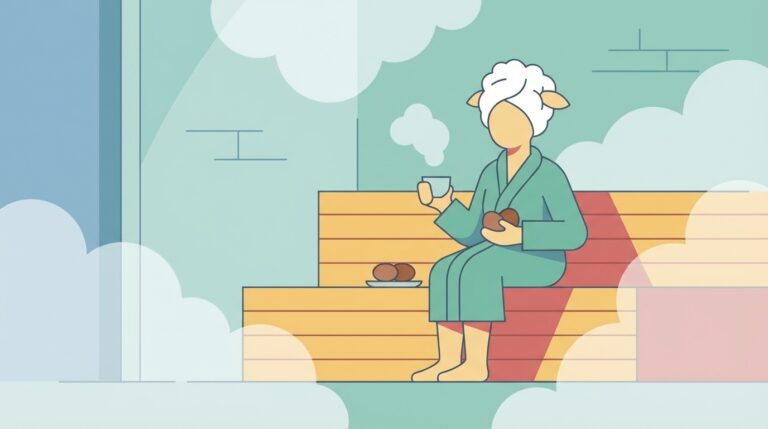
Picture this: You are watching a classic K-Drama. The main character just had a massive fight with their family, packed a tiny bag, and stormed out. Where do they end up? Sleeping on a heated wooden floor, wearing oversized orange pajamas with a towel folded into a “sheep head” (양머리) on their head, cracking roasted eggs on their friend’s forehead. Welcome to the Jjimjilbang (찜질방)—the Korean traditional bathhouse and sauna.
But beyond the snacks and the heated salt rooms lies the ultimate Korean self-care ritual, a rite of passage for any true K-Culture enthusiast: Sesin (세신), or the full-body scrub.
If you’ve ever wondered how Korean actors get that flawless “glass skin,” it doesn’t just start with serums. It starts with an Ajumma (auntie) or Ajeossi (uncle) in black undergarments wielding a brightly colored mitt, ready to scrub away your sins (and several layers of dead skin). It can be intimidating, vulnerable, and slightly painful. But trust me, if you don’t know the phrases to navigate this, you might end up running out of the steam room in a panic. Let’s make sure you walk out feeling like a newly peeled boiled egg instead!
Phase 2: 핵심 표현 심층 분석 (Deep Dive)
Here are the survival phrases you absolutely need before lying down on that vinyl scrub table.
1. 세신 부탁드립니다 (I’d like a body scrub, please)
- Pronunciation: [se-sin butak-deu-rim-ni-da] + [Say-sheen boo-tahk-deu-reem-nee-dah]
- Meaning: Literal: “I request a body cleansing.” Real nuance: “I’d like to sign up for the professional scrub service.”
- K-Culture Moment: When you enter the wet sauna area, you’ll see a small corner with vinyl beds. You don’t just lie down; you have to approach the Sesinsa (scrubber) and formally request it or write your locker number on their whiteboard.
- Editor’s Insight: You might hear locals say “때 밀어주세요” (Ttae mi-reo-ju-se-yo – Please scrub my dirt/dead skin), which is casual and very common. But as a B2 learner, using “세신” (the Sino-Korean word for body scrubbing) sounds much more polite and respectful to the professional performing it.
- Situation Spectrum:
[🚫 절대 금지] ———— [⚠️ 주의] ———— [✅ 자유롭게]
- To a close friend (asking them to scrub your back): 🚫 (Use “때 밀어줘”)
- To the Sesin professional: ✅
- 🤔 Think About It: “부탁드립니다” (I request/entrust) is used everywhere in Korea, from ordering coffee to asking for a favor. Why do Koreans use “entrust” rather than just saying “I want X”? How does this reflect the relational nature of Korean society?
2. 살살 해 주세요 (Please do it gently)
- Pronunciation: [sal-sal hae ju-se-yo] + [Sahl-sahl heh joo-say-yo]
- Meaning: Literal: “Please do it softly softly.” Real nuance: “Mercy! You are scrubbing my soul away, please lighten the pressure.”
- K-Culture Moment: The green “Italy Towel” they use is highly abrasive. If it’s your first time, it will sting. This is your safe word.
- Editor’s Insight: Sal-sal is a mimetic word (의태어) that vividly describes a gentle, light motion. It sounds much more natural than the robotic “약하게 해 주세요” (Make it weak).
- Situation Spectrum:
[🚫 절대 금지] ———— [⚠️ 주의] ———— [✅ 자유롭게]
- To a massage therapist or Sesin professional: ✅
- To a coworker doing a task: ⚠️ (Can sound patronizing)
- 🤔 Think About It: Korean is full of repeated sound words like sal-sal (gently), ppalli-ppalli (quickly), or banjjak-banjjak (sparkling). How do these words change the “flavor” of a sentence compared to standard adverbs?
3. 아~ 시원하다 (Ah~ That hits the spot / It’s refreshing)
- Pronunciation: [a~ si-won-ha-da] + [Ah~ she-won-ha-da]
- Meaning: Literal: “It’s cool/refreshing.” Real nuance: “It hurts a bit, or it’s blazing hot, but it feels incredibly relieving and deeply satisfying.”
- K-Culture Moment: You are sitting in a 90°C (194°F) salt room, sweating buckets, and an older Korean man next to you lets out a deep groan: “Ahhh, siwonhada!” Wait, isn’t he boiling? Yes, but the relief from muscle tension is “refreshing.”
- Editor’s Insight: This is the ultimate Korean paradox. You use this when drinking boiling hot soup (K-Food), stepping into a scalding bath, or getting a deep tissue massage. If you say this after getting a rough body scrub, the Sesin Ajumma will instantly respect you.
- Situation Spectrum:
[🚫 절대 금지] ———— [⚠️ 주의] ———— [✅ 자유롭게]
- Reacting to yourself in a sauna: ✅
- Reacting to a friend massaging your shoulders: ✅
- 🤔 Think About It: The concept of “Siwonhada” connects physical heat or pain with emotional/physical release. Is there a similar concept of “good pain” or “catharsis” in your culture?
Phase 3: 교과서 vs 진짜 한국어 (Textbook vs Real Life)
| 상황 | 📖 교과서 한국어 | 🗣️ 진짜 한국어 | 💡 왜 다를까? |
|---|---|---|---|
| Booking a scrub | 목욕탕에서 때를 밀고 싶습니다. | 저 세신 할게요. (또는 이모님, 저 때 밀게요!) | Locals use “할게요” (I will do) to declare intent, and endearment terms like “이모님” (Auntie) build instant rapport. |
| It hurts! | 너무 아픕니다. 강도를 낮춰주세요. | 아! 쪼금만 살살요~ (살살 해 주세요) | Pain is communicated with quick mimetic words (sal-sal) and a slightly whining tone for politeness without sounding accusatory. |
| Feeling refreshed | 기분이 매우 상쾌합니다. | 어우, 시원하다~ (때 다 벗겼다!) | “상쾌하다” is for a cool morning breeze. “시원하다” is for the deep, visceral relief of shedding dead skin. |
Bottom Note: As a B2 learner, using “이모님” (Auntie) to a female scrubber is a great way to sound like a local, but only use it if she looks visibly older than you. Otherwise, “선생님” (Teacher/Professional) is always a safe, respectful bet!
Phase 4: 문화적 맥락 — K-Culture 딥다이브 (Cultural Deep Dive)
4-1. 비언어적 요소 (Non-verbal Communication): Naked Eye Contact
Let’s address the elephant in the room: you are completely naked. In Western cultures, this might prompt people to look away or act hyper-aware. In a Korean bathhouse, staring is rude, but acting overly embarrassed or covering yourself constantly draws more attention. The best non-verbal communication here is confident nonchalance. When the Sesinsa tells you to turn over (“뒤집으세요”), just roll over like a compliant pancake. No hesitation.
4-2. K-Culture Connection: K-Drama Trope & Bonding
Have you noticed in K-Dramas that fathers and sons, or mothers and daughters, often go to the bathhouse together to scrub each other’s backs?
In Korea, scrubbing someone’s back is an act of deep intimacy and bonding. It requires a high level of “Nunchi” (눈치)—knowing exactly how hard to scrub without your partner having to say “Ouch!”
Critical Viewpoint: While dramas often show friends casually going to Jjimjilbangs for fun, the actual Sesin area is a place of serious business. It’s not a spa where you chat loudly over ambient music. It’s an efficient, rapid-fire exfoliation factory where the scrubbers are highly skilled laborers running on a tight schedule.
Phase 5: 실전 롤플레이 시나리오 (Immersive Roleplay)
메인 롤플레이: The Exfoliation Station
Setting: Saturday afternoon, a bustling local Jjimjilbang in Seoul. You’ve braved the naked bath area, soaked in the hot tub for 15 minutes as instructed, and now it’s your turn. You approach the vinyl bed where an energetic Sesinsa (scrubber in her 50s) is rinsing her green Italy Towel.
Characters:
– YOU (독자): A foreigner living in Korea, trying Sesin for the first time.
– 이모님 (Imo-nim): The veteran scrubber. Efficient, no-nonsense, but ultimately wants you to be clean.
Dialogue:
이모님: 다음 분! 이쪽으로 와서 누우세요. 🛏️
(Daeum bun! Ijjogeuro waseo nu-u-se-yo.)
[Next! Come here and lie down.]
YOU: 안녕하세요. 저 세신 부탁드립니다.
(Annyeonghaseyo. Jeo sesin butak-deu-rim-ni-da.)
[Hello. I’d like a scrub, please.]
이모님: (물바가지를 확 끼얹으며) 네, 엎드리세요. 때 불렸어요? 💦
(Ne, eop-deu-ri-se-yo. Ttae bul-lyeot-seo-yo?)
[Yes, lie on your stomach. Did you soak your dead skin?]
(🎭 Stage Direction: She splashes warm water on you. You immediately lie flat.)
YOU: 네, 탕에 15분 있었어요.
(Ne, tang-e sipo-bun isseot-seo-yo.)
[Yes, I was in the hot tub for 15 minutes.]
이모님: (빡빡 밀기 시작하며) 아이고, 때가 아주 술술 나오네. 시원하죠?
(Aigo, ttaega aju sul-sul na-o-ne. Si-won-ha-jyo?)
[Oh my, the dead skin is rolling right off. Feels refreshing, right?]
🔀 당신의 차례! 어떻게 대답할까요? (The scrubber is going a bit too hard!)
– A) “아니요, 너무 아픕니다. 그만하세요!” (No, it hurts too much. Stop!)
– B) “네, 근데 이모님… 조금만 살살 해 주세요. 아파요~”
– C) “대박! 시원해요! 더 세게 해 주세요!”✅ Best Choice: B — Reason: You validate her work (“Yes”) but politely request a lighter touch using the magic word sal-sal. Adding a little “ah-pa-yo~” with a soft tone ensures she won’t be offended.
⚠️ Choice A 분석: This is too direct and confrontational. It sounds like you are scolding her.
이모님: 아, 처음이에요? 알았어, 살살 할게. 돌아누워요! (등 툭툭)
(Ah, cheo-eum-i-e-yo? Arasseo, sal-sal hal-ge. Do-ra-nu-wo-yo!)
[Ah, is it your first time? Okay, I’ll go gently. Turn over!]
(🎭 Stage Direction: She taps your shoulder to signal the flip.)
YOU: 네, 감사합니다. 어우… 그래도 엄청 시원하네요! 😌
(Ne, gamsahamnida. Eou… geuraedo eomcheong siwonhaneyo!)
[Yes, thank you. Wow… but it’s still very refreshing!]
보너스 롤플레이: Jjimjilbang Snack Bar
(After your scrub, you are in the dry sauna area, wearing the orange uniform, craving some K-Food.)
YOU: 사장님, 식혜 하나랑 구운 계란 세 개 주세요.
(Sajangnim, sikhye hanarang gu-un gyelan se gae juseyo.)
[Boss, one sweet rice punch and three roasted eggs, please.]
매점 이모: 네, 4천5백 원이요. 팔찌 주세요.
(Ne, sacheon-obaek-won-iyo. Paljji juseyo.)
[Yes, that’s 4,500 won. Give me your bracelet.]
(You hand over your locker key bracelet to scan for payment. No wallets needed!)
Phase 6: 10초 섀도잉 드릴 (Shadowing Drill)
Practice making your requests sound natural. Pay attention to the pauses (/) and the emotion tags!
🥺 이모님, / 저 처음인데 / 쪼~~금만 / 살살 해 주세요.
(Imo-nim, / jeo cheo-eum-in-de / jjo~~geum-man / sal-sal hae juseyo.)
[Auntie, it’s my first time, so please do it just a liiittle gently.]😊 어우~ / 진짜 / 시원하다! / 피로가 / 다 풀려요.
(Eou~ / jinjja / si-won-ha-da! / pi-ro-ga / da pul-lyeo-yo.)
[Wow~ It’s really refreshing! All my fatigue is melting away.]
Phase 7: K-Culture 미니 사전 (K-Culture Glossary)
| 한국어 | Romanization | 영어 | 맥락 설명 |
|---|---|---|---|
| 때밀이 | ttaemiri | Body scrubbing / Scrubber | The act of exfoliating dead skin, or the person doing it (informal). |
| 세신사 | sesinsa | Professional bather | The official, respectful title for the person who gives the scrub. |
| 이태리타월 | itaeri ta-wol | Italy Towel | The abrasive green/yellow mitt used for scrubs. (Fun fact: The fabric originally came from Italy, hence the name!) |
| 식혜 | sikhye | Sweet rice punch | The traditional sweet, icy drink you must have after a sauna. |
| 양머리 | yang-meo-ri | Sheep head | Folding a towel to look like sheep horns. Perfect for Jjimjilbang selfies. |
Phase 8: 여행자 서바이벌 키트 (Traveler’s Survival Kit)
If you’re heading to a Korean bathhouse this weekend, screenshot this card!
🆘 서바이벌 표현 TOP 3
1. 🇰🇷 “결제는 팔찌로 되나요?” (Gyeolje-neun paljji-ro doe-na-yo?)
🗣️ Can I pay with my bracelet?
2. 🇰🇷 “세신 예약하고 싶은데요.” (Sesin ye-yak-hago si-peun-de-yo.)
🗣️ I’d like to make a reservation for a scrub. (Sometimes you have to write your locker number on a board).
3. 🇰🇷 “수건 하나만 더 주실 수 있나요?” (Su-geon ha-na-man deo ju-sil su in-na-yo?)
🗣️ Could you give me one more towel?📌 Editor’s Travel Note
– The Payment System: Leave your wallet in your locker! 99% of Jjimjilbangs use your locker key (which is on a waterproof bracelet) to track purchases. You pay the total bill at the front desk when you leave.
– Tattoos: While modern Jjimjilbangs in Seoul are getting lenient, large tattoos can still be frowned upon in traditional bathhouses. If you have full sleeves, check the venue’s policy beforehand!
– Tipping: Do NOT tip your Sesinsa. It’s not part of Korean culture and might cause confusion. The price on the wall is exactly what you pay.
Phase 9: 비판적 사고 코너 — “한 발 더 깊이” (Think Deeper)
Communal Bathing & Egalitarianism (Social Status Stripped Away)
🧠 Think Deeper:
In modern South Korea, social hierarchy (driven by age, job title, and wealth) dictates a lot of daily interactions. However, the Jjimjilbang bath area is often cited as the ultimate egalitarian space. When everyone is completely naked and sitting on identical plastic stools, there are no designer labels, no corporate badges, and no makeup to signal status. You are just a human being seeking warmth and cleanliness. It strips away the complex layers of Korean hierarchy, leaving only basic human respect. The shared vulnerability creates an unspoken community bond.💬 Your Turn: Does your culture have a space where social hierarchies are temporarily suspended? Or is the idea of communal bathing completely foreign? Let us know in the comments!
Phase 10: FAQ & 오해 방지 (Troubleshooting)
Q: “Can I wear a swimsuit or underwear during the scrub?”
No. 🚫 Absolutely not. Wearing a swimsuit in the wet bath/sauna area is considered unhygienic and strictly prohibited. You must be completely naked. Embrace the vulnerability!
Q: “How long do I need to soak before getting scrubbed?”
Usually, the Sesinsa expects you to soak in the hot tubs for at least 15-20 minutes to “불리다” (soften) your dead skin. If you go to the table totally dry, they will send you back to the tub!
Q: “Can I use 반말 (informal language) with the Sesinsa since they are scrubbing me?”
Never! Just because you are paying for a service doesn’t mean you can drop honorifics. In fact, many Sesinsa are older aunties/uncles, so you should use polite language (요/습니다).
❌ 흔한 실수 (Common Mistake): Walking straight into the wet bath area without showering first.
✅ 이렇게 하세요: You MUST take a quick soap shower before entering the communal hot tubs. It’s basic bathhouse etiquette worldwide, but taken very seriously in Korea!
Phase 11: 요약 및 액션 아이템 (Wrap-up)
One-Liner Summary: To survive a Korean body scrub, soak first, respectfully ask for Sesin, and don’t forget the magic word: Sal-sal hae juseyo! (Gently, please!).
Action Mission:
– 🥉 Bronze: Say “아~ 시원하다” (Ah, siwonhada) out loud next time you step into a hot shower or drink a hot coffee.
– 🥈 Silver: Search “Jjimjilbang Vlog” on YouTube and spot the green Italy Towel and Sikhye.
– 🥇 Gold (실전): Visit a real Jjimjilbang, successfully book a Sesin, and treat yourself to roasted eggs afterward!
K-Culture Mission: Next time you watch a K-Drama, look out for the “Yang-meori” (Sheep head towel). Try folding one yourself using a regular bath towel at home!
Engagement: Have you ever tried a Korean body scrub? Did you feel traumatized or reborn? Tell me your story below! 👇
Phase 12: 퀴즈 — 인터랙티브 챌린지 (Interactive Quiz)
1. Situational Judgment: The Sesin Auntie is scrubbing your back, and it feels like your skin is catching on fire. What is the most natural Korean way to ask her to soften the pressure?
* A) 이모님, 조금만 살살 해 주세요.
* B) 선생님, 파워를 낮춰주세요.
* C) 너무 아파요! 당장 그만!
2. True or False – K-Culture Edition:
“In a Korean Jjimjilbang, you should bring cash inside the sauna to buy Sikhye and eggs.” (T/F)
3. Fill in the Blank:
You step into a scorching hot tub, and instead of saying “It’s hot,” you want to sound like a Korean middle-aged man feeling deeply relaxed.
“아~ _______하다!”
👀 정답 보기 (Click to reveal answers)
- A (Using “살살” is the most natural and polite way to ask for less pressure.)
- False (You use your locker key bracelet with an RFID chip to pay for everything inside, then settle the bill at the front desk when leaving!)
- 시원 (siwon) (The ultimate paradox: expressing relief from heat/pain as “refreshing” or “cool”.)
Frequently Asked Questions (FAQ)
Q: What does "세신 부탁드립니다 (I'd like a body scrub, please)" mean in Korean and how do you pronounce it?
A: In Korean, "세신 부탁드립니다 (I'd like a body scrub, please)" is pronounced [se-sin butak-deu-rim-ni-da] and means: Literal: "I request a body cleansing." Real nuance: "I'd like to sign up for the professional scrub service."
Q: What does "살살 해 주세요 (Please do it gently)" mean in Korean and how do you pronounce it?
A: In Korean, "살살 해 주세요 (Please do it gently)" is pronounced [sal-sal hae ju-se-yo] and means: Literal: "Please do it softly softly." Real nuance: "Mercy! You are scrubbing my soul away, please lighten the pressure."
Q: What does "아~ 시원하다 (Ah~ That hits the spot / It's refreshing)" mean in Korean and how do you pronounce it?
A: In Korean, "아~ 시원하다 (Ah~ That hits the spot / It's refreshing)" is pronounced [a~ si-won-ha-da] and means: Literal: "It's cool/refreshing." Real nuance: "It hurts a bit, or it's blazing hot, but it feels incredibly relieving and deeply satisfying."







