

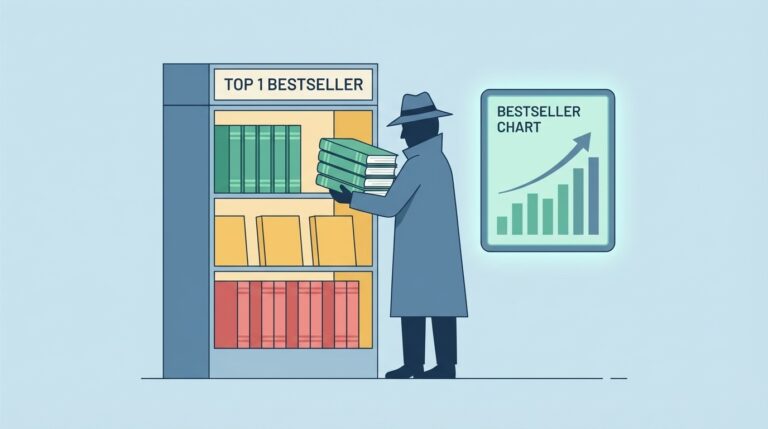
Phase 1: Immersive Hook\n\n안녕하세요! Daily Hangul’s Senior Editor here. \n\nPicture this: You are standing inside the massive Kyobo Bookstore in Gwanghwamun, Seoul. The smell of fresh paper and roasted coffee fills the air. You walk up to the glowing ‘Top 10 Bestsellers’ shelf. A Korean friend standing next to you scoffs, points at the #1 book, and whispers, “솔직히 저거 사재기 같지 않아? (Honestly, doesn’t that look like sajaegi?)”\n\nWait… sajaegi? You might have heard this word thrown around in fierce K-Pop Twitter debates regarding album sales, but what is it doing in a bookstore?\n\nAt the C2 level, you aren’t just learning how to order a coffee or ask for directions. You are learning how to read between the lines of Korean society. The concept of 베스트셀러 순위 조작 논란 (Bestseller ranking manipulation controversies) and 사재기 (bulk-buying/chart rigging) is a massive cultural touchstone. It touches everything from publishing to digital music charts. Understanding these terms gives you the ultimate ‘insider’ lens into the hyper-competitive nature of Korean media. Let’s dive into the dark arts of Korean chart manipulation!\n\n—\n\n## Phase 2: Deep Dive (Core Expressions)\n\nHere are the heavy-hitting expressions you need to discuss media controversies like a true Seoulite.\n\n> ### 1. 사재기 (Sajaegi)\n> – Pronunciation: [sa-jae-gi] (Sounds like ‘sah-jay-ghee’. Keep the ‘g’ soft, almost like a ‘k’.)\n> – Meaning: Hoarding, bulk-buying, or chart manipulation.\n> – K-Culture Moment: In K-Pop, it’s the scandalous accusation that an agency bought thousands of their own artist’s digital streams or physical albums to artificially inflate chart rankings. In publishing, it’s ghost-buying books to get that coveted ‘Bestseller’ sticker.\n> – Editor’s Insight: Historically, this meant ‘panic buying’ (like buying 50 rolls of toilet paper before a typhoon). But today, especially in media contexts, it strongly implies fraudulent manipulation. It carries a heavy, critical nuance.\n> – Situation Spectrum: [🚫 절대 금지] ———— [⚠️ 주의] ———— [✅ 자유롭게]\n> – Close friends (Casual discussion): ✅\n> – Coworkers (Semi-formal debates): ✅\n> – Accusing someone online (Legal risk): 🚫 (Korea has strict defamation laws!)\n> – 🤔 Think About It: Why does sajaegi exist? It’s born from the ‘Bandwagon Effect’ (군중심리). In Korea’s fast-paced society, people often rely on ‘Top 100’ lists to make quick choices. If you manipulate the list, you control the public. Does your country have a similar obsession with rankings?\n\n> ### 2. 순위 조작 (Sunwi Jojak)\n> – Pronunciation: [soon-wee jo-jak]\n> – Meaning: Ranking manipulation / Chart rigging.\n> – K-Culture Moment: Remember the massive voting manipulation scandal of the Produce 101 audition shows? Every news headline read: 투표 순위 조작 논란 (Voting ranking manipulation controversy).\n> – Editor’s Insight: 순위 means ranking, and 조작 means manipulation or fabrication. This is a very formal, academic/journalistic term. If 사재기 is the action, 순위 조작 is the resulting crime.\n> – Situation Spectrum: [🚫 절대 금지] ———— [⚠️ 주의] ———— [✅ 자유롭게]\n> – Formal essays/News discussions: ✅\n> – Casual chatter: ⚠️ (A bit too stiff, friends just say 사재기)\n\n> ### 3. 입소문을 타다 (Ipsomuneul tada)\n> – Pronunciation: [ip-so-mu-neul ta-da] (Imagine riding a wave of lips—literally!)\n> – Meaning: To ride the word-of-mouth / To go viral organically.\n> – K-Culture Moment: The holy grail for indie authors and obscure K-Pop groups. An unknown book suddenly sells out because a famous book-tuber genuinely praised it, or a song like EXID’s ‘Up&Down’ explodes due to a fan-cam. This is the honorable opposite of sajaegi.\n> – Editor’s Insight: 입 (mouth) + 소문 (rumor/news) + 타다 (to ride). It beautifully captures the feeling of a trend gaining natural momentum.\n\n—\n\n## Phase 3: Textbook vs. Real Life\n\nLet’s see how C2-level vocabulary transforms from textbook rigidity to real-world fluency.\n\n| 상황 | 📖 교과서 한국어 | 🗣️ 진짜 한국어 | 💡 왜 다를까? |\n|—|—|—|—|\n| Discussing a suspicious bestseller | 이 책은 비정상적으로 많이 팔렸습니다. (This book sold abnormally well.) | 이 책 순위, 솔직히 사재기 스멜 나지 않아? (Doesn’t this ranking smell like sajaegi?) | Koreans love adding ‘스멜’ (smell) to imply suspicion. It’s a slightly sarcastic, modern slang.\n| Explaining organic success | 사람들이 말로 전해서 유명해졌습니다. (It became famous as people told each other.) | 이거 완전 입소문 타서 역주행한 케이스야! (This case totally rode word-of-mouth and drove in reverse/climbed back up!) | ‘역주행’ (driving in reverse) is the ultimate modern metaphor for delayed, organic chart success.\n| Judging a hyped book | 저는 이 책이 인기가 많은 이유를 모르겠습니다. | 베스트셀러라길래 샀는데, 완전 거품이야. (Bought it ‘cause they said it’s a bestseller, but it’s totally a bubble/overrated.) | ‘거품’ (bubble) perfectly describes hype without substance.\n\n—\n\n## Phase 4: Cultural Deep Dive\n\n### 4-1. Non-verbal Communication: The Art of Skepticism\nWhen discussing sajaegi or 조작 (manipulation), Koreans rarely shout. Because defamation laws (명예훼손) are notoriously strict in Korea—even if what you are saying is true—people use non-verbal cues. A slight tilt of the head, a knowing smirk, and the phrase “글쎄요… (Well…)” speak volumes. It’s the ultimate application of 눈치 (Nunchi): knowing the chart is fake without explicitly screaming “FRAUD!” in a public space.\n\n### 4-2. K-Culture Connection: The ‘Chart-In’ Obsession\nWhether it’s the MelOn Top 100 or Kyobo Bookstore’s Weekly Bestsellers, Korean society is deeply driven by consensus. \n\nIn Publishing: Bookstores in Korea are prime real estate. If a publisher buys thousands of their own books to hit the Top 10, the book gets placed on the highly visible ‘Bestseller Stand’ right at the entrance. Regular consumers, who are too busy to read reviews, just grab what’s popular. The sajaegi pays for itself.\n\nIn K-Pop: Have you ever seen fans buying 100 copies of the exact same album? Is that sajaegi? Legally, no. It’s called 팬덤 화력 (fandom firepower) or 영수증 러시 (receipt rush) to win photocards or fan-sign tickets. However, when an agency hires a shadow company to buy albums or stream songs from thousands of fake IDs in the middle of the night—that is illegal sajaegi. The distinction is a very hot debate topic in Korea!\n\n—\n\n## Phase 5: Immersive Roleplay\n\n### Scenario A: The Book Cafe Debate\nSetting: Saturday afternoon at a trendy, quiet book-cafe in Hapjeong. You are having Americanos with Min-ji (29, a fiercely critical reader and your language exchange partner).\n\nMin-ji: 요즘 그 에세이 진짜 난리더라. 어딜 가나 1위야. 📚\n(Yojeum geu esei jinjja nanrideora. Eodil gana iri-ya.)\n[That essay is crazy popular lately. It’s #1 everywhere.]\n(🎭 Stage Direction: Min-ji stirs her coffee, looking highly skeptical.)\n\nYOU: 아, 나도 어제 서점 갔다가 봤어. 표지가 예쁘긴 하던데?\n(A, nado eoje seojeom gatdaga bwasseo. Pyojiga yeppeugin hadeonde?)\n[Ah, I saw it at the bookstore yesterday too. The cover was pretty, though?]\n\nMin-ji: 근데 솔직히 좀 수상해. 출간된 지 3일 만에 종합 베스트셀러 1위? 아무리 봐도 사재기 논란 터질 각이야.\n(Geunde soljikhi jom susanghae. Chulgandoen ji samil mane jonghap bestselleo iri? Amuri bwado sajaegi nollan teojil gagiya.)\n[But honestly, it’s a bit suspicious. #1 overall bestseller just 3 days after publication? No matter how I look at it, it seems like a sajaegi controversy is about to blow up.]\n\n> 🔀 당신의 차례! How will you respond?\n> – A) “그래? 경찰에 신고해야 하는 거 아니야?” (Shouldn’t we report it to the police?)\n> – B) “맞아. 내용도 별로라는 리뷰가 많던데, 전형적인 마케팅 거품 같아.” (Right. I saw lots of reviews saying the content isn’t even good, seems like a typical marketing bubble.)\n> – C) “사재기가 뭐야? 좋은 거야?” (What’s sajaegi? Is it good?)\n>\n> ✅ Best Choice: B — At the C2 level, you show that you understand the cultural context of ‘marketing bubbles’ (마케팅 거품). You agree with her skepticism using natural, advanced phrasing.\n> ⚠️ Choice A Analysis: Too aggressive. Koreans complain about it, but treating it like a violent crime calling for immediate police action kills the casual cafe vibe.\n\n### Scenario B: Bonus K-Pop Fandom Debate\nSetting: A Twitter Space or KakaoTalk Open Chat with fellow fans.\nFan A: “Did you see the rookie group beat our idol on the charts at 3 AM? That’s 100% sajaegi!”\nYOU (The Voice of Reason): “확실한 증거 없이 사재기라고 하면 명예훼손으로 고소당할 수 있어요. 조심하세요!” (If you call it sajaegi without solid proof, you could get sued for defamation. Be careful!)\n\n—\n\n## Phase 6: 10-Second Shadowing Drill\n\nMaster the skeptical, knowing tone of a true Seoulite.\n\n> 😤 약간 의심스럽게 (Slightly suspicious)\n> 저 책 / 베스트셀러 1위이긴 한데, / 솔직히 / 사재기 스멜이 / 좀 나요.\n> (Jeo chaek / bestselleo iri-igin hande, / soljikhi / sajaegi seumeri / jom nayo.)\n> [That book is the #1 bestseller, but honestly, it smells a bit like sajaegi.]\n\n—\n\n## Phase 7: K-Culture Glossary\n\n| 한국어 | Romanization | 영어 | 맥락 설명 |\n|—|—|—|—|\n| 베스트셀러 | bestselleo | Bestseller | The ultimate status symbol in Korean publishing. |\n| 사재기 | sajaegi | Bulk-buying / Chart rigging | Buying your own products to manipulate rankings. |\n| 역주행 | yeokjuhaeng | Driving in reverse | When an old song/book suddenly climbs the charts organically. |\n| 거품 | geopum | Bubble | Hype without substance. Often used as “거품이 끼다” (to be overhyped). |\n| 명예훼손 | myeongyehweson | Defamation | A serious legal issue in Korea. Even telling the truth can be defamation if it damages someone’s reputation publicly. |\n\n—\n\n## Phase 8: Traveler’s Survival Kit\n\nEven if you aren’t investigating chart manipulation, you’ll likely visit a magnificent Korean bookstore like Kyobo or Starfield Library during your trip.\n\n> 🆘 서바이벌 표현 (Bookstore Edition)\n> – 🇰🇷 “종합 베스트셀러 코너는 어디에 있나요?” (Jonghap bestselleo koneoneun eodie innayo?)\n> – 🗣️ Meaning: Where is the general bestseller section?\n> – 🇰🇷 “이 책, 지금 재고 있나요?” (I chaek, jigeum jaego innayo?)\n> – 🗣️ Meaning: Do you have this book in stock right now?\n> – 📍 쓰는 곳: 교보문고 (Kyobo), 영풍문고 (YP Books), 알라딘 중고서점 (Aladin Used Books).\n\n> 📌 Editor’s Travel Note\n> – Bookstores as Cultural Hubs: In Korea, major bookstores aren’t just for buying books. They have massive stationery sections (문구류), cafes, and sitting areas. They are popular indoor date spots!\n> – Aladin Used Books (알라딘): If you want cheap Korean books or second-hand K-Pop albums, look for ‘Aladin’ bookstores. They are incredibly well-organized.\n\n—\n\n## Phase 9: Think Deeper — 한 발 더 깊이\n\n> 🧠 Think Deeper: 언어와 권력 (The Obsession with Rankings)\n> Why is the Korean publishing and music industry so vulnerable to sajaegi? It reflects the highly competitive, fast-paced nature of modern Korean society. When everyone is working long hours, few have the time to deeply research a book before buying it. A “#1 Bestseller” sticker serves as a trusted shortcut—a stamp of societal approval. However, this absolute trust in ‘the consensus’ creates a dangerous loophole where capital can buy perceived popularity. The evolution of the word sajaegi from simple hoarding to ‘systemic manipulation’ perfectly mirrors Korea’s hyper-capitalist media landscape.\n>\n> 💬 Your Turn: Does your culture place a high value on “Top 10” lists and bestseller rankings? Have you ever bought something just because it was #1, only to be disappointed? Let me know in the comments!\n\n—\n\n## Phase 10: FAQ & Troubleshooting\n\nQ: Can I use ‘사재기’ as a joke if I buy too many snacks at the convenience store?\nYes! This is a great, witty way to use it. If you have 10 bags of Honey Butter Chips in your basket, you can laugh and say, “저 과자 사재기하는 거 아니에요!” (I’m not hoarding/sajaegi-ing snacks!). It shows a great command of vocabulary.\n\nQ: Is it safe to accuse someone of sajaegi online in Korea?\nNO. As mentioned, Korea’s cyber defamation laws (사이버 명예훼손죄) are incredibly strict. Even if you have ‘evidence’, publicly accusing a specific author or idol group of chart manipulation can lead to severe fines. Always use alleged terms (의혹) when typing online.\n\n> ❌ 흔한 실수 (Common Mistake):\n> Confusing 대량 구매 (Bulk purchasing) with 사재기 (Chart manipulation).\n> ✅ 이렇게 하세요: If a company buys 500 books legitimately for their employees, it is 대량 구매. If they secretly buy 500 books through fake accounts to make the book hit #1, it is 사재기. Context is everything!\n\n—\n\n## Phase 11: Wrap-up & Action Items\n\nOne-Liner Summary: Sajaegi isn’t just hoarding; it’s the dark art of chart manipulation that preys on Korea’s love for bestseller rankings.\n\n🎯 Action Mission 3단계\n- 🥉 Bronze (혼자서): Read the 10-second shadowing drill aloud using your most skeptical, drama-actor voice.\n- 🥈 Silver (온라인): Go to the Naver Webtoon or Naver Books app. Look for the ‘베스트셀러’ tab. See what Koreans are reading right now.\n- 🥇 Gold (실전): Next time you talk to a Korean friend about a sudden viral hit, drop the phrase: “이거 진짜 입소문 탄 거야, 아니면 마케팅이야?” (Is this riding real word-of-mouth, or is it just marketing?)\n\n🎬 K-Culture Mission: \nSearch for ‘음원 사재기’ (Digital music sajaegi) or ‘베스트셀러 사재기’ on YouTube. You will find fascinating investigative journalism documentaries (like Unanswered Questions / 그것이 알고싶다) exposing the shadow factories of fake accounts!\n\n—\n\n## Phase 12: Interactive Quiz\n\n1. Situational Judgment: Your friend excitedly shows you a book by an unknown author that hit #1 on Kyobo overnight with zero reviews. What is the most C2-appropriate, culturally nuanced response?\nA) “이 작가는 천재입니다!” (This author is a genius!)\nB) “이거 사재기 의혹 좀 있겠는데?” (This might get some sajaegi suspicions, no?)\nC) “경찰을 부르자!” (Let’s call the cops!)\n\n2. Fill in the Blank: \n”광고 없이 팬들의 추천만으로 차트 1위에 올랐어. 완벽한 [ ________ ]의 예시야!” (It hit #1 purely through fans’ recommendations without ads. A perfect example of [ ________ ]!)\n\n3. True or False – K-Culture Edition:\n”If you know for a fact that an agency committed sajaegi, it is completely legally safe to write a public post calling them out in Korea.” (True / False)\n\n
\n
👀 정답 보기 (Click for Answers)
\n1. B – It acknowledges the cultural skepticism around overnight success without being overly dramatic.
\n2. 입소문 (or 역주행) – Word-of-mouth/Driving in reverse.
\n3. False – Under Korean law, publicly stating facts that damage a reputation can still be prosecuted as defamation (사실적시 명예훼손). Be careful online!\n
Frequently Asked Questions (FAQ)
Q: What does "사재기" mean in Korean and how do you pronounce it?
A: In Korean, "사재기" is pronounced [bulk-buying/chart rigging] and means: is a massive cultural touchstone. It touches everything from publishing to digital music charts. Understanding these terms gives you the ultimate 'insider' lens into the hyper-competitive nature of Korean media. Let's dive into the dark arts of Korean chart manipulation!\n\n---\n\n## Phase 2: Deep Dive (Core Expressions)\n\nHere are the heavy-hitting expressions you need to discuss media controversies like a true Seoulite.\n\n> ### 1. 사재기 (Sajaegi)\n> -
Q: What does "🆘 서바이벌 표현" mean in Korean and how do you pronounce it?
A: In Korean, "🆘 서바이벌 표현" is pronounced [Bookstore Edition] and means: \n> - 🇰🇷 "종합 베스트셀러 코너는 어디에 있나요?" (Jonghap bestselleo koneoneun eodie innayo?)\n> - 🗣️ Meaning: Where is the general bestseller section?\n> - 🇰🇷 "이 책, 지금 재고 있나요?" (I chaek, jigeum jaego innayo?)\n> - 🗣️ Meaning: Do you have this book in stock right now?\n> - 📍 쓰는 곳: 교보문고 (Kyobo), 영풍문고 (YP Books), 알라딘 중고서점 (Aladin Used Books).\n\n> 📌
Q: What does "🧠 Think Deeper: 언어와 권력" mean in Korean and how do you pronounce it?
A: In Korean, "🧠 Think Deeper: 언어와 권력" is pronounced [The Obsession with Rankings] and means: \n> Why is the Korean publishing and music industry so vulnerable to
Q: What does "흔한 실수" mean in Korean and how do you pronounce it?
A: In Korean, "흔한 실수" is pronounced [Common Mistake] and means: \n> Confusing 대량 구매 (Bulk purchasing) with 사재기 (Chart manipulation).\n> ✅







