

Phase 1: Immersive Hook (공감 — 몰입형 오프닝)
Hello there! I’m your lead editor at Daily Hangul.
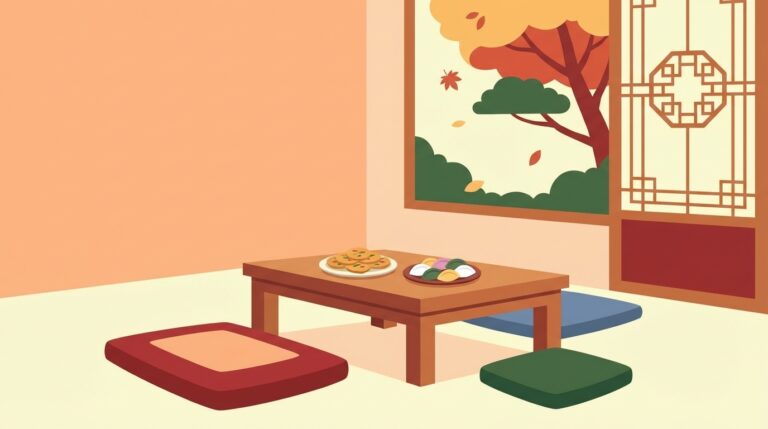
Picture this: It’s the morning of Chuseok (추석), the Korean Thanksgiving. You walk into a bustling living room filled with the savory, oily scent of sizzling Jeon (Korean pancakes). Relatives are everywhere, laughing, arguing over the TV remote, and passing around plates of food. It feels exactly like that chaotic but heartwarming scene from the K-drama Reply 1988.
Suddenly, your Korean cousin, whom you haven’t seen in two years, walks in. They look at you, eyes wide with excitement. What do you say? If you freeze and blurt out a robotic, textbook “An-nyeong-ha-sim-ni-kka?” (How do you do?), the warm family vibe might instantly turn into a stiff business meeting.
Knowing how to casually catch up with cousins or friends isn’t just about vocabulary; it’s about closing the emotional distance. Today, we’re going to learn how to ditch the textbook stiffness and greet your Korean relatives (or close friends) like a true local!
Phase 2: Deep Dive (핵심 표현 심층 분석)
Let’s break down the top 3 expressions you need when reuniting with cousins you haven’t seen in a while.
1. 오랜만이야! 잘 지냈어? (It’s been a while! Have you been well?)
- Pronunciation: [oraenmaniya! jal jinaesseo?]
(Tip: ‘eo’ sounds like the ‘u’ in “uh-oh”!) - Meaning: Literal: “It is a long time! Did you spend time well?” / Real Nuance: “Long time no see! How have you been?”
- K-Culture Moment: You’ll hear this at every high school reunion in K-dramas. The main character walks into a barbecue restaurant, spots their old best friend, and practically shouts this across the room.
- Editor’s Insight: This is the golden standard for catching up. It shows warmth and excitement. Because it’s in Banmal (casual language), it immediately establishes that you are close.
- Situation Spectrum:
[🚫 절대 금지] ———— [⚠️ 주의] ———— [✅ 자유롭게]- Close cousins of the same age/younger: ✅
- Older cousins you are very close to: ⚠️ (Usually, you’d add ‘요’ at the end: 잘 지냈어요?)
- Grandparents/Aunts/Uncles: 🚫 (Use: 오랜만입니다. 잘 지내셨어요?)
- 🤔 Think About It: Koreans rarely just say “Hi.” They immediately ask “Have you been well?” How does your native language handle greetings after a long time?
2. 너 얼굴 진짜 좋아졌다! (You look great!)
- Pronunciation: [neo eolgul jinjja joajyeotda!]
- Meaning: Literal: “Your face has really gotten better!” / Real Nuance: “You look healthy, glowing, and happy!”
- K-Culture Moment: During family gatherings, elders and cousins love commenting on your appearance. It’s their way of checking if you’re eating well and living a good life.
- Editor’s Insight: Don’t be offended by the word “face” (얼굴)! In Korean culture, saying someone’s face looks “good” or “bright” means they look healthy and unstressed. It’s a huge compliment.
- Situation Spectrum:
[🚫 절대 금지] ———— [⚠️ 주의] ———— [✅ 자유롭게]- Cousins/Friends (Casual): ✅
- Co-workers (Semi-formal): ⚠️ (Say: 얼굴 좋아 보이시네요)
- Boss/Elders (Formal): 🚫 (Can sound condescending to elders)
- 🤔 Think About It: Why is “looking healthy/well-fed” such an important compliment in Korean culture? (Hint: Think about Korea’s history of hardship and the importance of sharing meals!)
3. 우리 나중에 밥 한번 먹자! (Let’s grab a meal together sometime!)
- Pronunciation: [uri najunge bap hambeon meokja!]
- Meaning: Literal: “Let’s eat a meal together later!” / Real Nuance: “Let’s catch up properly later!” (or sometimes just a polite sign-off).
- K-Culture Moment: The classic K-Drama parting line. Two characters bump into each other on the street, chat for two minutes, and part ways with this phrase.
- Editor’s Insight: This is the Korean equivalent of “Let’s get coffee sometime.” It doesn’t always mean you need to pull out your calendar right then. It’s an expression of goodwill and affection.
- Situation Spectrum:
[🚫 절대 금지] ———— [⚠️ 주의] ———— [✅ 자유롭게]- Friends/Cousins: ✅
- Co-workers: ✅ (밥 한번 먹어요)
- Formal/Business: ⚠️
- 🤔 Think About It: Why does the concept of “eating rice” (밥) equate to “spending quality time” in Korea?
Phase 3: Textbook vs Real Life (교과서 vs 진짜 한국어)
| Situation | 📖 Textbook Korean | 🗣️ Real Korean | 💡 Why the difference? |
|---|---|---|---|
| Greeting a cousin | 오랜만입니다. | 야! 오랜만이다! | Cousins are considered peers; textbook formal language creates an awkward wall. |
| Asking how they are | 그동안 안녕하셨습니까? | 잘 지냈어? 별일 없지? | “별일 없지?” (Nothing bad happened, right?) shows genuine care in casual relationships. |
| Ending the chat | 다음에 다시 만납시다. | 나중에 밥 한번 먹자. | Food is the ultimate love language in Korea. Sharing a meal means sharing affection. |
Bottom Note: As a B1 learner, switching comfortably between formal ‘요’ and casual ‘반말’ based on the relationship is your secret weapon to sounding like a local!
Phase 4: Cultural Deep Dive (문화적 맥락)
4-1. Non-verbal Communication: The Art of “Nunchi” at Family Gatherings
When you haven’t seen your cousins in a while, reading the room (눈치, Nunchi) is crucial. If a cousin recently quit their job or broke up with someone, they might look a bit quiet. In Korea, you don’t pry directly. You use your nunchi, offer them a piece of delicious Songpyeon (traditional rice cake), and stick to lighthearted topics.
4-2. K-Culture Connection: Surviving the “Jansori” (Nagging)
If you watch family K-Dramas during the holidays, you’ll see a classic trope: The aunts and uncles starting their barrage of “Jansori” (잔소리 – nagging).
“When are you getting married?”
“Did you get a promotion?”
Often, cousins band together to escape this! A great survival tactic among cousins is catching each other’s eyes, making an excuse like, “Oh, we need to go buy some drinks at the convenience store!” and escaping together to catch up in peace.
Phase 5: Immersive Roleplay (실전 롤플레이 시나리오)
Scenario A: The Chuseok Reunion
- Setting: Friday afternoon, the day before Chuseok. You’re sitting on the living room floor of your aunt’s apartment. The TV is playing a holiday variety show.
- Characters:
- YOU: An expat living in Korea, joining a Korean friend/relative’s family gathering.
- Minho (28): Your Korean cousin (or friend’s cousin), easygoing, holding a plate of half-eaten fruit.
Minho: (Walking out of the kitchen) 어? 언제 왔어? 야, 진짜 오랜만이다! 🍎
(eo? eonje wasseo? ya, jinjja oraenmanida!)
(English) Huh? When did you get here? Hey, it’s really been a while!
YOU: (Standing up) 어, 방금 도착했어. 잘 지냈어?
(eo, banggeum dochakaesseo. jal jinaesseo?)
(English) Yeah, I just arrived. Have you been well?
Minho: 그럼~ 나야 늘 똑같지. 너야말로 얼굴 진짜 좋아졌다! 한국 생활은 할 만해?
(geureom~ naya neul ttokgatji. neoyamallo eolgul jinjja joajyeotda! hanguk saenghwareun hal manhae?)
(English) Of course~ I’m always the same. But you look really great! Is living in Korea doable?
🔀 Your Turn! How do you respond?
– A) “아니야, 나 요즘 진짜 힘들어.” (No, I’m really struggling these days.)
– B) “응! 덕분에 잘 지내. 너도 좋아 보이네!” (Yes! Doing well thanks to you. You look good too!)
– C) “얼굴이요? 제 얼굴이 왜요?” (My face? What’s wrong with my face?)✅ Best Choice: B — It’s positive, bounces the compliment back, and keeps the holiday mood light!
⚠️ Choice C Analysis: Taking “얼굴 좋아졌다” literally might make you think they are criticizing your face. Remember, it means you look healthy and happy!
Phase 6: 10-Second Shadowing Drill
Let’s practice the excitement of seeing someone after a long time. Follow the slashes (/) for natural pausing, and read with the emotion tag!
😊 야! / 진짜 오랜만이다! / 잘 지냈어?
(ya! / jinjja oraenmanida! / jal jinaesseo?)
(Hey! / It’s really been a while! / Have you been well?)
🥺 나중에 / 꼭 밥 한번 / 같이 먹자!
(najunge / kkok bap hambeon / gachi meokja!)
(Later / we absolutely must eat a meal / together!)
Phase 7: K-Culture Glossary (K-Culture 미니 사전)
| Korean | Romanization | English | Context |
|---|---|---|---|
| 추석 | Chuseok | Korean Thanksgiving | One of Korea’s biggest holidays, celebrated in autumn with family gatherings. |
| 반말 | Banmal | Casual language | Used with close friends, younger people, or cousins of the same age. |
| 잔소리 | Jansori | Nagging | The inevitable questions from relatives about your career, weight, or love life. |
| 전 | Jeon | Korean pancake | Savory pancakes fried in oil, an absolute must-have Chuseok food. |
| 눈치 | Nunchi | Social intuition | The ability to read the room and gauge other people’s moods. |
Phase 8: Traveler’s Survival Kit (여행자 서바이벌 키트)
Even if you aren’t attending a family Chuseok gathering, you might bump into a Korean friend while traveling or visiting a tourist spot during the holidays!
🆘 Survival Phrases for Catching Up on the Go
– 🇰🇷 “여기서 보니까 진짜 반갑다!” (yeogiseo bonikka jinjja bangapda!)
– 🗣️ Meaning: “It’s so nice to see you here!”
– 📍 Where to use: Running into an old friend in Myeongdong or at a cafe.
– 💡 Pro Tip: If you bump into someone during Chuseok, add “풍성한 한가위 보내세요” (Have a bountiful Chuseok) as a polite holiday greeting before parting ways!📌 Editor’s Travel Note
– Seoul during Chuseok: Many small shops close for 2-3 days, but palaces (like Gyeongbokgung) are open and often free!
– Traffic: Avoid intercity buses or trains on the day before and the day of Chuseok. It’s called the “national migration” for a reason. You will be stuck in traffic for hours!
Phase 9: Think Deeper — “한 발 더 깊이”
1. Language & Power: The Hierarchy of Cousins
In many Western cultures, a cousin is just a “cousin.” You use their first name regardless of age. But in Korea, age is an absolute rule, even among family. If your cousin is just one year older, you cannot call them by their name; you must call them Hyung/Oppa (older brother) or Noona/Unni (older sister). Even when you are close and catching up warmly, this linguistic hierarchy remains firmly in place. It shows that in Korean culture, respect for age and intimate closeness can coexist beautifully.
💬 Your Turn: “Does your culture have specific titles for older cousins, or do you treat everyone like friends? Share in the comments!”
Phase 10: FAQ & Troubleshooting
Q: Can I use “너” (You) to an older cousin if we are really close?
A: 🚫 No! Even if you are extremely close, calling an older cousin “너” is considered incredibly rude in Korean culture. Use their title (Oppa/Hyung, etc.) instead of “You.”
Q: Do I need to bow (절 – Jeol) to my cousins?
A: Usually, no. The deep, formal bows on Chuseok (called Charye for ancestors, or greetings to living elders) are reserved for grandparents, parents, aunts, and uncles. With cousins, a bright smile and a nod are perfect.
❌ Common Mistake: Using textbook formal language (안녕하십니까) to a cousin of the exact same age.
✅ Do this instead: Use casual language (안녕! 오랜만이야!) to close the emotional distance. If they are older, use the polite ‘요’ form (오랜만이에요!).
Phase 11: Wrap-up & Action Items
One-Liner Summary: Ditch the textbook and greet your cousins with a warm “오랜만이야! 잘 지냈어?” to instantly bridge the gap!
Action Mission 3 Steps:
– 🥉 Bronze (Solo): Say “야! 진짜 오랜만이다!” out loud in front of the mirror 3 times with a big smile.
– 🥈 Silver (Online): Comment “오랜만이에요! 잘 지냈어요?” on a Korean friend’s or idol’s recent social media post.
– 🥇 Gold (Real Life): Message a Korean friend you haven’t spoken to in a while using: “오랜만이야! 나중에 밥 한번 먹자!”
K-Culture Mission: Watch an episode of a family-centric K-Drama (like Reply 1988 or Hospital Playlist) and listen for the phrase “얼굴 좋아졌다!” or “밥 한번 먹자!”
Phase 12: Interactive Quiz
1. You run into a Korean friend you haven’t seen in 3 years. What is the most natural, local-sounding greeting?
– A) 안녕하십니까? 날씨가 좋습니다.
– B) 야! 진짜 오랜만이다! 잘 지냈어?
– C) 너 누구야?
2. Fill in the blank (Korean logic): “It’s been so long! Let’s ________ later!”
– A) read a book together (책 한번 읽자)
– B) grab a meal together (밥 한번 먹자)
– C) clean the house (청소 한번 하자)
3. True or False – K-Culture Edition:
“If a Korean relative says ‘너 얼굴 좋아졌다’ (Your face has gotten better), they are insulting your previous appearance.”
(Answers: 1. B – It’s casual and warm! A is too formal. 2. B – Sharing food is sharing affection! 3. False! It means you look healthy and glowing!)
Frequently Asked Questions (FAQ)
Q: What does "오랜만이야! 잘 지냈어? (It's been a while! Have you been well?)" mean in Korean and how do you pronounce it?
A: In Korean, "오랜만이야! 잘 지냈어? (It's been a while! Have you been well?)" is pronounced [oraenmaniya! jal jinaesseo?] and means: Literal: "It is a long time! Did you spend time well?" / Real Nuance: "Long time no see! How have you been?"
Q: What does "너 얼굴 진짜 좋아졌다! (You look great!)" mean in Korean and how do you pronounce it?
A: In Korean, "너 얼굴 진짜 좋아졌다! (You look great!)" is pronounced [neo eolgul jinjja joajyeotda!] and means: Literal: "Your face has really gotten better!" / Real Nuance: "You look healthy, glowing, and happy!"
Q: What does "우리 나중에 밥 한번 먹자! (Let's grab a meal together sometime!)" mean in Korean and how do you pronounce it?
A: In Korean, "우리 나중에 밥 한번 먹자! (Let's grab a meal together sometime!)" is pronounced [uri najunge bap hambeon meokja!] and means: Literal: "Let's eat a meal together later!" / Real Nuance: "Let's catch up properly later!" (or sometimes just a polite sign-off).







