

Phase 1: Immersive Hook
Greeting: 안녕하세요! This is your Senior Editor at Daily Hangul.
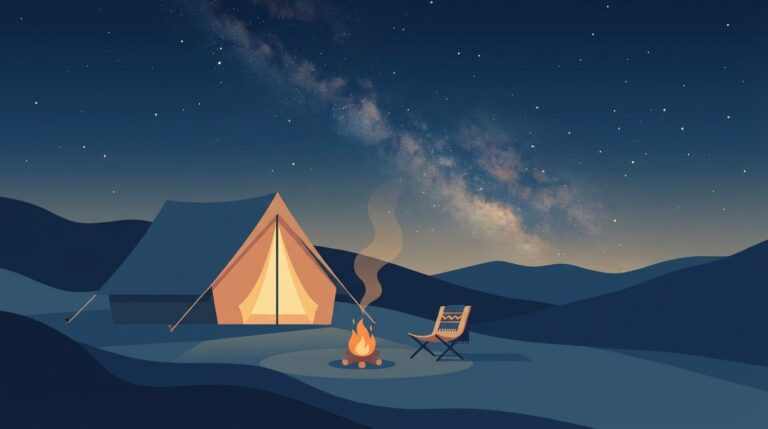
Imagine this: You are in Gangwon-do, far away from the neon lights of Seoul. You’re sitting in a luxury glamping chair, wrapped in a blanket. The air is crisp, and the only sound is the crackling of firewood. You look up, and the sky isn’t just black—it’s a canvas of diamonds.
We’ve all seen this scene in K-Dramas like Crash Landing on You or Goblin. The leads stand under the night sky, and the silence speaks volumes. But when they do speak, they don’t just say, “The stars are pretty.” That’s too A1. They say something poetic, something that captures the overwhelming emotion of the moment.
Today, we are going to upgrade your Korean from “tourist” to “romantic lead.” We’re diving into the language of Glamping and Stargazing—specifically, how to articulate awe, atmosphere, and that specific Korean concept of “Healing.”
Phase 2: Deep Dive (Core Expressions)
1. 별이 쏟아질 것 같아요 (Byeori ssodajil geot gatayo)
- Pronunciation: [Byeori ssoda-jil geot ga-tayo] (Think of ‘ssoda’ like soda pop exploding—pouring out.)
- Meaning:
- Literal: “It feels like the stars are going to pour down.”
- Nuance: “The sky is so full of stars, it looks like a waterfall of light.” This is the ultimate expression for a clear night sky.
- K-Culture Moment: In almost every romantic camping scene, when the camera pans to the sky, this is the line. It signifies a magical, almost unreal moment.
- Editor’s Insight: The verb 쏟아지다 (to pour/spill) is usually used for rain or sleepiness (잠이 쏟아지다). Using it for stars emphasizes their sheer quantity and intensity. It turns a visual observation into a physical sensation.
- Situation Spectrum:
[🚫 Formal Biz] ———— [⚠️ Semi-Formal] ———— [✅ Casual/Romantic]
- This is poetic. Use it with friends, dates, or even family. Avoid using it in a board meeting unless your PowerPoint slides are really sparkly.
- 🤔 Think About It: Why does Korean use dynamic verbs like “pour” for static objects like stars? It reflects a language that favors sensory and active descriptions over passive existence.
2. 불멍 때리기 딱 좋은 날씨네 (Bulmeong ttaerigi ttak joeun nalssine)
- Pronunciation: [Bul-meong ttae-rigi ttak joeun nal-ssine]
- Meaning:
- Literal: “It’s the perfect weather to hit ‘fire-spacing-out’.”
- Nuance: “It’s perfect weather to just zone out and stare at the campfire.”
- K-Culture Moment: If you watch Korean variety shows like I Live Alone or House on Wheels, you will see celebrities sitting silently in front of a fire. That trance state? That is 불멍 (Bulmeong).
- Editor’s Insight: 멍 때리다 (Meong ttaerida) means “to space out.” Combine it with 불 (Fire), and you get Bulmeong. It’s a cultural phenomenon in Korea—a deliberate pause from the hyper-competitive society.
- Situation Spectrum:
[🚫 Formal Biz] ———— [⚠️ Elders] ———— [✅ Casual]
- Slang-heavy. Perfect for friends. Use with caution around very conservative elders, though many modern seniors know this term now.
- 🤔 Think About It: In many Western cultures, “zoning out” is seen as being distracted or lazy. In Korea, Bulmeong is seen as a necessary mental detox. What does this say about the intensity of Korean daily life?
3. 여기 완전 힐링 스팟이네요 (Yeogi wanjeon hilling seupas-ineyo)
- Pronunciation: [Yeogi wanjeon healing-spot-ineyo]
- Meaning:
- Literal: “This place is a total healing spot.”
- Nuance: “This place completely recharges my soul/mental battery.”
- K-Culture Moment: Koreans use the English word “Healing” differently. It doesn’t mean curing a physical wound; it means mental relaxation and stress relief. You’ll see #힐링 (Healing) on millions of Instagram travel posts.
- Editor’s Insight: Using 완전 (Wanjeon – totally/completely) adds enthusiasm. Without it, you sound a bit detached.
- Situation Spectrum:
[🚫 Strict Formal] ———— [⚠️ Boss] ———— [✅ General]
- Very safe to use. Even your boss wants to find a “healing spot.”
- 🤔 Think About It: Why has “Healing” become a massive industry keyword in Korea (Healing food, healing trip, healing book)?
Phase 3: Textbook vs. Real Life
| Situation | 📖 Textbook Korean | 🗣️ Real Korean (C1 Level) | 💡 Why the difference? |
|---|---|---|---|
| Seeing many stars | 별이 많아요. (There are many stars.) | 와, 별천지다! (Wow, it’s a universe of stars!) | “별천지” implies an otherworldly, overwhelming amount, not just a count. |
| Feeling relaxed | 마음이 편안해요. (My mind is comfortable.) | 속이 뻥 뚫리는 기분이에요. (I feel like my insides are unclogged.) | Koreans often express emotional relief as a physical sensation of unblocking digestion or chests. |
| Praising the vibe | 분위기가 좋아요. (The atmosphere is good.) | 여기 감성 미쳤다. (The vibe here is crazy/insane.) | “Gamseong” (sensibility/vibe) is the key aesthetic word for Gen Z/Millennials. |
Bottom Note: At the C1 level, stop describing facts (it is pretty) and start describing impact (it makes me feel X).
Phase 4: Cultural Deep Dive — K-Culture Connection
4-1. The Art of Silence (Nunchi & Mood)
When stargazing or doing Bulmeong, the biggest mistake a foreigner can make is talking too much. In Western camping, we often fill silence with ghost stories or songs. In Korea, shared silence is a form of bonding. If someone says, “좋다…” (It’s good…) and sighs, do not ask “Why? What’s good?” Just sigh with them. Read the room (Nunchi).
4-2. “Gamseong Camping” (Emotional Camping)
Korean Glamping isn’t just about luxury; it’s about 감성 (Gamseong). This translates to “sensibility” or “vibe.” It’s why Korean campers hang fairy lights, bring vintage wooden speakers, and brew drip coffee even in the wild.
– K-Drama Connection: Think of Hospital Playlist. The characters go camping not just to sleep outside, but to create a specific, curated atmosphere of intimacy.
– Critical View: This obsession with Gamseong has led to “Equipment Hwals” (Equipment vanity), where people feel pressured to buy expensive gear just to fit in on Instagram.
Phase 5: Immersive Roleplay Scenario
Setting: A high-end glamping site in Pyeongchang, Gangwon-do. 11:00 PM. The air is freezing, but the campfire is warm. You are with Min-jun (30, a trendy Korean friend who loves photography).
Min-jun: (Setting up his tripod) 와, 오늘 공기 진짜 맑다. 서울에서는 절대 볼 수 없는 하늘이야.
(Wa, oneul gonggi jinjja malda. Seoureseoneun jeoldae bol su eomneun haneuriya.)
(Wow, the air is so clear today. This is a sky you can absolutely never see in Seoul.)
YOU: (Looking up, amazed)
[Option A] 맞아요. 별이 정말 많네요.
[Option B] 진짜… 별이 머리 위로 쏟아질 것 같아요.
Min-jun: 그치? 이 맛에 캠핑 오는 거지. 아, 불멍 하니까 잡생각이 다 사라진다.
(Geuchi? I mase kaemping oneun geoji. Ah, bulmeong hanikka japsaenggagi da sarajinda.)
(Right? This is the flavor/joy of coming camping. Ah, doing bulmeong makes all the distracting thoughts disappear.)
🔀 Decision Point: How do you respond to the ‘Bulmeong’ moment?
- A) “저도요. 멍 때리는 게 건강에 좋대요.” (Rational/Fact-based)
- B) “완전 힐링 돼요. 우리 컵라면 하나 끓여 먹을까요?” (Emotional + The ‘K-Food’ finish)
- C) “근데 이 장비들 다 얼마예요?” (Business-minded)
✅ Best Choice: B
– Why? You acknowledged the “Healing” vibe and immediately suggested the ultimate camping soul food: Ramyeon. In Korea, eating Ramyeon outdoors at night is the peak of happiness (Sohwakhaeng).
– Min-jun’s reaction to B: “대박! 너 진짜 한국 사람 다 됐다. 물 올릴게!” (Daebak! You’ve really become fully Korean. I’ll boil the water!)
Phase 6: 10-Second Shadowing Drill
Let’s practice the “Emotional Sigh.” Don’t just read it; feel the cold air and the warmth of the fire.
Tag: 🥺 [Sentimental/Awestruck]
Sentence:
서울에서는 / 이런 하늘 / 상상도 못 했는데… / 진짜 힐링 된다.
Romanization:
Seoureseoneun / ireon haneul / sangsangdo mot haetneunde… / jinjja healing doenda.
Meaning:
I couldn’t even imagine a sky like this in Seoul… it’s truly healing.
Phase 7: K-Culture Mini Glossary
| Korean | Romanization | Meaning in Context |
|---|---|---|
| 불멍 | Bulmeong | Spacing out by the fire. (Fire + Spacing out) |
| 물멍 | Mulmeong | Spacing out staring at water/ocean. |
| 감성 | Gamseong | Vibe, sensibility, mood. Essential for Instagram captions. |
| 장비빨 | Jangbi-bbal | The power of equipment. Doing something relying on expensive gear rather than skill. |
| 차박 | Chabak | Car camping (sleeping in the car). A huge trend in Korea recently. |
Phase 8: Traveler’s Survival Kit (Camping Edition)
Topic: Stargazing Camping Spots
🆘 Survival Phrases for Camping
1. “장작 좀 더 살 수 있을까요?” (Jangjak jom deo sal su isseulkkayo?)
– “Can I buy some more firewood?” (Essential for extending Bulmeong.)
2. “매너 타임이 몇 시부터인가요?” (Maeneo-taimi myeot sibuteo-ingayo?)
– “When does ‘Manner Time’ start?”
– Cultural Note: “Manner Time” is the designated quiet hour (usually 10 or 11 PM) at Korean campsites. Breaking this is a huge taboo.
3. “혹시 불 좀 빌릴 수 있을까요?” (Hoksi bul jom billil su isseulkkayo?)
– “Could I borrow a light/lighter?”📌 Editor’s Pro Tip
– Best Stargazing Spots: Anbandegi (Gangneung) is famous for the Milky Way, but it’s cold even in summer. Bring a padded jacket!
– Delivery Culture: Believe it or not, some camping sites near cities allow food delivery (Baemin/Yogiyo). Check the reception!
Phase 9: Think Deeper — “Why so intense?”
Subject: The Commercialization of Rest (Healing)
In Korea, “Rest” is often an active pursuit. You don’t just sleep; you go “Healing.” You don’t just sit by a fire; you do “Bulmeong.” Even relaxation has a name and a method.
🧠 Think Deeper:
Does naming these activities (like Bulmeong) make them feel like valid “productive” uses of time in a society that hates laziness? Is it harder for Koreans to just “be” without a label? How does this compare to how you spend your free time in your country?
Phase 10: FAQ & Troubleshooting
Q: Can I play music while stargazing?
A: Maybe. During the day, low volume is okay. But during “Manner Time” (night), even a quiet Bluetooth speaker can be considered rude. Koreans value the silence of nature at night. Use headphones if you want a soundtrack.
Q: Is it okay to drink alcohol openly?
A: Yes! Korea has very relaxed open-container laws. Soju and beer are staples of camping. Just don’t get loud and rowdy (Jusa – drunken bad habits).
❌ Common Mistake:
Don’t say “불을 보다” (Look at the fire) for Bulmeong.
✅ Say: “불멍 하다” (Do Bulmeong) or “불멍 때리다”. It’s an activity/state of mind, not just a visual action.
Phase 11: Wrap-up & Action Mission
Summary: Today we learned how to express awe (쏟아지다), the art of spacing out (불멍), and the concept of mental recharge (힐링).
🚀 Action Mission:
– 🥉 Bronze: Whisper “와, 별이 쏟아질 것 같아” next time you see a clear night sky (or even a ceiling of fairy lights).
– 🥈 Silver: Search #불멍 or #캠핑 on Instagram. Read the captions. How many use the word “힐링” or “감성”?
– 🥇 Gold: Go to a park or a camping site, light a candle or fire, and explain the concept of Bulmeong to a friend in English, then teach them the Korean phrase.
💬 Your Turn: Does your country have a specific word for staring at the fire or water? Tell me in the comments!
Frequently Asked Questions (FAQ)
Q: What does "별이 쏟아질 것 같아요 (Byeori ssodajil geot gatayo)" mean in Korean and how do you pronounce it?
A: In Korean, "별이 쏟아질 것 같아요 (Byeori ssodajil geot gatayo)" is pronounced [Byeori ssoda-jil geot ga-tayo] and means: Literal: "It feels like the stars are going to pour down."
Q: What does "불멍 때리기 딱 좋은 날씨네 (Bulmeong ttaerigi ttak joeun nalssine)" mean in Korean and how do you pronounce it?
A: In Korean, "불멍 때리기 딱 좋은 날씨네 (Bulmeong ttaerigi ttak joeun nalssine)" is pronounced [Bul-meong ttae-rigi ttak joeun nal-ssine] and means: Literal: "It's the perfect weather to hit 'fire-spacing-out'."
Q: What does "여기 완전 힐링 스팟이네요 (Yeogi wanjeon hilling seupas-ineyo)" mean in Korean and how do you pronounce it?
A: In Korean, "여기 완전 힐링 스팟이네요 (Yeogi wanjeon hilling seupas-ineyo)" is pronounced [Yeogi wanjeon healing-spot-ineyo] and means: Literal: "This place is a total healing spot."







