

Phase 1: Immersive Hook
“Gunfire, Glory, and the Sea”
Hello, Daily Hangul readers! Your editor here. ☕
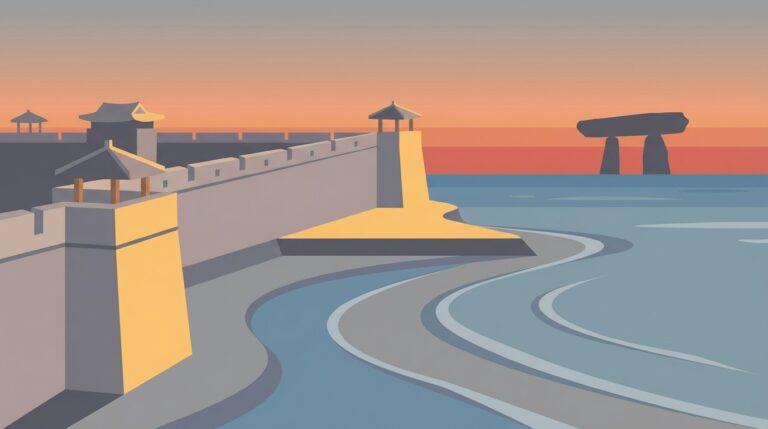
Picture this: You are standing on an old stone wall overlooking the ocean. The wind is strong, carrying the salty scent of the West Sea. In your mind, you hear the dramatic soundtrack of Mr. Sunshine (Eugene Choi, anyone?). You aren’t just visiting an island; you are standing on the front lines of Korea’s history.
Today, we are heading to Ganghwado (Ganghwa Island).
If Jeju Island is the “Hawaii of Korea,” Ganghwado is the “Open-Air Museum.” It’s where kings fled during invasions, where intellectuals were exiled, and where modern history clashed violently with the West.
For C1 learners, simply saying “Wow, it’s old” (우와, 오래됐네요) isn’t enough. You need to express the weight of history, the melancholy of the past, and the strategic beauty of the landscape.
Ready to sound like a history professor in a K-Drama? Let’s dive in.
Phase 2: Deep Dive into Core Expressions
To truly appreciate Ganghwado, we need vocabulary that carries emotional and historical weight.
1. 유서 깊다 (Yuseo gipda)
- Pronunciation: [yu-seo gip-da] (Think: You saw history keep going da.)
- Meaning:
- Literal: The history is deep.
- Real Nuance: “Historic,” “Time-honored,” or “With a long and storied past.” Use this when you want to sound sophisticated about a location.
- K-Culture Moment: In historical dramas (Sageuk), when a scholar enters an old library or a temple, they might whisper, “이곳은 정말 유서 깊은 곳이군요.” (This is truly a historic place.)
- Editor’s Insight: Don’t just say “old” (오래된). “Old” can mean a worn-out sneaker. “유서 깊은” commands respect.
- Situation Spectrum:
[🚫 Casual Slang] ———— [⚠️ Semi-formal] ———— [✅ Formal/Literary]
(Perfect for talking to guides, elders, or writing travel logs.) - 🤔 Think About It: Why does Korean distinguish so sharply between “physically old” (낡은) and “historically old” (유서 깊은)? What does this say about respect for ancestry?
2. 한 (Han)
- Pronunciation: [han] (Sounds like the German name Hans without the ‘s’.)
- Meaning:
- Literal: Resentment/Grudge.
- Real Nuance: A culturally specific mix of sorrow, resentment, regret, and unresolved grief. It is the core emotion of Ganghwado, an island of exiles and invasions.
- K-Culture Moment: Every sad K-Ballad where the singer clutches their chest? That’s Han. The ending of Mr. Sunshine? Pure Han.
- Editor’s Insight: You can say, “이곳에는 역사의 한이 서려 있어요.” (This place is imbued with the Han of history.) It implies a sadness that time hasn’t fully healed.
- Situation Spectrum:
[🚫 Joke] ———— [⚠️ Casual] ———— [✅ Emotional/Serious]
3. 천연 요새 (Cheonyeon Yosae)
- Pronunciation: [cheon-yeon yo-sae]
- Meaning: Natural Fortress.
- K-Culture Moment: In war movies like The Admiral: Roaring Currents, strategists always look for a “천연 요새.”
- Editor’s Insight: Ganghwado is surrounded by strong tides (mudflats), making it a natural defense. Use this when looking at the geography.
Phase 3: Textbook vs. Real Life (C1 Edition)
At the advanced level, it’s about shifting from “describing” to “interpreting.”
| Situation | 📖 Textbook Korean (B1/B2) | 🗣️ Real C1 Korean (Intellectual) | 💡 Why the difference? |
|---|---|---|---|
| Describing the atmosphere | 이곳은 슬픈 역사가 있습니다. (This place has a sad history.) |
역사의 비극이 고스란히 느껴지네요. (I can feel the tragedy of history intact/vividly.) |
Goseuranhi (고스란히) emphasizes that the feeling remains untouched by time. |
| Looking at the view | 경치가 아름답지만 슬퍼요. (The view is beautiful but sad.) |
아름다워서 더 애틋하네요. (It is beautiful, which makes it more heart-rending.) |
Aeteuthada (애틋하다) combines affection with a slight sadness—a very “Korean” emotion. |
| Talking about the location | 바다가 있어서 안전했어요. (It was safe because of the sea.) |
물살이 거세서 천연 요새 역할을 했죠. (The currents are rough, so it acted as a natural fortress.) |
Shows you understand the strategic value, not just the geography. |
Phase 4: Cultural Deep Dive — The Context of “Exile”
4-1. The Island of Exile (유배지)
Ganghwado was close enough to the capital (Hanyang/Seoul) to monitor the exiles, but separated by dangerous tides that made escape impossible.
Non-verbal Tip: When visiting sites like the Goryeo Palace Site or Gwangseongbo Fortress, Koreans often adopt a solemn demeanor. Loud laughter or flashy selfies are often frowned upon in these specific zones. It’s about “reading the room” (Nunchi) of the past ghosts.
4-2. K-Drama Connection: Mr. Sunshine
Many scenes involving the American expedition (Shinmiyangyo) were based on events that happened right here in Ganghwado.
* The Trope: The “Noble Sacrifice.” Characters fighting against modern weaponry with spears and stones.
* Critical View: Dramas often romanticize the heroism. In reality, the battles at Ganghwado were devastating massacres. When you visit Gwangseongbo, realize that what looks like a park today was once a desperate battlefield.
Phase 5: Immersive Roleplay Scenario
Setting: Late afternoon at Gwangseongbo Fortress. The sun is setting over the mudflats. You are with Min-ji, a Korean friend who loves history.
Characters:
* YOU: An expat who has studied Korean history deeply.
* Min-ji: Your Korean friend, thoughtful and quiet.
Min-ji: (Looking at the sea) 와, 물살 진짜 빠르다. 옛날에 배들이 여기로 들어오기 힘들었겠어.
(Wah, mulsal jinjja ppareuda. Yennare baedeuri yeogiro deureo-ogi himdeureotgesseo.)
(Wow, the current is really fast. It must have been hard for ships to enter here in the past.)
🔀 YOUR TURN! How do you respond?
- Option A: 네, 그래서 여기가 중요했어요. (Yes, that’s why this place was important.)
- Option B: 맞아요. 그래서 강화도가 천연 요새라고 불렸던 거겠죠? (Right. That must be why Ganghwado was called a natural fortress, right?)
- Option C: 수영하면 위험하겠네요. (Swimming would be dangerous.)
✅ Best Choice: B
Why? You are confirming her observation with the specific historical term (천연 요새). It shows C1 competence.
Min-ji: 정답! 하지만 결국엔 뚫렸다는 게 너무 슬퍼.
(Jeongdap! Hajiman gyeolgugen ttul-ryeot-daneun ge neomu seulpeo.)
(Correct! But it’s so sad that it was eventually breached.)
YOU: (Choose a sentiment)
그렇죠… 아름다운 풍경 뒤에 역사의 아픔이 서려 있는 것 같아요.
(Geureojyo… areumdaun punggyeong dwie yeoksaui apeum-i seoryeo inneun geot gatayo.)
(True… It feels like the pain of history is imbued behind this beautiful scenery.)
Min-ji: (Nods slowly) 너 진짜 한국 사람 다 됐다. 표현이 되게 시적이다.
(Neo jinjja Hanguk saram da dwaetda. Pyohyeoni doege sijeogida.)
(You’ve really become fully Korean. Your expression is very poetic.)
Phase 6: 10-Second Shadowing Drill
Let’s practice the “Sentimental Historian” tone. Speak slowly, with a slightly lower pitch.
📜 The Sentence:
“이곳에 서면 / 역사의 숨결이 / 생생하게 느껴져요.”
(Standing here / the breath of history / is felt vividly.)
- Pronunciation: Igose seomyeon / yeoksaui sumgyeori / saengsaeng-hage neukkyeojyeoyo.
- Emotion: 🥺 Solemn & Appreciative (Don’t smile too brightly; look contemplative.)
- Key Grammar: ~의 숨결 (Breath of ~) is a poetic metaphor often used for history or nature.
Phase 7: K-Culture Mini Glossary (Ganghwado Edition)
| Korean | Romanization | English | Context |
|---|---|---|---|
| 고인돌 | Goindol | Dolmen | Ganghwado has UNESCO World Heritage dolmens (prehistoric stone tombs). |
| 진 / 보 | Jin / Bo | Military Post/Fort | Suffixes found in place names like Chojijin, Gwangseongbo. Indicates military bases. |
| 순국 | Sunguk | Dying for one’s country | You will see this on monuments. “Patriotic martyrdom.” |
| 호국 | Hoguk | Protecting the country | Often seen in phrases like “History of Hoguk.” |
| 갯벌 | Gaetbeol | Mudflat | The vast tidal flats visible at low tide. Vital for the ecosystem and defense. |
Phase 8: Traveler’s Survival Kit (Ganghwado)
Since Ganghwado is an island connected by bridges, it feels rural yet accessible.
🆘 Survival Expression #1: Transportation
* 🇰🇷 “배차 간격이 어떻게 되나요?” (Baecha gan-gyeogi eotteoke doenayo?)
* 🗣️ Meaning: “What is the bus dispatch interval?”
* 💡 Pro Tip: Buses in Ganghwado can come every 60 minutes. Knowing the interval is crucial so you don’t get stranded at a dolmen site!🍜 Foodie Tip: Jangeo (Eel)
Ganghwado is famous for Grilled Eel (Jangeo-gui).
* Phrase: “꼬리는 누가 먹을래요?” (Who wants to eat the tail?)
* Context: In Korea, the eel tail is mythically believed to be the source of stamina. Offering it to someone is a huge gesture of respect (or teasing).
Phase 9: Think Deeper — “History as Identity”
Why is ‘Han’ (Resentment/Sorrow) so central to Korean history?
In Western history, fortresses are often symbols of conquest and power. In Korea, especially in Ganghwado, fortresses are symbols of desperate defense and endurance. The concept of Han isn’t just about being sad; it’s about the resilience to survive despite the sorrow.
🧠 Think Deeper:
When you look at a historical site in your country, do you feel “pride of conquest” or “sorrow of sacrifice”? How does that shape your national identity compared to Korea’s?
Phase 10: FAQ & Troubleshooting
- Q: Can I wear casual clothes to the historical sites?
- A: Yes, casual is fine. But if entering a shrine (sa-dang) where ancestral tablets are kept, take off your hat and sunglasses. It’s basic etiquette.
- Q: Is it okay to touch the fortress walls?
- A: Generally yes, but do not climb on them (obvious, but people do it). If you see a sign saying “손대지 마시오” (Do not touch), respect it immediately.
❌ Common Mistake: referring to the ocean here as just “Bada” (Sea).
✅ Better phrasing: Call it “Seohae” (West Sea). It distinguishes the muddy, tidal nature of the west from the deep blue East Sea (Donghae).
Phase 11: Wrap-up & Mission
One-Liner Summary: To master Ganghwado travel, swap “Old” for “Historic” (유서 깊은) and “Sad” for “Heart-rending” (애틋한).
🚀 Action Missions:
- 🥉 Bronze: Look at a photo of a historical site and say out loud: “이곳은 유서 깊은 곳입니다.”
- 🥈 Silver: Watch a clip of Mr. Sunshine (Shinmiyangyo battle scenes) on YouTube and try to spot the terrain of Ganghwado.
- 🥇 Gold: Visit a local museum or historical site in your own city and write a 3-sentence review in Korean using the word ‘숨결’ (breath of history).
Phase 12: Interactive Quiz
- Situational Judgment: You are looking at the vast mudflats (Gaetbeol) protecting the island. Your guide asks what you think. What is the most intellectual response?
- A) 와, 진흙이 많네요. (Wow, lots of mud.)
- B) 정말 천연 요새가 따로 없네요. (Ideally: It truly is a natural fortress.)
- C) 수영하고 싶어요. (I want to swim.)
- Vocabulary Match: Which word fits best?
- “Standing at the fortress, I felt the ____ of the ancestors.”
- Options: [A] 재미 (Fun) / [B] 한 (Han/Sorrow) / [C] 스트레스 (Stress)
Answers: 1. (B) – Shows understanding of geography and history. 2. (B) – The core emotion of Ganghwado.
See you in the next lesson, where we might explore the bustling energy of a traditional market! 👋
Frequently Asked Questions (FAQ)
Q: What does "유서 깊다 (Yuseo gipda)" mean in Korean and how do you pronounce it?
A: In Korean, "유서 깊다 (Yuseo gipda)" is pronounced [yu-seo gip-da] and means: Literal: The history is deep.
Q: What does "한 (Han)" mean in Korean and how do you pronounce it?
A: In Korean, "한 (Han)" is pronounced [han] and means: Literal: Resentment/Grudge.
Q: What does "천연 요새 (Cheonyeon Yosae)" mean in Korean and how do you pronounce it?
A: In Korean, "천연 요새 (Cheonyeon Yosae)" is pronounced [cheon-yeon yo-sae] and means: Natural Fortress.







