

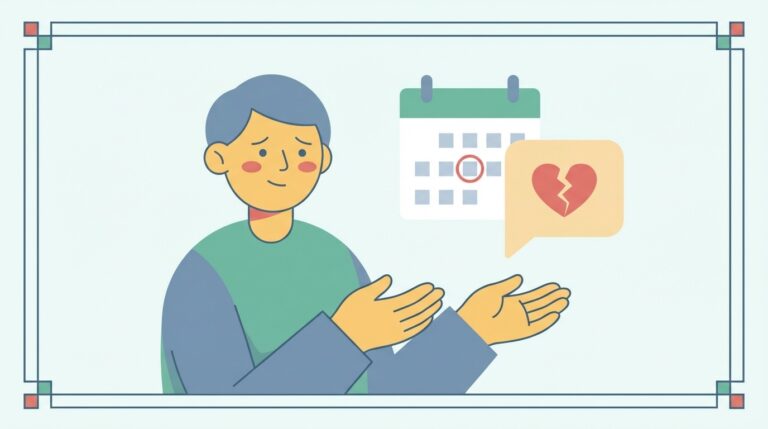
Master the Art of the Soft “No”: Declining Invitations Like a K-Drama Pro
Phase 1: The Immersive Hook
Greeting: 안녕하세요! This is your Daily Hangul Chief Editor. 👋
Imagine this: You are the main character in a K-Drama. It’s Friday night. Your team leader (the one who secretly roots for you) walks up to your desk with a big smile.
“Tonight, pork belly and soju? My treat!” (오늘 삼겹살에 소주 콜?) 🥩🍶
The office goes silent. Everyone looks at you. You really want to go home and watch the latest episode on Netflix, or maybe you actually have a date. In English, you might just say, “Sorry, I can’t make it.” But in Korea? A flat “No” can feel like a slap in the face with a wet kimchi leaf. 😱
How do you refuse without breaking the harmony? Today, we learn the Art of the Soft Refusal. Mastering this will save your social life in Korea.
Phase 2: Deep Dive into Core Expressions
Here are the magical phrases to protect your time and your relationships.
1. 선약이 있어서… (Seonyak-i isseoseo…)
- Pronunciation: [Seon-yak-i i-sseo-seo] (Sounds like: Sun + Yak + E + Saw + Saw)
- Meaning:
- Literal: Because I have a prior engagement.
- Real Nuance: “I promise I’m not rejecting you, I just made a promise to someone else first!”
- K-Culture Moment: In office dramas (Misaeng style), when the smart rookie needs to escape a drinking session, they check their watch and drop this line. It is the ultimate shield.
- Editor’s Insight: Seonyak (선약) sounds much more formal and valid than just saying “I’m busy” (바빠요). “Busy” can sound like an excuse. “Seonyak” implies a promise you must keep.
- Situation Spectrum:
[🚫 Boss (Strict)] ———— [⚠️ Colleagues] ———— [✅ Friends]
(Note: You can use this with anyone, but add polite endings for bosses!) - 🤔 Think About It: Why does specifying a “prior promise” soften the blow more than just saying “I don’t have time”?
2. 못 갈 것 같아요 (Mot gal geot gatayo)
- Pronunciation: [Mot gal got ga-ta-yo]
- Meaning:
- Literal: It seems like I won’t be able to go.
- Real Nuance: “I want to go, but the universe is preventing me.”
- Editor’s Insight: Pay attention to ~것 같아요 (it seems like). In English, saying “I think I can’t go” sounds uncertain. In Korean, this vague ending is politeness. Saying “못 가요” (I can’t go) is too direct and harsh for B1 level social skills!
3. 다음에 꼭 같이 가요 (Daeume kkok gachi gayo)
- Pronunciation: [Da-eum-e kkok ga-chi ga-yo]
- Meaning: Let’s surely go together next time.
- K-Culture Moment: This is the “padding” used by K-Pop idols when they can’t visit a fan’s country yet. “We will surely come next time!” It restores the hope.
Phase 3: Textbook vs. Real Life
| Situation | 📖 Textbook Korean | 🗣️ Real Korean (Insa Style) | 💡 Why the difference? |
|---|---|---|---|
| Friend asks to hang out | 아니요, 안 돼요. (No, I can’t.) | 아, 어떡하지? 나 선약 있는데… 😭 | “No” is too cold. We express regret first (“Aw, what to do?”). |
| Boss suggests dinner | 죄송합니다. 못 갑니다. (Sorry. I cannot go.) | 죄송해요 부장님, 오늘 제가 선약이 있어서… | Direct rejection challenges authority. We use the “Seonyak” shield. |
Editor’s Note: Notice the emoji use? In text messages, adding a crying face (ㅠㅠ or 😭) softens the refusal by 200%.
Phase 4: Cultural Deep Dive — The Art of ‘Nunchi’
4-1. Non-verbal Communication: The “Hesitation”
In Korea, speed matters. If you say “No” instantly (within 0.1 seconds), it implies you really didn’t want to go.
- The Pro Move: Pause for 2 seconds. Look slightly troubled. Sigh softly. Then say the phrase. This shows you are “struggling” between your desire to go and your prior engagement. This is acting, but it is also Nunchi (eye-measure/sense).
4-2. K-Food Connection: The “Empty Plate” Rule
Refusing an invitation is like leaving food on your plate.
* K-Food Context: If an elder puts a piece of kimchi on your spoon, you eat it. If they invite you to dinner, you try to go.
* Critical View: Why is it so hard to separate “work” and “life” in Korea? The concept of Jeong (deep affection/bond) means sharing meals builds trust. Refusing a meal can sometimes be misinterpreted as refusing the bond.
Phase 5: Immersive Roleplay
Setting: It’s 6 PM on a Friday. You are at the office elevator. The doors open, and Minji, your friendly but talkative coworker, spots you.
Characters:
* YOU: Exhausted, just want to go home.
* Minji: High energy, loves Chimaek (Chicken & Beer).
Dialogue:
Minji: (Blocking the elevator door) OO씨! 오늘 끝나고 치맥 어때요? 제가 맛집 찾았어요! 🍗🍺
(OO-ssi! How about Chimaek after work? I found a famous place!)
🔀 YOUR TURN! How do you reply?
- A) “싫어요. 피곤해요.” (I don’t want to. I’m tired.)
- B) “아… 진짜 가고 싶은데, 오늘 친구랑 선약이 있어서 못 갈 것 같아요. ㅠㅠ”
- C) “치킨 좋죠! 가요!” (Sacrifice your rest for social life)
✅ Best Choice: B
* Why: You validated her offer (“I really want to go”), used the Shield (“Seonyak”), and softened the ending (“seems like I can’t”).
⚠️ Choice A Analysis: You will likely never be invited again. This is considered very rude in a workplace setting.
Phase 6: 10-Second Shadowing Drill
Read this aloud with the “Sad/Regretful” emotion. Do not smile!
😟 아, 정말 아쉬운데요 / 제가 오늘은 / 선약이 있어서 / 못 갈 것 같아요.
(Ah, jeongmal aswiundeyo / jega oneul-eun / seonyak-i isseoseo / mot gal geot gatayo)
Translation: Ah, it’s such a shame / but today / because I have a prior plan / it seems I can’t go.
Phase 7: K-Culture Mini Glossary
| Korean | Rom | Meaning | Context |
|---|---|---|---|
| 선약 | Seonyak | Prior Engagement | The polite, unchallengeable excuse. |
| 눈치 | Nunchi | Social Sense | Reading the air to know when to refuse gently. |
| 회식 | Hoesik | Company Dinner | The event everyone loves to hate and tries to escape politely. |
| 아쉽다 | Aswipda | To be shameful/sad | Used when you miss an opportunity (not “shame” on a person). |
Phase 8: Traveler’s Survival Kit
Even if you aren’t working in Korea, you will need to say “No” to street vendors or persistent club promoters in Hongdae.
🆘 Survival Expression: The “Hand Wave” Refusal
* 🇰🇷 “괜찮아요.” (Gwaenchanayo)
* Meaning: No, thank you / I’m okay.
* Gesture: Gently wave your hand in front of your chest (like fanning away smoke). Do not make a “Stop” hand sign (palm out); that is for traffic police.
* 💡 Pro Tip: If a salesperson grabs your arm (rare but happens), be firm: “됐어요” (Dwaesseoyo – I’m done/No need).
Phase 9: Think Deeper — “High Context Culture”
🧠 Why can’t we just say “No”?
Korea is a High Context Culture. This means communication relies heavily on underlying feelings and relationships, not just words. In English (Low Context), “No” means “No.” In Korean, “No” can hurt the other person’s Kibun (mood/face). By saying “It seems like I can’t go because of a prior plan,” you shift the blame from yourself to the situation. You are protecting the relationship, not lying.
💬 Your Turn: In your country, do you use “white lies” to reject plans? Or is honesty the best policy? Tell me in the comments!
Phase 10: FAQ & Troubleshooting
- Q: Can I use “Seonyak” even if my plan is just sleeping?
- A: YES! 💯 A promise to yourself is still a promise. Koreans do this all the time. Your “prior engagement” can be with your pillow.
- Q: What if they ask “What is your plan?”
- A: That is rude of them! But if they ask, keep it vague. “가족 일이 좀 있어서요” (I have some family matters). No one questions family matters.
- ❌ Common Mistake: Smiling too much when refusing.
- Fix: Look slightly disappointed. If you smile while saying “I can’t go,” it looks like you are happy to escape.
Phase 11: Wrap-up & Mission
Summary: To refuse politely, express regret first, blame the “Seonyak” (prior plan), and end with “Next time!”
Action Missions:
* 🥉 Bronze: Look in the mirror, make a “sorry” face, and say “선약이 있어서…” 3 times.
* 🥈 Silver: Next time you are too tired to go out, text your friend: “미안, 오늘 선약이 있어서 못 갈 것 같아 ㅠㅠ”
* 🥇 Gold: Watch a K-Drama episode involving an office scene. Find the moment someone tries to leave work early or refuse a drink. Did they use Nunchi?
Engagement: Have you ever accidentally offended a Korean by being too direct? Share your story below! 👇
Phase 12: Interactive Quiz
Situation: Your Korean friend invites you to a spicy rice cake (Tteokbokki) place, but your stomach hurts.
Which is the MOST natural and polite response?
- “싫어. 배 아파.” (Hate it. Stomach hurts.)
- “안 돼요.” (No.)
- “아, 진짜 가고 싶은데… 배가 좀 안 좋아서 못 갈 것 같아. 다음에 꼭 먹자!” (Ah, I really want to go… but my stomach isn’t good so I don’t think I can. Let’s eat next time!)
Correct Answer: 3. It includes Empathy + Reason + Soft Refusal + Future Promise.
Frequently Asked Questions (FAQ)
Q: What does "선약이 있어서... (Seonyak-i isseoseo...)" mean in Korean and how do you pronounce it?
A: In Korean, "선약이 있어서... (Seonyak-i isseoseo...)" is pronounced [Seon-yak-i i-sseo-seo] and means: Literal: Because I have a prior engagement.
Q: What does "못 갈 것 같아요 (Mot gal geot gatayo)" mean in Korean and how do you pronounce it?
A: In Korean, "못 갈 것 같아요 (Mot gal geot gatayo)" is pronounced [Mot gal got ga-ta-yo] and means: Literal: It seems like I won't be able to go.
Q: What does "다음에 꼭 같이 가요 (Daeume kkok gachi gayo)" mean in Korean and how do you pronounce it?
A: In Korean, "다음에 꼭 같이 가요 (Daeume kkok gachi gayo)" is pronounced [Da-eum-e kkok ga-chi ga-yo] and means: Let's surely go together next time.







