

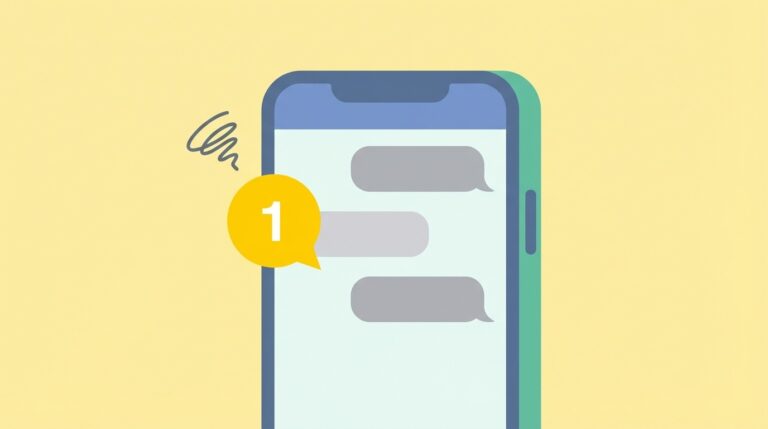
Phase 1: The Panic of the Yellow Bubble (Immersive Hook)
Greeting: 안녕하세요! Welcome to Daily Hangul. I’m your editor, here to decode the mysteries of Korean dating.
The Scene: You know that scene in every K-Drama? The protagonist is lying in bed, staring at their phone. The room is dark, lit only by the screen’s glow. They sent a message 3 hours ago. The little yellow number “1” next to the message on KakaoTalk has disappeared, meaning the other person read it. But… no reply. 😱
Cut to the next morning: The protagonist has dark circles under their eyes. Why? Because in Korea, contact frequency = love.
The ‘Why’: If you are dating a Korean, the “speed of reply” is often interpreted as the “depth of affection.” If you don’t understand the nuance of “reading but not replying” or “ghosting,” you might accidentally end a relationship before it even starts. Today, we aren’t just learning words; we are learning how to survive the high-speed emotional rollercoaster of K-Dating.
Phase 2: Deep Dive into Key Expressions
Here are the three heavy-hitters you’ll hear when the texting vibe goes wrong.
1. 읽씹 (Ilk-ssip)
- Pronunciation: [Ilk-ssip] (Sounds like ‘Eel’ + ‘Sip’ of water)
- Meaning: Read and Ignore (Lit: Read + Chew/Digest)
- K-Culture Moment: In K-Pop lyrics or web dramas, you’ll hear this constantly. It’s when someone reads your KakaoTalk message (the ‘1’ disappears) but doesn’t reply. It is considered highly offensive in the early stages of dating (Same).
- Editor’s Insight: This is a slang combination of 읽다 (to read) and 씹다 (to chew/ignore). It implies you “chewed up” their words. It’s much stronger than just “forgetting to reply.”
- Situation Spectrum:
[🚫 Boss/Elders] ———— [⚠️ Close Friends] ———— [✅ Dating fights]- 🤔 Think About It: Why is “ignoring” described as “chewing” in Korean? It suggests a physical act of disrespect, destroying the communication.
2. 서운하다 (Seounhada)
- Pronunciation: [Seo-un-ha-da]
- Meaning: Hurt/Disappointed/Wistful (Not quite angry, not quite sad)
- K-Culture Moment: A character waits for their partner at Namsan Tower, but the partner arrives 30 minutes late without calling. The character says, “나 진짜 서운해.” (I’m really hurt/disappointed.)
- Editor’s Insight: This is THE most important emotion word in Korean relationships. It is used when your expectations of care were not met. It’s a soft way to say, “I thought you cared more about me than this.”
- Situation Spectrum:
[🚫 Formal Business] ———— [⚠️ Close Colleagues] ———— [✅ Lovers/Family]- 🤔 Think About It: English doesn’t have a perfect 1:1 translation for Seounhada. Does your language have a specific word for “sadness caused by a lack of care from a loved one”?
3. 연락이 뜸하다 (Yeollagi tteumhada)
- Pronunciation: [Yeol-la-gi tteum-ha-da]
- Meaning: Contact has become infrequent/sporadic
- K-Culture Moment: In a cafe scene, a friend asks, “How’s it going with Min-su?” and the girl sighs, “요즘 연락이 좀 뜸해.” (Lately, his contact is sporadic.) This is usually the prelude to a breakup.
- Editor’s Insight: 뜸하다 comes from the intervals of steam or gaps. It’s a B2-level descriptive verb that sounds very mature and native compared to just saying “He doesn’t call often.”
- Situation Spectrum:
[✅ Casual] ———— [✅ Semi-formal] ———— [✅ Formal]
Phase 3: Textbook vs. Real Life
| Situation | 📖 Textbook Korean | 🗣️ Real Korean (Dating) | 💡 Why the difference? |
|---|---|---|---|
| asking why they didn’t reply | 왜 답장을 안 했어요? (Why didn’t you reply?) |
왜 읽씹했어? / 씹냐? (Why did you ‘read-chew’? / Are you chewing me?) |
The real version uses slang (Ilk-ssip) to emphasize the frustration and accusation. |
| Complaining about lack of contact | 전화를 자주 해주세요. (Please call often.) |
연락 좀 잘해줘. (Do ‘contact’ well/properly.) |
“Do it well” (잘해) implies a moral obligation or effort in the relationship context. |
| Expressing disappointment | 저는 슬퍼요. (I am sad.) |
나 좀 서운하려고 해. (I’m about to get ‘seoun’.) |
Koreans rarely say “I am sad” in fights. They warn that feelings are being hurt to induce guilt. |
Phase 4: Cultural Context — The “KakaoTalk Jail”
4-1. The “1” Anxiety
In Korea, KakaoTalk is life. The number “1” next to unread messages is a major source of anxiety. If the “1” doesn’t vanish for hours but you see them posting on Instagram? That is a declaration of war. This is called 안읽씹 (An-il-ssip)—not reading on purpose (checking via notification bar only) to avoid replying.
4-2. K-Drama Connection: The “Battery” Trope
Have you seen the trope where the lead’s phone dies, and they run to a convenience store to buy a charger or use a payphone (if one exists)? In many cultures, “My phone died” is a valid excuse. In K-Dating, letting your phone die is often seen as negligence. Being reachable is considered a basic duty of a boyfriend/girlfriend.
Phase 5: Immersive Roleplay Scenario
Setting: It’s 11:00 PM on a Friday. You are at home. Your Korean partner, Min-ho, went out for a “Hoe-sik” (company dinner) at 6 PM. He hasn’t texted you once. Finally, his name pops up on your screen.
Characters:
* YOU: Feeling worried but also annoyed (Seounhada).
* Min-ho: A bit tipsy, thinks he did nothing wrong.
Dialogue:
Min-ho: 집 가는 중~ 🚕
(Jip ganeun jung~) [Heading home~]
(🎭 Min-ho sends a cute emoticon acting innocent)
YOU: (Decide your response!)
🔀 Your Turn! How do you respond?
- A) “지금 몇 시인 줄 알아? 연락 한 통 없다가 이제야?” (Do you know what time it is? No contact all night and only now?)
- B) “응, 조심히 들어가~” (Okay, get home safe~)
- C) “아… 진짜 걱정했잖아. 읽씹하는 줄 알았어.” (Ah… I was really worried. I thought you were ghosting me.)
✅ Best Choice: C
* Why? It expresses your feeling (worried) and gently scolds him using the slang term (Ilk-ssip context), making you sound native but caring. Choice A is too aggressive for a start, and B is too passive if you are actually upset.
Min-ho: 아 미안, 배터리가 없었어. 😅
(A mian, baeteriga eopseosseo.) [Ah sorry, I had no battery.]
YOU: 핑계 대지 마. 진짜 서운해. 😤
(Pinggye daeji ma. Jinjja seounhae.) [Don’t make excuses. I’m really hurt/disappointed.]
Phase 6: 10-Second Shadowing Drill
Let’s practice the “Guilt Trip” tone. Don’t sound angry; sound disappointed.
“Please… contact me properly. I get anxious.”
🥺 Emotion: Sad & Pleading
제발… / 연락 좀 / 잘해줘. / 나 불안하잖아.
(Je-bal… / yeol-lak jom / jal-hae-jwo. / Na buran-hajanha.)
Phase 7: K-Culture Glossary (Texting Edition)
| Korean | Romanization | English | Context |
|---|---|---|---|
| 칼답 | Kal-dap | Knife Reply | Replying immediately (as fast as a knife slash). Highly desired in dating. |
| 안읽씹 | An-il-ssip | Unread Ignore | Seeing the notification but not opening the app to keep the ‘1’ there. |
| 잠수 | Jamsu | Submerging | Ghosting. Disappearing completely without explanation. |
| 썸 | Ssome | Some(thing) | The “talking stage” before officially dating. Texting frequency peaks here. |
Phase 8: Traveler’s Survival Kit
Even if you aren’t dating, you might need to complain about a lack of contact from a host or a guide.
🆘 Survival Phrase
* 🇰🇷 “연락이 너무 안 돼서 답답해요.” (Yeollagi neomu an dwaeseo dapdapaeyo.)
* 🗣️ Meaning: “It’s frustrating because I can’t get in touch with you.”
* 📍 Where: Airbnb host, Tour guide, Meeting a Korean friend.
* 💡 Pro Tip: 답답하다 (Dapdaphada) is a great word when you feel “stuffy” or blocked because communication isn’t working.📌 Editor’s Travel Note
If a Korean friend doesn’t reply to a text, try calling. In Korea, texting is casual, but a phone call signals urgency. If they don’t answer the call, send a text saying “급한 일이에요” (It’s urgent).
Phase 9: Think Deeper — Technology & Affection
The “Always-On” Culture:
Korea is one of the most connected nations on earth. Because everyone can be connected 24/7, being disconnected is often interpreted as a choice rather than a circumstance. In Korean dating culture, the phone is a digital umbilical cord. If you cut it, you cut the emotional flow.
🧠 Think Deeper:
Does constant contact equal love? In some cultures, independence is sexy. In Korea, dependency and constant updates (reporting where you are, what you ate) are signs of care. How does this compare to the dating style in your country?
Phase 10: FAQ & Troubleshooting
- Q: Can I use ‘읽씹’ with my boss if he ignores my message?
- A: NEVER. absolutely not. You will be fired (emotionally, if not literally). Use “답장을 기다리고 있습니다” (I am waiting for a reply) instead.
- Q: My Korean boyfriend reads my messages but replies 3 hours later. Is this ‘Ilk-ssip’?
- A: Technically, yes. But if he is working, it’s forgivable. If he is posting stories on Instagram but not replying to you? That is the definition of bad Ilk-ssip.
- Q: How do I say “Don’t ghost me” playfully?
- A: “잠수 타면 죽어!” (If you submerge/ghost, you die!) – Use with a smile and only with close dates! 😉
Phase 11: Wrap-up & Mission
Summary: Today we learned that Seounhada (Disappointed) is better than “Angry,” and Ilk-ssip (Read-Ignore) is a crime in K-Dating.
🔥 Action Missions:
* 🥉 Bronze: Look at your phone and say “나 서운해” with a sad face in the mirror.
* 🥈 Silver: Watch a K-Drama scene where a couple fights. Listen for the word “연락” (Contact).
* 🥇 Gold: If you have a Korean friend who is slow to reply, jokingly text them: “자꾸 읽씹할래?” (Are you going to keep read-ignoring me?)
💬 Your Turn: What is the longest time you’ve waited for a reply before getting angry? Tell me in the comments!
Phase 12: Interactive Quiz
1. Which phrase is appropriate to use with your Professor who didn’t reply to your email?
* A) 교수님, 왜 읽씹하세요? (Professor, why are you read-ignoring?)
* B) 교수님, 답장이 늦으셔서 서운해요. (Professor, I’m hurt you are late.)
* C) 교수님, 바쁘시겠지만 확인 부탁드립니다. (Professor, you must be busy, but please check.)
2. True or False?
* “In Korea, having your battery die is widely accepted as a valid excuse for missing a text from your partner.”
Answers:
1. C. (A and B are suicidal in a hierarchical society!)
2. False. (You should have carried a power bank! It’s seen as lack of care.)
Frequently Asked Questions (FAQ)
Q: What does "읽씹 (Ilk-ssip)" mean in Korean and how do you pronounce it?
A: In Korean, "읽씹 (Ilk-ssip)" is pronounced [Ilk-ssip] and means: Read and Ignore (Lit: Read + Chew/Digest)
Q: What does "서운하다 (Seounhada)" mean in Korean and how do you pronounce it?
A: In Korean, "서운하다 (Seounhada)" is pronounced [Seo-un-ha-da] and means: Hurt/Disappointed/Wistful (Not quite angry, not quite sad)
Q: What does "연락이 뜸하다 (Yeollagi tteumhada)" mean in Korean and how do you pronounce it?
A: In Korean, "연락이 뜸하다 (Yeollagi tteumhada)" is pronounced [Yeol-la-gi tteum-ha-da] and means: Contact has become infrequent/sporadic







