

Phase 1: The ‘Warm’ Trap — Immersive Hook
Hello! This is your Senior Editor from Daily Hangul.
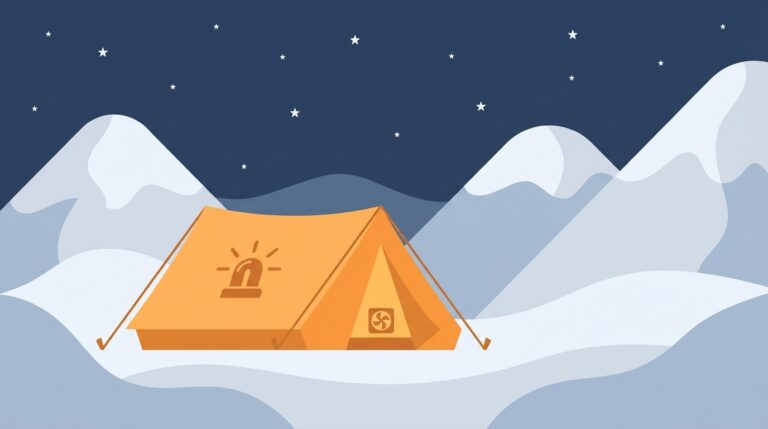
Picture this: You’re in a scene straight out of Hospital Playlist (Seulgi-roi-eun Ui-sa-saeng-hwal). You are deep in the mountains of Gangwon-do, surrounded by pristine white snow. Inside your tent, it’s cozy. You’ve got a kerosene heater glowing warmly, a pot of Ramyeon bubbling, and maybe some K-Indie music playing softly. It feels perfect.
But here’s the plot twist no K-Drama mentions: The Silent Killer.
Every winter in Korea, the news reports tragic accidents of campers suffering from carbon monoxide poisoning. Koreans have a specific obsession with warmth (thanks to our Ondol culture), which leads many to seal their tents too tightly. Today, we aren’t just learning vocabulary; we are learning survival Korean. As a C1 learner, you need to know how to discuss safety with precision and authority. Let’s make sure your romantic winter camping trip has a happy ending.
Phase 2: Deep Dive — The Language of Survival
1. 환기시키다 (Hwan-gi-si-ki-da)
- Pronunciation: [hwan-gi-si-ki-da] Sounds like ‘Hwan’ (Juan) + ‘gi’ (key) + ‘see-key-da’.
- Meaning: To ventilate / To air out
- K-Culture Moment: You’ll hear this in medical dramas or even when a K-Pop idol is doing a live stream in a stuffy practice room: “야, 환기 좀 시키자!” (Hey, let’s air this place out!).
- Editor’s Insight: Note the causative form -시키다 (to make/let happen). You aren’t just opening a window; you are actively causing the air to circulate. In winter camping, this is non-negotiable.
- Situation Spectrum:
[🚫 Use Caution] ———— [⚠️ Standard] ———— [✅ Essential]- This is a neutral, standard verb used in all situations, from casual to formal safety manuals.
- 🤔 Think About It: Why does Korean distinguish so clearly between 환기하다 (to ventilate) and 환기시키다 (to cause ventilation)? It emphasizes the active effort required to change the atmosphere.
2. 일산화탄소 경보기 (Ilsanhwatan-so Gyeongbogi)
- Pronunciation: [il-san-hwa-tan-so gyeong-bo-gi]
- Meaning: Carbon Monoxide Alarm
- K-Culture Moment: If you watch camping variety shows like Camping Club, you might see the cast meticulously checking their gear. This item is the ‘holy grail’ of winter safety.
- Editor’s Insight: This is a mouthful, I know. Break it down: 일 (Mono) + 산화 (Oxide) + 탄소 (Carbon). 경보기 comes from 경보 (warning/alert) + 기 (device/machine). If you visit a Korean camping gear shop (Camping Gorilla, etc.), asking for this proves you aren’t a tourist; you’re a serious camper.
- Situation Spectrum:
[🚫 Slang] ———— [⚠️ Technical] ———— [✅ Essential] - 🤔 Think About It: Korean technical terms are often Sino-Korean words (Hanja). Can you recognize the ‘So’ (소) sound related to elements (like San-so for Oxygen)?
3. 질식 사고 (Jilsik Sago)
- Pronunciation: [jil-sik sa-go]
- Meaning: Suffocation accident / Asphyxiation accident
- K-Culture Moment: News anchors use this term with a grave face during the winter season. “텐트 내 질식 사고를 주의하십시오.” (Please beware of suffocation accidents inside tents.)
- Editor’s Insight: 질식 implies a blockage of breath. In a camping context, it refers to oxygen depletion. Using this word shows you understand the consequences, not just the action.
- Situation Spectrum:
[🚫 Casual Chat] ———— [⚠️ Warning] ———— [✅ Emergency]
Phase 3: Textbook vs. Real Life
| Situation | 📖 Textbook Korean | 🗣️ Real Korean (Camping ver.) | 💡 Why the difference? |
|---|---|---|---|
| Checking Ventilation | 창문을 조금 열어 주세요. (Please open the window a little.) | 숨구멍 좀 열어놔. (Leave a breathing hole open.) | ‘숨구멍’ (breathing hole) vividly describes the desperate need for oxygen in a sealed tent. |
| Turning on the heater | 난로를 켜겠습니다. (I will turn on the heater.) | 난로 피운다? (I’m lighting the heater, okay?) | ‘피우다’ (to bloom/light/smoke) feels more analog and warm, fitting the kerosene heater vibe. |
| Warning about danger | 일산화탄소가 위험합니다. (CO is dangerous.) | 가스 차면 큰일 나. (If gas fills up, we’re in big trouble.) | ‘큰일 나다’ (big trouble happens) is the universal Korean phrase for disaster avoidance. |
Note: ‘숨구멍’ (Sum-gu-meong) is originally used for the fontanelle on a baby’s head or pores in skin/plants, but campers use it metaphorically for ventilation flaps.
Phase 4: Cultural Deep Dive — The Warmth Obsession
4-1. The “Ondol” DNA
Why do Koreans risk bringing heaters into small tents? It’s in the DNA. Koreans are used to Ondol (floor heating). We don’t just want the air to be warm; we want the floor to be hot enough to roast our backs. This leads to “Jwa-sik” (sitting mode) camping setups with thick rugs and powerful heaters. Understanding this helps you understand why your Korean friends might be overpacking heating gear.
4-2. K-Drama vs. Reality
In dramas, characters fall asleep while looking at the stars through a clear tent roof. In reality, winter camping (Dong-gye Camping) is a battle against condensation (Gyeol-lo) and cold. If you tell a Korean camper, “드라마처럼 낭만적이네요” (It’s romantic like a drama), they might laugh and say, “현실은 생존이죠” (Reality is survival).
Phase 5: Immersive Roleplay — “The Long Night”
Setting: A freezing night at a campsite in Pyeongchang. -15°C outside. Inside the ‘shellter’ tent, the kerosene heater is humming.
Characters:
– YOU: A safety-conscious camper who read the manual.
– Min-su: Your Korean friend who loves ‘emotional camping’ (Gamseong Camping) but is a bit careless.
(The heater flame is flickering slightly yellow)
Min-su: 아, 너무 춥다. 그냥 벤틸(환기구) 다 닫고 잘까?
(Ah, neomu chupda. Geunyang ventil da datgo jalkka?)
[Ah, it’s so cold. Should we just close all the vents and sleep?]
YOU:
🔀 Decision Point! How do you respond?
A) 안 돼요. 죽을 수도 있어요. (No. We could die.)
B) 야, 미쳤어? 일산화탄소 중독으로 뉴스에 나오고 싶어? (숨구멍은 남겨야지!)
C) 조금 추운 게 나아요. (It’s better to be a little cold.)
✅ Best Choice: B
– Why? Option A is too stiff. Option C is too weak. Option B uses strong rhetoric (“Do you want to be on the news?”) which is a very Korean way to warn friends, combined with the technical term (CO poisoning) and the slangy ‘breath hole’.
Min-su: 에이, 설마. 경보기 있잖아.
(Ei, seolma. Gyeongbogi itjana.)
[Ey, come on. We have the alarm.]
YOU: 기계는 고장 날 수도 있잖아. 안전이 제일이야. 내가 위쪽 창문 조금만 열게.
(Gigye-neun gojang nal sudo itjana. Anjeon-i jeil-iya. Naega wijjok changmun jogeum-man yeolge.)
[Machines can break. Safety is #1. I’ll open the top window just a bit.]
(You unzip the upper vent. Fresh, cold air rushes in mixed with the warm air.)
Min-su: 알았어, 알았어. 역시 너는 철두철미하다니까.
(Arasseo, arasseo. Yeoksi neo-neun cheolducheolmi-hadanikka.)
[Okay, okay. You really are thorough (as expected).]
Phase 6: 10-Second Shadowing Drill
Let’s practice the sentence that establishes your authority as a smart camper.
😤 Strict & Serious:
자다가 / 가스 중독되면 / 진짜 큰일 나니까 / 환기구는 / 꼭 열어두자.
(Jadaga / gaseu jungdok-doemyeon / jinjja keunil nanikka / hwangigu-neun / kkok yeoreo-duja.)Translation: If we get gas poisoning while sleeping, it’s a huge disaster, so let’s absolutely keep the vents open.
Phase 7: K-Culture Mini Glossary
| Korean | Romanization | Meaning | Context |
|---|---|---|---|
| 동계 캠핑 | Dong-gye Camping | Winter Camping | Regarded as the ‘flower of camping’ by enthusiasts due to the lack of bugs and crowds. |
| 장비빨 | Jangbi-bbal | Gear power | The belief that good equipment makes the experience. (lit. ‘Equipment foot/power’) |
| 불멍 | Bul-meong | Fire spacing-out | Staring at the campfire blankly to relax. Note: Never do ‘Charcoal-meong’ inside a tent! |
| 등유 | Deung-yu | Kerosene | The fuel used for most Korean camping heaters (e.g., Paseco brand). |
Phase 8: Traveler’s Survival Kit (Camping Ed.)
Even if you aren’t camping, these safety phrases work for guesthouses with old heating systems.
🆘 Emergency Safety Expressions
1. “머리가 너무 어지러워요.” (Meori-ga neomu eojireo-woyo)
– I feel very dizzy. (First sign of CO poisoning).
2. “창문 좀 열어주세요.” (Changmun jom yeoreo-juseyo)
– Please open the window. (Use in taxis, overheated rooms, or buses).
3. “이거 안전한가요?” (Igeo anjeon-hangayo?)
– Is this safe? (Ask this when renting gear).📌 Editor’s Pro Tip:
In rural Korea, some old accommodations still use Yeontan (coal briquettes) or old gas boilers. If you smell something like rotten eggs or feel a sudden headache, get fresh air immediately. Call 119 for medical emergencies (English service available).
Phase 9: Think Deeper — “The Price of Warmth”
Food & Identity: Why do Koreans eat boiling hot soup (Guk/Jjigae) even when camping?
In Western camping, sandwiches or grilled meat might suffice. But for Koreans, a meal isn’t complete without a boiling pot of stew, even (or especially) in freezing weather. This cultural desire for “heat”—both in food and environment—explains the heavy reliance on stoves inside tents. It reflects the Korean concept of ‘Siwon-hada’ (refreshing), used paradoxically when consuming hot soup or sitting on a hot floor. It’s about releasing tension through heat.
💬 Your Turn: Does your culture have a concept similar to ‘fighting fire with fire’ or finding relief in extreme heat? Tell us in the comments!
Phase 10: FAQ & Troubleshooting
Q: Can I use a charcoal grill inside the tent just for a little bit to cook meat?
A: 🚫 ABSOLUTELY NOT (Nae-beo / Never). This is the #1 cause of camping deaths. Charcoal releases massive amounts of CO without smoke. Cook outside, eat inside.
Q: I saw a ‘Mini Heater’ at the convenience store. Is it safe for a small tent?
A: Be careful with “Iso-butane” gas heaters inside. They consume oxygen rapidly. Use them only for short periods while awake, never while sleeping.
❌ Common Mistake: Thinking “I’ll just leave a tiny crack open.”
✅ Correction: You need cross-ventilation (Daeryu). Open a bottom vent (for fresh air in) and a top vent (for hot/bad air out).
Phase 11: Wrap-up & Action Items
Summary: Winter camping in Korea is beautiful but requires respect for Hwan-gi (Ventilation) and fear of Ilsanhwatan-so (CO).
Mission:
– 🥉 Bronze: Say “환기 좀 시키자” (Let’s ventilate) next time you enter a stuffy room.
– 🥈 Silver: Go to a Korean online store (Coupang/Naver) and search for “일산화탄소 경보기.” Read the Korean reviews.
– 🥇 Gold: If you go camping or glamping, locate the ventilation points and the CO alarm yourself. Point to them and say, “숨구멍 확보 완료!” (Breathing holes secured!)
K-Culture Mission: Watch an episode of Hospital Playlist Season 2, specifically the camping scenes. Notice what gear they use. Are they being safe?
Phase 12: Quiz — Survival Check
- Situation Judgment: Your friend brings a charcoal grill (Hwaro) into the tent because it’s raining. What do you say?
- A) “Wow, BBQ party!”
- B) “야, 미쳤어? 당장 밖으로 빼!” (Hey, are you crazy? Take it out right now!)
- C) “냄새 좋네.” (Smells good.)
- Fill in the Blank: Camping requires good circulation. You must open the ‘_______.’ (Hint: It’s not just a window, it’s a ‘breathing hole’).
- Answer: [ _______ ]
Answers:
1. B. This is a life-or-death situation. Politeness is secondary.
2. 숨구멍 (Sum-gu-meong)
Frequently Asked Questions (FAQ)
Q: What does "환기시키다 (Hwan-gi-si-ki-da)" mean in Korean and how do you pronounce it?
A: In Korean, "환기시키다 (Hwan-gi-si-ki-da)" is pronounced [hwan-gi-si-ki-da] and means: To ventilate / To air out
Q: What does "일산화탄소 경보기 (Ilsanhwatan-so Gyeongbogi)" mean in Korean and how do you pronounce it?
A: In Korean, "일산화탄소 경보기 (Ilsanhwatan-so Gyeongbogi)" is pronounced [il-san-hwa-tan-so gyeong-bo-gi] and means: Carbon Monoxide Alarm
Q: What does "질식 사고 (Jilsik Sago)" mean in Korean and how do you pronounce it?
A: In Korean, "질식 사고 (Jilsik Sago)" is pronounced [jil-sik sa-go] and means: Suffocation accident / Asphyxiation accident







