

Beyond “I’m Sorry”: Protecting Your Team from “Gapjil” Like a K-Drama Boss
Phase 1: Immersive Hook
Greeting: Hello, Daily Hangul readers. It’s your Senior Editor here.
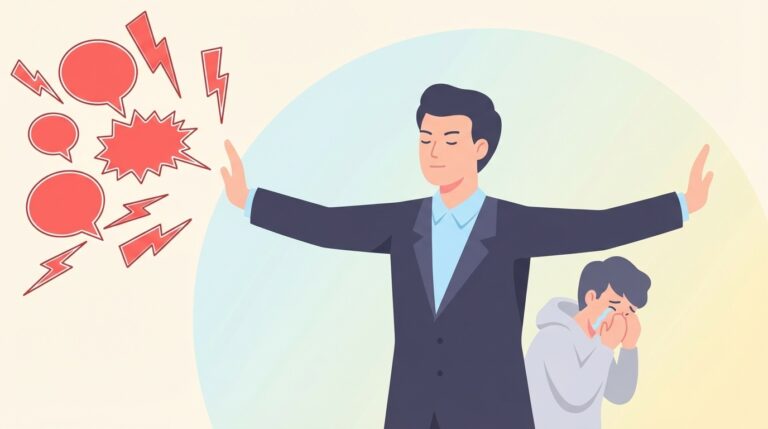
The Scene: Picture this. You are watching a tense scene in a K-Drama like Misaeng (Incomplete Life) or VIP. A junior employee is standing with their head bowed low, trembling. Across the counter, a VIP customer—a classic “Jin-sang” (nuisance customer)—is screaming, throwing a credit card, demanding the impossible. The air is thick with tension. The employee is on the verge of tears.
Then, the camera pans to the shoes. Someone steps in. The Team Leader blocks the customer’s view of the employee. The music changes from suspenseful to heroic. They don’t shout back. They speak low, firm, and with terrifying politeness.
The ‘Why’: In Korea, the phrase “The Customer is King” (손님은 왕이다) has long dominated the service industry. However, modern Korean leadership is evolving. Knowing how to protect your team from Gapjil (abuse of power) using high-level, sophisticated Korean is the ultimate mark of a C2-level speaker and a true leader. It’s not just about language; it’s about dignity.
Transparency: This guide is based on actual crisis management protocols used in Korean corporate training, blended with the dramatic flair of top-tier K-Dramas.
Phase 2: Deep Dive (Key Expressions)
1. 제가 책임지고 해결하겠습니다.
(Jega chaegim-jigo haegyeol-hagetseumnida)
- Pronunciation: [Jae-ga chae-gim-jee-go hae-gyeol-ha-get-sum-nee-da]
- Meaning: “I will take full responsibility and resolve this.”
- Nuance: This is the “Human Shield” phrase. It signals to the customer, “Stop attacking the weak; deal with me instead.” It immediately shifts the power dynamic. In a high-context culture like Korea, “Responsibility” (책임) is a heavy word. Using it means you are putting your title and honor on the line.
- K-Culture Moment: Think of the scene where the General Manager walks into a chaotic meeting, silences everyone, and says this line to the angry board of directors.
- Situation Spectrum:
[🚫 Casual Friend] ———— [⚠️ Colleague] ———— [✅ Angry Client/Boss]- 🤔 Think About It: Why is “Responsibility” (책임) considered the ultimate silencer in Korean business culture? It reflects the Confucian value of hierarchy—where higher status equals higher burden.
2. 저희 직원에 대한 무례한 언행은 삼가 주십시오.
(Jeohui jigwon-e daehan muryehan eonhaeng-eun samga jusipsio)
- Pronunciation: [Jeo-hui jig-won-e dae-han mu-rye-han eon-haeng-eun sam-ga ju-ship-shi-o]
- Meaning: “Please refrain from rude words or actions toward our staff.”
- Nuance: This is a C2-level “Stop it.” It uses the high formal imperative “~하십시오” and the advanced vocabulary “삼가다” (to refrain). It is polite on the surface but incredibly cold and threatening underneath. It draws a clear legal and moral line.
- Editor’s Insight: You must maintain eye contact when saying this. If you look down, you lose. The tone should be dry, devoid of emotion.
- Situation Spectrum:
[🚫 Family] ———— [⚠️ Peers] ———— [✅ Abusive Customer]- 🤔 Think About It: Notice the use of “저희” (Our humble) instead of “우리” (Our). Even while defending the staff, the speaker humbles the group to maintain professional decorum. Why?
3. 원칙대로 처리해 드리겠습니다.
(Wonchik-daero cheori-hae deurigetseumnida)
- Pronunciation: [Won-chik-dae-ro cheo-ri-hae deu-ri-get-sum-nee-da]
- Meaning: “We will handle this according to the principles/regulations.”
- Nuance: This is the “Bureaucratic Wall.” When a customer demands special treatment or exceptions (a common form of Gapjil), this phrase shuts it down without saying “No.” It depersonalizes the rejection.
- K-Culture Moment: The cold, efficient prosecutor in a legal drama refusing a bribe or a request for leniency.
- Situation Spectrum:
[🚫 Lover] ———— [⚠️ Team Meeting] ———— [✅ Unreasonable Request]- 🤔 Think About It: Korean culture values “Jeong” (Attachment/Bond), but in modern conflict resolution, “Wonchik” (Principle) is the antidote to toxic Jeong. How do you balance the two?
Phase 3: Textbook vs. Real Life
| Situation | 📖 Textbook Korean | 🗣️ Real Leader Korean | 💡 Why the difference? |
|---|---|---|---|
| Customer is yelling | 진정하세요. (Please calm down.) | 말씀이 지나치십니다. (You are crossing the line with your words.) | “Calm down” often makes angry Koreans angrier. Pointing out the “line” (Seon) is a cultural warning signal. |
| Refusing a request | 안 됩니다. (No, it’s not allowed.) | 규정상 어렵습니다. (It is difficult due to regulations.) | Direct refusal is considered too blunt. Blaming the “Regulations” shifts the blame to an abstract entity. |
| Ending the conversation | 안녕히 가세요. (Goodbye.) | 더 이상 드릴 말씀이 없습니다. (I have nothing further to say to you.) | Used when the conversation is no longer productive. It signals a complete cutoff of negotiation. |
Bottom Note: In C2-level business Korean, the goal is not just to communicate information, but to manage “Gibun” (mood/atmosphere) and status.
Phase 4: Cultural Deep Dive — The War on “Gapjil”
4-1. Non-verbal: The “Gaze of Authority”
In a conflict, a leader protecting their team does not bow 90 degrees. You bow perhaps 15 degrees—enough to show basic civility, but not submission.
* The Hands: Clasp them in front of you, but do not wring them nervously.
* The Silence: After delivering a warning like Expression #2, pause for 3 seconds. In Korean communication (Nunchi), this silence forces the other person to process the shame of their behavior.
4-2. K-Culture Connection: The “Cider” Moment
In K-Dramas and webtoons, audiences crave “Cider” (Saida) moments. This refers to the refreshing feeling (like drinking Sprite) when a protagonist finally shuts down a villainous character.
* The Trope: The “Gapjil” customer (often a rich heir or entitled person) expects the employee to crawl. The leader who steps in and uses logical, high-level language to dismantle the customer’s argument provides that “Cider” catharsis.
* Critical Perspective: While we cheer for this in dramas, in reality, Korean service workers suffer from severe emotional labor (Gamjeong-nodong). The “Anti-Gapjil Law” (Workplace Harassment Prohibition Act) was passed recently to combat this, making your leadership skills not just cool, but legally relevant.
Phase 5: Immersive Roleplay
Scenario A: The Hotel Front Desk Standoff
Setting: A luxury hotel lobby in Gangnam. 10:00 PM. A guest is throwing a key card at your junior staff, Min-ji, claiming the room view is “trash” and demanding a free upgrade to a suite.
Characters:
* YOU (Manager): Calm, professional, protective.
* Guest (Mr. Kim): 50s, wearing an expensive suit, face red with anger.
* Min-ji: 20s, new hire, trembling.
Dialogue:
Min-ji: (Voice shaking) 고객님, 죄송합니다. 만실이라 변경이… (Customer, I’m sorry. We are fully booked, so…)
Mr. Kim: 야! 지배인 나오라고 해! 내가 누군지 알아? (Hey! Get the manager! Do you know who I am?)
(🎭 Stage Direction: You step in front of Min-ji, making eye contact with Mr. Kim.)
YOU: 안녕하십니까, 당직 지배인입니다. 무슨 일로 저희 직원에게 고성을 지르시는지 여쭈어도 되겠습니까?
(Annyeonghasimnikka, dangjik jibaein-imnida. Museun illo jeohui jigwon-ege goseong-eul jireusineunji yeojjueodo doetgetseumnikka?)
(Hello, I am the Duty Manager. May I ask why you are shouting at our staff?)
Mr. Kim: 아니, 이 아가씨가 말귀를 못 알아듣잖아! (No, this young lady can’t understand a word I say!)
🔀 Decision Point! How do you respond?
A) “죄송합니다. 제가 대신 사과드리겠습니다.” (I apologize. I will apologize on her behalf.)
B) “고객님, 말씀이 지나치십니다. 욕설은 삼가 주십시오.” (Sir, you are crossing the line. Please refrain from profanity.)
C) “네, 네, 알겠습니다. 진정하세요.” (Yes, yes, I understand. Calm down.)
✅ Best Choice: B — While A is safe, it validates his abuse. B establishes that you are protecting the staff’s dignity. In 2024 Korea, protecting employees is a leader’s duty.
⚠️ Choice C Analysis: “진정하세요” acts as fuel to the fire. Never tell an angry Korean uncle to calm down.
(Continuing from B…)
YOU: 컴플레인 내용은 제가 확인하겠습니다. 하지만 직원에게 인격적인 모독을 하신다면, 저희도 규정대로 경찰을 부를 수밖에 없습니다.
(We will check your complaint. However, if you insult the staff’s personality, we have no choice but to call the police according to regulations.)
Phase 6: 10-Second Shadowing Drill
Let’s practice the “Shield” sentence. Use a low, resonant voice.
😤 Firm & Professional:
저희 직원은 / 제가 / 책임지겠습니다.
(Jeohui jigwon-eun / je-ga / chae-gim-ji-get-seum-nee-da)
“I will take responsibility for my employee.”
Phase 7: K-Culture Mini Glossary
| Korean | Romanization | English | Context |
|---|---|---|---|
| 갑질 | Gapjil | Power Trip/Abuse | The act of people with power (Gap) abusing those without (Eul). |
| 진상 | Jin-sang | Nuisance Customer | A slang term for customers who make unreasonable demands or scenes. |
| 감정노동 | Gamjeong-nodong | Emotional Labor | The stress of suppressing real feelings to smile for customers. |
| 총대 메다 | Chongdae meda | Taking the bullet | Literally “carrying the gun stock.” Doing the dangerous/hard task for the group. |
Phase 8: Traveler’s Survival Kit
Even as a traveler, you might need to make a complaint without becoming a “Jin-sang.” Or you might need to find a manager.
🆘 Survival Expression #1
– 🇰🇷 “혹시 담당자분 계신가요?” (Hoksi damdangja-bun gyesingayo?)
– 🗣️ Meaning: “Is the person in charge here?”
– 📍 Where: Hotels, Airlines, Shops when a clerk can’t solve your issue.
– 💡 Pro Tip: Adding “혹시” (By any chance) softens the request significantly, making you sound polite rather than demanding.📌 Editor’s Travel Note
– Recording: In Korea, it is legal to record a conversation you are participating in without consent. Many service workers now wear cameras (body cams) for protection. Be aware that your “Gapjil” could be recorded!
Phase 9: Think Deeper — “The Customer is… King?”
Media vs. Reality:
Traditionally, the phrase “The Customer is King” (손님은 왕이다) was the golden rule of Korean capitalism. However, the rise of social media and the “Gapjil” discourse has shifted this. Recent campaigns now say, “That employee is someone’s precious family member.”
🧠 Think Deeper:
In your culture, is the customer always right? Or is there a limit? Korean society is currently in a fierce debate trying to find the balance between extreme service (which makes Korea convenient) and basic human rights for workers. The high level of honorifics in Korean (Keun-jeol bows, kneeling service) ironically creates a visual hierarchy that fuels entitlement. Does the language itself promote Gapjil?
Phase 10: FAQ & Troubleshooting
- Q: Can I really threaten to call the police on a customer in Korea?
- A: Yes, absolutely. Under the new Occupational Safety and Health Act, employers must protect workers. If a customer uses violence, sexual harassment, or severe verbal abuse, stating “We will call the police” is a standard, protected procedure.
- Q: Is it rude to cut off a customer who is speaking?
- A: Generally, yes. But in a “Gapjil” situation, you must interrupt to set a boundary. Use the phrase: “잠시만요, 고객님.” (One moment, sir/ma’am) firmly but loudly to break their momentum.
❌ Common Mistake #1: Smiling while setting boundaries.
✅ Fix: Your face must match your words. A smile during a warning signals weakness or mockery. Maintain a neutral, “stone” face.
Phase 11: Wrap-up & Action Items
One-Liner: True leadership in Korea isn’t about bossing people around; it’s about becoming a shield (Chongdae) for your team against unjust attacks.
Action Missions:
* 🥉 Bronze: Stand before a mirror, look yourself in the eye, and say “제 책임입니다” (It’s my responsibility) with gravity.
* 🥈 Silver: Watch a YouTube clip of a K-Drama “Cider” scene (search ‘사이다 참교육’ – Cider Education/Revenge) and listen for the formal register.
* 🥇 Gold: Next time you see a service worker in Korea dealing with a rude person, give them a warm smile or a small bow afterwards. It’s a silent “I stand with you.”
K-Culture Mission: Watch the drama Ms. Temper & Nam Jung-gi (욱씨남정기). It is a masterclass in fighting Gapjil!
Phase 12: Interactive Quiz
Scenario: A customer is screaming because the coffee is lukewarm. They throw the cup on the floor.
- What is the worst response?
- a) 경찰에 신고하겠습니다. (I will report to the police.)
- b) 죄송합니다. 다시 만들어 드리겠습니다. (Sorry. I will make it again.)
- c) 치우세요! (Clean it up!)
- True or False?
- Using “Honorifics” (Jondaetmal) always makes you sound weaker.
Answers:
1. b) In this specific case of violence (throwing things), apologizing validates the violence. You must first address the safety issue.
2. False. Using cold, precise honorifics creates a psychological distance that can be more intimidating than informal swearing.







