

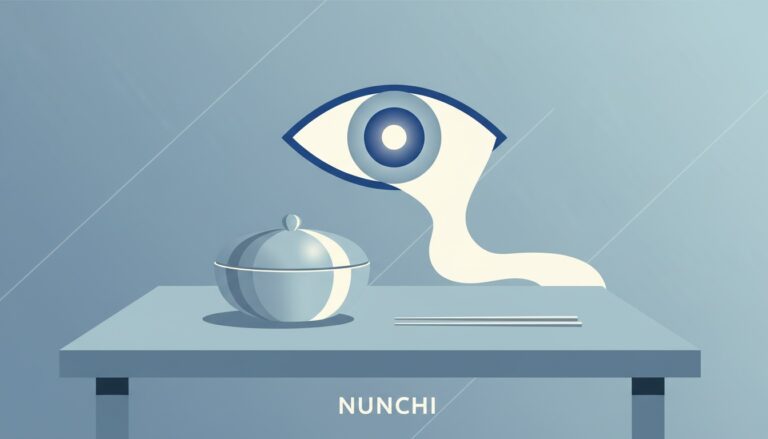
Phase 1: The Hook — Why Does This Rice Taste Like Stress?
Hello! This is your Daily Hangul Editor. 👋
Imagine this scene: You are watching a K-Drama. The main character, a hardworking intern, is sitting at a fancy restaurant with their strict boss or a terrifying mother-in-law. The table is full of delicious Galbi (ribs), but the intern is barely eating. They look like they are chewing sand. 😰
Suddenly, the intern puts down their spoon and says, “체할 것 같아요” (I think I’m getting indigestion).
Why? Is the food bad? No. They are eating something else along with the rice: “Nunchi” (눈치).
In Korea, a meal isn’t just about calories; it’s about the atmosphere. Today, we are going to learn the survival phrase “눈칫밥을 먹다” (eating Nunchi rice). If you don’t understand this, you might think Koreans just have weak stomachs! Let’s decode the flavor of anxiety.
Phase 2: Deep Dive — 3 Key Expressions
1. 눈칫밥(을) 먹다 [nun-chi-bap-eul meok-da]
- Pronunciation: [Nun-chi-bap] sounds like “Noon” + “Chi” (like cheese) + “Bap” (bob).
- Meaning: Literal: Eating Nunchi rice. / Real Nuance: To eat under pressure, feeling uncomfortable because you are being judged or living off someone else’s favor.
- K-Culture Moment: Think of the K-Drama Misaeng. The interns are eating quietly while the manager scolds them. That isn’t just lunch; that is 눈칫밥.
- Editor’s Insight: This is a very sad and heavy expression. You usually use this when you live in someone else’s house for free, or when your boss is angry during lunch.
- Situation Spectrum:
[🚫 Boss] ———— [⚠️ Close Colleague] ———— [✅ Friends/Self]
- (You can say this to friends to complain about your boss, but NEVER say it TO the boss!)
- 🤔 Think About It: Why does Korean mix “emotions” with “rice”? Rice represents survival. If your “rice” is uncomfortable, your survival is threatened.
2. 체하다 [che-ha-da]
- Pronunciation: [Che] (like Che Guevara) + [Ha-da].
- Meaning: To have indigestion / To have an upset stomach.
- K-Culture Moment: In almost every drama, when a character is stressed or heartbroken, they hit their chest and say “아, 체했나 봐” (Ah, I must have indigestion). Then, someone pricks their thumb with a needle (traditional remedy)! 💉
- Editor’s Insight: In Western medicine, indigestion is about food. In Korea, indigestion is often about stress. If the vibe is bad, we physically cannot digest.
- Situation Spectrum:
[✅ Doctor] ———— [✅ Boss] ———— [✅ Friends]
- (This is a safe, polite excuse to leave a dinner early!)
3. 분위기 파악 좀 해 [bun-wi-gi pa-ak jom hae]
- Pronunciation: [Bun-wi-gi] (Atmosphere) + [Pa-ak] (Grasp/Understand).
- Meaning: “Read the room!” / “Get a clue!”
- Editor’s Insight: This is what you hear before you have to eat 눈칫밥. If you are laughing loudly when everyone else is serious, someone will whisper this to you.
Phase 3: Textbook vs. Real Life
| Situation | 📖 Textbook Korean | 🗣️ Real Korean | 💡 Why different? |
|---|---|---|---|
| Explaining why you can’t eat | 분위기가 너무 불편해요. (The atmosphere is too uncomfortable.) |
눈치 보여서 밥이 안 넘어가요. (I can’t swallow rice because of the Nunchi.) |
Koreans express emotional stress through physical sensations (swallowing/digesting). |
| Leaving a dinner early | 저는 배가 아파요. (I have a stomachache.) |
급체한 것 같아요. (I think I have acute indigestion.) |
“Acute indigestion” (급체) sounds like a sudden, uncontrollable medical issue, making it a perfect excuse. |
| Scolding a clueless friend | 상황을 좀 보세요. (Please look at the situation.) |
넌 밥이 넘어가냐? (Can you even swallow food right now?) |
It implies: “How can you eat comfortably in this serious situation?” |
Phase 4: Cultural Deep Dive — The Art of Dining Silence 🤫
4-1. Non-verbal Communication: The “Speed Match”
In the West, you eat at your own pace. In Korea, eating speed is a Nunchi game.
* Rule: Do not finish before the eldest person. Do not make them wait for you.
* Tip: If your boss puts down their spoon, you should put yours down too (or at least slow down).
4-2. K-Food Connection: Why “Rice”?
In Korean history, food was scarce. Sharing rice meant sharing life. Therefore, ruining the mood during a meal is considered a serious offense. 눈칫밥 is painful because the one time you should be relaxing (eating) has become a battlefield.
4-3. Critical Thinking: The “Community” Stomach
🤔 Think About It: In many Western cultures, emotional stress and digestion are separate. In Korea, they are one. Why? Perhaps because in a collective society, social disharmony feels as physically painful as bad food.
Phase 5: Immersive Roleplay — The Awkward Team Lunch 🥩
Setting: A BBQ restaurant. Smoke fills the air. Your Team Leader (Manager Kim) is angry because the sales numbers dropped. You are holding a lettuce wrap.
Characters:
* YOU: New employee (trying to survive).
* Manager Kim: Stressed, grilling meat aggressively.
(Dialogue Start)
Manager Kim: (Sighs deeply) 하… 이번 달 매출이 이게 뭐야? 고기가 입으로 들어가는지 코로 들어가는지 모르겠네.
(Ha… what are these sales figures? I don’t know if the meat is going into my mouth or my nose.)
YOU: (Noticing he isn’t eating) …
Manager Kim: 김 대리, 자네는 밥이 맛있어?
(Assistant Manager Kim [You], does the food taste good to you?)
🔀 DECISION POINT: How do you answer?
- A) “네! 이 집 고기 정말 맛있는데요?” (Yes! This meat is delicious!)
- B) “죄송합니다. 입맛이 없어서 못 먹고 있습니다.” (Sorry. I have no appetite, so I’m not eating.)
- C) “매니저님 힘내세요! 쌈 하나 드세요!” (Cheer up Manager! Have a lettuce wrap!)
✅ Best Choice: B
* Why? Option A shows ZERO Nunchi (suicide mission). Option C is risky—he might not want to be fed by you right now. Option B shows empathy. You are saying, “I am too worried about the sales to eat, just like you.” That is Nunchi.
Phase 6: 10-Second Shadowing Drill 🎤
Let’s practice the perfect excuse for when the atmosphere is too heavy.
😢 Emotion: Clutch your chest and look slightly in pain.
“아무래도 / 체한 것 같아요. / 먼저 일어나 보겠습니다.”
(Amuraedo / che-han-geot gatayo. / Meonjeo ireona bogess-seumnida.)Translation: I think / I have indigestion. / I will excuse myself first.
Phase 7: K-Culture Glossary 📚
| Korean | Romanization | Meaning | Context |
|---|---|---|---|
| 눈치 | Nunchi | Eye-measure / Sensing | The superpower of reading the room. |
| 회식 | Hoesik | Company Dinner | The #1 place where people eat Nunchibap. |
| 꼰대 | Kkondae | Boomer / Old-school | The type of person who makes you eat Nunchibap. |
| 혼밥 | Honbap | Eating Alone | The modern antidote! Eating alone means zero Nunchi. |
Phase 8: Traveler’s Survival Kit — Dining Solo vs. Group ✈️
Are you traveling to Korea? Here is how to avoid Nunchibap.
🆘 Survival Expression #1: Asking for a solo table
* 🇰🇷 “혹시 혼자 식사 되나요?” (Hoksi honja siksa doenayo?)
* 🗣️ Context: Many Korean BBQ places require 2+ orders. Asking this saves you the awkwardness (Nunchi) of being rejected after sitting down.📌 Editor’s Travel Note: The Rise of ‘Honbap’
Don’t worry too much! Honbap (Eating alone) is very trendy now. You don’t need to look at anyone’s Nunchi at a convenience store or a specialized “1-person” restaurant. Enjoy your freedom!
Phase 9: Think Deeper — Food as Politics 🧠
Topic: Why is eating together so stressful in Korea?
In many Western cultures, lunch is “my time.” In Korea, lunch is often “our time” or “work extension.” Refusing a meal offer from a superior can be seen as rejecting the relationship, not just the food. This is why 눈칫밥 exists—because the meal is a social contract.
💬 Your Turn: In your country, if your boss asks for lunch, can you say “No, I want to eat alone”? How would they react?
Phase 10: FAQ & Troubleshooting 🛠️
- Q: Can I use “눈칫밥” to my Korean boss?
- A: ABSOLUTELY NOT. 🚫 If you say “사장님 때문에 눈칫밥 먹었어요” (I ate Nunchibap because of you), it is an accusation. Only use it with friends behind the boss’s back.
- Q: Is it rude to leave food on the plate?
- A: Not really. But if the atmosphere is bad (Nunchibap situation), leaving food might be interpreted as “I am unhappy.” If the vibe is good, it just means you are full.
- ❌ Common Mistake: confusing 눈치 (sensing) with 눈 (eye).
- Don’t say “I have good eyes” (vision). Say “I have quick Nunchi” (눈치가 빨라요).
Phase 11: Wrap-up & Action Mission 🚀
Summary: “Nunchibap” is the emotional indigestion you get when eating in an uncomfortable social situation.
🎯 Your Mission:
* 🥉 Bronze: Look in the mirror, hold your stomach, and say “체한 것 같아요” with a sad face.
* 🥈 Silver: Watch a K-Drama dinner scene. Can you spot who is eating “Nunchibap”? (Look for the person not chewing properly!)
* 🥇 Gold: Next time you are in an awkward dinner, text a friend: “Help, I’m eating Nunchibap right now!”
See you in the next lesson! Don’t get indigestion! 👋
Frequently Asked Questions (FAQ)
Q: What does "눈칫밥(을) 먹다 [nun-chi-bap-eul meok-da]" mean in Korean and how do you pronounce it?
A: In Korean, "눈칫밥(을) 먹다 [nun-chi-bap-eul meok-da]" is pronounced [Nun-chi-bap] and means: Literal: Eating Nunchi rice. / Real Nuance: To eat under pressure, feeling uncomfortable because you are being judged or living off someone else's favor.
Q: What does "체하다 [che-ha-da]" mean in Korean and how do you pronounce it?
A: In Korean, "체하다 [che-ha-da]" is pronounced [Che] and means: To have indigestion / To have an upset stomach.
Q: What does "분위기 파악 좀 해 [bun-wi-gi pa-ak jom hae]" mean in Korean and how do you pronounce it?
A: In Korean, "분위기 파악 좀 해 [bun-wi-gi pa-ak jom hae]" is pronounced [Bun-wi-gi] and means: "Read the room!" / "Get a clue!"







