

Phase 1: The ‘Drama Queen’ Hook
Hello! This is your Daily Hangul Editor.
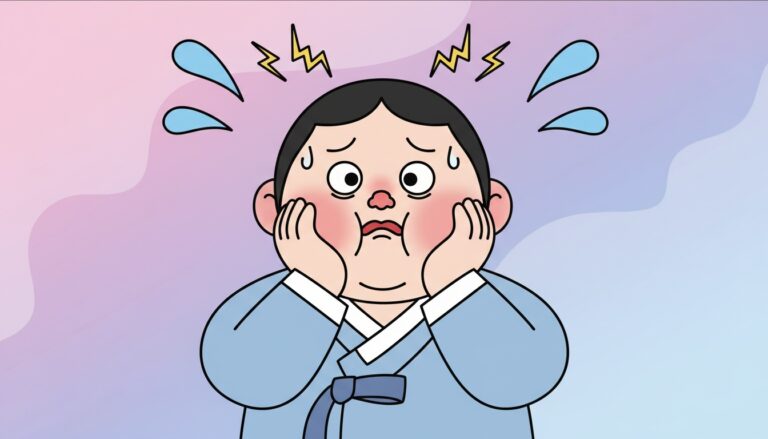
Picture this: You are watching your favorite K-Drama. The main character is pacing back and forth in a hospital hallway, biting their nails. Their phone rings. They pick it up and scream, “Eotteokhae!”
The subtitles say “What should I do?” or “Oh no!” but the emotion is pure, unfiltered panic and worry.
Or maybe you’re a K-Pop fan. Your bias (favorite idol) coughs once during a V-Live, and suddenly the chat is flooded with comments. They aren’t just saying “Are you sick?” They are using specific phrases to show deep concern.
In Korea, expressing worry isn’t just about sharing anxiety; it’s a way of showing affection (Jeong, 정). If you don’t say you are worried, people might think you don’t care! Today, let’s learn how to express worry without sounding like a robot reading a dictionary.
(Transperancy Note: This guide is built on real mistakes my students made when trying to comfort their Korean friends!)
Phase 2: Deep Dive into ‘Worry’ Expressions
Here are the top 3 ways to say you are worried, ranked by drama intensity.
1. 걱정돼요 (Geokjeong-dwaeyo)
- Pronunciation: [Geok-jeong-dwae-yo]
Tip: ‘Geok’ sounds like the ‘guck’ in ‘yuck’. ‘Jeong’ sounds like ‘jung’ in ‘jungle’.- Meaning: ‘I am worried’ (Standard / Polite)
- K-Culture Moment: Used in everyday life. You missed the last bus? Your Korean friend will text this.
- Editor’s Insight: This is the safest, most standard phrase. You can put a noun before it. “시험이 걱정돼요” (I’m worried about the exam).
- Situation Spectrum:
[ ✅ Casual ] —— [ ✅ Semi-formal ] —— [ ✅ Formal ]- 🤔 Think About It: In English, we often say “I’m stressed.” Koreans often replace “stress” with “worried” (걱정). Why do you think Koreans focus more on the outcome (worry) than the feeling (stress)?
2. 어떡해 (Eotteokhae)
- Pronunciation: [Eo-tteok-hae]
Tip: Sounds a bit like ‘Auto-K’ (like the car). Make it breathy at the end!- Meaning: ‘What should I do?’ / ‘Oh my gosh’ (Panic mode)
- K-Culture Moment: The CLASSIC K-Drama line. Something breaks? “어떡해!” You see your ex-boyfriend? “어떡해!”
- Editor’s Insight: This isn’t a question asking for a solution. It’s an exclamation of worry. Use this when the situation is sudden.
- Situation Spectrum:
[ ✅ Casual ] —— [ ⚠️ Semi-formal ] —— [ 🚫 Formal ]3. 큰일 났어요 (Keunil nasseoyo)
- Pronunciation: [Keu-nil nas-seo-yo]
- Meaning: ‘Something big happened’ / ‘I’m in big trouble’
- K-Culture Moment: When a variety show host realizes they lost a game, or a character loses their wallet abroad.
- Editor’s Insight: Use this when the worry is based on a specific bad event that just happened.
- Situation Spectrum:
[ ✅ Casual ] —— [ ✅ Semi-formal ] —— [ ✅ Formal ]
Phase 3: Textbook vs. Real Life
| Situation | 📖 Textbook Korean | 🗣️ Real Korean | 💡 Why is it different? |
|---|---|---|---|
| Late for a meeting | 저는 늦을까 봐 걱정합니다. (I am worried I will be late.) |
어떡해! 늦겠다! (What do I do! I’ll be late!) |
In emergencies, Koreans shorten sentences and use exclamations (어떡해) to show urgency. |
| Friend looks sick | 당신의 건강이 걱정돼요. (I worry about your health.) |
괜찮아? 어디 아파? (You okay? Hurt somewhere?) |
Direct statements sound like a doctor’s diagnosis. Questions show care. |
💡 Bottom Note: “당신” (Dangsin/You) is rarely used in real life worry. It creates distance. Use the person’s name or title!
Phase 4: Cultural Deep Dive — The Art of Worrying
4-1. Non-verbal: The ‘Worry’ Face (눈치 Nunchi)
When you say “걱정돼요” (I’m worried), your face must match.
– Eyes: Slightly squinted or widened (if panicked).
– Sound: Make a small “tsk” sound or a sigh (하…) before speaking. This auditory cue tells the listener, “I am deeply invested in this problem.”
4-2. K-Food Connection: “Did you eat?”
Here is the ultimate secret. In Korea, the strongest way to say “I was worried about you” is often related to food.
– Phrase: 밥 먹었어? (Bap meogeosseo? / Did you eat?)
– Context: If your friend had a bad day, or if you haven’t seen them in a while, asking this means, “I am worried about your well-being.”
– Think Deeper: Historically, Korea went through times of food shortage. Ensuring someone ate was the ultimate sign of survival and care.
Phase 5: Immersive Roleplay
Scenario: You are a tourist in Myeongdong (Seoul). It is 9:00 PM. You realize you left your shopping bag on the subway. You are with Minji, your Korean language exchange partner.
Characters:
– YOU: Tourist, A2 Level Korean learner.
– Minji: 24, University student, helpful but easily excitable.
Dialogue:
YOU: (Checking pockets) 어? 가방이 없어요!
(Eo? Gabang-i eop-seo-yo!)
(Oh? My bag is gone!)
Minji: (Eyes wide open) 정말? 지하철에 두고 내렸어?
(Jeongmal? Jihacheol-e dugo naeryeosseo?)
(Really? Did you leave it on the subway?)
YOU: 네… 아… 어떡해?
(Ne… Ah… Eotteokhae?)
(Yes… Ah… What should I do?)
Minji: 일단 분실물 센터에 가보자. 너무 걱정하지 마.
(Ildan bunsilmul center-e gaboja. Neomu geokjeong-haji ma.)
(Let’s go to the Lost & Found first. Don’t worry too much.)
🔀 Decision Point: How do you respond to Minji’s comfort?
- A) 네, 걱정 안 해요. (Yes, I don’t worry.)
- B) 정말 걱정돼요. 안에 지갑이 있어요. (I’m really worried. My wallet is inside.)
- C) 큰일 났네요! (Big trouble!)
✅ Best Choice: B — It expresses your feelings accurately and gives a reason why you are worried (the wallet), which helps Minji understand the urgency.
⚠️ Choice A Analysis: Grammatically correct, but sounds unnatural. Who wouldn’t worry about a lost bag?
Phase 6: 10-Second Shadowing Drill
Read aloud with the emotion indicated!
- 😟 (솝상하게/Upset)
저는 / 시험이 / 너~~~무 걱정돼요.
(Jeo-neun / si-heom-i / neo~~~mu geok-jeong-dwae-yo.)
I am soooo worried about the exam. -
😨 (당황하며/Panicked)
어떡해! / 지갑을 / 안 가져왔어요!
(Eo-tteok-hae! / Ji-gap-eul / an ga-jyeo-was-seo-yo!)
What do I do! I didn’t bring my wallet!
Phase 7: K-Culture Mini Glossary
| Korean | Romanization | Meaning | Context |
|---|---|---|---|
| 잔소리 | Jansori | Nagging | In Korea, “nagging” is often seen as a form of aggressive worrying. Parents do this out of love! |
| 걱정인형 | Geokjeong Inhyeong | Worry Doll | A small doll popular in gift shops. You tell your worries to the doll so you can sleep. |
| 걱정 마 | Geokjeong ma | Don’t worry | A very common casual phrase heard in K-Pop lyrics (e.g., BTS, BLACKPINK songs). |
Phase 8: Traveler’s Survival Kit
When ‘Worry’ meets ‘Travel Emergencies’
🆘 Survival Phrase #1: The ‘Lost Item’ Panic
– 🇰🇷 정말 큰일 났어요. 지갑을 잃어버렸어요.
– (Jeongmal keunil nasseoyo. Jigap-eul ireobeoryeosseoyo.)
– Meaning: I’m in big trouble. I lost my wallet.
– Use at: Police station, Hotel front desk.🆘 Survival Phrase #2: Asking for Reassurance
– 🇰🇷 이거 괜찮아요? 걱정돼요.
– (Igeo gwaenchapayo? Geokjeong-dwaeyo.)
– Meaning: Is this okay? I’m worried.
– Use at: Pharmacy (showing a wound), Street food stall (if it looks too spicy).📌 Editor’s Travel Note
– Lost & Found: In Korea, the subway Lost & Found (유실물 센터) is incredibly efficient. Don’t panic (걱정 마세요)!
– Police: Dial 112. They often have interpretation services available.
Phase 9: Think Deeper — Language & Love
“Why does Mom yell when she is worried?”
In many Western cultures, worry is expressed with soft hugs and “Are you okay?” In Korea, you might experience ‘Angry Worry.’
If you trip and fall, a Korean friend might say, “Why aren’t you careful! (조심했어야지!)” It sounds like scolding, but the underlying emotion is deep concern. It stems from a collective culture where your pain is viewed as a shared problem. They aren’t mad at you; they are mad at the situation that hurt you.
💬 Your Turn: Does your culture express worry softly or loudly? Tell us in the comments!
Phase 10: FAQ & Troubleshooting
Q: Can I say “걱정 마” (Don’t worry) to my boss or teacher?
A: NO! 🚫 “마” comes from “마라” (command form). It sounds like you are ordering them.
– To a boss: 걱정하지 마세요 (Geokjeong-haji maseyo) is better, but even better is 제가 해결하겠습니다 (I will solve it).
Q: Can I say “어떡해” (What should I do) when I see my K-Pop idol?
A: YES! Fans often scream “아 어떡해! 너무 잘생겼어!” (What do I do! You are too handsome!). It’s a cute way to show you are ‘worried’ your heart might explode.
❌ Common Mistake #1: Saying “I am worrying” as “걱정하고 있어요” (Present Progressive).
✅ Fix: Just say 걱정돼요 (It worries me / I get worried). It’s more natural for feelings.
Phase 11: Wrap-up & Mission
One-Liner: Worrying in Korean is less about “stress” and more about showing you care, sometimes loudly (어떡해!) and sometimes with food (밥 먹었어?).
🚀 Your Mission:
– 🥉 Bronze: Look in the mirror, make a worried face, and sigh “어떡해…” 3 times.
– 🥈 Silver: Find a scene in a K-Drama where someone says “큰일 났다” or “걱정돼”. Share the timestamp in the comments!
– 🥇 Gold: Ask a Korean friend (or text them) “걱정돼요. 밥 먹었어요?” (I’m worried. Did you eat?) and see how happy they get.
Phase 12: Interactive Quiz
1. Situation: You are late for a date with your Korean boyfriend/girlfriend. You arrive running. What is the best thing to say?
– A) 걱정해서 미안해요. (Sorry for worrying.)
– B) 어떡해! 너무 늦었죠! (Oh no! I’m too late!)
– C) 당신을 걱정했습니다. (I worried about you.)
2. True or False: In Korea, if a mother nags you about wearing a jacket, she is angry at you.
– (True / False)
3. Fill in the blank: “My phone is broken! _______!”
– A) 걱정 마
– B) 어떡해
🔑 Answers:
1. B (It shows you care about the situation. A is okay, but B is more ‘in the moment’ panic/apology mix.)
2. False (She is ‘worrying’ about your health. It’s love!)
3. B (어떡해 fits the panic of a broken phone.)
Frequently Asked Questions (FAQ)
Q: What does "걱정돼요 (Geokjeong-dwaeyo)" mean in Korean and how do you pronounce it?
A: In Korean, "걱정돼요 (Geokjeong-dwaeyo)" is pronounced [Geok-jeong-dwae-yo] and means: ‘I am worried’ (Standard / Polite)
Q: What does "어떡해 (Eotteokhae)" mean in Korean and how do you pronounce it?
A: In Korean, "어떡해 (Eotteokhae)" is pronounced [Eo-tteok-hae] and means: ‘What should I do?’ / ‘Oh my gosh’ (Panic mode)
Q: What does "큰일 났어요 (Keunil nasseoyo)" mean in Korean and how do you pronounce it?
A: In Korean, "큰일 났어요 (Keunil nasseoyo)" is pronounced [Keu-nil nas-seo-yo] and means: ‘Something big happened’ / ‘I’m in big trouble’







