

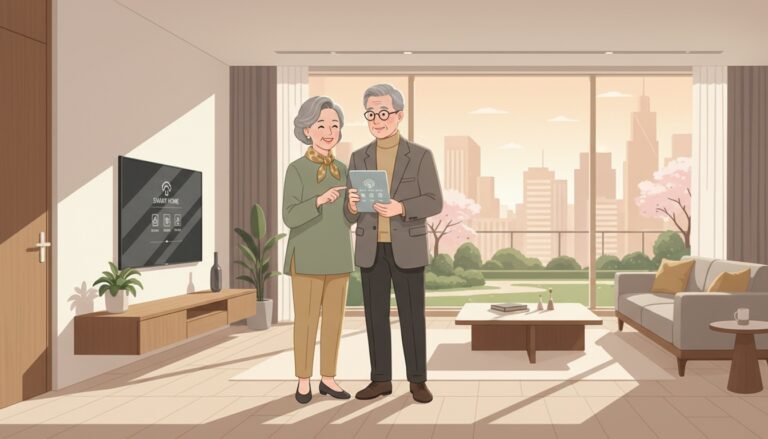
Phase 1: The Immersive Hook
안녕하세요! Daily Hangul Editor here.
Picture this: You’re watching a high-stakes K-Drama about a Chaebol family. The grandfather—the Chairman—isn’t just sitting at home. He’s living in a sleek, hotel-like apartment complex with medical staff on standby, gourmet cafeterias, and a golf course. He calls it his “Silver Town.”
In the West, “Silver Town” might sound like a dusty old western movie location. But in Korea? It represents the pinnacle of the Silver Economy. It’s where the “New Old” generation—who reject the traditional idea of being a burden to their children—choose to live out their golden years in style.
As Korea faces a “super-aged society” (chogoryeong sahwae), the business of aging is exploding. From AI-driven community care to luxury senior housing, understanding this sector requires more than just language skills; it requires understanding the shifting tectonic plates of Korean Confucianism.
If you want to discuss business in Korea today, you cannot ignore this demographic. Let’s dive into the sophisticated language of Korea’s Silver Economy.
Phase 2: Deep Dive into Core Expressions
Since we are at the C2 (Proficiency) level, we will move beyond basic vocabulary into socio-cultural terminology.
1. 실버타운 (Silbeotaun)
- Pronunciation: [Silbeotaun] + Sounds like ‘Silver’ + ‘Town’ (Konglish)
- Meaning: (Literal) Silver Town / (Real Nuance) A private, fee-based retirement community for active seniors. Unlike Yoyang-won (nursing homes for the sick), this implies wealth, independence, and luxury.
- K-Culture Moment: In dramas like Sky Castle or Penthouse, wealthy elders often discuss moving to a specific ‘Silver Town’ in Gyeonggi-do to escape family drama while maintaining their status.
- Editor’s Insight: Do not confuse this with Yangnowon (public nursing home). Calling a luxury facility a Yangnowon is a massive faux pas. Silbeotaun is aspirational; Yangnowon is often viewed with pity.
- Situation Spectrum:
[🚫 Yangnowon (Insulting context)] ———— [⚠️ Yoyang-won (Medical context)] ———— [✅ Silbeotaun (Business/Lifestyle)]- 🤔 Think About It: Why does Korea use the English loanword “Silver” so prominently for the elderly (Silver seat, Silver zone)? It attempts to rebrand aging as something shining and valuable, rather than decaying.
2. 커뮤니티 케어 (Keomyuniti Ke-eo)
- Pronunciation: [Keomyuniti Ke-eo]
- Meaning: (Literal) Community Care / (Real Nuance) “Aging in Place.” A policy shift where elders receive care in their own homes/neighborhoods rather than being institutionalized in hospitals.
- K-Culture Moment: Think of the drama Navillera, where the elderly protagonist pursues ballet while living in his own home, supported by his community, rather than being sent away.
- Editor’s Insight: This is a hot keyword in Korean public policy and business. It signifies a move away from the “ghettoization” of the elderly. Use this term in business meetings to sound incredibly well-informed about current market trends.
- Situation Spectrum:
[🚫 Family Chat] ———— [⚠️ Casual Dinner] ———— [✅ Policy/Business Meeting]- 🤔 Think About It: How does Community Care challenge the traditional Korean concept of Hyo (filial piety), where the eldest son was solely responsible for the parents’ roof?
3. 액티브 시니어 (Aektibeu Sinieo)
- Pronunciation: [Aektibeu Sinieo]
- Meaning: (Literal) Active Senior / (Real Nuance) The “Young Old” (Yo-Old). Baby boomers with high purchasing power who refuse to be treated as “grandpas/grandmas.”
- K-Culture Moment: Variety shows like Youn’s Kitchen or Grandpas Over Flowers, where seniors travel, run businesses, and dress fashionably.
- Editor’s Insight: In marketing or business proposals, never refer to this demographic simply as noin (elderly). Aektibeu Sinieo flattery is strategic; it acknowledges their vitality and economic power.
- Situation Spectrum:
[🚫 Medical Diagnosis] ———— [⚠️ Legal Documents] ———— [✅ Marketing & Trends]- 🤔 Think About It: Is the rise of the “Active Senior” a sign of empowerment, or does it pressure the elderly to remain “useful” and “productive” to be respected in a capitalist society?
Phase 3: Textbook vs. Real Life
| Situation | 📖 Textbook Korean | 🗣️ Real Korean (Biz/Trend) | 💡 Why the difference? |
|---|---|---|---|
| Describing the market | 고령화 사회 (Aging society) | 실버 이코노미 / 초고령 사회 (Silver Economy / Super-aged society) | Specificity matters. “Super-aged” (20%+ over 65) is the urgent current reality. |
| Housing for elders | 양로원 (Nursing home) | 시니어 레지던스 / 웰니스 타운 (Senior Residence / Wellness Town) | Yangnowon carries a stigma of abandonment. Modern terms emphasize lifestyle. |
| Caregivers | 간병인 (Carer) | 요양보호사님 (Certified Caregiver – honorific) | Professional titles are crucial. Using * -nim* acknowledges their certification and status. |
💡 Bottom Note: In the Silver Economy, euphemism is currency. The harsher the reality of aging, the softer and fancier the vocabulary becomes (e.g., “Twilight” -> “Golden Age”).
Phase 4: Cultural Deep Dive
4-1. Non-verbal Communication: The Art of “Nunchi” in Care
In Korean senior housing, Nunchi (reading the room) is vital. Even in a paid facility, the staff-resident relationship mimics the Confucian family structure. Staff must treat residents not just as customers, but with the reverence due to an elder in the family hierarchy. Eye contact should be respectful but soft; direct staring can be seen as challenging authority. When handing over documents or medication, using two hands is non-negotiable.
4-2. K-Drama Connection: The “VIP Ward” Trope
You’ve seen it a hundred times. The head of the conglomerate collapses and ends up in a VIP hospital suite that looks like a penthouse. In the Silver Economy context, this reflects the extreme polarization of senior care in Korea. The drama isn’t just about health; it’s about space as status. Discussing “premium services” (concierge, personal trainers) in senior housing taps into this cultural desire for exclusivity portrayed in media.
Phase 5: Immersive Roleplay Scenario
Setting: A high-end real estate consultancy in Gangnam. You are a foreign investor or consultant looking into the Korean Silver Housing market. You are speaking with Manager Choi (40s), a sharp specialist in Senior Residences.
Characters:
* YOU: International Investor/Consultant.
* Manager Choi: Professional, polite, but testing your knowledge of the local market.
(Dialogue Start)
Manager Choi: 요즘 강남의 자산가들은 도심형 실버타운을 선호하는 추세입니다. 접근성이 중요하니까요.
(Yojeum Gangnam-ui jasanga-deureun dosim-hyeong silbeotaun-eul seonho-haneun chuse-imnida.)
(Translation: Recently, wealthy individuals in Gangnam prefer urban-style Silver Towns. Accessibility is key.)
(🎭 Manager Choi slides a glossy brochure across the marble table.)
YOU: 맞습니다. 예전처럼 전원생활만 고집하지는 않더군요. 의료 인프라와의 연계가 핵심이겠죠?
(Matseumnida. Yejeon-cheoreom jeonwon-saenghwal-man gojip-hajineun anteogunyo. Uiryo inpeura-waui yeongye-ga haeksim-igetjyo?)
(Translation: That’s right. They don’t insist on countryside living like before. Connection to medical infrastructure is the key, right?)
Manager Choi: 정확히 보셨습니다. 그런데 외국인 투자자분들은 보통 ‘입주 보증금’ 문제를 좀 낯설어하시던데요.
(Jeonghwakhi bosyeotsseumnida. Geureonde oegugin tujaja-bundeureun botong ‘ipju bojeung-geum’ munje-reul jom natseoreo-hasideondeyo.)
(Translation: You saw it exactly right. However, foreign investors usually find the ‘entrance deposit’ issue a bit unfamiliar.)
🔀 Decision Point: How do you respond to the “Deposit” (Jeonse-style) concern?
- Option A: “아, 한국 특유의 전세 개념과 비슷해서 이해하기 어렵지 않습니다.” (Show deep cultural knowledge of Jeonse).
- Option B: “보증금이 너무 비싸서 수익성이 떨어지지 않나요?” (Direct business question, risky if too blunt).
- Option C: “미국에서는 월세가 일반적이라서요.” (Comparing to the West, slightly engaging but less impressive).
✅ Best Choice: Option A.
Connecting the massive entry deposits of Silver Towns (often hundreds of thousands of dollars) to Korea’s unique Jeonse (key money) system shows you understand the underlying financial structure of Korean housing. It builds immediate trust.
(Roleplay continues…)
YOU (Option A): 아, 한국 특유의 전세 개념과 비슷해서 이해하기 어렵지 않습니다. 오히려 자금 유동성 면에서 장점이 될 수도 있겠네요.
(Ah, Hanguk teugyu-ui jeonse gaenyeom-gwa biseutaeseo ihae-hagi eoryeopji anseumnida. Ohiryeo jageum yudongseong myeon-eseo jangjeom-i doel sudo itgenneyo.)
Manager Choi: (Smiling comfortably) 역시 한국 시장을 잘 아시는군요.
(Yeoksi Hanguk sijang-eul jal asineungunyo.)
(As expected, you know the Korean market well.)
Phase 6: 10-Second Shadowing Drill
Master the rhythm of a professional C2 speaker. Focus on the pauses / to sound authoritative yet thoughtful.
Sentence:
“단순한 요양이 아니라, / 삶의 질을 높이는 / 웰니스 라이프가 / 이 시장의 핵심입니다.”
Pronunciation:
Dansun-han yoyang-i anira, / salm-ui jil-eul nopineun / well-ni-seu ra-i-peu-ga / i sijang-ui haeksim-imnida.
Meaning:
It’s not just about simple caregiving, / but a wellness life / that enhances the quality of life / which is the core of this market.
Emotion Tag: 😤 Confident & Professional (Speak as if you are closing a deal).
Phase 7: K-Culture Mini Glossary (Silver Economy Edition)
| Korean | Romanization | English | Context |
|---|---|---|---|
| 효(효도) | Hyo (Hyodo) | Filial Piety | The traditional duty to care for parents. Silver Towns allow “outsourcing” this duty with money, creating a complex guilt/relief dynamic. |
| 독거노인 | Dokgeo noin | Elderly living alone | A social issue term. The opposite target of the “community care” initiative. |
| 임종 | Imjong | End of life / Deathbed | Formal term for passing away. Many luxury Silver Towns have hospices for dignified imjong. |
| 상속 | Sangsok | Inheritance | Often the “elephant in the room” when discussing senior assets and housing deposits. |
| 100세 시대 | Baek-se sidae | Era of 100 Years | A common phrase used to justify the need for long-term retirement planning. |
Phase 8: Business Traveler’s Survival Kit
Even if you aren’t moving into a Silver Town, you might visit a facility for business or to visit a Korean friend’s relative.
🆘 Survival Phrase #1
– 🇰🇷 “면회 시간이 어떻게 되나요?” (Myeonhoe sigan-i eotteoke doenayo?)
– 🗣️ Meaning: “What are the visiting hours?”
– 📍 Use: At the reception desk of a hospital or care facility.
– 💡 Pro Tip: Korean facilities are strict about hours. Bring a small gift (fruit or healthy beverages like Soymilk/Vita500) for the staff as well as the patient. It’s called Seongui (sincerity).📌 Editor’s Note: The Gift Culture
When visiting an elder in a facility, do not bring white chrysanthemums (associated with funerals). Instead, bring practical items like high-quality fruit, red ginseng extract (Hongsam), or comfortable indoor slippers.
Phase 9: Critical Thinking — “Think Deeper”
Concept: The Commercialization of Filial Piety (Hyo)
Traditionally, sending parents to a facility was considered Bulhyo (unfilial). However, with the rise of the Silver Economy, a new narrative is emerging: “True Hyo is paying for the best professional care.” The expensive Silver Town has become a status symbol for the children—proof of their financial success and devotion.
🧠 Think Deeper:
Is this shift a betrayal of tradition, or a necessary evolution for a generation squeezed by economic pressure? Does the price tag of the facility replace the emotional labor of caregiving?💬 Your Turn: In your culture, is it acceptable to pay for parental care, or is it strictly a family duty? How do you say “We put grandma in a home” without it sounding negative?
Phase 10: FAQ & Troubleshooting
Q: Can I use the word “노인 (Noin)” directly to an elder?
A: 🚫 No. While it means “elderly person,” using it to their face (
Frequently Asked Questions (FAQ)
Q: What does "실버타운 (Silbeotaun)" mean in Korean and how do you pronounce it?
A: In Korean, "실버타운 (Silbeotaun)" is pronounced [Silbeotaun] and means: (Literal) Silver Town / (Real Nuance) A private, fee-based retirement community for active seniors. Unlike Yoyang-won (nursing homes for the sick), this implies wealth, independence, and luxury.
Q: What does "커뮤니티 케어 (Keomyuniti Ke-eo)" mean in Korean and how do you pronounce it?
A: In Korean, "커뮤니티 케어 (Keomyuniti Ke-eo)" is pronounced [Keomyuniti Ke-eo] and means: (Literal) Community Care / (Real Nuance) "Aging in Place." A policy shift where elders receive care in their own homes/neighborhoods rather than being institutionalized in hospitals.
Q: What does "액티브 시니어 (Aektibeu Sinieo)" mean in Korean and how do you pronounce it?
A: In Korean, "액티브 시니어 (Aektibeu Sinieo)" is pronounced [Aektibeu Sinieo] and means: (Literal) Active Senior / (Real Nuance) The "Young Old" (Yo-Old). Baby boomers with high purchasing power who refuse to be treated as "grandpas/grandmas."







