

Phase 1: The “Zombie Mode” Opening
Hello! This is your Daily Hangul editor.
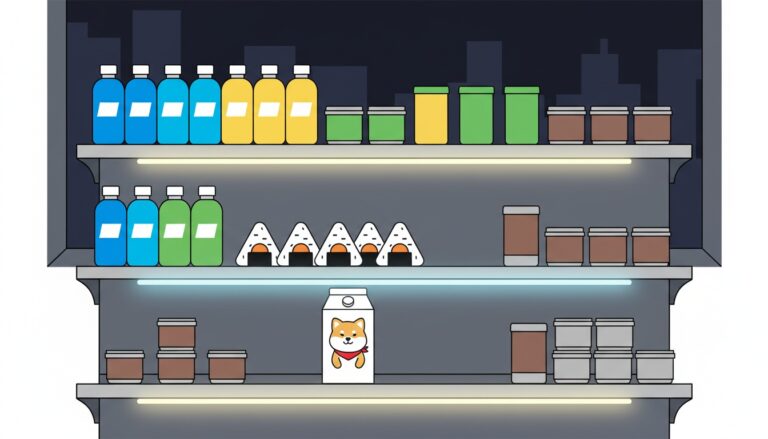
Imagine this scene: It’s 2 AM in Seoul. The streets are quiet, but the lights in the 24-hour convenience stores (CU, GS25, 7-Eleven) are blazing bright. Walk inside, and you’ll see them—university students looking like stylish zombies, standing in front of the refrigerator shelf.
They aren’t looking for water. They are looking for “Snoopy Coffee” (famous for having more caffeine than an energy drink) or a bottle of Bacchus-F.
In K-Dramas, you’ve probably seen the protagonist getting a nosebleed while studying, or a scene where a student opens a can with a sharp click-fizz sound before diving back into books. That sound is the soundtrack of Korean exam periods.
If you don’t understand the vocabulary of “survival by caffeine,” you miss half the conversation during midterms or intense work projects. Today, we aren’t just learning words; we’re learning the desperate language of Korean stamina.
Phase 2: Deep Dive into Core Expressions
1. 밤을 새우다 (Bameul saeuda)
- Pronunciation: [Bam-eul sae-u-da] (Sounds like: Bam + ul + say + oo + da)
- Meaning: To stay up all night / To pull an all-nighter.
- K-Culture Moment: You hear this constantly during K-Pop comeback seasons too. “Streaming bameul saeuda” (Staying up all night to stream music videos).
- Editor’s Insight: Grammatically, ‘밤’ is night and ‘새우다’ means to make something stand up or stay up. You are literally making the night stand up with you. It implies effort and struggle, not just insomnia.
- Situation Spectrum:
[🚫 Formal Speech] ———— [⚠️ Colleagues] ———— [✅ Friends]
(Perfectly fine to use with colleagues to show how hard you worked!) - 🤔 Think About It: In many Western cultures, saying “I stayed up all night” might imply poor time management. In Korea, it often signals passion and dedication. Why do you think physical suffering is sometimes equated with effort here?
2. 카페인 수혈 (Kapein suhyeol)
- Pronunciation: [Ka-pe-in su-hyeol]
- Meaning: Caffeine blood transfusion.
- K-Culture Moment: A scene in a workplace drama where the team leader walks into the office looking half-dead and whispers to the intern, “Coffee… please…”
- Editor’s Insight: This is my favorite melodramatic phrase. We don’t just “drink” coffee; we inject it into our veins like a medical emergency. It highlights the necessity rather than the taste.
- Situation Spectrum:
[🚫 Elders] ———— [⚠️ Senior Colleagues] ———— [✅ Friends/Peers]
(Use this for humor with friends or close coworkers. Don’t say it to your boss seriously!)
3. 벼락치기 (Byeorak-chigi)
- Pronunciation: [Byeo-rak-chi-gi]
- Meaning: Cramming (Literal: Lightning strike).
- K-Culture Moment: The classic montage in a high school drama where the hero hasn’t studied all semester and tries to memorize the whole textbook 12 hours before the test.
- Editor’s Insight: ‘벼락’ means lightning. ‘치기’ comes from hitting or striking. You are studying with the speed and intensity of a lightning strike. It’s chaotic, stressful, but oddly effective for many.
- Situation Spectrum:
[🚫 Formal Report] ———— [⚠️ Boss] ———— [✅ Friends]
Phase 3: Textbook vs. Real Life
| Situation | 📖 Textbook Korean | 🗣️ Real Korean | 💡 Why is it different? |
|---|---|---|---|
| Staying awake | 잠을 안 잤어요. (I didn’t sleep.) |
어제 밤샘. (Yesterday, night-stayed.) |
‘밤샘’ (Bamsãem) is the noun form. It sounds punchier and implies you were doing something, not just awake. |
| Ordering Coffee | 커피 마시고 싶어요. (I want to drink coffee.) |
아아 수혈 시급함. (Ice Americano transfusion urgent.) |
‘아아’ (Ah-Ah) is slang for Iced Americano. Koreans love shortening words for efficiency. |
| Studying hard | 열심히 공부할 거예요. (I will study hard.) |
오늘 밤샘 각이다. (Tonight is destined for an all-nighter.) |
‘각’ (Gak) comes from geometry (angle), meaning “the situation is shaping up to be…” |
💡 Bottom Note: Usage of ‘각’ (angle) is very common slang among Millennials and Gen Z to describe a future probability. “Pizza gak?” means “Does it look like a pizza situation?”
Phase 4: Cultural Deep Dive — The Logic of “1+1”
4-1. The “Pyun-eui-jeom” (Convenience Store) Economics
If you visit a Korean convenience store (GS25, CU, 7-Eleven) during exam season, look at the price tags on energy drinks or coffee. You will see “1+1” or “2+1” stickers everywhere.
- The Culture: Korean students often study in groups. The “2+1” marketing is designed perfectly for this. You buy two, you get one free—perfect for you and your two study buddies. It reinforces the communal suffering culture.
4-2. Food & Identity: The “Snoopy” Legend
There is a carton of coffee milk featuring the cute character Snoopy. In Korea, this is known as “The Devil’s Drink” because it contains more caffeine than a Red Bull.
* Critical View: Why is a cute cartoon character on a high-caffeine drink? It reflects a society where high-intensity performance starts young, and “cute” packaging makes the bitter reality of sleep deprivation easier to swallow.
Phase 5: Immersive Roleplay
Setting: A convenience store near a university library. 3:00 AM. The hum of the refrigerator is the only sound.
Characters:
* YOU: An exchange student, exhausted, holding a triangle kimbap.
* Minji: Your Korean classmate, looking surprisingly energetic despite the hour.
Dialogue:
Minji: 어? 너도 아직 안 잤어? 완전 좀비네.
(Eo? Neodo ajik an jasseo? Wanjeon zombine.)
(Huh? You haven’t slept yet either? You’re a total zombie.)
(🎭 Stage Direction: Minji laughs while holding three cans of coffee)
YOU: 응… 내일 시험이라서 벼락치기 중이야.
(Eung… naeil siheomiraseo byeorak-chigi jung-iya.)
(Yeah… exam is tomorrow, so I’m in the middle of cramming.)
Minji: 야, 이거 마셔. 지금 2+1 행사해서 하나 남았어.
(Ya, igeo masyeo. Jigeum 2+1 haengsa-haeseo hana namasseo.)
(Hey, drink this. They’re doing a 2+1 promo so I have one left over.)
🔀 Decision Point: How do you respond?
- A) “고마워! 이거 마시면 밤샘 가능할 것 같아.” (Thank you! With this, I think I can pull an all-nighter.)
- B) “아니야, 나 커피 못 마셔.” (No, I can’t drink coffee.)
- C) “오! 카페인 수혈 필요했어! 대박!” (Oh! I needed a caffeine transfusion! Daebak!)
✅ Best Choice: C
* Why? It uses the witty slang we learned (카페인 수혈) and matches Minji’s casual energy. It creates an “us against the exam” bond.
* Analysis of A: Grammatically correct and polite, but C is more fun and local.
Phase 6: 10-Second Shadowing Drill
Let’s practice the desperate cry for coffee.
- Emotion: 😫 Exhausted but determined (Imagine dragging your feet)
- Line: 지금 / 카페인 수혈이 / 시급해!
- Romanization: Jigeum / kapein suhyeol-i / sigeuphae!
- Meaning: Right now / caffeine transfusion / is urgent!
Phase 7: K-Culture Glossary (Exam Edition)
| Korean | Romanization | Meaning | Context |
|---|---|---|---|
| 열공 | Yeol-gong | Study Hard | Short for ‘Yeolsimhi Gongbu’ (Study hard). Used as a cheering phrase: “Yeol-gong!” |
| 스펙 | Spek | Spec | From ‘Specification’. Refers to your resume qualifications (grades, internships, scores). |
| 핫식스 | Hot-Six | Hot6 | The most famous Korean energy drink brand. Synonymous with staying awake. |
| 중간고사 | Junggan-gosa | Midterm Exam | The season when everyone disappears from social life. |
| 카공족 | Kagong-jok | Cafe Study Tribe | People who study in cafes for hours. |
Phase 8: Traveler’s Survival Kit — Cafe Edition
Even if you aren’t taking exams, you will visit Korean cafes. Here is how to customize your caffeine fix.
🆘 Survival Phrases
- “샷 추가 해주세요.” (Syat chuga hae-ju-se-yo)
- Meaning: Please add an extra shot (of espresso).
- Why: When standard coffee isn’t enough.
- “디카페인 있나요?” (Di-ka-pe-in innayo?)
- Meaning: Do you have decaf?
- Why: For when you want the taste but need to sleep eventually.
📌 Editor’s Travel Note:
Many cafes in university districts (Hongdae, Sinchon, Konkuk Univ.) operate 24 hours. If you see a sign that says “24시” (24-si), it’s a safe haven for night owls and travelers waiting for the first subway.
Phase 9: Think Deeper — The “4 Hours Pass, 5 Hours Fail” Myth
There is an old saying in Korea: “4당5락” (Sa-dang-o-rak). It means “If you sleep 4 hours you pass, if you sleep 5 hours you fail.”
🧠 Think Deeper:
While this saying is a bit outdated, the sentiment remains. In your culture, is sleep viewed as a necessity for health, or a luxury that gets in the way of success? Why do you think Korea developed such a high-pressure culture around exams and “time fighting”?
💬 Your Turn: Do you have a special drink or snack you rely on when you need to focus? Tell me in the comments!
Phase 10: FAQ & Troubleshooting
- Q: Can I say “밤샘” (Bamsaem) to my teacher?
- A: Better to use the verb form politely: “어제 밤을 새웠어요” (I stayed up all night). “밤샘” as a noun is too slangy for formal situations.
- Q: Is it rude to study in a cafe for a long time?
- A: It depends. In franchise cafes (Starbucks, Twosome Place), it’s very common (Kagong-jok). But in small private cafes, staying more than 2 hours without ordering more is considered bad manners (No-nunchi!).
❌ Common Mistake:
Don’t say “I drank medicine” when drinking energy drinks. Even though Bacchus is sold in pharmacies, we say “마시다” (drink), not “먹다” (eat/take medicine), unless you are jokingly treating it like a life-saving drug.
Phase 11: Wrap-up & Mission
Summary: Today we learned how to survive the Korean exam season with 밤샘 (all-nighters), 카페인 수혈 (caffeine transfusion), and 벼락치기 (cramming).
🎯 Action Mission:
* 🥉 Bronze: Look in the mirror and sigh, saying “Ah… I need a caffeine transfusion” in Korean.
* 🥈 Silver: Go to a Korean cafe (or any cafe) and post a photo of your coffee with the caption: “오늘 밤샘 각?” (All-nighter tonight?).
* 🥇 Gold: Ask a Korean friend, “Do you like Snoopy coffee?” and watch their reaction.
K-Culture Mission: Watch the drama “Reply 1988” (specifically the scenes in the study room/Dokseosil) to see the intense (and sleepy) atmosphere of Korean studying!
Phase 12: Interactive Quiz
- Situation: Your friend says they have an exam tomorrow but haven’t studied yet. What are they doing now?
- A) 쇼핑 (Shopping)
- B) 벼락치기 (Cramming)
- C) 소개팅 (Blind date)
- True or False: “Kapein Suhyeol” literally means “Drinking delicious coffee.”
- (True / False)
Answers:
1. B) 벼락치기. Lightning strike study!
2. False. It means “Caffeine Blood Transfusion” – implying survival, not taste!
Frequently Asked Questions (FAQ)
Q: What does "밤을 새우다 (Bameul saeuda)" mean in Korean and how do you pronounce it?
A: In Korean, "밤을 새우다 (Bameul saeuda)" is pronounced [Bam-eul sae-u-da] and means: To stay up all night / To pull an all-nighter.
Q: What does "카페인 수혈 (Kapein suhyeol)" mean in Korean and how do you pronounce it?
A: In Korean, "카페인 수혈 (Kapein suhyeol)" is pronounced [Ka-pe-in su-hyeol] and means: Caffeine blood transfusion.
Q: What does "벼락치기 (Byeorak-chigi)" mean in Korean and how do you pronounce it?
A: In Korean, "벼락치기 (Byeorak-chigi)" is pronounced [Byeo-rak-chi-gi] and means: Cramming (Literal: Lightning strike).







