

Phase 1: The Immersive Hook
Greeting: 안녕하세요! This is your Daily Hangul editor, writing to you from a bustling café in Yeouido, the Wall Street of Seoul.
The Scene: Imagine this. It’s January in Korea. The winter wind is biting, but inside the office, the atmosphere is even chillier. Why? It’s Yeonmal-jeongsan (연말정산) season—the year-end tax settlement.
In every K-Drama office scene, you see employees frantically gathering receipts. For some, it’s the joyous “13th-month salary” (a refund). For others, it’s a “tax bomb.” Now, imagine your Korean colleague, Min-ji, smiling calmly amidst the chaos. She whispers one secret acronym to you: ISA.
The ‘Why’: In the fast-paced world of Korean finance, knowing how to say “How much is this?” is A1 level. Knowing how to discuss ‘tax optimization strategies’ (jeolse) over a pork belly dinner? That is immediate C2 status. It signals you aren’t just a visitor; you are a stakeholder in this society.
Transparency: I learned this the hard way. My first year working in Seoul, I ignored these accounts. When my Korean friends compared their tax refunds, I felt like I’d left a pile of cash on the table. Don’t be like past-me.
Phase 2: Deep Dive into Core Expressions
1. 절세 (Jeolse)
- Pronunciation: [jeol-se] Sounds like ‘Jol’ (as in Jolie) + ‘Se’ (as in Set).
- Meaning: Lit. Tax Saving. Nuance: Smart, legal tax optimization. (Distinct from ‘Tal-se’ which is illegal tax evasion).
- K-Culture Moment: In the drama Queen of Tears, notice how the chaebol characters don’t talk about “making money”—they talk about “protecting assets.” Jeolse is the weapon of the smart protagonist.
- Editor’s Insight: This word carries a positive connotation of intelligence and astuteness. If you use this, Koreans will look at you with genuine respect. It implies you understand the system.
- Situation Spectrum:
[🚫 Formal/Lawyer] ———— [✅ Standard] ———— [✅ Casual]
(Widely used in all contexts regarding money)- 🤔 Think About It: Why does Korean distinguish so sharply between jeolse (saving) and talse (evasion) in daily conversation? It reflects a society where navigating bureaucracy efficiently is seen as a high-level survival skill.
2. 만능 통장 (Manneung Tongjang)
- Pronunciation: [man-neung tong-jang]
- Meaning: Lit. All-powerful Account. Nuance: The “Swiss Army Knife” of bank accounts.
- K-Culture Moment: Think of this as the Bibimbap of banking. Just as Bibimbap mixes namul, rice, and meat in one bowl, this account holds stocks, funds, and cash in one place.
- Editor’s Insight: ‘Manneung’ (All-powerful) is a favorite Korean prefix. You’ll hear ‘Manneung Entertainer’ (someone who sings, acts, and dances). Calling ISA a ‘Manneung Tongjang’ captures the Korean desire for efficiency and consolidation.
- Situation Spectrum:
[🚫 Legal Contracts] ———— [✅ Marketing/News] ———— [✅ Casual]🤔 Think About It: Koreans love “All-in-One” solutions (apps that do delivery, banking, and chatting). How does this “Manneung” concept reflect the Ppalli-Ppalli (Hurry-Hurry) culture?
3. 비과세 (Bigwase)
- Pronunciation: [bi-gwa-se]
- Meaning: Tax Exemption / Tax-free.
- K-Culture Moment: Walking through a traditional market or a Duty-Free shop at Incheon Airport. But in finance, this is the magic word that makes people’s eyes light up during a consultation.
- Editor’s Insight: This isn’t just vocabulary; it’s a trigger word. In a high-interest rate environment, hearing “ibunbun-eun bigwase-yeyo” (this part is tax-free) is like hearing a bell chime.
- Situation Spectrum:
[🚫 Kids] ———— [✅ Banks/Adults] ———— [✅ Casual Bragging]
Phase 3: Textbook vs. Real Life
| Situation | 📖 Textbook Korean | 🗣️ Real Korean (In the Wild) | 💡 Why the difference? |
|---|---|---|---|
| Discussing Profit | 수익률이 좋아요. (The return rate is good.) | 쏠쏠해요. (It’s pretty decent/fun.) | ‘Ssol-ssol’ implies a tangible, satisfying, slightly lucky feeling of gain. |
| Asking about Tax | 세금 혜택이 있나요? (Is there a tax benefit?) | 이거 비과세 되나요? (Does this become tax-free?) | Koreans cut straight to the core benefit: “Is it tax-free or not?” |
| Losing money | 손해를 봤어요. (I saw a loss.) | 물렸어요. (I was bitten/stuck.) | Describes the feeling of being trapped by a bad stock purchase, like a fish on a hook. |
Bottom Note: Use “Ssol-ssol-haeyo” when your ISA makes a little money. It makes you sound incredibly native and humble-braggy.
Phase 4: Cultural Deep Dive — The ‘Bibimbap’ Portfolio
K-Food Connection:
To understand the ISA (Individual Savings Account), stop thinking like a banker and start thinking like a Chef.
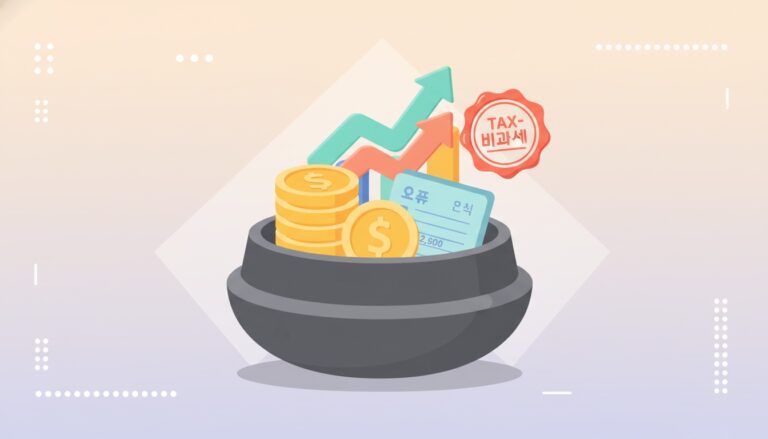
In Korea, we have Bibimbap. You don’t eat rice, then spinach, then egg separately. You mix them. The ISA is the Dolsot (hot stone pot).
– The Rice: Your cash deposits.
– The Gochujang: Your high-risk stocks.
– The Vegetables: Your safe bonds/ETFs.
The magic of the ISA, like the Dolsot, is that it keeps the heat (compound interest) contained, and the crispy rice at the bottom (tax benefits) is the best part.
Critical Insight: Why are Koreans so obsessed with this? Because of the “Yeonggeul” (영끌) phenomenon—pulling one’s soul to invest. In a society where real estate prices have skyrocketed, financial instruments like ISA are seen as one of the few “ladders” left for the younger generation to build wealth efficiently. It’s not just savings; it’s a survival strategy.
Phase 5: Immersive Roleplay
Setting: Friday night, 8 PM. A Gopchang (grilled intestines) restaurant near Gangnam Station. Loud chatter, clinking glasses. You are with Min-su (34, Finance Team Manager, loves talking stocks).
Min-su: 아, 이번에 세금 토해낼 것 같아. 죽겠네. 📉
(Ah, ibeon-e segeum tohaenael geot gata. Jukgenne.)
(Ah, I think I’m going to have to vomit up taxes this time. Usually means paying extra. I’m dying.)
YOU (Decision Point):
– Option A: 세금을 많이 내서 슬프시겠어요. (Textbook empathy)
– Option B: 형, ISA 계좌 아직 안 만들었어요? 만능 통장인데! (The “Smart Junior” move)
– Option C: 저도 세금 많이 내요. (Risk of sounding arrogant)
✅ Best Choice: B
YOU: 형, ISA 계좌 아직 안 만들었어요? 만능 통장인데! 🥣
(Hyeong, ISA gyejwa ajik an mandeureosseoyo? Manneung tongjang-inde!)
(Hyung, you haven’t opened an ISA account yet? It’s the all-powerful account!)
Min-su: 야, 그거 복잡하지 않냐? 3년 묶여있어야 하잖아. 🤔
(Ya, geugeo bokjaphaji annya? Sam-nyeon mukkyeoisseoya hajana.)
(Hey, isn’t that complicated? Money has to be tied up for 3 years.)
YOU: 에이, 그래도 비과세 혜택이 쏠쏠하죠. 배당금 받으면 세금 안 내잖아요.
(Ei, geuraedo bigwase hyetaegi ssolssolhajyo. Baedanggeum badeumyeon segeum an naejanayo.)
(Ey, come on. But the tax-free benefits are decent. You don’t pay tax on dividends.)
(Stage Direction: Min-su looks at you with impressed eyes and pours you a shot of Soju.)
Phase 6: 10-Second Shadowing Drill
Let’s practice persuading a friend to be financially smart. Use a persuasive, slightly knowing tone.
The Sentence:
😤 “다른 건 몰라도 / ISA는 꼭 / 챙겨야죠! / 절세 끝판왕이잖아요.”
(Dareun geon mollado / ISA-neun kkok / chaenggyeoyajyo! / Jeolse kkeupanwang-ijanayo.)
Meaning: “I don’t know about other things, but you MUST take care of the ISA! It’s the final boss (ultimate king) of tax saving.”
Phase 7: K-Culture Mini Glossary
| Korean | Rom | Meaning | Context |
|---|---|---|---|
| 13월의 월급 | 13-wol ui wolgeup | 13th Month Salary | The year-end tax refund. The goal of all Korean salarymen. |
| 짠테크 | Jjantechu | Penny-pinching Tech | “Salty” + “Technology”. Strategic frugality (like using ISA) to save money. |
| 성지 | Seongji | Holy Land | Usually for K-pop/Anime, but in finance, a bank branch known for good exchange rates or specific products. |
| 물타기 | Multagi | Water-dilution | Buying more stock as the price drops to lower your average cost. Common slang. |
Phase 8: Traveler’s Survival Kit (Bank Edition)
While tourists rarely open ISAs, expats living in Korea must visit a bank eventually. Korean banks are insanely fast but require specific docs.
🆘 Survival Phrases:
- “외국인 거주자인데, ISA 가입 되나요?”
(Oegugin geojuja-inde, ISA gaip doenayo?)
“I’m a foreign resident, can I sign up for an ISA?”“의무 가입 기간이 어떻게 되나요?”
(Uimu gaip gigani eotteoke doenayo?)
“What is the mandatory subscription period?” (Crucial, because withdrawing early kills the tax benefit!)
📌 Editor’s Note:
Most Korean banking apps (Toss, KakaoBank) are amazing but harder for foreigners to navigate for complex products like ISA. Visiting a physical branch (Offline) is often better. Look for the Global Desk ticket machine.
Phase 9: Think Deeper — Language & Society
The Shift from Saving to Survival
Historically, Korean banking terms focused on Jeochuk (saving) as a virtue. But terms like Manneung Tongjang and Jeolse reflect a shift in the modern Korean psyche—specifically the “Hell Joseon” discourse.
It is no longer enough to simply work hard and save. The inflation and housing crisis have made “passive income” and “tax efficiency” moral imperatives for survival. When you use these words, you aren’t just talking finance; you are acknowledging the intense competitive pressure of modern Korean life. You are saying, “I am fighting to survive here, too.”
💬 Your Turn: Does your language have specific words for “tax-advantaged” accounts that carry emotional weight? Or is it just boring banking jargon?
Phase 10: FAQ & Troubleshooting
Q: Can I use slang like ‘Tteoksang’ (price skyrocketing) with a bank teller?
A: 🚫 No. Keep it professional with the clerk. Save Tteoksang (떡상) and Tteokrak (떡락 – crash) for drinks with friends. With a teller, use “Suingnyul” (Profit rate).
Q: I heard foreigners can’t open ISA.
A: Misconception! If you are a resident (So-deuk-se-beop-sang Geojuja) with reported income in Korea, you generally can. However, strict reporting laws in your home country (like the US) might make it complicated. Check both sides!
❌ Common Mistake: Withdrawing money too early.
✅ Fix: Understand the concept of Mukkyeo-itda (being tied up). Treat this money as if it doesn’t exist for 3 years.
Phase 11: Wrap-up & Action Mission
Summary: ISA is the “Bibimbap” of accounts—a Manneung Tongjang that offers Jeolse (tax savings) and Bigwase (tax-free) benefits, essential for the “13th Month Salary.”
🚀 Action Missions:
– 🥉 Bronze: Practice saying “Bigwase” (Tax-free) five times. It’s a fun word.
– 🥈 Silver: Open your Korean banking app (if you have one) and type “ISA” in the search bar. Just see what pops up.
– 🥇 Gold: Ask a Korean friend, “Neo-do ISA isseo?” (Do you have an ISA too?) Watch their reaction. You might start a 2-hour conversation about stocks.
K-Culture Mission: Watch a clip of the drama Reborn Rich (Chaeboljib Maknaeadeul). Look at how the characters treat investment information as a weapon. That is the intensity of Korean finance!
Phase 12: Interactive Quiz
1. Which word implies “Smart, legal tax saving”?
A) Talse (탈세)
B) Jeolse (절세)
C) Malse (말세)
2. True or False?
“You should use the slang ‘Jjantechu’ (Penny-pinching) when talking to a bank manager to show you are serious.”
(False. Use it with friends. With a manager, say you are interested in ‘Jasan Gwalli’ – Asset Management.)
3. Situation Check:
Your friend says their stock price dropped significantly. What is the most natural Korean reaction?
A) “Congratulations!” (Chukhahaeyo)
B) “It is tax-free.” (Bigwase-yeyo)
C) “Ah… you were bitten (Mul-ryeot-gun-yo).” (Ah… Mullyeotgunyo)
(Answers: 1:B, 2:False, 3:C)
Frequently Asked Questions (FAQ)
Q: What does "절세 (Jeolse)" mean in Korean and how do you pronounce it?
A: In Korean, "절세 (Jeolse)" is pronounced [jeol-se] and means: Lit. Tax Saving. Nuance: Smart, legal tax optimization. (Distinct from 'Tal-se' which is illegal tax evasion).
Q: What does "만능 통장 (Manneung Tongjang)" mean in Korean and how do you pronounce it?
A: In Korean, "만능 통장 (Manneung Tongjang)" is pronounced [man-neung tong-jang] and means: Lit. All-powerful Account. Nuance: The "Swiss Army Knife" of bank accounts.
Q: What does "비과세 (Bigwase)" mean in Korean and how do you pronounce it?
A: In Korean, "비과세 (Bigwase)" is pronounced [bi-gwa-se] and means: Tax Exemption / Tax-free.







