

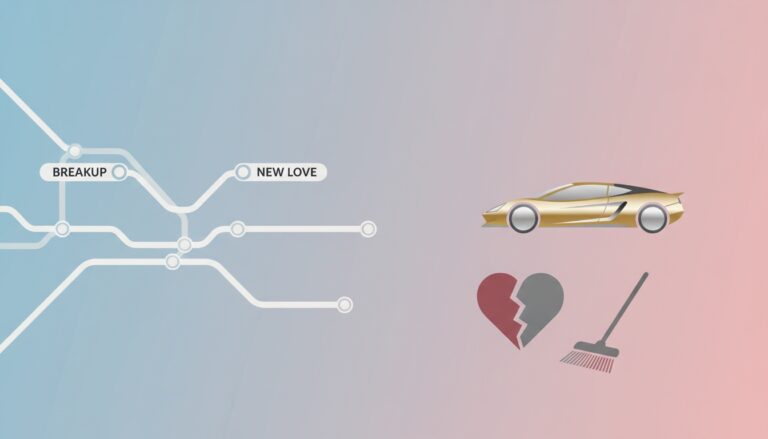
Phase 1: The “Transfer” Phenomenon
Hello, Daily Hangul readers. It’s your editor here.
Let’s talk about the Seoul Metro for a second. It’s efficient, clean, and fast. You get off Line 2, walk a few steps, and boom—you’re on Line 5. Efficient, right? Now, imagine applying that efficiency to your love life. You break up on Friday, and by Saturday night, you’re posting photos with someone new. In Korea, we call this 환승 이별 (Hwanseung Ibyeol)—literally, a “Transfer Breakup.”
If you’ve watched the reality show Transit Love (환승연애), you know exactly how messy this gets. It’s not just a breakup; it’s a moral battleground. In Western cultures, moving on quickly might be seen as “rebounding.” Here? It’s often viewed as a betrayal of 상도덕 (Sang-do-deok)—business ethics. Yes, we apply business ethics to dating. Because in Korea, a relationship isn’t just about two people; it’s about the shared history, the overlapping friend groups, and the “respect” (Ye-ui) you owe the past.
Today, we aren’t just learning words; we’re dissecting the anatomy of a messy Korean breakup.
Phase 2: The Vocabulary of Heartbreak
1. 환승 이별 (Hwanseung Ibyeol)
- Pronunciation: [Hwan-seung I-byeol] (Sounds like ‘Juan’ + ‘Sing’ / ‘E’ + ‘Byul’)
- Meaning: Transfer Breakup (Leaving a partner specifically to start dating someone else immediately).
- Nuance: This is aggressive. It implies the new relationship overlapped with the old one, or the “transfer” was pre-planned. It’s different from just moving on.
- K-Culture Moment: Think of that K-Drama scene where the protagonist sees their ex with a new lover the very next day. The background music stops. The rage builds.
- Situation Spectrum:
[🚫 To your boss] ———— [✅ To close friends] - 🤔 Think About It: Why use a public transport metaphor? It implies the ex was just a “stop” or a “station” rather than a destination. It devalues the past relationship instantly.
2. 똥차 가고 벤츠 온다 (Ttong-cha gago Benz onda)
- Pronunciation: [Ttong-cha ga-go Ben-cheu on-da]
- Meaning: “The poop car (junker) leaves, and a Mercedes Benz comes.”
- Nuance: This is the ultimate consolation phrase. When someone suffers a Hwanseung Ibyeol, friends will say this. It means the ex was trash (poop car), and the next person will be luxury (Benz).
- Editor’s Insight: It’s blunt, materialistic, and absolutely hilarious. It’s the most effective way to cheer up a crying friend at a pocha (tent bar).
- Situation Spectrum:
[🚫 To elders] ———— [✅ Besties only]
3. 잠수 타다 (Jamsu tada)
- Pronunciation: [Jam-su ta-da]
- Meaning: Ghosting (Literally: “To go underwater/scuba diving”).
- Nuance: It captures the feeling of someone disappearing into the deep ocean where no signal can reach them. It’s considered the most cowardly form of breakup.
Phase 3: Textbook vs. Real Life
| Context | 📖 Textbook Korean | 🗣️ Real Street Korean | 💡 The Vibe Check |
|---|---|---|---|
| Explanation | 우리는 헤어졌어요. (We broke up.) | 우리 끝났어. / 나 까였어. (We’re done. / I got kicked.) | “까였어” (Kkayeosseo) is self-deprecating slang for being dumped. It sounds like being kicked in the shin. |
| The Reason | 성격 차이로 헤어졌습니다. (We split due to personality differences.) | 그 자식 환승했어. (That jerk transferred.) | “Personality differences” is for press conferences. In real life, we blame the “transfer.” |
| Post-Breakup | 좋은 사람 만날 거예요. (I will meet a good person.) | 똥차 가고 벤츠 온다! (Poop car goes, Benz comes!) | Formal optimism vs. Aggressive, humorous reality. |
Bottom Note: Use “까였어” only with close friends. If you say this to your superior, they might panic and not know how to comfort you.
Phase 4: Cultural Deep Dive — The Ethics of Exes
4-1. The Concept of “Sang-do-deok” (Business Ethics)
Why do Koreans bring “business ethics” into dating? It comes down to Jeong (정) and community. In a high-context society, your relationship usually involves a tangled web of mutual friends. A “Transit Breakup” disrupts the group harmony. It forces mutual friends to choose sides instantly. It’s seen as “disrespectful to the memories” you shared.
4-2. The “Clean Cut” Expectation
In many Western cultures, staying friends with an ex is somewhat common. In Korea? It’s rare and often frowned upon. “How can you be friends with someone you loved?” is the dominant mindset. A clean break—deleting photos, unfollowing on Instagram, removing the “Lovestagram”—is considered the basic etiquette (Ye-ui) for the next partner.
Phase 5: Roleplay — The Pocha Confession
Setting: It’s 11 PM at a Pojangmacha (street tent bar) in Jongno. It’s raining outside. You are with Minji, your Korean friend who just got dumped.
Minji: (Downing a shot of Soju) 와… 진짜 어이가 없네. 걔 프로필 사진 봤어?
(Wa… jinjja eo-i-ga eom-ne. Gyae peu-ro-pil sa-jin bwasseo?)
Translation: Wow… I’m speechless/dumbfounded. Did you see his profile picture?
YOU: (Looking at her phone) 벌써 바꿨어? 헤어진 지 이틀 됐잖아.
(Beolsseo bakkwosseo? He-eo-jin ji i-teul dwaet-ja-na.)
Translation: He changed it already? It’s been two days since you broke up.
Minji: 그러니까! 이거 완전 환승 아니야? 나 몰래 썸 타고 있었던 게 분명해.
(Geu-reo-ni-kka! I-geo wan-jeon hwan-seung a-ni-ya? Na mol-lae sseom ta-go i-sseot-deon ge bun-myeong-hae.)
Translation: Exactly! Isn’t this a total transfer? It’s obvious he was flirting with her behind my back.
🔀 Decision Point: How do you respond?
A) “확실한 거 아니니까 너무 생각하지 마.” (Don’t overthink it, we don’t know for sure.)
– Result: Minji glares at you. You failed the empathy test. Logic is not welcome here.B) “미친 거 아니야? 진짜 똥차였네! 액땜했다 쳐.” (Is he crazy? He was a total poop car! Consider it warding off bad luck.)
– Result: Minji pours you a drink. “Right? I deserve a Benz!” You are a true friend.
Phase 6: 10-Second Shadowing Drill
Let’s practice the ultimate reaction to a transit breakup. Use a tone of disbelief and disgust.
😤 Sentence: 인간적으로 / 최소한의 / 예의는 / 지켜야지!
Pronunciation: In-gan-jeok-eu-ro / choe-so-han-ui / ye-ui-neun / ji-kyeo-ya-ji!
Meaning: Humanly speaking / the minimum / manners / (you) should keep!
Nuance: “Ideally, as a human being, you should have basic decency!”
Phase 7: K-Culture Glossary
| Word | Romanization | Context |
|---|---|---|
| 미련 | Miryeon | Lingering feelings/regret. “Don’t have miryeon for that trash.” |
| 흑역사 | Heuk-yeok-sa | Dark History. Your embarrassing past (like drunk texting an ex). |
| CC | CC (Campus Couple) | Dating someone in your university major. Dangerous because breakups are public. |
| 읽씹 | Ilk-ssip | Read and ignored. The precursor to ghosting. |
Phase 8: Traveler’s Survival Kit — The Breakup Trip
Even if you aren’t breaking up, you might end up drinking with Koreans who are venting. Here is your survival guide to the Korean Drinking Console.
🆘 Survival Phrase
– 🇰🇷 “마시고 잊어버려요!” (Masigo ijeobeoryeoyo!)
– 🗣️ Sound: [Ma-shi-go / Ee-juh-buh-ryuh-yo]
– 📍 Use: When someone is sad at a bar.
– 💡 Meaning: “Drink and forget it!”📌 Editor’s Note: If you see people crying at a pocha, don’t stare. It’s a sacred space for releasing Han (deep sorrow/resentment). Just focus on your udon.
Phase 9: Think Deeper — The “Public” Relationship
Here is something to chew on: In Korea, why is a “Transit Breakup” treated almost like a crime?
It relates to the concept of Chemyon (체면 – Face/Reputation). When you overlap relationships, you aren’t just hurting the ex’s feelings; you are damaging their “face” in front of your shared community. You made them look foolish for trusting you while you were already looking for the next station.
In individualistic cultures, your romantic choices are your private business. In Korea, your romantic choices are often subject to the court of public opinion. Does this pressure make people behave better, or just hide their secrets better?
💬 Your Turn: Is “Transit Dating” considered rude in your culture, or just efficient? Let me know in the comments!
Phase 10: FAQ & Troubleshooting
Q: Can I stay friends with my ex in Korea?
A: Generally, no. It’s often seen as keeping “insurance” (eojang-gwalli – fishery management). Unless you were friends for 10 years before dating, a clean cut is safer.
Q: What if I accidentally liked my ex’s Instagram post?
A: That is a classic Heuk-yeok-sa (Dark History) moment. Undo it immediately. If they saw it, pretend your finger slipped or you were hacked. Never admit you were lurking.
Phase 11: Wrap-up & Missions
Summary: “Transit Breakups” (Hwanseung) are taboo because they violate the “business ethics” (Sang-do-deok) of dating.
Action Missions:
– 🥉 Bronze: Say “Ttong-cha gago Benz onda” out loud three times. Feel the optimism.
– 🥈 Silver: Watch a clip of the show Transit Love (EXchange) on YouTube and read the Korean comments. Look for the word “환승” (transfer).
– 🥇 Gold: Next time a friend complains about a bad date, use the “Poop car/Benz” analogy to comfort them.
See you at the next station! (Hopefully not a transfer station). 😉
Frequently Asked Questions (FAQ)
Q: What does "환승 이별 (Hwanseung Ibyeol)" mean in Korean and how do you pronounce it?
A: In Korean, "환승 이별 (Hwanseung Ibyeol)" is pronounced [Hwan-seung I-byeol] and means: Transfer Breakup (Leaving a partner specifically to start dating someone else immediately).
Q: What does "똥차 가고 벤츠 온다 (Ttong-cha gago Benz onda)" mean in Korean and how do you pronounce it?
A: In Korean, "똥차 가고 벤츠 온다 (Ttong-cha gago Benz onda)" is pronounced [Ttong-cha ga-go Ben-cheu on-da] and means: "The poop car (junker) leaves, and a Mercedes Benz comes."
Q: What does "잠수 타다 (Jamsu tada)" mean in Korean and how do you pronounce it?
A: In Korean, "잠수 타다 (Jamsu tada)" is pronounced [Jam-su ta-da] and means: Ghosting (Literally: "To go underwater/scuba diving").







