

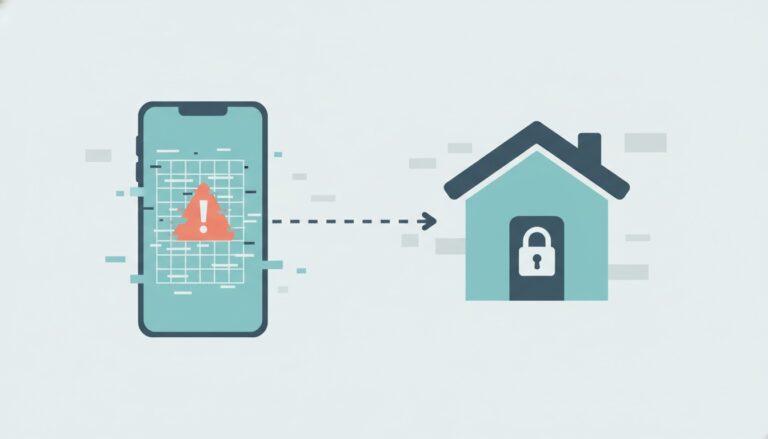
Phase 1: The “Smart” Nightmare Hook 😱
Hello, Daily Hangul family! It’s your editor here.
Imagine this scene: You’re watching a K-Drama. It’s a thriller. The protagonist lives in a high-tech Seoul apartment. Suddenly, the lights start flickering, the robotic vacuum cleaner starts chasing the dog, and the digital door lock starts beeping like crazy. The protagonist stares at their phone in horror.
In the subtitles, it says: “I’ve been hacked.”
But if you listen closely, the actor doesn’t say the English loanword “Hacking” (해킹). They scream something visceral, something that sounds like they’ve been completely emptied out.
Korea is the land of hyper-connectivity. From ordering food to controlling your boiler, everything is an app. But with great convenience comes great… paranoia. Today, we are going to look at the dark side of the IoT world through the lens of the Korean language.
We aren’t just learning computer terms; we’re learning the feelings of vulnerability and frustration that come when technology betrays us. Let’s get into the mind of a Korean dealing with a security breach.
Phase 2: Deep Dive into Core Expressions 🧠
Here are three expressions that will take you from “textbook student” to “local insider.”
1. 털리다 (Teollida)
- Pronunciation: [Teol-li-da] (Think of the ‘u’ in ‘turn’ + ‘lee’ + ‘da’)
- Meaning: Literal: To be dusted off / emptied / robbed. Real nuance: To be hacked, compromised, or completely cleaned out.
- K-Culture Moment: You’ll hear this in PC Bangs (internet cafes) when a gamer loses their account, or in news reports about phishing scams. “내 계정 털렸어” (My account got cleaned out).
- Editor’s Insight: This word is powerful. “Hacked” sounds technical. “털리다” feels like someone walked into your house and took everything. It implies a sense of total loss.
- Situation Spectrum:
[🚫 Boss/Elders] ———— [⚠️ Colleagues] ———— [✅ Friends]- 🤔 Think About It: Why does Korean use a verb meaning “to be dusted/robbed” for digital hacking? It shows that Koreans view digital assets as tangible property. Losing data feels like physical theft.
2. 신상(이) 털리다 (Sinsang-i teollida)
- Pronunciation: [Sin-sang-ee teol-li-da]
- Meaning: Literal: Personal details are robbed. Real nuance: To be doxed. Your private info is all over the internet.
- K-Culture Moment: In dramas involving cyberbullying or public scandals, netizens often “dig up” (털다) the villain’s past. This is “Sinsang teolgi.”
- Editor’s Insight: ‘신상’ is short for ‘신상 정보’ (personal status information). In Korea’s hyper-connected society, this is a genuine fear. It’s not just about credit cards; it’s about your face, address, and past being exposed.
- Situation Spectrum:
[🚫 Formal Speech] ———— [⚠️ Semi-formal] ———— [✅ Casual/Internet]3. 먹통이 되다 (Meoktong-i doeda)
- Pronunciation: [Meok-tong-ee dwe-da]
- Meaning: Literal: To become an ink stick container. Real nuance: To become a brick; completely unresponsive; frozen.
- K-Culture Moment: You’re trying to use a kiosk or your smart home pad, and it freezes. You tap it, sigh, and say, “아, 또 먹통이네.” (Ah, it’s a brick again.)
- Editor’s Insight: ‘Meoktong’ refers to the carpenter’s ink container which is black and dark inside. It signifies a state of “darkness” or “no communication.” It’s the perfect word for a crashed IoT device.
- Situation Spectrum:
[🚫 Very Formal] ———— [⚠️ Polite conversation] ———— [✅ Casual]
Phase 3: Textbook vs. Real Korean 🥊
| Situation | 📖 Textbook Korean | 🗣️ Real Korean (C1 Level) | 💡 Why the difference? |
|---|---|---|---|
| Account Hacked | 제 아이디가 해킹당했습니다. (My ID was hacked.) | 아, 나 아이디 털렸어. (Ah, my ID got robbed/cleaned out.) | ‘털리다’ carries the emotional weight of being violated, not just a system error. |
| Device Frozen | 기계가 작동하지 않습니다. (The machine is not working.) | 이거 완전 먹통이야. (This is totally a brick.) | ‘작동하지 않다’ is too clinical. ‘먹통’ describes the frustration of a useless object. |
| Privacy Leak | 개인정보가 유출되었습니다. (Personal info was leaked.) | 신상 다 털렸어. (My details were all dug up.) | ‘유출’ is passive (leaked); ‘털렸다’ implies an active attack or public exposure. |
Bottom Note: Use the Real Korean expressions with friends or peers. If you are reporting a hack to the police or a bank teller, stick to the Textbook version for clarity and politeness!
Phase 4: Cultural Deep Dive — The “Wallpad” Crisis 📺
K-Drama vs. Reality:
In shows like Ghost (Yuryeong) or Start-Up, hacking is often portrayed as a hoodie-wearing genius typing at light speed. But for real Koreans, the scariest IoT threat is the “Wallpad” (월패드).
Most modern Korean apartments have a tablet on the wall (the Wallpad) that controls lights, gas, and the front door. Recently, there was a huge scandal where hackers compromised these pads to film people in their living rooms.
The “Nunchi” of Security:
In Korea, if you see a piece of tape covering a laptop webcam or a Wallpad camera, don’t ask “Why?” That’s the owner’s “security nunchi” kicking in. It’s a silent acknowledgement that “I trust technology, but not that much.”
Think About It:
In a country where delivery packages left at the door never get stolen, why is digital theft (game items, accounts, personal data) so rampant? It’s an interesting paradox of physical safety vs. digital vulnerability.
Phase 5: Immersive Roleplay — The Glitch 🏚️
Setting: It’s 11 PM on a rainy Tuesday. You are outside your high-tech Airbnb in Gangnam. The digital door lock isn’t opening despite you punching in the correct code. You call your Korean friend, Min-jae, in a panic.
Characters:
* YOU: A tech-savvy traveler, but currently panicked.
* Min-jae: Your local Korean friend (30s), IT worker, calm but cynical.
(Phone rings)
YOU: 민재야, 큰일 났어. 도어락이 안 열려!
(Minjae-ya, keunil nasseo. Do-eo-rak-i an yeollyeo!)
Min-jae, big problem. The door lock won’t open!
Min-jae: 뭐? 번호 맞게 누른 거 맞아? 천천히 다시 해봐.
(Mwo? Beonho matge nureun geo maja? Cheoncheonhi dasi haebwa.)
What? Did you press the right numbers? Try again slowly.
YOU: 다섯 번이나 했어! 소리는 나는데 문이 안 열려. 설마… 우리 집 털린 거 아니야?
(Daseot beonina haesseo! Sorineun naneunde muni an yeollyeo. Seolma… uri jip teollin geo aniya?)
I did it 5 times! It makes a sound but won’t open. Don’t tell me… did my house get hacked/robbed?
Min-jae: 에이, 해킹은 무슨. 그냥 먹통이 된 걸 수도 있어. 배터리 방전 아니야?
(Ei, hacking-eun museun. Geunyang meoktong-i doen geol sudo isseo. Battery bangjeon aniya?)
Ey, hacking my foot. It might just be bricked/frozen. Isn’t the battery dead?
YOU: …아? 배터리?
(…Ah? Battery?)
🔀 Decision Point: What do you say next?
- Option A: “편의점 가서 건전지 사올게.” (I’ll go to the convenience store and buy batteries.)
- Option B: “9V 건전지 어디 대는 곳 없나?” (Is there a place to put a 9V battery?)
- Option C: “경찰 부를까?” (Should I call the police?)
✅ Best Choice: B — Korean digital locks usually have emergency terminals for a 9V battery externally. Knowing this makes you look like a total pro.
⚠️ Choice C Analysis: Calling the police for a dead battery is a bit extreme! Try the 9V trick first.
Phase 6: 10-Second Shadowing Drill 🗣️
Let’s practice complaining about tech failures naturally.
Emotion: Frustrated but resigned (😤/😩)
“아, / 진짜 / 갑자기 / 먹통이 / 되면 / 어떡해!”
(Ah, / jinjja / gapjagi / meoktong-i / doemyeon / eotteokhae!)
“Ah, seriously, what am I supposed to do if it suddenly bricks like this!”
Phase 7: K-Culture Mini Glossary 📖
| Korean | Romanization | Meaning | Context |
|---|---|---|---|
| 비번 | Bibeon | Password | Short for 비밀번호 (Bimil-beonho). Everyone uses this short form. |
| 인증 | Injeung | Authentication | You will hate this word. “Phone authentication” is required for everything in Korea. |
| 랜섬웨어 | Ranseom-we-eo | Ransomware | Same as English, but often heard in office contexts. |
| 피싱 | Pising | Phishing | Voice phishing (보이스피싱) is a major social issue in Korea. |
| 로그아웃 | Rogeu-a-ut | Logout | Essential IoT vocabulary. |
Phase 8: Traveler’s Survival Kit — Digital Safety 🧳
When you are traveling in Korea, you are essentially an IoT node. Here is how to survive.
🆘 Survival Phrases
1. 🇰🇷 “와이파이 비번이 뭐예요?” (Waipai bibeoni mwoyeyo?)
* “What is the Wi-Fi password?” (Essential for every cafe).
2. 🇰🇷 “이거 QR 찍어야 돼요?” (Igeo QR jjigeoya dwaeyo?)
* “Do I need to scan the QR code for this?” (Used for ordering, entry, or info).
3. 🇰🇷 “충전 좀 할 수 있을까요?” (Chungjeon jom hal su isseulkkayo?)
* “Can I charge this?” (If your phone dies, your digital life ends).📌 Editor’s Note:
Public Wi-Fi in Korea is everywhere (subways, buses). However, avoid banking on open networks labeled “Seoul_WiFi” or similar unless they are the secure versions (usually indicated by a lock icon). K-Banking apps are notoriously finicky about security.
Phase 9: Think Deeper — Convenience vs. Privacy 🧠
Korea is the land of “Bali-Bali” (Hurry-Hurry). We want internet now, delivery now, connection now. This drive for speed and convenience has built the world’s most impressive IoT infrastructure. But ask yourself: Is the ‘Open’ culture of the internet clashing with the ‘Closed’ culture of private life?
In traditional Korean architecture (Hanok), fences were low, and neighbors shared lives. In digital Korea, we put up high firewalls, yet we share our entire lives on Instagram and KakaoTalk. We are terrified of “Sinsang teolgi” (doxing), yet we upload the data that makes it possible. How does your country balance this trade-off?
Phase 10: FAQ & Troubleshooting 🛠️
Q: Can I use ‘털리다’ (Robbed/Hacked) with my boss?
A: No. It is too slangy. With a boss, say “해킹 피해를 입었습니다” (I suffered hacking damage) or “계정이 도용된 것 같습니다” (It seems my account was misappropriated/stolen).
Q: A weird number is calling me. Should I answer?
A: If it starts with 070, it is likely spam or internet marketing. Most Koreans ignore 070 numbers. If it is urgent, they will text you.
❌ Common Mistake:
Don’t say “My computer is broke” (고장났어) for a software freeze.
* Hardware broken = 고장 났다.
* Software frozen/bricked = 먹통이다.
Phase 11: Wrap-up & Mission 🚀
One-Liner: Today we learned that in Korea, getting hacked feels like getting “robbed” (털리다), and a frozen device is a “ink stick” (먹통).
Your Mission:
* 🥉 Bronze: Say “아, 먹통이네!” the next time your phone or laptop lags.
* 🥈 Silver: Change your phone’s language setting to Korean for 1 hour and try to find the “Privacy” (개인정보보호) menu.
* 🥇 Gold: Watch a scene from the drama Phantom (Yuryeong) or Start-Up and try to catch the word “털렸다” or “해킹.”
💬 Comment Below:
Have you ever experienced a “Meoktong” moment with technology while traveling? How did you react? Tell me in the comments!
Phase 12: Quiz — Are You Secure? 🕵️
- Situational Judgment: Your smart speaker isn’t responding. You are talking to a close friend. What is the most natural thing to say?
- a) 스피커가 고장 나셨어. (Honorific mistake)
- b) 스피커가 완전 먹통이야. (Correct)
- c) 스피커가 해킹을 당했십니다. (Too formal/Awkward)
- True or False:
- “Sinsang-i teollida” refers to your bank account money being stolen. (False – It refers to personal information/identity, though money loss can follow.)
(Scroll down for answers)
.
.
.
Answers: 1. (b), 2. (False – usually means Doxing/Privacy leak)*
Frequently Asked Questions (FAQ)
Q: What does "털리다 (Teollida)" mean in Korean and how do you pronounce it?
A: In Korean, "털리다 (Teollida)" is pronounced [Teol-li-da] and means: Literal: To be dusted off / emptied / robbed. Real nuance: To be hacked, compromised, or completely cleaned out.
Q: What does "신상(이) 털리다 (Sinsang-i teollida)" mean in Korean and how do you pronounce it?
A: In Korean, "신상(이) 털리다 (Sinsang-i teollida)" is pronounced [Sin-sang-ee teol-li-da] and means: Literal: Personal details are robbed. Real nuance: To be doxed. Your private info is all over the internet.
Q: What does "먹통이 되다 (Meoktong-i doeda)" mean in Korean and how do you pronounce it?
A: In Korean, "먹통이 되다 (Meoktong-i doeda)" is pronounced [Meok-tong-ee dwe-da] and means: Literal: To become an ink stick container. Real nuance: To become a brick; completely unresponsive; frozen.







