

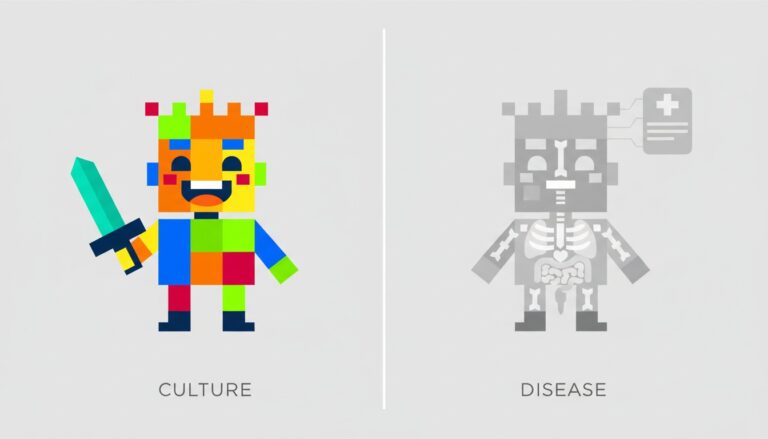
Introduction: The “Pangyo” Conversation You Need to Master
Hello! I’m your Head Editor at Daily Hangul.
If you are aiming for C2 proficiency, you aren’t just ordering bibimbap anymore. You are likely engaging in deep discussions, perhaps over a beer in Pangyo (Korea’s Silicon Valley) or during a university seminar. Today, we are tackling one of the most heated debates in modern Korea: The WHO’s classification of ‘Gaming Disorder’ as a disease (게임 이용 장애 질병 코드 등재).
Why does this matter? Because Korea is an E-sports mecca and a country with intense educational fever. This topic splits the nation. Knowing how to discuss this doesn’t just make you fluent; it makes you an intellectual peer.
This isn’t just about video games; it’s about logic, society, and the generation gap. Let’s dive into the vocabulary that will make Korean native speakers nod in respect.
Phase 2: Deep Dive into Critical Expressions
At the C2 level, we move beyond simple description into argumentation. Here are the three power words you need.
1. 낙인찍기 (Nag-in-jjik-gi)
- Pronunciation: Nag-in sounds like “noggin” (head) but sharper + jjik-gi (strong ‘jj’ sound like a staple gun firing).
- Meaning: Stigmatization / Labeling (Literal: Branding a mark)
- Editor’s Insight: This is the core argument of the gaming industry. They argue that calling gaming a disease is “branding” normal hobbyists as patients. It carries a heavy, negative nuance of unfair societal judgment.
- Situation Check: Perfect for debates, op-eds, or serious discussions.
2. 인과관계 (In-gwa-gwan-gye)
- Pronunciation: In-gwa (In-guava without the ‘v’) + gwan-gye.
- Meaning: Causality / Cause-and-effect relationship
- Editor’s Insight: A must-have for logical debates. You use this to question: “Is the game the cause of the problem, or just a symptom?”
- “게임과 폭력성 사이의 인과관계는 명확하지 않습니다.” (The causality between games and violence is unclear.)
- Situation Check: Highly formal and academic. Use this to sound sharp and objective.
3. 마녀사냥 (Ma-nyeo-sa-nyang)
- Pronunciation: Ma-nyeo (Ma + new) + sa-nyang (Sa + nyang like a cat’s meow).
- Meaning: Witch hunt
- Editor’s Insight: This is a powerful metaphor. When the media attacks games every time a crime happens, industry insiders call it a “witch hunt.” It implies irrational mass hysteria against a scapegoat.
- Situation Check: Used in passionate defense or criticism of media/public opinion.
Phase 3: Textbook vs. Real Life (The Industry Insider Edition)
How the news talks vs. how game developers talk.
| Textbook / News (Formal) | Real Life (Industry/Gamers) |
|---|---|
| 게임 과몰입 (Game over-immersion) | 겜창인생 (Game-window life – Slang/Self-deprecating), 하드 유저 (Hard user) |
| 규제 도입 (Introduction of regulations) | 산업 죽이기 (Killing the industry), 밥그릇 뺏기 (Taking away the rice bowl – Meaning: Threatening livelihood) |
| 학업에 방해가 됩니다 (Disturbs studies) | 입시 스트레스 풀 데가 없잖아 (There’s nowhere else to relieve exam stress) |
Editor’s Note: As a C2 learner, you should understand the slang like “겜창인생” (a life stuck in the game window), but in a professional setting, stick to “산업 죽이기” (killing the industry) to express strong opposition without sounding vulgar.
Phase 4: Cultural Context – The “Two-Faced” Reality
Korea has a unique dual nature regarding games.
- The Pride: We possess Faker, the god of LoL. E-sports is a legitimate career path and national pride.
- The Fear: Parents see games as the #1 enemy of entering a SKY university (Seoul, Korea, Yonsei).
Nunchi Tip: When discussing this, identify your audience first.
* With older bosses/parents: Focus on “health balance” and acknowledge their worry.
* With Gen Z/Millennials/Tech workers: You can safely criticize the disease classification as “outdated thinking” (구시대적 사고방식).
Phase 5: Roleplay Script (The Debate)
Setting: A coffee break at a tech conference in Seoul.
Characters:
* Min-jun (Korean Developer): Strongly opposes the regulation.
* Alex (You): Playing ‘Devil’s Advocate’ to keep the conversation going.
Alex: 이번 질병 코드 등재 이슈, 업계 분위기는 좀 어때요?
(Ibeon jilbyeong code deungjae issue, eopgye bunwigineun jom eottaeyo?)
[How is the industry atmosphere regarding this disease code listing issue?]
Min-jun: (Sighing and shaking head) 완전 초상집이죠. 이건 명백한 낙인찍기예요. 문화 산업을 싸잡아서 중독 물질 취급하잖아요.
(Wanjeon chosangjib-ijyo. Igeon myeongbaekhan naginjjikgi-yeyo. Munhwa saneobeul ssajabaseo jungdok muljil chwigeuphajanayo.)
[It’s like a funeral home. This is clear stigmatization. They are lumping the whole cultural industry together and treating it like an addictive substance.]
Alex: 이해는 가요. 하지만 학부모들 입장에서는 게임 중독과 학업 부진의 인과관계를 무시하기 힘들지 않을까요?
(Ihaeneun gayo. Hajiman hakbumodeul ipjangeseoneun game jungdokgwa hageop bujin-ui ingwagwangye-reul musihagi himdeulji aneulkkayo?)
[I get that. But from the parents’ perspective, wouldn’t it be hard to ignore the causality between game addiction and poor academic performance?]
Min-jun: 에이, 그건 마녀사냥이죠. 입시 경쟁이 근본 원인인데, 만만한 게 게임이니까요.
(Ei, geugeon manyeosanyang-ijyo. Ipsi gyeongjaengi geunbon wonininde, manmanhan ge game-inikkayo.)
[Ay, that’s a witch hunt. The root cause is the entrance exam competition, but games are just an easy target.]
Phase 6: 10-Second Shadowing Drill
Practice this sentence to sound like an intellectual critic. Focus on the pauses /.
“게임은 / 단순한 놀이가 아니라 / 21세기의 복합 문화 예술입니다.”
(Games are / not just simple play / but 21st-century complex cultural arts.)
Pronunciation Tip: Make the word 예술 (art) sound slightly heavy and serious to emphasize the value.
Phase 7: FAQ & Troubleshooting
- Q: Can I use the word ‘중독’ (Addiction) casually?
- A: Yes, Koreans use it often for food or hobbies (e.g., “떡볶이 중독” – Tteokbokki addiction). But in this specific medical context, the industry prefers the term “과몰입” (Over-immersion) to avoid the medical stigma. Using “과몰입” instead of “중독” shows you really know the nuance.
- Q: Is it rude to argue about this?
- A: Not at all. Koreans love a heated debate (토론) on social issues, as long as you use logic (logical words like 인과관계) rather than emotions.
Phase 8: Wrap-up & Mission
Summary:
To discuss the gaming disease controversy at a C2 level, use 낙인찍기 (Stigmatization) to defend gamers, ask about 인과관계 (Causality) to challenge logic, and call unfair attacks a 마녀사냥 (Witch hunt).
Your Mission:
Find a YouTube video or news article about “게임 질병 코드” (Game Disease Code). Read the comments. Can you spot the word “꼰대” (Boomer) or “규제” (Regulation)? Leave a comment saying: “게임은 문화입니다.” (Games are culture.)
Phase 9: Pop Quiz
- Which word best describes the act of unfairly branding a group with a negative image?
A) 마녀사냥 (Witch hunt)
B) 낙인찍기 (Stigmatization)
C) 인과관계 (Causality) -
If a developer thinks the government is destroying their livelihood, they might say:
A) 밥그릇 뺏기 (Taking away the rice bowl)
B) 떡볶이 중독 (Tteokbokki addiction)
C) 꿀잼 (Honey fun) -
What is the more neutral/industry-preferred term for “Game Addiction”?
A) 게임 미친놈 (Game crazy person)
B) 게임 이용 장애 (Gaming disorder)
C) 게임 과몰입 (Game over-immersion)
(Answers: 1. B / 2. A / 3. C)
Frequently Asked Questions (FAQ)
Q: What does "낙인찍기 (Nag-in-jjik-gi)" mean in Korean and how do you pronounce it?
A: In Korean, "낙인찍기 (Nag-in-jjik-gi)" is pronounced [Nag-in sounds like "noggin" (head] and means: Stigmatization / Labeling (Literal: Branding a mark)
Q: What does "인과관계 (In-gwa-gwan-gye)" mean in Korean and how do you pronounce it?
A: In Korean, "인과관계 (In-gwa-gwan-gye)" is pronounced [In-gwa (In-guava without the 'v'] and means: Causality / Cause-and-effect relationship
Q: What does "마녀사냥 (Ma-nyeo-sa-nyang)" mean in Korean and how do you pronounce it?
A: In Korean, "마녀사냥 (Ma-nyeo-sa-nyang)" is pronounced [Ma-nyeo (Ma + new] and means: Witch hunt







