

Phase 1: Introduction
안녕하세요! This is your Senior Editor at Daily Hangul.
We talk a lot about the “Han River Miracle” and the hustle culture of Korea, but today, let’s take a deep breath and look inward. You’ve reached an advanced level (C1) of Korean, which means you’re likely working with Koreans, studying at a Korean university, or deeply integrated into the society.
There comes a moment when saying “피곤해요” (I’m tired) just doesn’t cut it. You feel hollow, cynical, and emotionally drained. In Korea, where Nunchi (reading the room) and diligence are paramount, admitting you are burnt out can be terrifying. But knowing exactly how to articulate this state is crucial for your mental health and for deepening your relationships.
Today, we are moving beyond basic physical fatigue. We are diagnosing the soul. Let’s learn how to express Burnout Syndrome (번아웃 증후군) with the nuance and depth of a native speaker.
Phase 2: Deep Dive into Core Expressions
Here are the three most authentic ways to express mental exhaustion found in C1-level conversations.
1. “번아웃이 온 것 같아요.”
- Pronunciation: [Beon-a-out-i on geot ga-ta-yo]
- Sound Analogy: ‘Beon’ sounds like ‘bun’ in ‘bundle’. ‘Out’ is standard English. ‘On’ sounds like ‘own’.
- Meaning: “I think burnout has come to me.” (Lit.) -> “I think I’m suffering from burnout.”
- Editor’s Insight: Notice the verb 오다 (to come). In Korean, burnout is often treated like a season or a guest that arrives. You don’t just “have” it; it “comes” to you. This passive phrasing subtly suggests that it’s a condition that happened to you despite your efforts, which sounds less like you are admitting failure and more like you are stating a symptom.
- Situation Check: Suitable for colleagues (formal polite) and friends (casual).
2. “모든 게 다 귀찮고 무기력해요.”
- Pronunciation: [Mo-deun ge da gwi-chan-ko mu-gi-ryeok-hae-yo]
- Sound Analogy: ‘Gwi’ sounds like ‘Gwen’ without the ‘n’. ‘Ryeok’ is tricky—think of it like the ‘rea’ in ‘reaction’ but with a sharp ‘k’ ending.
- Meaning: “Everything is bothersome and I feel lethargic.”
- Editor’s Insight: 귀찮다 (to be bothersome/annoying to do) is a quintessential Korean feeling. It’s not that you hate the task, but you lack the will to lift a finger. Combined with 무기력 (lethargy/helplessness), this is the textbook definition of burnout symptoms. It shows a loss of motivation rather than just physical tiredness.
- Situation Check: Best for close friends or counseling sessions. Too vulnerable for strict business meetings.
3. “완전 방전됐어요.”
- Pronunciation: [Wan-jeon bang-jeon-dwaet-seo-yo]
- Sound Analogy: ‘Bang’ sounds like a ‘bang’ on a drum. ‘Jeon’ sounds like ‘John’.
- Meaning: “I am completely discharged.”
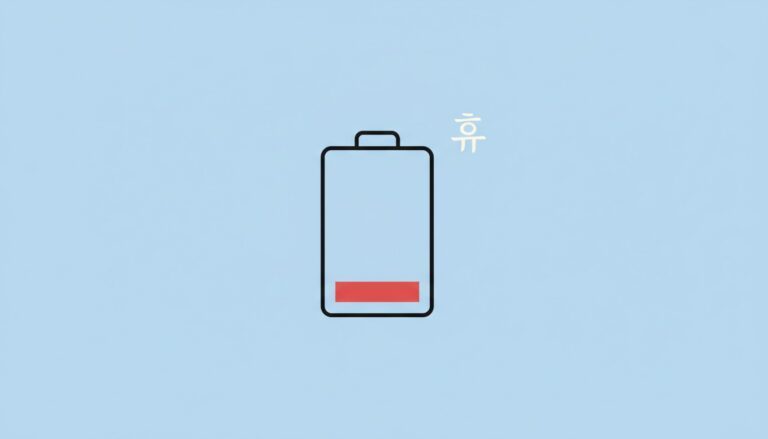
- Editor’s Insight: Koreans love comparing the human body to a battery. 방전 (discharged) is a vivid metaphor. It implies you had energy and used it all up for a cause, which validates your hard work before the collapse.
- Situation Check: Very common in both office chats (semi-formal) and casual settings.
Phase 3: Textbook vs. Real Life
Let’s upgrade your vocabulary from “classroom safe” to “Seoul street smart.”
| Textbook (Accurate but Stiff) | Real Life (Native Nuance) |
|---|---|
| 정신적으로 많이 지쳤습니다. (I am mentally very exhausted.) |
멘탈이 나갔어요 / 멘탈이 바사삭 됐어요. (My mental [state] has left / My mental crumbled like a cookie.) |
| 일하기가 싫습니다. (I dislike working.) |
일할 맛이 안 나요. (I don’t feel the ‘taste’ [zest] for work.) |
| 아무것도 하고 싶지 않습니다. (I don’t want to do anything.) |
시체놀이 하고 싶어요. (I want to play the corpse game [lie still and do nothing].) |
Editor’s Note: “멘탈이 바사삭” uses the onomatopoeia for something crispy crumbling. It’s a witty way to say your mental state is fragile.
Phase 4: Cultural Context & Manners
The “Gwenchana” (Fine) Mask
In Korean society, there is high pressure to answer “네, 괜찮습니다” (Yes, I’m fine) when asked about work stress. Complaining too early can be seen as lacking grit.
However, sharing vulnerability is a bonding ritual in Korea if done at the right time.
* The Rule: Do not announce burnout during a busy meeting.
* The Strategy: Wait for a Hwasik (company dinner) or a coffee break. Start with a sigh (creates atmosphere) and use the “battery” metaphor. It frames your condition as a result of hard work, which garners sympathy rather than judgment.
Phase 5: Real-Life Roleplay
Setting: A quiet Izakaya or café after work. Min-ji (Korean friend) notices Mark (You) looks gloomy.
Min-ji: 얼굴이 왜 그래? 무슨 일 있어? (Why the long face? Is something wrong?)
Mark (You): (Sighing deeply and staring at the glass) 솔직히 말하면, 요즘 좀 번아웃이 온 것 같아.
(To be honest, I think burnout has hit me lately.)
Min-ji: 에이, 설마. 너 진짜 열심히 일했잖아. (No way. You’ve been working so hard.)
Mark (You): 그러니까. 열심히 달렸는데 갑자기 배터리가 뚝 끊긴 느낌이야. 아침에 눈 뜨는 게 무서워.
(Exactly. I ran hard, but suddenly it feels like the battery just cut off. I’m scared to open my eyes in the morning.)
Min-ji: 아이고… 너 진짜 좀 쉬어야겠다. 이번 주말에는 아무것도 하지 마. (Oh no… You really need to rest. Don’t do anything this weekend.)
Phase 6: 10-Second Shadowing Drill
Practice this sentence to express that feeling of emptiness despite success.
“열심히 달리긴 했는데 / 남는 게 없는 것 같아서 / 자괴감이 들어요.”
(I did run hard / but it feels like nothing remains / so I feel a sense of shame/failure.)
- Focus Point: Pause at the slashes (
/). - Intonation: Drop your pitch low at “자괴감이 들어요” to convey heaviness.
Phase 7: FAQ & Troubleshooting
Q: Can I tell my boss “번아웃이 왔어요”?
A: Maybe. If your boss is younger or the company culture is horizontal, yes. If it’s a traditional conservative company, phrase it differently: “재충전이 좀 필요한 것 같습니다” (I think I need some recharging). This sounds more constructive.
Q: Is “무기력하다” (lethargic) too medical?
A: No, it’s a very common C1 vocabulary word used in daily conversation to describe emotional flatness.
Phase 8: Wrap-up
One-Liner Summary: Instead of just saying you’re tired, use “방전됐어요” (discharged) or “무기력해요” (lethargic) to describe the deeper state of burnout.
Action Mission: Next time a close Korean friend asks “How are you?” and you feel drained, don’t say “I’m fine.” Try saying: “요즘 멘탈이 좀 나간 것 같아.” (I think my mental is out lately.)
Tell me in the comments: What is your go-to activity when your battery is at 0%?
Phase 9: Quiz
1. Which word best fills the blank? “너무 바빠서 ___이/가 온 것 같아요.”
a) 다이어트 (Diet)
b) 번아웃 (Burnout)
c) 쇼핑 (Shopping)
2. How do you metaphorically say “I have no energy left”?
a) 충전됐어요 (I am charged)
b) 방전됐어요 (I am discharged)
c) 발전했어요 (I developed)
3. What is the C1 word for “feeling helpless and lethargic”?
a) 행복하다
b) 씩씩하다
c) 무기력하다
(Answers: 1-b, 2-b, 3-c)
Frequently Asked Questions (FAQ)
Q: What does ""번아웃이 온 것 같아요."" mean in Korean and how do you pronounce it?
A: In Korean, ""번아웃이 온 것 같아요."" is pronounced [Beon-a-out-i on geot ga-ta-yo] and means: a key conversational Korean expression covered in this lesson.
Q: What does ""모든 게 다 귀찮고 무기력해요."" mean in Korean and how do you pronounce it?
A: In Korean, ""모든 게 다 귀찮고 무기력해요."" is pronounced [Mo-deun ge da gwi-chan-ko mu-gi-ryeok-hae-yo] and means: a key conversational Korean expression covered in this lesson.
Q: What does ""완전 방전됐어요."" mean in Korean and how do you pronounce it?
A: In Korean, ""완전 방전됐어요."" is pronounced [Wan-jeon bang-jeon-dwaet-seo-yo] and means: a key conversational Korean expression covered in this lesson.







