

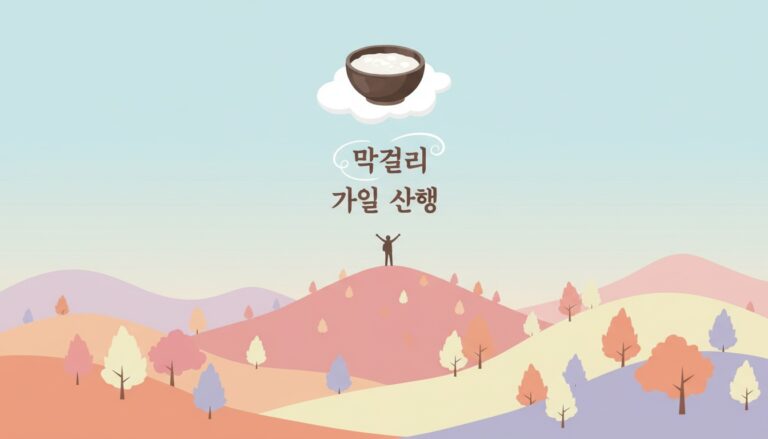
Phase 1: Introduction
Hello! This is your Daily Hangul Editor. 👋
If you have spent more than a week in Korea, you’ve probably noticed something: Korea is 70% mountains, and Koreans are 100% obsessed with hiking (Deungsan).
Picture this: It’s Monday morning at the office. Your co-worker asks, “What did you do this weekend?” Most beginners answer, “Just stayed home.” But imagine the look of respect in their eyes if you casually say, “Oh, I went hiking. I go every weekend to clear my head.”
Suddenly, you aren’t just a foreigner; you are a local who understands the spirit of the Korean weekend. In this B1-level lesson, we won’t just learn how to say “I climbed a mountain.” We are going to learn how to brag about it, talk about the refreshing feeling of the peak, and—most importantly—mention the post-hike reward (Makgeolli!).
Let’s turn you into a “Mountain Insider” today!
Phase 2: Deep Dive (Core Expressions)
Here are the three key phrases to make you sound like a hiking pro.
1. 주말마다 등산 가요 (I go hiking every weekend)
- Pronunciation: [Ju-mal-ma-da deung-san ga-yo]
- Tip: ‘Ju-mal’ (Weekend) + ‘Ma-da’ (Every). For ‘Deung’, think of the sound ‘Dung’ but smile widely to flatten the vowel.
- Meaning:
- Literal: Every weekend hiking go.
- Real Nuance: It implies consistency. You aren’t just a tourist; this is your lifestyle.
- Editor’s Insight: The particle -마다 (mada) is powerful. It shows habit. Using this instantly upgrades you from a casual walker to a hobbyist.
- Situation Check: Perfect for casual chats and polite office small talk.
2. 정상에 오르면 기분이 상쾌해요 (I feel refreshed when I reach the peak)
- Pronunciation: [Jeong-sang-e o-reu-myeon gi-bun-i sang-kwae-hae-yo]
- Tip: ‘Sang-kwae’ sounds a bit like ‘Sang-K’ + ‘Way’. It’s a bright, crisp sound.
- Meaning:
- Literal: If I climb to the top, the feeling is refreshing.
- Real Nuance: Use this to explain why you sweat so much. ‘Sang-kwae’ describes that cool, crisp feeling of fresh air hitting your face.
- Editor’s Insight: Don’t just say “Good” (좋아요). B1 learners should express specific feelings. 상쾌하다 (refreshing) is the perfect word for mountains, mint candy, or a cool breeze.
3. 역시 등산 후에는 막걸리죠! (Makgeolli is a must after hiking!)
- Pronunciation: [Yeok-si deung-san hu-e-neun mak-geol-li-jyo]
- Tip: ‘Yeok-si’ (As expected / Of course).
- Meaning:
- Literal: As expected, after hiking, it is Makgeolli!
- Real Nuance: “You can’t call it hiking if you don’t drink Makgeolli afterwards.” This shows you understand the culture deeply.
- Editor’s Insight: Use -죠 (-jyo) at the end instead of ‘-eyo’. It invites agreement. You are saying, “You agree with me, right?”
Phase 3: Textbook vs. Real Life
Let’s make your Korean sound less like a robot and more like a Seoulite.
| Textbook (Correct but dry) | Real Life (Natural & Insider Vibe) |
|---|---|
| 등산을 좋아해요. (I like hiking.) |
산 타는 거 좋아해요. (I like “riding” the mountain.) |
| 산이 아름다워요. (The mountain is beautiful.) |
경치가 끝내줘요! (The scenery is killer/amazing!) |
| 운동하러 가요. (I go to exercise.) |
땀 좀 빼러 가요. (I go to “sweat it out.”) |
Note: “산 타다” (To ride a mountain) is a very common B1+ idiomatic way to say you go hiking. It sounds much more dynamic than “등산하다.”
Phase 4: Cultural Context & Manners 🏔️
1. The “Full Gear” Phenomenon
Have you noticed? Koreans dress like they are climbing Mount Everest even when hiking a small neighborhood hill.
* Insider Tip: If you wear jeans and sneakers, people might look at you with concern. You don’t need expensive gear, but wearing “athletic wear” shows you respect the activity.
2. The “Greeting” Rule
On the trail, everyone is friends. If you make eye contact with an elderly hiker, nod and say “안녕하세요” (Hello) or “수고하세요” (Keep up the good work).
3. The Summit Feast
Koreans don’t just eat energy bars. They bring kimbap, cup ramen, cucumbers, and sometimes Makgeolli to the summit. Sharing food is a huge part of the hiking bonding experience.
Phase 5: Roleplay Script
Setting: Monday morning in the office break room. Minji notices you look tanned.
- Minji: 주말 잘 보냈어요? 얼굴이 좋아 보이네요!
- (Did you have a good weekend? You look good!)
- You: 네! 친구들이랑 북한산에 다녀왔어요. 주말마다 등산 가거든요.
- (Yes! I went to Bukhansan with friends. I go hiking every weekend.)
- Minji: 우와, 진짜요? 힘들지 않아요?
- (Wow, really? Isn’t it tiring?)
- You: 힘들지만, 정상에 오르면 기분이 정말 상쾌해요.
- (It is tiring, but it feels so refreshing when I reach the peak.)
- Minji: 맞아요. 그 맛에 산에 가죠.
- (Right. That’s the flavor/reason needed for hiking.)
- You: (Smiling slyly) 그리고 역시 등산 후에는 파전에 막걸리죠!
- (And of course, after hiking, it’s Pajeon and Makgeolli!)
Phase 6: 10-Second Shadowing
Listen to the rhythm. Practice this sentence 5 times to master the “Contrast” intonation (Hard vs. Good).
올라갈 때는 / 힘들지만, // 정상에 가면 / 스트레스가 / 다 풀려요.
[Ol-la-gal ttae-neun / him-deul-ji-man, // jeong-sang-e ga-myeon / seu-teu-re-seu-ga / da pul-lyeo-yo.]
“It’s tough when going up, but when I get to the peak, all my stress is relieved.”
- Check Point: Pause at the
/marks. Emphasize 힘들지만 (tough but…) and 다 (all).
Phase 7: FAQ & Troubleshooting
Q: Can I say “Climbing” (클라이밍)?
A: Be careful! In Korean, “등산” (Deungsan) implies hiking/trekking up a trail. “클라이밍” (Climbing) or “암벽 등반” usually refers to rock climbing with ropes or indoor bouldering. If you just walked up a path, stick to “등산.”
Q: Is it okay to drink alcohol on the mountain?
A: It used to be very common, but nowadays drinking inside National Parks is often restricted or fined to prevent accidents. Save the Makgeolli for the restaurants at the base of the mountain (we call this “dwit-pul-i” or after-party). That’s the safest and most culturally accepted spot!
Phase 8: Wrap-up
One-Liner Summary: To brag about hiking, remember: Frequency (Every weekend), Feeling (Refreshing), and Reward (Makgeolli).
🔥 Your Mission:
This weekend, or even just looking at a photo of a mountain, tell a friend: “나 요즘 주말마다 등산 가.” (I go hiking every weekend these days.) See if they ask you about Makgeolli!
What is your favorite mountain snack? Let me know in the comments! 👇
Phase 9: Quiz
1. Which word best completes the sentence? “___ 등산 후에는 막걸리죠!” (Of course/As expected…)
a) 아마도 (Amado)
b) 역시 (Yeoksi)
c) 가끔 (Gakkeum)
2. How do you say “It feels refreshing”?
a) 심심해요 (Simsimhaeyo)
b) 상쾌해요 (Sangkwaehaeyo)
c) 답답해요 (Dapdapexhaeyo)
3. Which phrase sounds more natural for a hobbyist than “등산을 좋아해요”?
a) 산 타는 거 좋아해요
b) 산을 싫어해요
c) 산을 만들어요
(Answers: 1. b, 2. b, 3. a)
Frequently Asked Questions (FAQ)
Q: What does "주말마다 등산 가요 (I go hiking every weekend)" mean in Korean and how do you pronounce it?
A: In Korean, "주말마다 등산 가요 (I go hiking every weekend)" is pronounced [Ju-mal-ma-da deung-san ga-yo] and means: a key conversational Korean expression covered in this lesson.
Q: What does "정상에 오르면 기분이 상쾌해요 (I feel refreshed when I reach the peak)" mean in Korean and how do you pronounce it?
A: In Korean, "정상에 오르면 기분이 상쾌해요 (I feel refreshed when I reach the peak)" is pronounced [Jeong-sang-e o-reu-myeon gi-bun-i sang-kwae-hae-yo] and means: a key conversational Korean expression covered in this lesson.
Q: What does "역시 등산 후에는 막걸리죠! (Makgeolli is a must after hiking!)" mean in Korean and how do you pronounce it?
A: In Korean, "역시 등산 후에는 막걸리죠! (Makgeolli is a must after hiking!)" is pronounced [Yeok-si deung-san hu-e-neun mak-geol-li-jyo] and means: a key conversational Korean expression covered in this lesson.







