

Phase 1: Introduction
Hello! This is your Senior Editor at Daily Hangul.
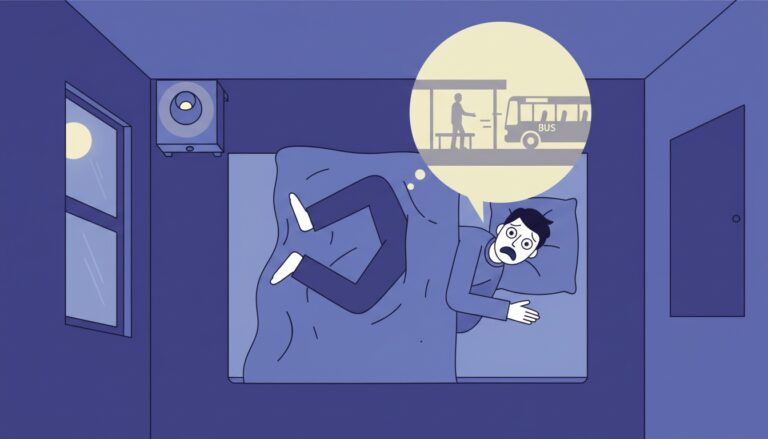
We all have those moments. You’re lying in bed at 2 AM, staring at the ceiling, and suddenly—Bam!—you remember that time you accidentally waved at a stranger who wasn’t waving at you. Or perhaps something more serious, like not buying that plane ticket when it was cheap.
Talking about regrets is a huge part of bonding. It’s when we share our mistakes that we truly connect with others. But here’s the problem: Many intermediate (B1) students get stuck saying “I am sad” (슬퍼요) when they actually mean “I should have done that.”
If you use the wrong nuance, you might sound like you are currently crying, rather than reflecting on the past. Today, I’m sharing the secret sauce to expressing regret that will make your Korean friends nod and say, “Ya, nado (Hey, me too).”
Note: This guide is based on real struggles from our B1 students who wanted to talk about their “the one that got away” stories.
Phase 2: Deep Dive into Core Expressions
Here are the top 3 expressions you need to master to sound like a regretful local.
1. ~할걸 그랬어요 (I should have done…)
This is the MVP of regret grammar. It implies you didn’t do something, and now you wish you had.
- Pronunciation: [hal-kkeol geu-raess-eo-yo]
- Sound Analogy: The ‘걸’ sounds a bit like the English word “Girl” but with a ‘K’ sound at the start -> K-girl.
- Meaning:
- Literal: I assume I would have done it (and it would have been good).
- Real Nuance: “Ugh, I totally should have done that!” (Deep regret).
- Editor’s Insight: This is the most natural way to express regret about your own actions. It’s much better than saying “I regret it” directly.
- Situation Check: Safe for both casual (drop the ‘yo’) and polite situations.
2. 아쉽다 (It’s a shame / I feel wistful)
Use this when the situation didn’t turn out as planned, but it wasn’t necessarily your fault, or you just feel bad about the result.
- Pronunciation: [a-swip-tta]
- Sound Analogy: Think of “Ah, sweep the floor.” -> Ah-sweep-da.
- Meaning:
- Literal: To be lacking / to be sorry.
- Real Nuance: “Bummer,” “It’s a pity,” or “I miss that chance.”
- Editor’s Insight: Use this when you are sad about a missing opportunity (like a sold-out concert ticket). It’s softer than “regret.”
- Situation Check: Very common in daily conversation.
3. 이불킥 (Kick the blanket)
This isn’t a verb, it’s a noun used to describe an embarrassing memory.
- Pronunciation: [i-bul-kik]
- Sound Analogy: E-bull (like E-mail) + Kick.
- Meaning:
- Literal: Kicking the blanket.
- Real Nuance: A memory so embarrassing it makes you kick your blankets at night.
- Editor’s Insight: Use this slang to be funny. “Totally an Ibul-kick moment.”
- Situation Check: Casual / Friends only.
Phase 3: Textbook vs. Real Life
Textbooks teach you to be a robot. We teach you to be a human.
| Textbook Korean (Awkwardly Formal) | Real Life Korean (Natural & Lively) |
|---|---|
| 그것을 사지 않은 것을 후회합니다. (I regret the act of not buying that.) |
아, 그거 그냥 살걸! (Ah, I should’ve just bought it!) |
| 파티에 가지 않아서 슬픕니다. (I am sad because I did not go to the party.) |
파티 안 간 거 진짜 아쉬워. (It’s really a shame I didn’t go to the party.) |
| 부끄러운 기억이 있습니다. (I have a shy memory.) |
어제 일 생각하면 완전 이불킥이야. (Thinking about yesterday makes me wanna kick my blanket.) |
Editor’s Note: Notice how in real life, we shorten sentence endings and use emotional exclamations like “아” (Ah) or “진짜” (Really).
Phase 4: Cultural Context & Manners
The Art of “Nunchi” (Reading the Room)
In Western cultures, talking about regrets can sometimes turn into a long therapy session. In Korea, sharing a regret is often done quickly to build rapport, followed by a “Fighting!” spirit to move on.
- The Reaction Rule: If someone shares a regret using
~할걸, you shouldn’t lecture them. The best response is “그러게 말이에요” (That’s what I’m saying / I agree) or “다음엔 꼭 해요” (Let’s do it next time for sure). - Eye Contact: When confessing a regret, Koreans often look slightly down or away, rather than intense eye contact. It shows humility and reflection.
Phase 5: Roleplay Scenario
Setting: Two friends, Min-su and Jason, are at a convenience store drinking banana milk.
Characters:
* Jason: B1 Level Learner (Regretting not studying for a test).
* Min-su: Korean Friend.
(Dialogue)
Min-su: 시험 잘 봤어? (Did you do well on the exam?)
[Si-heom jal bwass-eo?]
Jason: (Sighing deeply) 아니, 망했어. 어제 게임하지 말고 공부 좀 할걸.
[Ani, mang-haess-eo. Eo-je ge-im-ha-ji mal-go gong-bu jom hal-kkeol.]
(No, I messed up. I should have studied instead of playing games yesterday.)
Min-su: 야, 이미 지난 일이잖아. 잊어버려.
[Ya, i-mi ji-nan il-i-jan-a. Ij-eo-beo-ryeo.]
(Hey, it’s already in the past. Forget about it.)
Jason: 그래도 너무 아쉬워서 그래. 아는 문제도 틀렸거든.
[Geu-rae-do neo-mu a-swi-wo-seo geu-rae. A-neun mun-je-do teul-ryeot-geo-deun.]
(Still, I feel so bad/wistful about it. I even got the questions I knew wrong.)
Min-su: 오늘은 가서 이불킥 하지 말고 푹 자라.
[O-neul-eun ga-seo i-bul-kik ha-ji mal-go puk ja-ra.]
(Don’t kick your blankets tonight, just sleep tight.)
Phase 6: 10-Second Shadowing Drill
Read this out loud. Focus on extending the sound on ‘걸’ to show your lingering regret.
“Ah, I should have just told him honestly.”
아, / 그때 그냥 / 솔직하게 말할걸!
[Ah, / geu-ttae geu-nyang / sol-jik-ha-ge mal-hal-kkeol!]
- Intonation Tip: Raise your pitch on ‘아’ (frustration) and drop your pitch at ‘걸’ (trailing off in regret).
Phase 7: FAQ & Troubleshooting
Q: Can I use ~할걸 그랬어요 to my boss?
A: Yes, but be careful. If you made a mistake at work, saying “I should have checked it” (확인할걸 그랬습니다) might sound like you are just making excuses. It is better to apologize directly (죄송합니다) and say how you will fix it. Use ~할걸 mostly for personal regrets or with close colleagues.
Q: What is the difference between 후회하다 and 아쉽다?
A: 후회하다 (to regret) is very heavy and serious. 아쉽다 is lighter and covers everything from “missed the bus” to “missed a great opportunity.”
Phase 8: Wrap-up & Action Item
- Summary: Use
~할걸 그랬어요for actions you didn’t do, and아쉽다for situations that are a pity. Don’t forget이불킥for embarrassing moments! - Mission: Think of one small thing you didn’t do today (e.g., didn’t bring an umbrella, didn’t drink coffee). Say out loud: “아, 커피 마실걸!” (Ah, I should have drunk coffee!)
- Engagement: What is your biggest “Leebul-kick” moment in Korea? Tell us in the comments (in English or Korean)!
Phase 9: Pop Quiz
1. Which phrase is best when you regret NOT buying the limited edition shoes?
A) 신발을 안 사서 기뻐요. (I am happy I didn’t buy shoes.)
B) 신발을 살걸 그랬어요. (I should have bought the shoes.)
C) 신발이 맛이 없어요. (The shoes don’t taste good.)
2. What does “이불킥” (Leebul-kick) mean?
A) A traditional Korean martial art.
B) Playing soccer in bed.
C) Kicking the blanket due to an embarrassing memory.
3. True or False: You should maintain intense, unblinking eye contact when confessing a regret to a Korean.
A) True
B) False
Click to see answers
1. B
2. C
3. B (Look slightly away to show humility!)







