

Phase 1: Introduction
Hello! This is your Daily Hangul Editor.
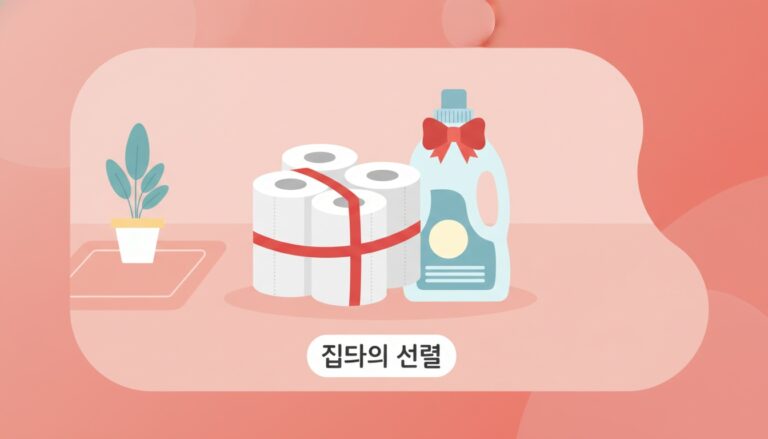
So, you’ve finally been invited to a Korean friend’s new place. This event is called 집들이 (Jip-deu-ri). You’ve probably heard that you need to buy toilet paper or laundry detergent (we’ll get to why later).
But here is the panic moment: You are standing at the front door, holding a giant pack of toilet paper. The door opens. You take off your shoes. Now, what do you say?
If you just say “축하해요” (Congratulations) and shove the toilet paper in their face, it’s… fine. But it feels a bit robotic, doesn’t it?
Today, we are going to learn how to hand over that gift with the perfect mix of warmth, wit, and Korean cultural nuance. These phrases will make you look like a true 인싸 (Insider) who understands the heart behind the gift.
Phase 2: Deep Dive into Key Expressions
Here are the top 3 expressions for a B1 (Intermediate) level learner. We want to be polite but natural.
1. 초대해 줘서 고마워요 (Thank you for inviting me)
- Pronunciation: Cho-dae-hae jwo-seo go-ma-wo-yo
- Meaning: Thank you for the invitation.
- Editor’s Insight: This is the perfect opener. As you step inside (after taking off your shoes!), say this with a smile. It shows you appreciate their effort in hosting.
- Situation Check: Universal. Works for friends, colleagues, or seniors.
2. 집이 정말 아늑하네요 / 예쁘네요 (Your house is really cozy/pretty)
- Pronunciation: Jibi jeong-mal a-neuk-ha-ne-yo / ye-ppeu-ne-yo
- Meaning: The house is really cozy / pretty.
- Editor’s Insight: Koreans love compliments on their living space. 아늑하다 (Cozy) is a great B1 vocabulary word that elevates your Korean instantly. It implies a warm, comfortable feeling rather than just visual beauty.
- Situation Check: Casual to Polite.
3. 별거 아니지만 준비했어요 (I prepared this, though it’s not much)
- Pronunciation: Byeol-geo a-ni-ji-man jun-bi-hae-sseo-yo
- Meaning: It’s nothing special, but I prepared/bought it for you.
- Editor’s Insight: This is the humility phrase. Even if you bought expensive luxury detergent, you say this. It puts the focus on your “heart” rather than the price tag.
- Situation Check: Polite. For very close friends, you can drop the ‘yo’ and say “별거 아니야” (It’s nothing).
Phase 3: Textbook vs. Real Life
Let’s see how to sound less like a book and more like a local.
| Textbook (Don’t use these robots!) | Real Life (Say this instead!) |
|---|---|
| 이것은 집들이 선물입니다. (This is a housewarming gift.) | 오다 하나 샀어요. (I just picked this up on the way.) |
| 휴지를 받으세요. (Please accept the toilet paper.) | 부자 되라고 휴지 사 왔어요! (I bought TP so you become rich!) |
| 선물이 마음에 드시나요? (Do you like the gift?) | 취향에 맞았으면 좋겠네요. (I hope it suits your taste.) |
Note: The “Real Life” expressions use a bit of “Tsundere” charm (acting indifferent but actually caring). saying “I picked it up on the way” makes the receiver feel less burdened.
Phase 4: Cultural Context & Manners
Why Toilet Paper and Detergent?
You are holding them, so you should know why!
- Toilet Paper (휴지): Just as toilet paper unrolls easily, we want the host’s problems to unravel easily (술술 풀리다).
- Detergent (세제): Just as bubbles rise up, we want the host’s wealth and luck to bubble up and multiply.
The “Hand-Over” Ritual
When you hand the gift to your host:
* Look: Don’t stare intensely. Soft eye contact.
* Hands: Use two hands. Even if the gift is light, supporting it with your second hand shows respect.
* Timing: Usually, you hand it over right after entering the living room, or immediately after greetings at the entrance.
Phase 5: Real-Life Roleplay
Setting: Mark (Foreigner) arrives at Minji’s (Korean friend) new apartment.
Minji: 어서 와, 마크! 찾기 안 힘들었어? (Welcome, Mark! Was it hard to find?)
Mark: (Taking off shoes neatly) 아니, 금방 찾았어. 초대해 줘서 고마워. (No, found it quickly. Thanks for inviting me.)
Minji: 들어와, 집이 좀 좁지? (Come in. The place is a bit small, right?)
Mark: (Looking around) 아니야! 집이 정말 아늑하고 좋은데? (No! The house is really cozy and nice!)
Mark: (Handing over toilet paper with two hands) 아, 그리고 이거… 부자 되라고 사 왔어. (Ah, and this… I bought it so you become rich.)
Minji: 뭘 이런 걸 다 사 왔어! 고마워. (Why did you buy all this! Thanks.)
Phase 6: 10-Second Shadowing Drill
Practice this sentence until it flows naturally. Pay attention to the pause.
“It’s nothing special, but I hope you become rich!”
별거 아니지만 / 부자 되라고 / 준비했어요.
Byeol-geo a-ni-ji-man / bu-ja dwe-ra-go / jun-bi-hae-sseo-yo.
Key Point:
* Emphasize ‘Bu-ja’ (Rich person) to show your excitement for their future!
Phase 7: FAQ & Troubleshooting
- Q: Can I give money instead of a gift?
- A: For a Jip-deu-ri, physical gifts (household items, wine, diffusers) are more common and warm. Money is acceptable for weddings, but for housewarming, a gift shows you thought about their new life.
- Q: Can I say this to my boss?
- A: Yes, but keep the endings formal. Instead of “부자 되라고…” (which is casual connection), say “좋은 일만 가득하시라고 준비했습니다” (I prepared this wishing you only full of good things).
Phase 8: Wrap-up
Today’s Summary: Don’t just hand over the gift silently! compliment the house (아늑하네요) and wish them wealth with your gift (부자 되세요).
Your Mission: Next time you hand anyone a gift (even a coffee), try saying “별거 아니지만 준비했어요.” Watch their expression soften instantly!
Comment below: What is the most unique housewarming gift you have ever given or received? Tell me in the comments!
Phase 9: Pop Quiz
1. What is the meaning of giving toilet paper in Korea?
A) To clean the new house well.
B) Wishing for problems to unravel/solve easily.
C) Because it is cheap.
2. Which phrase is best to use when you want to be humble about your gift?
A) 이거 비싼 거예요. (This is expensive.)
B) 별거 아니지만 준비했어요. (It’s nothing special, but I prepared it.)
C) 선물 여기 있어요. (Here is the gift.)
3. How should you describe a house that feels warm and comfortable?
A) 아늑하네요 (It’s cozy)
B) 거대하네요 (It’s huge)
C) 복잡하네요 (It’s complicated)
(Answers: 1-B, 2-B, 3-A)
Frequently Asked Questions (FAQ)
Q: What does "초대해 줘서 고마워요 (Thank you for inviting me)" mean in Korean and how do you pronounce it?
A: In Korean, "초대해 줘서 고마워요 (Thank you for inviting me)" is pronounced [Cho-dae-hae jwo-seo go-ma-wo-yo] and means: Thank you for the invitation.
Q: What does "집이 정말 아늑하네요 / 예쁘네요 (Your house is really cozy/pretty)" mean in Korean and how do you pronounce it?
A: In Korean, "집이 정말 아늑하네요 / 예쁘네요 (Your house is really cozy/pretty)" is pronounced [Jibi jeong-mal a-neuk-ha-ne-yo / ye-ppeu-ne-yo] and means: The house is really cozy / pretty.
Q: What does "별거 아니지만 준비했어요 (I prepared this, though it's not much)" mean in Korean and how do you pronounce it?
A: In Korean, "별거 아니지만 준비했어요 (I prepared this, though it's not much)" is pronounced [Byeol-geo a-ni-ji-man jun-bi-hae-sseo-yo] and means: It’s nothing special, but I prepared/bought it for you.







