

Phase 1: Introduction (공감)
안녕하세요! 매일한글(Daily Hangul)의 Senior Editor입니다. 👋
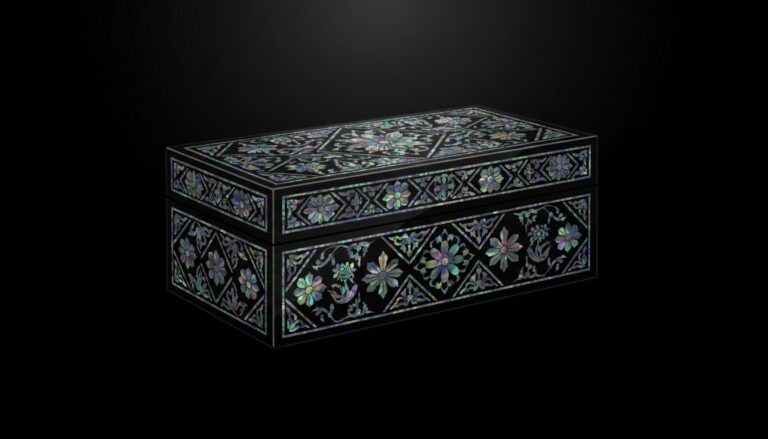
Imagine you are standing in a quiet gallery in Bukchon Hanok Village. Before you lies a pitch-black box adorned with iridescent pieces of abalone shell that seem to dance in the light. This is 나전칠기 (Najeonchilgi), Korean mother-of-pearl lacquerware.
You turn to the 장인 (Jangin – Master Craftsman) standing next to you. You want to express your awe. But all your brain provides is: “와, 정말 예뻐요” (Wow, it’s really pretty).
Stopped there? As a C2 learner, you know that feels insufficient. “Pretty” doesn’t capture the months of sanding, the toxic lacquer, or the thousand-year-old history.
Today, we are going to upgrade your vocabulary from “Tourist” to “Art Connoisseur.” We will explore how to discuss the soul of craftsmanship and the delicate issue of preservation. This isn’t just about language; it’s about giving the proper respect (예우) to the artist.
Phase 2: Deep Dive (핵심 표현 심층 분석)
Here are three expressions that will make a Master Craftsman look at you with genuine surprise and appreciation.
1. 영롱하다 (Yeongronghada)
- Pronunciation: [Yeong-rong-ha-da] Think of the ‘ng’ sound ringing like a crystal bell.
- Meaning: Brilliant, lucid, iridescent, sparkling (specifically used for gems, dew, or eyes).
- Editor’s Insight: You cannot describe Najeonchilgi without this word. “반짝이다” (twinkle) is for stars or glitter. 영롱하다 implies a deep, mysterious light that seems to come from within the object. It captures the shifting colors of the abalone shell.
- Situation Check: Perfect for galleries, jewelry shops, or poetic descriptions. Formal & Casual.
2. 혼을 불어넣다 (Honeul bureoneota)
- Pronunciation: [Hon-eul bu-reo-neo-ta]
- Meaning: To breathe one’s soul into something.
- Editor’s Insight: This is the ultimate compliment for an artist. It acknowledges that the object isn’t just ‘manufactured’ but created through suffering and spirit. Use this when you hear about the arduous process of 옻칠 (Otchil – lacquering).
- Situation Check: Highly respectful. Use with serious tone.
3. 맥을 잇다 (Maegeul itda)
- Pronunciation: [Mae-geul it-da] Sounds like ‘Connect the pulse’.
- Meaning: To carry on the lineage/tradition; to keep the pulse alive.
- Editor’s Insight: At the C2 level, we don’t just say “teach tradition” (전통을 가르치다). We talk about the survival of the art form. “맥” is the pulse or vein. You are acknowledging the struggle of preserving this art in modern times.
- Situation Check: Academic discussions, interviews with masters, serious cultural debates.
Phase 3: Textbook vs. Real Life (뉘앙스 비교)
How to sound less like a news anchor and more like a sophisticated local.
| Textbook Korean (Formal & Dry) | Real “Insider” Korean (Sophisticated & Emotional) |
|---|---|
| 이 작품은 만드는데 시간이 오래 걸렸습니다. (This work took a long time to make.) | 인고의 시간이 느껴지는 작품이네요. (I can feel the time of endurance/patience in this work.) |
| 전통 기술을 보존해야 합니다. (We must preserve traditional skills.) | 사라져가는 명맥을 잇는 것이 중요하죠. (It is crucial to connect the fading lineage.) |
| 빛깔이 아주 아름답습니다. (The color is very beautiful.) | 빛깔이 참 깊고 영롱하네요. (The color is truly deep and iridescent.) |
Editor’s Note: Words like 인고 (Endurance/Suffering) and 명맥 (Lineage/Lifeblood) elevate your speech instantly.
Phase 4: Cultural Context (문화적 맥락)
The Aesthetics of Waiting (기다림의 미학)
In Western art discussions, we often focus on the visual composition. In Korea, especially with Najeonchilgi, the focus is often on time.
The lacquer (Otchil) must dry in a humid environment, be sanded, and re-applied repeatedly. It takes months. Therefore, commenting on the “time” (시간) or “effort/sincerity” (정성) is often more appreciated than commenting on the design itself.
Pro Tip: When viewing the art, don’t just lean in. Take a step back, nod slowly, and let out a soft sigh of admiration. That silence is part of the language.
Phase 5: Roleplay Scenario (실전 시나리오)
Setting: An atelier in Tongyeong (famous for Najeonchilgi). You are speaking with a Master (장인).
Characters:
* You (Learner): An art enthusiast.
* Master (장인): An elderly craftsman, proud but humble.
Dialogue:
Master: 이 자개함 하나를 만드는 데 꼬박 6개월이 걸렸습니다.
(It took a full 6 months just to make this one mother-of-pearl box.)
You: 6개월이나요? 어쩐지, 단순한 물건이 아니라 작가님의 혼이 깃들어 있는 것 같아요.
(6 months? No wonder. It feels like your soul is imbued in it, not just a simple object.)
Master: (Smiling) 그 가치를 알아봐 주시니 감사합니다. 요즘은 배우려는 사람이 없어서 걱정입니다.
(Thank you for recognizing its value. I worry because no one wants to learn these days.)
You: 정말 안타깝네요. 이 아름다운 예술의 맥이 끊기지 않고 계속 이어졌으면 좋겠습니다.
(That is truly a pity. I hope the pulse of this beautiful art continues without being severed.)
Phase 6: 10-Second Shadowing (섀도잉 훈련)
Read this aloud to practice the rhythm of admiration.
“오랜 인고의 시간을 거쳐 탄생한 / 영롱한 빛깔이 / 정말 경이롭습니다.”
(Oraen in-go-ui si-gan-eul geo-cheo tan-saeng-han / yeong-rong-han bit-khal-i / jeong-mal gyeong-i-rop-seum-ni-da.)
Meaning: The iridescent color / born through a long time of endurance / is truly marvelous.
Phase 7: FAQ (오해 방지)
- Q: Can I use “영롱하다” for a person?
- A: Yes, but usually only for their eyes (눈빛이 영롱하다). If you say a person is 영롱하다, it sounds like they are a magical fairy or a ghost. Use it for objects or eyes!
- Q: Is “장인 (Jangin)” only for traditional arts?
- A: Originally, yes. But nowadays, young Koreans use it jokingly for anyone good at something (e.g., “치킨의 장인” – Master of Fried Chicken). However, in the context of this lesson, treat it with high respect.
Phase 8: Wrap-up & Mission
One-Liner Summary:
Don’t just say it’s pretty; acknowledge the soul (혼), the iridescence (영롱함), and the struggle to preserve the lineage (맥을 잇다).
Your Mission:
Next time you see something handmade (even on Instagram!), comment: “정성이 가득 담겨서 그런지 정말 영롱하네요.” (Perhaps because it’s filled with sincerity, it’s truly iridescent.)
Question for you:
Is there a traditional craft in your country that is struggling to find successors? Tell me in the comments using the word ‘보존’ (Preservation)!
Phase 9: Pop Quiz (퀴즈)
- Which word best describes the mysterious, sparkling light of a pearl or dew?
a) 깜찍하다 (Kkamjjikhada)
b) 영롱하다 (Yeongronghada)
c) 씩씩하다 (Ssikssikhada) -
Which verb combination means “to breathe one’s soul into” something?
a) 혼을 빼다 (To drain the soul)
b) 혼이 나다 (To get scolded)
c) 혼을 불어넣다 (To breathe soul in) -
What does “맥을 잇다” mean in the context of traditional art?
a) To check the pulse
b) To continue the tradition/lineage
c) To connect the internet
(Answers: 1-b, 2-c, 3-b)
Frequently Asked Questions (FAQ)
Q: What does "영롱하다 (Yeongronghada)" mean in Korean and how do you pronounce it?
A: In Korean, "영롱하다 (Yeongronghada)" is pronounced [Yeong-rong-ha-da] and means: Brilliant, lucid, iridescent, sparkling (specifically used for gems, dew, or eyes).
Q: What does "혼을 불어넣다 (Honeul bureoneota)" mean in Korean and how do you pronounce it?
A: In Korean, "혼을 불어넣다 (Honeul bureoneota)" is pronounced [Hon-eul bu-reo-neo-ta] and means: To breathe one's soul into something.
Q: What does "맥을 잇다 (Maegeul itda)" mean in Korean and how do you pronounce it?
A: In Korean, "맥을 잇다 (Maegeul itda)" is pronounced [Mae-geul it-da] and means: To carry on the lineage/tradition; to keep the pulse alive.







