

Phase 1: Introduction
Hello! This is your Daily Hangul Editor.
Imagine this: You are hiking up the beautiful Bukhansan National Park in autumn. The leaves are red, the air is crisp, and you’re feeling great. Suddenly, crack. A misstep on a rocky path sends a sharp pain shooting through your ankle. It’s not just a scrape; you can’t put weight on it.
Panic sets in. You know how to order bibimbap, but do you know how to tell a passerby, “I think I broke a bone, I need to immobilize this”?
At the C1 (Advanced) level, we move beyond “It hurts” (아파요). In emergency situations involving fractures (골절) or sprains (염좌), precision isn’t just linguistic showing off—it’s vital for your safety. Miscommunication here could lead to permanent injury. Today, we are going to learn the specific medical and action-oriented vocabulary to handle musculoskeletal injuries like a calm, collected pro.
Transparency Note: This guide incorporates real questions from advanced learners who found themselves in Korean emergency rooms.
Phase 2: Deep Dive into Core Expressions
Here are the three critical phrases you need to master to manage a fracture or sprain situation.
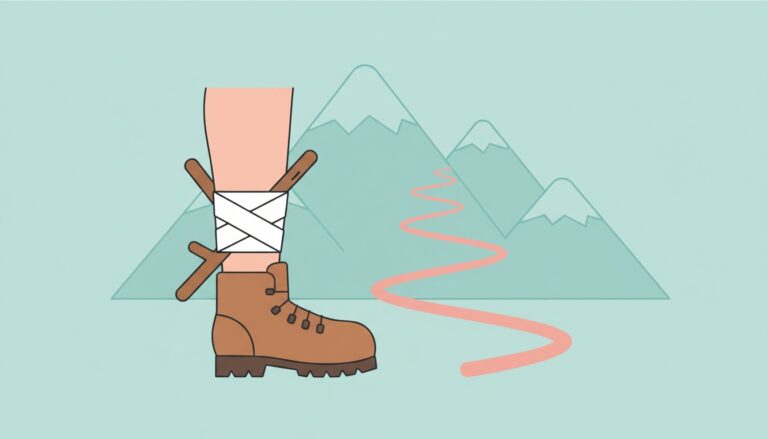
1. 부목을 대다 (To apply a splint)
- Pronunciation: [Bu-mok-eul dae-da]
- Tip: ‘Bu’ sounds like ‘boo’ in ‘book’. ‘Mok’ sounds like ‘mock’. ‘Dae’ rhymes with ‘day’.
- Meaning: Literally “to place a splint.” It refers to the act of immobilizing an injured limb using a board or rigid object.
- Editor’s Insight: You will hear verbs like ‘하다’ (to do) used with this, but ‘대다’ (to apply/touch against) is the colophonically accurate verb when attaching a medical device like a splint or a stethoscope.
- Situation Check: Used in medical contexts or urgent first-aid scenarios.
2. 고정시키다 (To immobilize / fixate)
- Pronunciation: [Go-jeong-si-ki-da]
- Meaning: To fix something in place so it doesn’t move.
- Editor’s Insight: In a C1 context, don’t just say “Don’t move” (움직이지 마). If you are helping a friend, you say, “We need to immobilize the leg before moving you.” It adds a layer of logic and authority to your command.
- Situation Check: Highly common in technical, repair, and medical contexts.
3. 감각이 둔하다 (Sensation is dull / Numbness)
- Pronunciation: [Gam-gak-i dun-ha-da]
- Meaning: “My sense of feeling is dull.”
- Editor’s Insight: Why is this crucial? When you apply a splint, you must check for circulation. If the bandage is too tight, the patient might lose feeling. Telling a doctor “I can’t feel anything” (아무 느낌 없어요) is okay, but “감각이 둔해요” precisely describes that alarming loss of sensation due to nerve pressure or lack of blood flow.
- Situation Check: Formal/Medical.
Phase 3: Textbook vs. Real Life
When pain hits, grammar often goes out the window. Here is how to sound natural.
| Textbook / Medical Formal | Real Life (Urgent & Natural) |
|---|---|
| 환부를 움직이지 마십시오. (Do not move the affected area.) | 다친 곳 절대 움직이지 마세요! (Don’t move the hurt spot at all!) |
| 골절이 의심됩니다. (A fracture is suspected.) | 뼈가 부러진 것 같아요. (I think the bone is broken.) |
| 인대가 손상된 것 같습니다. (It seems the ligament is damaged.) | 인대가 늘어난 것 같아요. (I think I pulled/stretched a ligament.) |
Editor’s Note: Notice the use of ‘늘어났다’ (stretched) for ligaments in casual speech. Even if it’s a tear, Koreans often colloquially say “the ligament stretched” first unless a doctor confirms a rupture (파열).
Phase 4: Cultural Context & Manners
1. The “Golden Time” (골든타임)
Koreans are obsessed with “Golden Time” (the critical period for medical treatment). If you use this word while explaining the urgency—”골든타임을 놓치면 안 돼요” (We shouldn’t miss the Golden Time)—people will immediately understand the severity and move faster.
2. 119 is NOT 911
Unlike in some countries where ambulances are expensive, Korea’s 119 (fire and ambulance) service is free and extremely efficient. Culturally, there is less hesitation to call 119 for genuine injuries compared to the US. If you suspect a fracture (cannot walk), do not try to take a taxi. Call 119. The paramedics are trained to apply splints (부목) properly before transport.
Phase 5: Roleplay Scenario
Setting: Hiking trail on Bukhansan. ‘Min-ji’ slips and screams in pain holding her ankle. ‘Alex’ (You) rushes to help.
Characters:
* Alex: A foreigner who knows advanced Korean first-aid terms.
* Min-ji: A Korean friend in pain.
Dialogue:
Min-ji: (Groaning holding her ankle) 아, 뚝 소리가 났어… 너무 아파서 못 걷겠어.
(Ah, dduk so-ri-ga na-sseo… neo-mu a-pa-seo mot geot-ge-sseo.)
[Ah, I heard a popping sound… It hurts too much, I can’t walk.]
Alex: (Looking serious) 잠깐만! 억지로 일어서지 마. 골절일 수도 있으니까 부목부터 대야 해.
(Jam-kkan-man! Eok-ji-ro il-eo-seo-ji ma. Gol-jeol-il su-do i-sseu-ni-kka bu-mok-bu-teo dae-ya hae.)
[Wait! Don’t force yourself up. It might be a fracture, so we need to apply a splint first.]
Min-ji: 부목? 여기서 어떻게?
(Bu-mok? Yeo-gi-seo eo-tteo-ke?)
[A splint? How (do we do that) here?]
Alex: (Taking out a hiking stick and a towel) 등산 스틱으로 발목을 고정시킬게. 119 올 때까지 절대 움직이지 마.
(Deung-san seu-tik-eu-ro bal-mok-eul go-jeong-si-kil-ge. 119 ol ttae-kka-ji jeol-dae um-ji-gi-ji ma.)
[I’ll immobilize your ankle with this hiking stick. Don’t move at all until 119 arrives.]
Alex: (After tying it) 너무 꽉 묶었나? 발가락에 감각이 있어?
(Neo-mu kkwak mukk-eon-na? Bal-ga-rak-e gam-gak-i i-sseo?)
[Did I tie it too tight? Do you have feeling in your toes?]
Phase 6: 10-Second Shadowing
Practice this sentence to take control of an emergency. Read it aloud with authority.
“Please don’t move the injured area until we secure it with a splint.”
부목으로 / 고정하기 전까지는 / 다친 부위를 / 움직이지 마세요.
[Bu-mo-geu-ro / go-jeong-ha-gi jeon-kka-ji-neun / da-chin bu-wi-reul / um-ji-gi-ji ma-se-yo.]
- Focus: Pause at the
/marks. Stress the word ‘움직이지’ (don’t move) firmly.
Phase 7: FAQ & Troubleshooting
Q: Can I try to straighten the bone if it looks bent?
A: No! (절대 안 돼요!) In Korean first aid culture (and general medicine), this is a huge taboo for non-professionals. You might damage the nerves (신경 손상). Just use the phrase “있는 그대로 고정하세요” (Immobilize it exactly as it is).
Q: Is ‘삐다’ and ‘염좌’ the same?
A: Yes, but the register is different.
* 삐다 (Ppi-da): “I sprained my ankle.” (Casual, everyday speech)
* 염좌 (Yeom-jwa): “Diagnosis: Ankle sprain.” (Medical term, written on prescriptions)
* Tip: When talking to a doctor, understanding ‘염좌’ helps, but saying ‘삐었어요’ is perfectly fine for C1 speakers too.
Phase 8: Wrap-up
Summary: When dealing with fractures, remember to use 부목을 대다 (apply a splint) and 고정시키다 (immobilize) to prevent further injury.
Action Mission: Next time you pass a pharmacy (약국), go in and ask, “혹시 압박 붕대 있어요?” (Do you happen to have a compression bandage?). It’s a great item to have in your home kit, and asking is good practice!
Engagement: Have you ever had to visit a hospital in Korea? How did you describe your pain? Tell me in the comments!
Phase 9: Quiz
1. Which verb is most appropriate for “applying” a splint (부목)?
a) 입다 (Ip-da)
b) 대다 (Dae-da)
c) 먹다 (Meok-da)
2. How do you say “immobilize” in Korean?
a) 운동하다 (Un-dong-ha-da)
b) 고정시키다 (Go-jeong-si-ki-da)
c) 수술하다 (Su-sul-ha-da)
3. If the bandage is too tight, you might say:
a) 감각이 둔해요. (Sensation is dull.)
b) 기분이 좋아요. (I feel good.)
c) 배가 고파요. (I am hungry.)
Click for Answers
1. b) 대다
2. b) 고정시키다
3. a) 감각이 둔해요.
Frequently Asked Questions (FAQ)
Q: What does "부목을 대다 (To apply a splint)" mean in Korean and how do you pronounce it?
A: In Korean, "부목을 대다 (To apply a splint)" is pronounced [Bu-mok-eul dae-da] and means: a key conversational Korean expression covered in this lesson.
Q: What does "고정시키다 (To immobilize / fixate)" mean in Korean and how do you pronounce it?
A: In Korean, "고정시키다 (To immobilize / fixate)" is pronounced [Go-jeong-si-ki-da] and means: To fix something in place so it doesn't move.
Q: What does "감각이 둔하다 (Sensation is dull / Numbness)" mean in Korean and how do you pronounce it?
A: In Korean, "감각이 둔하다 (Sensation is dull / Numbness)" is pronounced [Gam-gak-i dun-ha-da] and means: "My sense of feeling is dull."






