

Phase 1: Introduction
Hello! This is your Senior Editor at Daily Hangul.
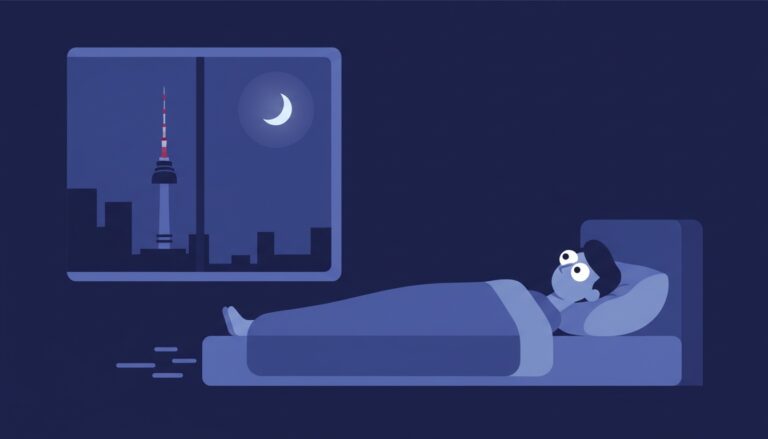
Imagine this: You are Mark, a senior developer working in Seoul. You love the dynamic energy of the city, but the infamous ‘Pali-pali’ (hurry-hurry) culture is taking a toll. You lie in bed at 3 AM, staring at the ceiling, your mind racing with tomorrow’s presentation. You go to a clinic the next day, but all you can say to the doctor is, “I no sleep good.” Frustrating, right?
For C1 (Advanced) learners, being able to articulate physical and mental distress is crucial. It changes how doctors treat you and how friends comfort you. Today, we are moving beyond simple complaints to discussing clinical symptoms and mental wellness with sophistication.
Transparency Note: This guide incorporates real questions from our advanced learners who have navigated the Korean healthcare system for stress management.
Phase 2: Deep Dive into Key Expressions
Here are the three heavy-hitters you need when discussing insomnia at a sophisticated level.
1. 뜬눈으로 밤을 지새우다 (To stay up all night with eyes wide open)
- Pronunciation: [Tteun-nu-neu-ro ba-meul ji-sae-u-da]
- Sound Analogy: ‘Tteun’ sounds like the sharp ‘t’ in ‘stun’ but tenser. ‘Ji-sae-u-da’ flows like a wave.
- Meaning:
- Literal: To pass the night with open eyes.
- Real Nuance: This is much more dramatic and descriptive than just “I didn’t sleep.” It implies a struggle—you wanted to sleep but couldn’t. It conveys the agony of insomnia.
- Editor’s Insight: Use this when you want to emphasize the severity of your condition to a doctor or a close friend. It paints a picture of suffering.
- Situation Check: Safe for both Clinics (Formal) and Close Friends (Casual).
2. 수면 패턴이 깨지다 (Sleep pattern is broken/disrupted)
- Pronunciation: [Su-myeon pae-teo-ni kkae-ji-da]
- Meaning:
- Literal: Sleep pattern is broken.
- Real Nuance: Used to describe Circadian Rhythm disruption. It’s not just about one bad night; it suggests a systemic issue, perhaps due to overtime work, jet lag, or stress.
- Editor’s Insight: This makes you sound very analytical and self-aware. It shows you understand your body’s rhythm.
- Situation Check: Professional/Medical contexts.
3. 만성 피로에 시달리다 (To suffer from chronic fatigue)
- Pronunciation: [Man-seong pi-ro-e si-dal-li-da]
- Meaning:
- Literal: To be harassed by chronic fatigue.
- Real Nuance: ‘시달리다’ (to suffer/be harassed) is the key here. It turns ‘tiredness’ into an ‘affliction.’ It implies that fatigue is actively attacking your quality of life.
- Editor’s Insight: If you just say “피곤해요” (I’m tired), people might just say “Drink coffee.” If you say this, they will say, “You need to see a specialist.”
- Situation Check: Formal conversations about health.
Phase 3: Textbook vs. Real Life
Let’s upgrade your vocabulary from “Survival Korean” to “Native-Level Fluency.”
| Textbook (Boring & Basic) | Real Korean (Natural & C1 Level) |
|---|---|
| 잠이 잘 안 와요. (Sleep doesn’t come well.) | 불면증 증세가 있는 것 같아요. (I think I have symptoms of insomnia.) |
| 너무 피곤해요. (I am very tired.) | 요즘 기력이 하나도 없어요. (I have absolutely no energy/vitality these days.) |
| 꿈을 많이 꿨어요. (I dreamed a lot.) | 자고 일어나도 개운하지가 않아요. (Even after sleeping, I don’t feel refreshed.) |
Editor’s Note: usage of “개운하다” (refreshing/light feeling) is the hallmark of a fluent speaker. It describes the quality of the feeling, not just the physical state.
Phase 4: Cultural Context & Manners
The Shift in Mental Health Awareness
Historically, visiting a psychiatrist (정신건강의학과) was taboo in Korea. However, the younger generation (MZ generation) treats mental care as ‘gym for the mind.’
The “Hwabyung” (화병) Factor
When discussing sleep with older Koreans, you might hear about ‘Hwabyung’ (Fire Disease). It’s a somatization disorder resulting from repressed anger and stress—often manifested as insomnia and chest tightness. If a doctor asks if you have “repressed stress” (스트레스 받은 일 있어요?), they are digging for the root cause, not just treating symptoms.
Manner Tip: When describing symptoms to a doctor, be specific but humble. Even if you suspect a diagnosis, frame it as a concern: “~한 것 같아서 걱정이에요” (I am worried because it seems like…).
Phase 5: Roleplay Script
Setting: A Mental Health Clinic (정신건강의학과). Mark is describing his insomnia.
Characters:
* Mark (Client): Exhausted expat.
* Doctor (Korean): Professional and empathetic.
(Mark walks in, looking dark under the eyes and sitting heavily.)
Doctor: 어디가 불편해서 오셨나요?
(What brings you here today? / Where is the discomfort?)
Mark: 요즘 스트레스 때문인지 통 잠을 못 자고 뒤척여요.
(Yo-jeum stress ttae-mun-in-ji tong ja-meul mot ja-go dwi-cheo-gyeo-yo.)
[Maybe because of stress lately, I can’t sleep at all and just toss and turn.]
Doctor: 잠드는 데 시간이 오래 걸리나요, 아니면 자주 깨시나요?
(Does it take long to fall asleep, or do you wake up often?)
Mark: 둘 다예요. 어제도 뜬눈으로 밤을 지새웠거든요. 낮에는 만성 피로 때문에 업무가 불가능할 정도예요.
(Dul da-ye-yo. Eo-je-do tteun-nu-neu-ro ba-meul ji-sae-wot-geo-deun-yo. Na-je-neun man-seong pi-ro ttae-mu-ne eom-mu-ga bul-ga-neung-hal jeong-do-ye-yo.)
[It’s both. I stayed up all night with my eyes wide open yesterday, too. During the day, it’s impossible to work due to chronic fatigue.]
Doctor: 수면의 질이 많이 떨어지셨군요. 상담과 약물 치료를 병행하는 게 좋겠습니다.
(Your sleep quality has dropped significantly. I recommend combining counseling with medication.)
Phase 6: 10-Second Shadowing
Read this aloud to practice sentence flow and emotional delivery. Focus on the pauses /.
“아무리 피곤해도
/막상 자리에 누우면/머릿속이 복잡해져서/잠들 수가 없어요.”Romanization: A-mu-ri pi-gon-hae-do / mak-sang ja-ri-e nu-u-myeon / meo-rit-so-gi bok-jap-hae-jyeo-seo / jam-deul su-ga eop-seo-yo.
Translation: No matter how tired I am, once I actually lie down, my head gets complicated (full of thoughts), and I can’t fall asleep.
Phase 7: FAQ & Troubleshooting
Q: Can I tell my boss, “불면증이 있어요” (I have insomnia)?
* Answer: Use with caution. In a conservative Korean company, admitting to a health issue might be seen as “not being able to self-manage” (자기관리 부족). Instead of declaring a diagnosis, say: “요즘 컨디션 조절에 더 신경 쓰고 있습니다.” (I am paying extra attention to condition management these days.) This sounds professional and proactive.
Q: Is ‘정신과’ (Psychiatry) a bad word?
* Answer: The official term changed to ‘정신건강의학과’ (Mental Health Medicine) to reduce stigma. Using the full name or simply ‘병원’ (hospital) is softer and more polite.
Phase 8: Wrap-up
- One-Liner Summary: Don’t just say you’re tired; explain that your sleep pattern is broken (수면 패턴이 깨지다) and you are tossing and turning (뒤척이다) to get proper help.
- Action Mission: Before going to bed tonight, write a one-line diary entry in Korean describing your physical condition using “개운하다” or “피곤하다.”
- Engagement: Do you have a special routine to sleep well? Tell us in the comments using Korean!
Phase 9: Quiz
1. Which expression best describes staying up all night unable to sleep?
A) 낮잠을 자다 (Napping)
B) 뜬눈으로 밤을 지새우다 (Staying up with eyes open)
C) 꿀잠을 자다 (Sleeping like honey/well)
2. How do you say “Chronic Fatigue” in Korean?
A) 급성 피로
B) 단순 피로
C) 만성 피로
3. Fill in the blank: “자고 일어나도
______하지가 않아요.” (I don’t feel refreshed after sleeping.)
A) 개운
B) 불편
C) 심심
(Answers: 1. B, 2. C, 3. A)
Frequently Asked Questions (FAQ)
Q: What does "뜬눈으로 밤을 지새우다 (To stay up all night with eyes wide open)" mean in Korean and how do you pronounce it?
A: In Korean, "뜬눈으로 밤을 지새우다 (To stay up all night with eyes wide open)" is pronounced [Tteun-nu-neu-ro ba-meul ji-sae-u-da] and means: a key conversational Korean expression covered in this lesson.
Q: What does "수면 패턴이 깨지다 (Sleep pattern is broken/disrupted)" mean in Korean and how do you pronounce it?
A: In Korean, "수면 패턴이 깨지다 (Sleep pattern is broken/disrupted)" is pronounced [Su-myeon pae-teo-ni kkae-ji-da] and means: Literal: Sleep pattern is broken.
Q: What does "만성 피로에 시달리다 (To suffer from chronic fatigue)" mean in Korean and how do you pronounce it?
A: In Korean, "만성 피로에 시달리다 (To suffer from chronic fatigue)" is pronounced [Man-seong pi-ro-e si-dal-li-da] and means: Literal: To be harassed by chronic fatigue.






