

Phase 1: Introduction
안녕하세요! Hello, Daily Hangul family! This is your Senior Editor.
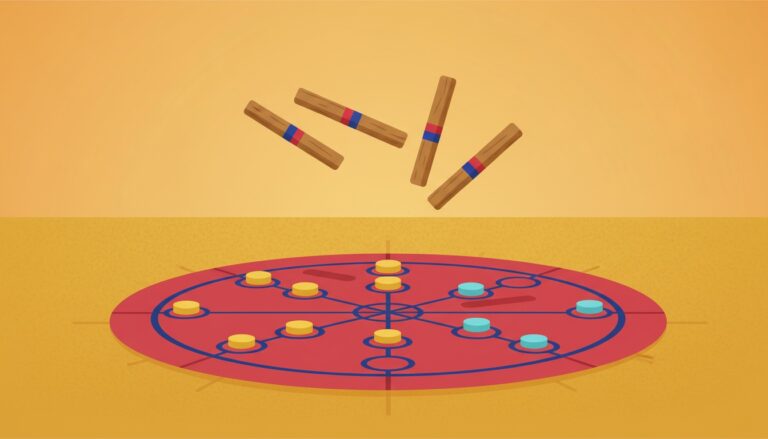
Picture this: It’s Seollal (Lunar New Year). You are invited to a Korean friend’s house. The table is cleared, a blanket is spread on the floor, and four wooden sticks appear. Suddenly, everyone—from the sweet grandmother to the shy cousin—starts shouting, clapping, and groaning in frustration.
This is Yutnori (윷놀이), the battlefield of Korean holidays.
Many intermediate (B2) learners just sit and watch because they think the language is too fast or complex. But here is a secret: Yutnori is 90% psychological warfare and 10% luck. If you know the right words to tease your opponent or celebrate a victory, you become the star of the party.
In this unit, we move beyond basic phrases like “재미있어요” (It’s fun). We are going to learn how to strategize, argue (playfully!), and dominate the game board like a true Korean local. Ready to roll?
Phase 2: Deep Dive (Core Expressions)
Here are the three expressions that will upgrade your status from ‘Spectator’ to ‘Player’.
1. 낙장불입 (Nakjang-burip)
- Pronunciation: [Nak-jang-bu-rip] (Sounds like: Knock + Jang + Boo + Rip)
- Meaning: “No take-backs!” / “A card laid is a card played.”
- Editor’s Insight: This is a classic idiom often used in gambling or games. If your opponent moves a game piece (mal), lets go of it, and then tries to move it somewhere else because they changed their mind, you shout this! It makes you sound incredibly fluent and witty.
- Situation Check: Perfect for casual games with friends or family. Use it with a playful smile when playing with elders.
2. 말을 업다 (Mareul eopda)
- Pronunciation: [Ma-reul-eop-da] (The ‘eo’ sounds like the ‘u’ in cup)
- Meaning: To stack game pieces (literally: “to carry the piece on one’s back”)
- Editor’s Insight: In Yutnori, if your piece lands on a spot where you already have another piece, you can combine them and move them together. This is a high-risk, high-reward strategy.
- Usage: “이번에 업고 가자!” (Let’s stack them and go this time!)
3. 역전하다 (Yeokjeon-hada)
- Pronunciation: [Yeok-jeon-ha-da]
- Meaning: To turn the tables / To come from behind and win
- Editor’s Insight: Korean games are dramatic. You might be losing the whole time, but one good throw can change everything. That moment is ‘역전’.
- Usage: “와! 이걸 역전하네!” (Wow! They turned this around!)
Phase 3: Textbook vs. Real Life
How does a B2 learner sound compared to a textbook robot?
| Textbook Korean (Standard) | Real Life Korean (Insa/Insider Vibe) |
|---|---|
| 이겼어요! (We won!) | 나이스! 대박! (Nice! Jackpot!) |
| 다시 던지세요. (Please throw again.) | 한 번 더! (One more time!) |
| 규칙을 지키세요. (Please follow the rules.) | 에이~ 낙장불입이죠! (Ey~ No take-backs!) |
| 말을 잡았어요. (I caught the piece.) | 잡았다! (Gotcha!) |
Editor’s Note: In the heat of the game, short and punchy exclamations work best. Use “나이스!” (Nice) frequently—it’s Konglish, but Koreans use it constantly in sports and games.
Phase 4: Cultural Context & Manners
1. The Art of “Nunchi” (눈치) in Games
Even though games are competitive, remember the hierarchy. If you are playing against the family elders:
* Do: Cheer loudly when they win.
* Don’t: Celebrate too arrogantly if you beat the grandfather 5 times in a row. A little “Aigoo, I got lucky!” (아이고, 운이 좋았네요) goes a long way.
2. The “Smash” Technique
When throwing the Yut sticks, don’t just gently drop them. Koreans believe a little force brings better luck. However, the sticks must stay on the mat. If a stick falls off the mat, it is called “낙” (Nak), and your turn is void. It’s a tragic moment!
Phase 5: Real-Life Scenario (Roleplay)
Setting: A living room on Chuseok. Alex is playing Yutnori against his Korean friend, Minji.
Minji: (Throws the sticks) 윷이다! 한 번 더!
(Yuchida! Han beon deo!)
It’s a Yut (4 sticks face up)! One more turn!
Alex: 잠깐만요. 이거 ‘낙’ 아니에요? 멍석 밖으로 나갔잖아요.
(Jamkkanmanyo. Ige ‘Nak’ anieyo? Meongseok bakkeuro nagatjanayo.)
Wait a minute. Isn’t this ‘Nak’ (out of bounds)? It went outside the mat.
Minji: (Trying to nudge it back) 에이, 살짝 걸쳤어. 그냥 봐줘~
(Ei, saljjak geolchyeosseo. Geunyang bwajwo~)
Ey, it’s slightly touching the line. Just let it slide~
Alex: 안 돼요. 승부는 냉정한 법! 낙장불입이에요.
(Andwaeyo. Seungbuneun naengjeonghan beop! Nakjang-burip-ieyo.)
No way. The game is cold/fair! No take-backs.
Minji: 와, 알렉스 한국 사람 다 됐네.
(Wa, Alex Hanguk saram da dwaenne.)
Wow, Alex, you’ve become a total Korean now.
Phase 6: 10-Second Shadowing
Practice this sentence to defend your victory playfully!
“Wait! You already moved that piece. No take-backs!”
잠깐만요! / 아까 그 말 옮겼잖아요. / 낙장불입이라니까요!
[Pronunciation Guide]
Jam-kkan-man-yo! / Akka geu mal om-gyeot-ja-na-yo. / Nak-jang-bu-rip-i-ra-ni-kka-yo!
- Focus: Emphasize “옮겼잖아요” (moved it, didn’t you?) and raise your voice slightly at “낙장불입” to sound firm.
Phase 7: FAQ & Troubleshooting
- Q: Can I use “낙장불입” with my boss?
- A: Maybe. If the atmosphere is very casual and everyone is laughing, yes. If it’s a formal company event and the boss looks serious, stick to “이미 두셨습니다” (You already placed it).
- Q: What if I don’t know the rules of Yutnori?
- A: Just memorize: Do (1 step), Gae (2 steps), Geol (3 steps), Yut (4 steps + extra turn), Mo (5 steps + extra turn). Even if you forget, just asking “몇 칸 가요?” (How many spaces do I go?) works perfectly.
Phase 8: Wrap-up
Today’s Takeaway: Traditional games are about interaction, not just rules. Use “낙장불입” to show your wit and “역전” to describe the drama.
Action Mission: Next time you play a board game (even Jenga or Uno!) with Korean friends, use “낙장불입” when they try to undo a mistake. Watch their eyes widen in surprise!
Tell me in the comments: What is the most confusing Korean game you’ve ever seen? Let’s talk about it!
Phase 9: Quick Quiz
- What do you shout when your opponent tries to move a piece back to its original spot illegally?
- A) 안녕하세요 (Hello)
- B) 낙장불입 (No take-backs)
- C) 맛있겠다 (Looks delicious)
- What does “말을 업다” mean in Yutnori?
- A) To carry a horse on your back
- B) To shout loudly
- C) To stack game pieces together
- If you throw the sticks and one falls off the mat, what is it called?
- A) 윷 (Yut)
- B) 모 (Mo)
- C) 낙 (Nak)
(Answers: 1. B, 2. C, 3. C)
Frequently Asked Questions (FAQ)
Q: What does "낙장불입 (Nakjang-burip)" mean in Korean and how do you pronounce it?
A: In Korean, "낙장불입 (Nakjang-burip)" is pronounced [Nak-jang-bu-rip] and means: "No take-backs!" / "A card laid is a card played."
Q: What does "말을 업다 (Mareul eopda)" mean in Korean and how do you pronounce it?
A: In Korean, "말을 업다 (Mareul eopda)" is pronounced [Ma-reul-eop-da] and means: To stack game pieces (literally: "to carry the piece on one's back")
Q: What does "역전하다 (Yeokjeon-hada)" mean in Korean and how do you pronounce it?
A: In Korean, "역전하다 (Yeokjeon-hada)" is pronounced [Yeok-jeon-ha-da] and means: To turn the tables / To come from behind and win







