

Phase 1: Introduction
안녕하세요! Daily Hangul Editor-in-Chief here.
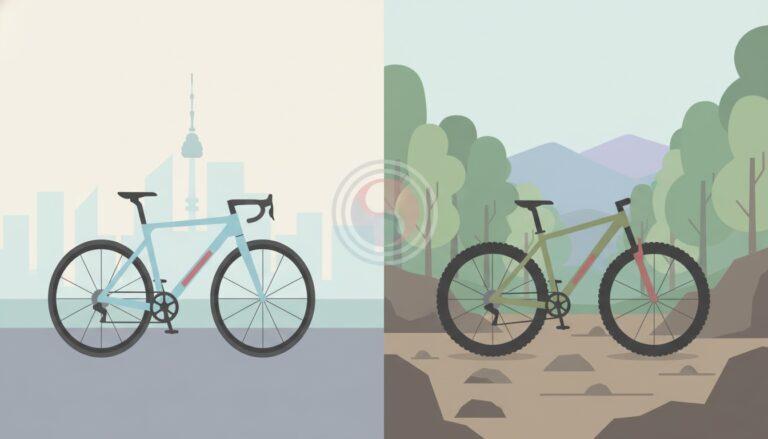
So, you’ve decided to join the massive community of cyclists along the Han River (Han-gang). Excellent choice! But as you stand there, you notice a distinct divide. On one side, riders in tight Lycra zooming past on sleek, skinny-tired machines. On the other, vibrant groups of middle-aged riders on heavy-looking bikes with thick tires, playing trot music from portable speakers.
Today, we are diving deep into the Road Bike (로드) vs. MTB (엠티비) debate. Since you are at a C1 level, we aren’t just going to learn “This bike is fast.” We are going to discuss ride quality, terrain suitability, and technical nuances.
If you use the wrong terminology in a Korean cycling club, you might not get kicked out, but you certainly won’t be seen as a ‘Go-su’ (고수 – expert). Let’s sharpen your vocabulary so you can debate gear specs like a local.
Phase 2: Deep Dive into Key Expressions
Here are the three heavy-hitter expressions you need to discuss bike differences intelligently.
1. 승차감 (Seung-cha-gam)
- Pronunciation: [Seung-cha-gam] (‘Seung’ sounds like ‘sung’ in sunglass, ‘cha’ is sharp like cha-cha, ‘gam’ sounds like gum).
- Meaning: Ride quality / Ride comfort.
- Editor’s Insight: This word is composed of 승 (riding), 차 (vehicle), and 감 (feeling). While Road bikes focus on speed, MTBs are the kings of Seung-cha-gam because they absorb bumps. You can use this for cars too!
- Situation Check: Used in casual chats or technical reviews.
- “로드는 엉덩이가 아픈데, 엠티비는 확실히 승차감이 좋아요.” (Road bikes hurt my bum, but MTBs definitely have better ride comfort.)
2. 지면 마찰 (Ji-myeon Ma-chal)
- Pronunciation: [Ji-myeon Ma-chal]
- Meaning: Ground friction / Rolling resistance.
- Editor’s Insight: To explain why a road bike is faster, don’t just say “It’s light.” Explain that the thin tires have less Ji-myeon Ma-chal. This makes you sound like a pro.
- Situation Check: Somewhat technical/formal. Good for debating specs.
- “타이어가 얇아서 지면 마찰이 적으니까, 속도가 훨씬 잘 나죠.” (Since the tires are thin, there is less ground friction, so the speed is much better.)
3. 충격 흡수 (Chung-gyeok Heup-su)
- Pronunciation: [Chung-gyeok Heup-su]
- Meaning: Shock absorption.
- Editor’s Insight: This is the main selling point of an MTB. You will often hear Koreans talk about “Suspension” (서스펜션) or “Shock” (쇼바 – slang derived from ‘shock absorber’), but Chung-gyeok Heup-su is the proper descriptive term.
- Situation Check: Universal usage.
- “산길에서는 충격 흡수가 제일 중요해요.” (On mountain trails, shock absorption is the most important thing.)
Phase 3: Textbook vs. Real Life
At the C1 level, you need to know the slang. Koreans rarely say “Mountain Bicycle.”
| Textbook / Formal | Real Korean (Slang/Natural) | Nuance & Context |
|---|---|---|
| 산악 자전거 (San-ak Ja-jeon-geo) | 엠티비 (Em-ti-bi) | Almost everyone uses the phonetic “MTB”. |
| 로드 자전거 (Road Ja-jeon-geo) | 싸이클 (Ssa-i-keul) / 로드 (Ro-deu) | “Cycle” specifically refers to road bikes in Korea, not just any bike. |
| 자전거를 잘 타다 (Ride well) | 잘 나가다 (Jal na-ga-da) | Literally “goes out well,” implying the bike is responsive and fast. |
| 장비를 갖추다 (Equip gear) | 장비빨 (Jang-bi-ppal) | Slang: Relying on expensive gear rather than skill. “The power of gear.” |
Editor’s Note: If someone has a $10,000 bike but rides slowly, friends might jokingly say: “완전 장비빨이네!” (It’s totally just the gear power!)
Phase 4: Cultural Context & Manners
The “Ahjussi” vs. “Oppa” Stereotype
In the Korean cycling world, there is a funny stereotype regarding bike types:
- The MTB Crowd: Often associated with middle-aged men (Ahjussi). They value comfort and durability. You will see them wearing colorful, loose hiking-style clothes and often gathered at rest spots sharing food.
- The Road Bike Crowd: Often associated with younger people or serious hobbyists. They wear tight “jjol-jjol-i” (쫄쫄이 – spandex) kits and focus on speed (Sok-do-gam).
The “Nunchi” Tip:
If you are riding a heavy MTB on a paved bike path, don’t try to race a Road bike. Conversely, if you are on a Road bike, don’t look down on the MTB riders—they might be slower on the flat, but they can conquer mountains you can’t even touch!
Phase 5: Real Life Scenario (Roleplay)
Setting: Han River Convenience Store. Min-su is advising his foreign friend, Leo, on buying a new bike.
Characters:
* Leo: (Advanced Korean Learner, looking for a bike)
* Min-su: (Korean local, cycling enthusiast)
Dialogue:
Leo: (Looking at bikes passing by)
한강에서 타려면 역시 로드가 나을까? 엠티비는 좀 무거워 보여서.
(For riding on the Han River, would a Road bike be better? MTBs look a bit heavy.)
[Han-gang-e-seo ta-ryeo-myeon yeok-si ro-deu-ga na-eul-kka? MTB-neun jom mu-geo-wo bo-yeo-seo.]
Min-su:
속도 즐기는 편이면 무조건 로드지! 지면 마찰이 적어서 밟는 대로 쭉쭉 나가거든.
(If you enjoy speed, it’s absolutely a Road bike! Less ground friction means it shoots forward as you pedal.)
[Sok-do jeul-gi-neun pyeo-ni-myeon mu-jo-geon ro-deu-ji! Ji-myeon ma-cha-ri jeo-geo-seo bam-neun dae-ro jjuk-jjuk na-ga-geo-deun.]
Leo:
근데 한국 자전거 도로가 다 평평한 건 아니잖아. 엉덩이 아플까 봐 걱정돼.
(But not all Korean bike paths are flat. I’m worried my butt will hurt.)
[Geun-de Han-guk ja-jeon-geo do-ro-ga da pyeong-pyeong-han geon a-ni-ja-na. Eong-deong-i a-peul-kka bwa geok-jeong-dwae.]
Min-su:
(Laughing) 그건 맞아. 승차감만 따지면 엠티비가 최고지. 턱 넘을 때 충격 흡수가 예술이거든.
(That’s true. If you only care about ride comfort, MTB is the best. The shock absorption when going over bumps is art.)
[Geu-geon ma-ja. Seung-cha-gam-man tta-ji-myeon MTB-ga choe-go-ji. Teok neo-meul ttae chung-gyeok heup-su-ga ye-su-ri-geo-deun.]
Phase 6: 10-Second Shadowing Drill
Let’s practice a sentence that perfectly summarizes the trade-off. Pay attention to the pause after ‘myeon’ and ‘neun’.
“If you want speed, go for Road; if you want comfort, MTB is the answer.”
속도감을 원하면 / 로드를 타고, // 승차감을 원하면 / 엠티비가 정답이죠.
[Sok-do-ga-meul won-ha-myeon / ro-deu-reul ta-go, // seung-cha-ga-meul won-ha-myeon / em-ti-bi-ga jeong-da-bi-jyo.]
💡 Tips:
* Stress the words 속도감 (Speed) and 승차감 (Comfort) to emphasize the contrast.
* Make the “//” pause slightly longer to separate the two logic blocks.
Phase 7: FAQ & Troubleshooting
- Q: Can I use the word “자전거” for everything?
- A: Yes, but at a C1 level, it sounds a bit generic. Using “로드” (Road) or “엠티비” (MTB) makes you sound like an insider. Also, “따릉이” (Ttareungi) is specifically for the Seoul public rental bikes.
- Q: Is it rude to ask someone how much their bike cost?
- A: In the cycling community? Not really! It’s actually a common conversation starter. “와, 이거 얼마짜리예요?” (Wow, how much is this one?) is often a compliment implying the bike looks expensive and cool. But read the room—if they look shy, don’t press.
Phase 8: Wrap-up
Summary:
Road bikes (로드) are for speed (속도감) and low friction (지면 마찰), while MTBs (엠티비) are for comfort (승차감) and shock absorption (충격 흡수).
Action Mission:
Next time you walk by a bike shop or see a cyclist taking a break, try to mentally categorize the bike: “저건 타이어가 얇으니까 로드네!” (That one has thin tires, so it’s a Road bike!)
Discussion:
Which team are you? Team Speed (Road) or Team Comfort (MTB)? Let me know in the comments!
Phase 9: Pop Quiz
- Which word best describes the “feeling of the ride” or comfort?
- a) 속도감 (Sok-do-gam)
- b) 승차감 (Seung-cha-gam)
- c) 배신감 (Bae-sin-gam)
- What is the Korean slang for relying on expensive equipment rather than skill?
- a) 장비빨 (Jang-bi-ppal)
- b) 말빨 (Mal-ppal)
- c) 운빨 (Un-ppal)
- If you want to say the tires hold speed well due to low resistance, you talk about low…?
- a) 지면 마찰 (Ji-myeon Ma-chal)
- b) 충격 흡수 (Chung-gyeok Heup-su)
- c) 인생 역전 (In-saeng Yeok-jeon)
(Answers: 1-b, 2-a, 3-a)
Frequently Asked Questions (FAQ)
Q: What does "승차감 (Seung-cha-gam)" mean in Korean and how do you pronounce it?
A: In Korean, "승차감 (Seung-cha-gam)" is pronounced [Seung-cha-gam] and means: Ride quality / Ride comfort.
Q: What does "지면 마찰 (Ji-myeon Ma-chal)" mean in Korean and how do you pronounce it?
A: In Korean, "지면 마찰 (Ji-myeon Ma-chal)" is pronounced [Ji-myeon Ma-chal] and means: Ground friction / Rolling resistance.
Q: What does "충격 흡수 (Chung-gyeok Heup-su)" mean in Korean and how do you pronounce it?
A: In Korean, "충격 흡수 (Chung-gyeok Heup-su)" is pronounced [Chung-gyeok Heup-su] and means: Shock absorption.







