

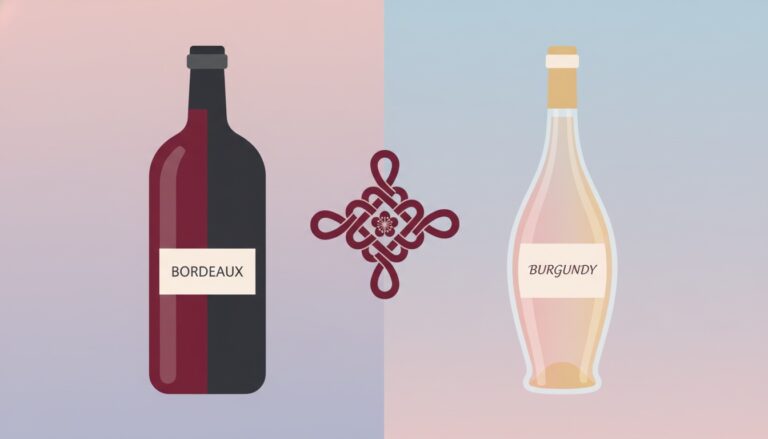
1. Introduction: The “Sommelier” Moment
Hello! This is your Daily Hangul Editor.
Imagine this: You are at a sophisticated dinner meeting in Hannam-dong or Cheongdam-dong. The host hands you the wine list and asks, “보르도 스타일 좋아하세요, 아니면 부르고뉴 쪽이세요?” (Do you prefer Bordeaux style or the Burgundy side?).
If you answer with a simple “Yes” or “Red wine, please,” the conversation ends there. But at the C1 (Advanced) level, we don’t just want to drink wine; we want to discuss taste (취향 – Chwihyang) and atmosphere (분위기 – Bunwigi).
In Korea, wine culture has exploded. Knowing how to distinguish between the bold Bordeaux (보르도) and the delicate Burgundy (부르고뉴) using the right adjectives isn’t just about alcohol—it’s about showing your ‘Gyo-yang’ (교양 – sophistication/refinement). Today, I’ll teach you the expressions that will make your Korean friends nod in respect.
2. Deep Dive: Core Expressions (C1 Level)
Here are the three expressions that separate a beginner from a connoisseur.
1. 묵직하다 [Muk-jik-ha-da]
- Pronunciation:
Muk-jik-ha-da[Think of a heavy book dropping with a thud: Muk!]- Meaning: Heavy, weighty, full-bodied.
- Editor’s Insight: You know that feeling when a Cabernet Sauvignon coats your mouth? In English, you say “Full-bodied.” In Korean, we say 묵직하다. It literally means something is heavy to lift, but for wine, it describes that solid structure. This is the go-to word for Bordeaux wines.
- Situation Check: Perfect for formal dinners or business meetings when describing a serious wine.
2. 섬세하다 [Seom-se-ha-da]
- Pronunciation:
Seom-se-ha-da[Soft ‘s’ sound, not a sharp hiss]- Meaning: Delicate, refined, subtle.
- Editor’s Insight: This is the soul of Burgundy (Pinot Noir). It implies that the flavor isn’t overpowering but has layers of complexity. Use this when the wine is elegant rather than strong.
- Situation Check: Use this to compliment someone’s taste. “Taste is very seomsehada.”
3. 여운이 길다 [Yeo-un-i gil-da]
- Pronunciation:
Yeo-un-i gil-da- Meaning: Long finish / Lingering aftertaste.
- Editor’s Insight: Yeo-un is a beautiful word meaning “lingering imagery” or “resonance.” It’s used for movies, music, and yes, wine. If you swallow the wine and can still taste it 10 seconds later, say this.
3. Textbook vs. Real Life (C1 Edition)
At the advanced level, we stop using generic adjectives like “good” or “strong.”
| Textbook / Basic (A2-B1) | Real Life / Advanced (C1) |
|---|---|
| 이 와인은 맛이 강해요. (This wine has a strong taste.) |
이 와인은 바디감이 묵직하네요. (This wine has a weighty body.) |
| 냄새가 좋아요. (The smell is good.) |
아로마가 풍부하고 복합적이네요. (The aroma is rich and complex.) |
| 이건 제 스타일이 아니에요. (This isn’t my style.) |
산미가 좀 튀는 것 같아요. (The acidity seems a bit sharp/standing out.) |
- Editor’s Note: Notice the use of ‘바디감’ (Body-gam). Adding ‘-감’ (feeling/sense) turns nouns into sensory adjectives (e.g., Mok-neom-gim/Throat-feel).
4. Cultural Context: The Art of “Sool-jari” (Drinking Party)
Even in a Western-style wine setting, Korean Confucian etiquette applies, but with a twist.
- Pouring: Unlike beer or Soju, you do not fill the wine glass to the rim. Fill it to the widest part of the glass (about 1/3).
- Receiving: When a senior (or boss) pours wine for you, you should still hold the glass. However, because wine glasses are fragile, you don’t need to lift it high. Lightly touch the base of the stem with your fingers to show respect. This is the “Sense” (Sen-seu) way to do it.
- The “One-Shot” Myth: Never shout “One-shot!” (Won-syat) with expensive wine. It implies you don’t appreciate the flavor. Instead, say “음미해 보세요” (Eum-mi-hae bo-se-yo) – “Please savor it.”
5. Real-Life Scenario: At a Wine Bar
Setting: A trendy wine bar in Seoul. You (Foreigner) are discussing the menu with a Korean Sommelier.
Characters:
* You: A wine enthusiast.
* Sommelier: Helpful staff.
Dialogue:
You: (Looking at the menu) 요즘은 너무 묵직한 것보다는 좀 섬세한 스타일이 당기네요.
(Yojeumeun neomu mukjikan geotbodaneun jom seomsehan seutail-i danggineyo.)
(Lately, I’m craving something delicate rather than too heavy.)
Sommelier: 아, 그러시면 부르고뉴 피노 누아 어떠세요? 산미도 적당하고 여운이 아주 훌륭합니다.
(Ah, geureosimyeon Bureugonyu Pino Nua eotteoseyo? Sanmido jeokdanghago yeo-un-i aju hullyunghamnida.)
(Ah, then how about a Burgundy Pinot Noir? The acidity is moderate and the finish is excellent.)
You: 좋네요. 탄닌감이 너무 강하지 않은 걸로 추천해 주세요.
(Jonneyo. Tannin-gam-i neomu ganghaji aneun geollo chucheonhae juseyo.)
(Sounds good. Please recommend one where the tannins aren’t too overpowering.)
Sommelier: 그럼 이 2018년 빈티지가 딱이겠네요.
(Geureom i 2018-nyeon bintiji-ga ttak-igunyo.)
(Then this 2018 vintage would be perfect.)
6. 10-Second Shadowing Drill
Read this sentence aloud to practice flow and intonation. Focus on the pauses /.
“보르도 와인은 / 구조감이 탄탄해서 / 스테이크랑 정말 / 잘 어울려요.”
Romanization: Bordeaux wine-eun / gujogam-i tantanhaeseo / seuteikeu-rang jeongmal / jal eoul-ryeoyo.
Translation: Because Bordeaux wines have a solid structure, they pair really well with steak.
7. FAQ & Troubleshooting
Q: Can I use purely English words like ‘Full-body’ or ‘Finish’?
A: Yes, you can! Koreans use Konglish often in wine contexts (e.g., 풀바디 – Pul-ba-di, 피니시 – Pi-ni-si). However, using Korean terms like 묵직하다 or 여운 sounds much more natural and sophisticated to native speakers. It shows you understand the feeling, not just the terminology.
Q: How do I say “It’s dry”?
A: You can say “드라이해요” (Deu-ra-i-hae-yo). But if you want to describe the sensation of dryness on your tongue (astringency), use “떫은맛이 있어요” (Ddeol-beun-mas-i isseoyo).
8. Wrap-up & Mission
Summary: Bordeaux is 묵직하다 (heavy/bold), Burgundy is 섬세하다 (delicate), and a great wine has 긴 여운 (long finish).
Action Mission: Next time you go to a convenience store (GS25 or CU) to buy wine, look at the label description on the shelf. Try to find the word ‘바디감’ (Body) and see how many stars are filled in!
Question: Do you prefer Mukjik (Heavy) or Seomse (Delicate)? Tell me in the comments!
9. Pop Quiz
1. Which word best describes a light, elegant Pinot Noir?
A) 묵직하다 (Mukjikhada)
B) 섬세하다 (Seomsehada)
C) 떫다 (Ddeolbda)
2. What does ‘여운’ (Yeo-un) refer to in wine tasting?
A) The price
B) The color
C) The finish/aftertaste
3. How should you hold your glass when a senior pours wine?
A) Lift it high above your head.
B) Leave it on the table and don’t touch it.
C) Lightly touch the base/stem with your fingers.
Click for Answers
1. B, 2. C, 3. C
Frequently Asked Questions (FAQ)
Q: What does "섬세하다 [Seom-se-ha-da]" mean in Korean and how do you pronounce it?
A: In Korean, "섬세하다 [Seom-se-ha-da]" is pronounced [Seom-se-ha-da [Soft 's' sound, not a sharp hiss] and means: Delicate, refined, subtle.
Q: What does "여운이 길다 [Yeo-un-i gil-da]" mean in Korean and how do you pronounce it?
A: In Korean, "여운이 길다 [Yeo-un-i gil-da]" is pronounced [Yeo-un-i gil-da] and means: Long finish / Lingering aftertaste.







