

Phase 1: Greeting & Introduction
Hello! This is your Senior Editor from Daily Hangul. 👋
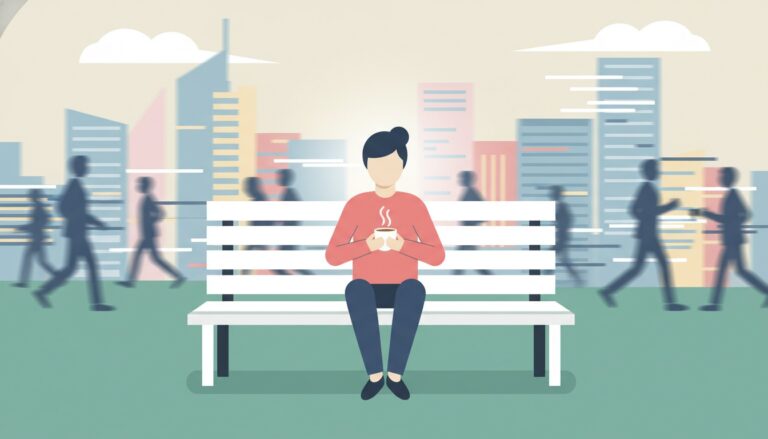
Living in Korea often feels like you’re on a treadmill that’s moving just a little too fast. You’ve probably heard the phrase “Pali-Pali” (빨리빨리 – Hurry up!) a million times. From subway doors closing at the speed of light to baristas handing you coffee before you’ve even finished paying, the speed is efficient, but exhausting.
As a B1 learner, you can order food and introduce yourself. But can you express your need for mental space? Today, we aren’t just learning words; we are learning survival skills. We are going to talk about how to say you are trying to take it easy.
If you don’t know these phrases, Koreans might think you are lazy. But if you use them correctly? You become the sophisticated friend who knows the value of “Healing” (힐링). Let’s slow down together.
Phase 2: Core Expressions Deep Dive
Here are the top 3 expressions to show you are prioritizing your peace of mind.
1. 여유를 가지다 (Yeoyu-reul gajida)
- Pronunciation: Yuh-yu-reul ga-jee-da [Sounds like ‘Yuh’ as in ‘Yuck’ but softer + ‘You’]
- Meaning:
- Literal: To possess surplus/leisure.
- Real Nuance: To have peace of mind; to not be rushed mentally.
- Editor’s Insight: This is the golden word. 여유 (Yeoyu) isn’t just free time; it’s the mental space to breathe. You can use this when you decide to stop stressing over a deadline.
- Situation Check: ✅ Friends | ✅ Colleagues (Polite)
2. 숨 좀 돌리다 (Sum jom dollida)
- Pronunciation: Soom jom dol-li-da
- Meaning:
- Literal: To rotate/turn one’s breath.
- Real Nuance: To catch one’s breath; to take a short break after a hectic run.
- Editor’s Insight: Use this when you’ve been running around like a headless chicken and finally sit down. It implies you worked hard and now earned this pause.
- Situation Check: ✅ Casual | ⚠️ Boss (Only if you are close)
3. 재충전하다 (Jaechungjeon-hada)
- Pronunciation: Jae-chung-jun-ha-da
- Meaning:
- Literal: To recharge.
- Real Nuance: exactly the same as English “recharging my batteries.”
- Editor’s Insight: Koreans love efficiency. Describing your rest as “recharging” sounds productive! It suggests you are resting so that you can work better later.
- Situation Check: ✅ Formal | ✅ Casual
Phase 3: Textbook vs. Real Life Korean
Textbooks teach you to be robotic. We teach you to be human. Here is how to sound like you actually live in Seoul.
| Textbook (Correct but Stiff) | Real Life (Natural & Trendy) |
|---|---|
| 조금 쉬고 싶어요. (I want to rest a little.) |
좀 멍 때리고 싶어요. (I want to space out / zone out.) |
| 서두르지 마세요. (Do not hurry.) |
천천히 해도 돼요. (It’s okay to do it slowly.) |
| 마음이 편해요. (My heart is comfortable.) |
여유가 좀 생겼어요. (I’ve gained some mental space.) |
Editor’s Note: ‘멍 때리다’ (Mung-ttae-ri-da) is a huge cultural trend. There are even “Space Out Competitions” in Korea. It’s the ultimate form of taking it easy.
Phase 4: Cultural Context & Manners
🧠 The “Healing” (힐링) Obsession
In the land of Pali-Pali, the antidote is “Healing.” When you say you are “trying to take it easy,” Koreans understand this as “Healing Time.”
💡 Nunchi (Eye-measure) Tip:
If you tell your coworker, “I’m trying to take it easy” (여유를 가지려고요), do not look at your phone while saying it. Look out a window or take a deep breath.
- Bad Nunchi: Saying you need a break while furiously texting.
- Good Nunchi: Holding a warm cup of tea with two hands, sighing softly, and saying, “요즘은 좀 천천히 가고 싶어요” (These days, I want to go a bit slowly).
Phase 5: Roleplay Script
Situation: Min-su is stressed about his job search. You (the learner) advise him to slow down.
- Min-su: 아, 진짜 머리 터질 것 같아. 해야 할 게 너무 많아.
(Ah, my head is going to explode. There’s too much to do.) -
You: (Patting his shoulder lightly) 너무 조급해하지 마. 좀 쉬엄쉬엄 해.
(Neomu jogeup-hae-haji ma. Jom swieom-swieom hae.)
(Don’t be too hasty. Take it easy/do it little by little.) -
Min-su: 그래도 남들보다 뒤쳐질까 봐 겁나.
(But I’m scared I’ll fall behind others.) -
You: 재충전할 시간도 필요해. 그래야 더 멀리 가지.
(Jaechungjeon-hal sigan-do piryohae. Geuraeya deo meolli gaji.)
(You need time to recharge too. That’s how you go further.)
Phase 6: 10-Second Shadowing Drill
Read this aloud. Focus on the pauses / to sound dramatic and thoughtful.
“이번 주말에는 / 아무것도 안 하고 / 그냥 여유를 좀 즐길 거야.”
(Ibeon jumal-eneun / amugeotdo an hago / geunyang yeoyu-reul jom jeulgil geoya.)
“This weekend / I won’t do anything / and just enjoy some leisure.”
Phase 7: FAQ & Troubleshooting
Q: Can I tell my boss “쉬엄쉬엄 하세요” (Take it easy)?
A: NO! 🛑
If you say this to a superior, it sounds like you are telling them they are working inefficiently or you are instructing them. Instead, say: “잠깐 쉬었다 하셔도 좋을 것 같아요” (It might be good to take a brief break before continuing).
Q: What is the difference between 휴식 (Hyusik) and 여유 (Yeoyu)?
A: 휴식 is the physical act of resting (stopping work). 여유 is a mental state of calmness. You can be working but still have 여유 (composure).
Phase 8: Wrap-up
- One-Liner Summary: Trying to take it easy isn’t laziness in Korea; it’s 재충전 (Recharging) for the next sprint.
- Action Mission: Next time you go to a cafe, don’t rush to order. If the staff waits, smile and say “잠시만요, 천천히 고를게요” (Just a moment, I’ll choose slowly).
- Engagement: Do you prefer the Pali-Pali lifestyle or the Healing lifestyle? Tell us in the comments! 👇
Phase 9: Pop Quiz
1. Which word best describes “spacing out” to relax?
A) 낮잠 (Nap)
B) 멍 때리다 (Mung-ttae-ri-da)
C) 빨리빨리 (Pali-pali)
2. You want to tell your friend to “take it easy” (do it little by little). What is the best phrase?
A) 빨리 해 (Do it fast)
B) 열심히 해 (Work hard)
C) 쉬엄쉬엄 해 (Do it breezily/slowly)
3. True or False: It is polite to tell your boss strictly to “take it easy” (여유를 가지세요).
A) True
B) False
(Answers: 1. B, 2. C, 3. B)
Frequently Asked Questions (FAQ)
Q: What does "여유를 가지다 (Yeoyu-reul gajida)" mean in Korean and how do you pronounce it?
A: In Korean, "여유를 가지다 (Yeoyu-reul gajida)" is pronounced [Yuh-yu-reul ga-jee-da [Sounds like 'Yuh' as in 'Yuck' but softer + 'You'] and means: Literal: To possess surplus/leisure.
Q: What does "숨 좀 돌리다 (Sum jom dollida)" mean in Korean and how do you pronounce it?
A: In Korean, "숨 좀 돌리다 (Sum jom dollida)" is pronounced [Soom jom dol-li-da] and means: Literal: To rotate/turn one's breath.
Q: What does "재충전하다 (Jaechungjeon-hada)" mean in Korean and how do you pronounce it?
A: In Korean, "재충전하다 (Jaechungjeon-hada)" is pronounced [Jae-chung-jun-ha-da] and means: Literal: To recharge.







