

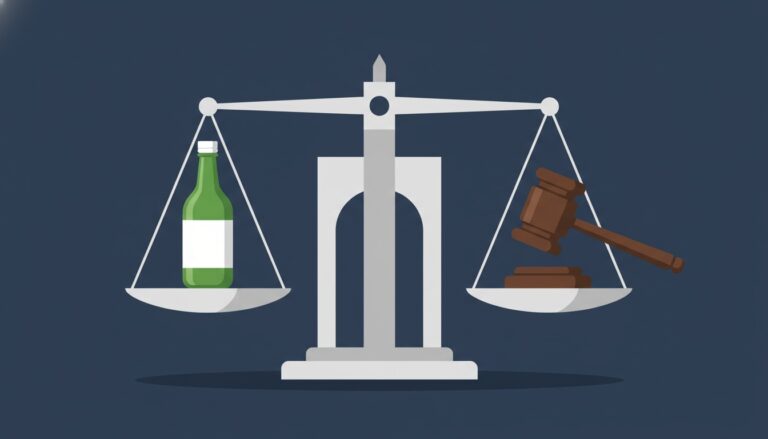
Introduction: Beyond “Beer Please” – Discussing Society
Hello! This is your Senior Editor at Daily Hangul.
As a C2 learner, you’ve mastered ordering food and navigating daily life. But imagine this scenario: You are at a dinner party discussing the news. A report comes on about a tragic drunk driving accident. Your Korean friends start debating the effectiveness of the law. They use words like “legal loopholes” and “public sentiment.” Do you stay silent, or do you join the debate?
To truly integrate into Korean society, you need to navigate these heavier topics. Today, we are tackling a serious but essential subject: The Yoon Chang-ho Act (윤창호법) and the debate surrounding the effectiveness of stricter drunk driving punishments.
This isn’t just about law; it’s about understanding the shifting moral compass of modern Korea. Let’s upgrade your Korean from “survival” to “intellectual.”
Phase 1: Deep Dive into Critical Expressions
To sound like an educated native speaker (C2 level), you need specific idioms used in news and debates. Here are the top 3.
1. 솜방망이 처벌 (Sombangmang-i Cheobeol)
- Pronunciation: [Som-bang-mang-i Cheo-beol]
- Tip: ‘Som’ sounds like ‘Some’. ‘Bang-mang-i’ has a rhythm like a drumbeat (Bum-bum-bum).
- Meaning:
- Literal: Cotton bat punishment.
- Real Nuance: A slap on the wrist. A punishment so light it feels like being hit by a soft cotton club.
- Editor’s Insight: This is the number one phrase used by Koreans when criticizing the judicial system. If a drunk driver gets a suspended sentence, the comment section will be flooded with this word.
- Situation Check: Perfect for debates, news discussions, or venting frustration. (Formal/Casual mostly OK).
2. 미필적 고의 (Mipiljeok Goi)
- Pronunciation: [Mi-pil-jeok Go-ui]
- Tip: ‘Ui’ in ‘Goui’ is tricky. It sounds like the ‘we’ in ‘wet’.
- Meaning:
- Literal: Willful negligence / Dolus eventualis (Legal term).
- Real Nuance: You didn’t plan to kill someone, but you knew it could happen and did it anyway.
- Editor’s Insight: In the context of drunk driving, Koreans argue that drinking and holding a steering wheel is murder by willful negligence, not just an accident.
- Situation Check: High-level discussions, legal contexts, serious debates.
3. 유명무실하다 (Yumyeongmusilhada)
- Pronunciation: [Yu-myeong-mu-sil-ha-da]
- Meaning:
- Literal: Having a name but no reality/substance.
- Real Nuance: Nominal; in name only; toothless (regarding laws).
- Editor’s Insight: This is a Saja-seong-eo (Four-character idiom). Use this when arguing that the Yoon Chang-ho Act exists, but it isn’t actually stopping people from drinking and driving because enforcement is weak.
- Situation Check: Formal writing, presentations, serious conversations.
Phase 2: Textbook vs. Real Life (C2 Edition)
At the advanced level, the difference isn’t about “correctness,” but about “rhetorical power.”
| Textbook / News Anchor (Standard) | Real Life / Debate (Impactful) |
|---|---|
| 처벌이 너무 약하다고 생각합니다. (I think the punishment is too weak.) |
매번 솜방망이 처벌에 그치니까 재범률이 높은 거죠. (Recidivism is high because it always ends with a slap on the wrist.) |
| 음주운전은 나쁜 행동입니다. (Drunk driving is bad behavior.) |
이건 단순 실수가 아니라, 명백한 예비 살인 행위입니다. (This isn’t a simple mistake; it’s clearly a premeditated act of murder.) |
| 법의 효과가 별로 없습니다. (The law doesn’t have much effect.) |
법만 강화되면 뭐해요? 현장에서는 유명무실한데. (What’s the use of strengthening the law? It’s toothless in the field.) |
Editor’s Note: Notice the use of -에 그치다 (to end at/stop at) and rhetorical questions (~면 뭐해요?). These make your argument sound much more persuasive.
Phase 3: Cultural Context & Nunchi
The “Daeri” Culture (대리운전)
In Korea, there is zero tolerance for “just one glass.” Because the police do spot checks (called 음주 단속), the Designated Driver service, or Daeri Woonjeon, is a massive industry.
The Shift in “Hoesik” (Company Dinner)
Historically, superiors might have forced subordinates to drink. However, post-Yoon Chang-ho Act, forcing a drink or letting a drunk colleague drive is technically abetting a crime (방조죄).
* Advanced Tip: If you see someone trying to drive after a drink, physically taking their keys is considered an act of true friendship/loyalty in Korea. Don’t just say “Don’t drive”—call a Daeri for them.
Phase 4: Roleplay Scenario
Setting: A cafe, debating a recent news article about a DUI sentence reduction.
Characters:
* Alex (You): C2 Learner, passionate about justice.
* Ji-hoon: Korean friend, cynical about the legal system.
Dialogue:
Ji-hoon: 이번에도 집행유예라니, 판사들이 너무 관대한 거 아니야?
(Probation again? Aren’t the judges being too lenient?)
Alex: 정말 이해가 안 가. 윤창호법 도입 취지가 무색해지는 판결이네. (Looking frustrated)
(I really don’t get it. This ruling makes the purpose of the Yoon Chang-ho Act pointless.)
Ji-hoon: 그러니까 말이야. 술 마셨다고 감형해 주는 ‘심신미약’ 논리는 이제 없어져야 해.
(Exactly. The ‘feeble-mindedness’ logic of reducing sentences because of alcohol needs to disappear.)
Alex: 맞아. 음주운전은 미필적 고의에 의한 범죄라고! 솜방망이 처벌이 계속되는 한 비극은 반복될 거야.
(Right. Drunk driving is a crime of willful negligence! As long as these slap-on-the-wrist punishments continue, the tragedy will repeat.)
Phase 5: 10-Second Shadowing Drill
Read this sentence aloud to practice your intonation for persuasion.
“법이 존재하는 이유는 / 가해자를 보호하기 위해서가 아니라, / 무고한 시민을 지키기 위해서입니다.”
- Pronunciation: Beop-i jon-jae-ha-neun i-yu-neun / ga-hae-ja-reul bo-ho-ha-gi wi-hae-seo-ga a-ni-ra, / mu-go-han si-min-eul ji-ki-gi wi-hae-seo-im-ni-da.
- Translation: The reason laws exist is not to protect the perpetrator, but to safeguard innocent citizens.
- Focus: Pause at the
/marks. Emphasize 아니라 (not this) to highlight the contrast.
Phase 6: FAQ & Troubleshooting
- Q: Can I use terms like ‘murderer’ (살인마) when discussing this?
- A: In a debate or when expressing anger at a news report, yes. Koreans often say “음주운전은 살인입니다” (Drunk driving is murder). However, don’t direct it at a specific person unless they have been convicted, or you risk defamation laws.
- Q: Is the Yoon Chang-ho Act actually effective?
- A: This is the debate! You can say: “경각심은 높아졌지만(Awareness has risen), 실효성은 논란이 있다(effectiveness is controversial).”
Phase 7: Wrap-up & Mission
Summary: Today we moved beyond basic conversation to critique the legal system using terms like 솜방망이 처벌 (slap on the wrist) and 미필적 고의 (willful negligence).
Action Mission: Next time you are with a Korean friend and see a news segment on crime, try saying: “한국은 처벌이 너무 약한 것 같아. (I think punishments in Korea are too weak.)” and see where the conversation goes!
Phase 8: Quiz (Answer Key at Bottom)
- Which idiom best describes a punishment that is too light/weak?
a) 일석이조 (Killing two birds with one stone)
b) 솜방망이 처벌 (Cotton bat punishment)
c) 금상첨화 (Icing on the cake) -
What does ‘유명무실하다’ mean in the context of the Yoon Chang-ho Act?
a) The law is famous and effective.
b) The law exists in name only and lacks real power.
c) The law is actually a fruit. -
How do you say “Willful Negligence” (knowing the risk but doing it anyway)?
a) 정당방위
b) 미필적 고의
c) 과실 치사
(Answers: 1-b, 2-b, 3-b)
Frequently Asked Questions (FAQ)
Q: What does "솜방망이 처벌 (Sombangmang-i Cheobeol)" mean in Korean and how do you pronounce it?
A: In Korean, "솜방망이 처벌 (Sombangmang-i Cheobeol)" is pronounced [Som-bang-mang-i Cheo-beol] and means: a key conversational Korean expression covered in this lesson.
Q: What does "미필적 고의 (Mipiljeok Goi)" mean in Korean and how do you pronounce it?
A: In Korean, "미필적 고의 (Mipiljeok Goi)" is pronounced [Mi-pil-jeok Go-ui] and means: a key conversational Korean expression covered in this lesson.
Q: What does "유명무실하다 (Yumyeongmusilhada)" mean in Korean and how do you pronounce it?
A: In Korean, "유명무실하다 (Yumyeongmusilhada)" is pronounced [Yu-myeong-mu-sil-ha-da] and means: Literal: Having a name but no reality/substance.







