

Hello, this is Daily Hangul!
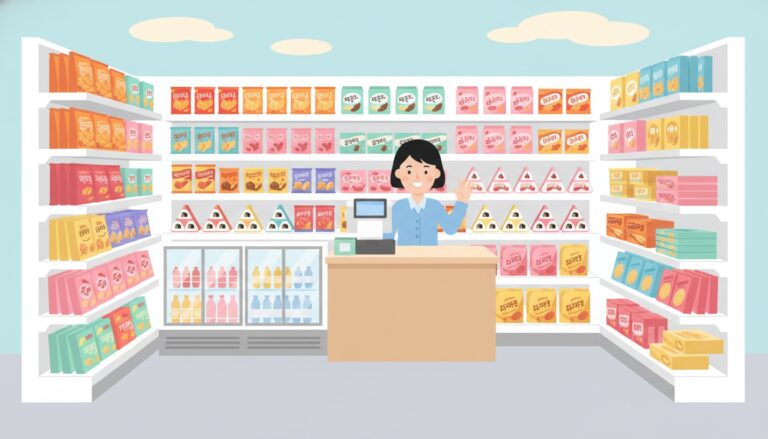
Have you ever walked into a bright, shiny Korean convenience store (pyeoneui-jeom), grabbed a banana milk, and then frozen at the checkout counter because the part-timer asked you three rapid-fire questions?
“Do you need a bag? Do you have points? Receipt?”
Today’s lesson is designed for those who want to navigate a Korean convenience store like a local, not just a tourist. We will look at the specific script used by part-timers (Alba) and how you can respond naturally.
Note on Case Study: The episode below is a “Synthetic Case,” created by combining frequent questions and mistakes reported by multiple foreign learners in Korea. It represents a typical experience rather than a specific individual’s story.
The “Panic at the Checkout” Moment
Sarah, an exchange student, went to buy water. The part-timer mumbled something that sounded like “Bong…yo?” Sarah thought he was greeting her, so she smiled and said “Hello.” The part-timer stared, paused, and pointed at a plastic bag. Sarah realized too late he was asking about a bag, not saying hello. Does this sound familiar?
Textbooks teach full sentences, but in the fast-paced reality of a Korean city, syllables get dropped, and speed is king. Let’s decode this.
Summary: At a Glance
- Today’s Expressions: Asking for a bag, earning points, handling receipts.
- Safe to Use: Anywhere with a checkout counter (Convenience stores, Daiso, Supermarkets).
- Level: Survival to Intermediate (Why? The grammar is simple, but the listening speed is Advanced).
Table of Contents
- Today’s Deep Dive: The “Checkout Trinity”
- Textbook vs. Real Korean
- Analysis: The Speed of Sound
- Real-Life Role Play
- Shadowing Challenge
- FAQ
- Final Quiz
Today’s Deep Dive: The “Checkout Trinity”
Here are the three questions you will hear 99% of the time, in this exact order.
1. 봉투 필요하세요? (Bongtu piryohaseyo?)
- Meaning: Do you need a (plastic) bag?
- Use & Register: Formal/Polite (Haeyo-che). Used by staff to customers.
- Tutor’s Secret Note: In Korea, plastic bags are not free (usually 20-100 KRW). If you don’t answer, they assume you don’t need one. Staff often say this while scanning items, so they might not make eye contact.
- Warning: Do not just nod silently if they aren’t looking. Speak up!
- Pronunciation Clinic: Foreigners often pronounce it clearly as [Bong-tu]. However, native speakers often nasalize the first syllable and say it quickly like [Bong-tuh-yo?].
Examples:
1. (Customer) 봉투 주세요. (Bongtu juseyo.) – Please give me a bag.
2. (Staff) 봉투에 담아 드릴까요? (Bongtue dama deurilkkayo?) – Shall I put it in a bag for you?
3. (Customer) 아니요, 괜찮아요. (Aniyo, gwaenchannayo.) – No, it’s okay (I don’t need one).
Alternatives:
* Casual (To self): “Ah, bongtu.” (Ah, a bag.)
* Formal: “Bongtu hana juseyo.” (Please give me one bag.)
Mini Quiz: Fill in the blank
Customer: ___________ 있어요. (I have a bag / I brought my own bag.)
Answer: 가방 (Gabang) or 장바구니 (Jangbaguni)
2. 포인트 적립하세요? (Pointeu jeongnip-haseyo?)
- Meaning: Do you accumulate points? (Do you have a membership card?)
- Use & Register: Polite. “Jeongnip” means accumulation.
- Tutor’s Secret Note: Most travelers don’t have this. It’s for GS25/CU/7-Eleven apps or telecom memberships (T-membership). Don’t panic; just say “No.”
- Pronunciation Clinic: “Pointeu” is Konglish. Emphasize the ‘Po’ and say ‘in-teu’ quickly.
Examples:
1. (Customer) 포인트 없어요. (Pointeu eopseoyo.) – I don’t have points (membership).
2. (Staff) 할인 카드 있으세요? (Harin kadeu isseuseyo?) – Do you have a discount card?
3. (Customer) 여기요. (Yeogiyo.) – Here it is (showing app).
Alternatives:
* Simple: “Eopseoyo.” (I don’t have it.)
* Detailed: “App-i an yeollyeoyo.” (The app isn’t opening – common excuse!)
3. 영수증 드릴까요? (Yeongsujeung deurilkkayo?)
- Meaning: Shall I give you the receipt?
- Use & Register: Polite. Usually the last step.
- Tutor’s Secret Note: Many Koreans say “Beoryeo juseyo” (Please throw it away) or simply leave without taking it.
- Pronunciation Clinic: “Yeong-su-jeung” has a tricky ‘ng’ (ㅇ) sound at the end of the first and last syllable.
Examples:
1. (Customer) 영수증은 버려 주세요. (Yeongsujeung-eun beoryeo juseyo.) – Please throw away the receipt.
2. (Customer) 영수증 주세요. (Yeongsujeung juseyo.) – Please give me the receipt.
3. (Staff) 영수증 필요하세요? (Yeongsujeung piryohaseyo?) – Do you need a receipt?
Alternatives:
* Gestures: Just shaking your hand (No) is acceptable here as you are leaving.
Mini Quiz: Fill in the blank
Staff: 영수증 ________? (Shall I throw away the receipt?)
Answer: 버려 드릴까요? (Beoryeo deurilkkayo?)
Textbook vs. Real Korean
How does the classroom differ from a busy Friday night in Hongdae?
| Context | Book Korean (Standard) | Real Korean (Street/Fast) |
|---|---|---|
| Asking for a bag | 봉투 필요하십니까? (Bongtu piryohasimnikka?) | 봉투요? (Bongtu-yo?) |
| Declining | 아니요, 필요 없습니다. (Aniyo, piryo eopseumnida.) | 아뇨, 됐어요. (Anyo, dwaesseoyo.) |
| Asking for points | 포인트 적립 카드가 있으신가요? (Full sentence) | 적립 하세요? (Jeongnip haseyo?) |
| Leaving | 안녕히 계세요. (Annyeonghi gyeseyo.) | 수고하세요~ (Sugohaseyo – Keep up the good work) |
Situation Checklist:
* Use ‘Book Korean’: When you want to be extremely clear or are speaking to an older staff member.
* Use ‘Real Korean’: When the store is busy, or you want to sound like a local regular.
Analysis: The Speed of Sound
Why couldn’t Sarah understand the staff? Because of “Compression.”
Korean speakers often drop particles (eul/reul) and shorten verbs when busy. Let’s look at the “Hearing Test.”
- Level 1 (Textbook): Bong-tu pi-ryo-ha-se-yo? (Clear, robotic)
- Level 2 (Normal): Bong-tu piry’aseyo? (Connected speech)
- Level 3 (Busy Staff): Bongtu…? (Rising intonation implies the question)
Tutor Tip: Listen for the keyword “Bongtu”. If you hear it with a rising tone, just answer “Yes” (Ne) or “No” (Aniyo).
Real-Life Role Play: At a GS25
- Setting: A convenience store near the Han River park. Evening.
- Characters: Alba (Part-timer), Guest (You).
(You place a drink and a snack on the counter)
Alba: (Scans items quickly) 봉투 필요하세요?
(Bongtu piryohaseyo?)
Guest: 네, 하나 주세요.
(Ne, hana juseyo.)
Alba: 4,500원입니다. 포인트 적립 하세요?
(Sa-cheon o-baek-won imnida. Pointeu jeongnip haseyo?)
Guest: 아니요, 없어요.
(Aniyo, eopseoyo.)
Alba: (Inserts card) 영수증 드릴까요?
(Yeongsujeung deurilkkayo?)
Guest: 아뇨, 버려 주세요. 수고하세요!
(Anyo, beoryeo juseyo. Sugohaseyo!)
Alba: 네, 안녕히 가세요.
(Ne, annyeonghi gaseyo.)
Culture Tip: Saying “Sugohaseyo” (Work hard / Good job) when leaving is a very polite and common way to say goodbye to service workers in Korea.
Shadowing Challenge
Let’s practice the “Customer Combo.” Repeat this 3 times to build muscle memory.
Script:
“봉투는 괜찮아요. 영수증만 주세요.”
(Bongtu-neun gwaenchannayo. Yeongsujeung-man juseyo.)
[I don’t need a bag. Just give me the receipt.]
- [ ] Slow speed (Focus on ‘gwaenchannayo’)
- [ ] Normal speed
- [ ] Fast speed (Imagine a line of people behind you!)
Pronunciation Point: In 괜찮아요, the ‘h’ (ㅎ) is silent. It sounds like [Gwaen-cha-na-yo].
FAQ (Frequently Asked Questions)
Q1: Can I just point at the bag instead of speaking?
A: You can, but saying “Bongtu juseyo” is much politer. Pointing can sometimes be seen as rude depending on the gesture.
Q2: What if I didn’t hear what they said?
A: Just say “Ne?” (Yes? / Pardon?). They will usually repeat the keyword clearer, like “Bongtu-yo.”
Q3: Can I use a credit card for very small amounts (like 500 KRW)?
A: Yes! Korea is almost cashless. Paying 500 KRW (about $0.40) with a card is perfectly normal. No need to feel sorry.
Conclusion & Action Item
Today we cracked the code of the convenience store checkout: Bag, Points, and Receipt.
Today’s Mission:
Go to a convenience store today. When the clerk speaks, try to identify which of the “Big 3” questions they are asking. Even if you just nod, try to catch the word “Bongtu”!
Tell me in the comments:
Have you ever accidentally bought a plastic bag because you just said “Yes” to everything? Share your story!
Final Quiz
- Which word means “Receipt”?
A) Bongtu
B) Yeongsujeung
C) Pointeu -
How do you say “Please throw it away” (referring to a receipt)?
A) Juseyo
B) Beoryeo juseyo
C) Isseoyo -
(Fill in the blank) When leaving the store, it is polite to say “_______ haseyo!” to the staff.
Click to see Answers
1. B) Yeongsujeung
2. B) Beoryeo juseyo
3. Sugohaseyo (수고하세요)
Frequently Asked Questions (FAQ)
Q: What does "봉투 필요하세요? (Bongtu piryohaseyo?)" mean in Korean and how do you pronounce it?
A: In Korean, "봉투 필요하세요? (Bongtu piryohaseyo?)" is pronounced [Clinic: Foreigners often pronounce it clearly as [Bong-tu] and means: Do you need a (plastic) bag?
Q: What does "포인트 적립하세요? (Pointeu jeongnip-haseyo?)" mean in Korean and how do you pronounce it?
A: In Korean, "포인트 적립하세요? (Pointeu jeongnip-haseyo?)" is pronounced [Clinic: "Pointeu" is Konglish. Emphasize the 'Po' and say 'in-teu' quickly.] and means: Do you accumulate points? (Do you have a membership card?)
Q: What does "영수증 드릴까요? (Yeongsujeung deurilkkayo?)" mean in Korean and how do you pronounce it?
A: In Korean, "영수증 드릴까요? (Yeongsujeung deurilkkayo?)" is pronounced [Clinic: "Yeong-su-jeung" has a tricky 'ng' (ㅇ] and means: Shall I give you the receipt?







