

Hello, this is Daily Hangul!
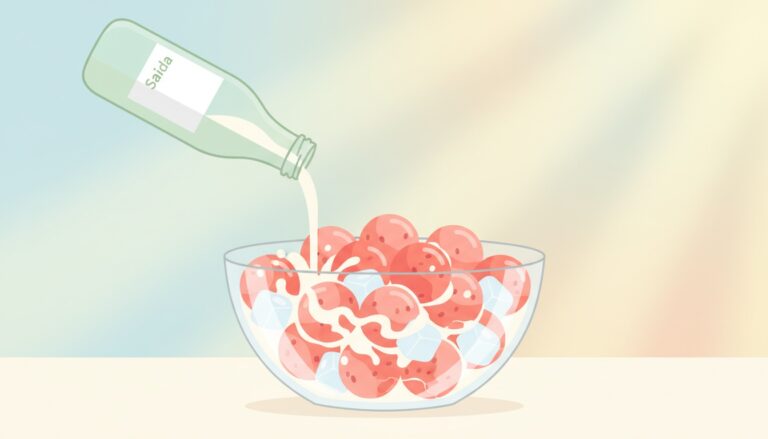
Are you ready to survive the Korean summer heat? 🥵 If you visit Korea in July or August, the humidity might surprise you. While many tourists look for Bingsu (shaved ice), locals have a homemade secret weapon to beat the heat: Subak Hwachae (Watermelon Punch).
Since I haven’t visited your kitchen personally, let’s look at a “Composite Case” based on questions I frequently get from my students during the summer semester. Many foreign learners ask, “Teacher, I bought a huge watermelon at the market, but how do I eat it like a Korean?” or “Why do Koreans put Sprite in fruit salad?”
Textbooks teach you the word “watermelon,” but they don’t teach you the culture of mixing it with soda and milk to create the ultimate summer vibe. Today, we will learn the essential vocabulary to make this delicious treat and understand the nuances behind the ingredients. Let’s dive in!
📝 Summary: At a Glance
- Today’s Expressions: 수박 (Watermelon), 사이다 (Lemon-lime soda), 시원하다 (Cool/Refreshing).
- Safe Zone: Casual gatherings, home parties, or ordering at a traditional tea house.
- Level (A2): Essential food vocabulary + expressing feelings about temperature and taste.
📚 Table of Contents
- Today’s Key Expressions Deep Dive
- Textbook vs. Real Korean
- Unique Analysis: The “Saida” Nuance
- Real-Life Role Play: Making Hwachae Together
- Shadowing Challenge
- FAQ
- Wrap-up & Quiz
💡 Today’s Key Expressions Deep Dive
1. 수박 (Subak / Subak)
- Meaning: Watermelon
- Usage & Register:
- To whom: Everyone (Store clerk, friends).
- Recommended Style: Use with “주세요 (juseyo)” when buying, or “먹어요 (meogeoyo)” when suggesting.
- Tutor’s Secret Note: 🤫
- In Korea, watermelons are often sold whole and are quite large. If you bring a whole Subak to a friend’s housewarming party in summer, you are instantly the favorite guest!
- Warning: Don’t confuse it with “수박 겉핥기” (Licking the surface of a watermelon). This idiom means “skimming the surface” or not learning deeply.
- Pronunciation Clinic:
- Don’t say “Shoo-bak.” The ‘S’ sound is a plain ‘s’ [s], not ‘sh’. Keep your tongue behind your teeth.
- Examples:
- 수박이 진짜 커요. (Subagi jinjja keoyo.) – The watermelon is really big.
- 여름에는 수박이 최고예요. (Yeoreumeneun subagi choegoyeyo.) – Watermelon is the best in summer.
- 수박 좀 썰어 줄래? (Subak jom sseoreo jullae?) – Can you slice the watermelon? (Casual)
- Alternatives:
- 과일 (Gwail) – Fruit (General category)
- 제철 과일 (Jecheol gwail) – Seasonal fruit (More advanced)
- Mini Quiz:
- “I want to eat ______.” -> “______ 먹고 싶어요.”
-
Click for Answer
수박 (Subak)
2. 사이다 (Saida / Saida)
- Meaning: Lemon-lime soda (e.g., Sprite, 7-Up)
- Usage & Register:
- To whom: Convenience store staff, restaurant servers.
- Tutor’s Secret Note: 🤫
- Important: In English, “Cider” usually means apple wine (alcoholic). In Korea, Saida is always clear, non-alcoholic soda like Sprite or Chilsung Cider. If you ask for “Cider” expecting alcohol, you will get a soft drink!
- Slang Alert: When a frustrating situation is resolved refreshingly, Koreans say “It’s like Saida!” (Complete opposite of “Goguma”/Sweet Potato which means frustrating).
- Pronunciation Clinic:
- Pronounce it clearly as three syllables: [Sa-i-da]. Don’t slur it into “Sider.”
- Examples:
- 사이다 한 병 주세요. (Saida han byeong juseyo.) – Please give me one bottle of soda/Sprite.
- 화채에는 사이다를 넣어야 해요. (Hwachaeneun saidareul neoeoya haeyo.) – You must put soda in Hwachae.
- 속이 뻥 뚫려요, 완전 사이다예요! (Sogi ppeong ttullyeoyo, wanjeon saidayeyo!) – I feel relieved, it’s totally refreshing (like Saida)!
- Alternatives:
- 탄산음료 (Tansan eumryo) – Carbonated drink (Formal)
- 콜라 (Kolla) – Cola
- Mini Quiz:
- “Do you have ______?” -> “______ 있어요?”
-
Click for Answer
사이다 (Saida)
3. 시원하다 (Siwonhada / Siwonhada)
- Meaning: Cool / Refreshing
- Usage & Register:
- To whom: Friends, family, oneself.
- Recommended Style: “시원해요 (Siwonhaeyo)” is polite and safe.
- Tutor’s Secret Note: 🤫
- This is a magic word. You use it when the air conditioner is on, when drinking cold water, AND when eating hot spicy soup (meaning “it relieves my stomach”). For Hwachae, it means physically cold and refreshing.
- Pronunciation Clinic:
- Linking sound: [Si-wo-na-da]. The ‘h’ (ㅎ) sound often becomes very weak or silent in fast speech.
- Examples:
- 국물이 시원해요. (Gungmuri siwonhaeyo.) – The broth is refreshing.
- 밖에 너무 더워서 시원한 곳에 가고 싶어요. (Bakke neomu deowoseo siwonhan gose gago sipeoyo.) – It’s too hot outside, I want to go somewhere cool.
- 얼음을 넣어서 시원하게 드세요. (Eoreumeul neoeoseo siwonhage deuseyo.) – Add ice and eat it cool/chilled.
- Alternatives:
- 차갑다 (Chagapda) – Cold (Temperature only, touch)
- 상쾌하다 (Sangkwaehada) – Refreshing (Air/Mood)
- Mini Quiz:
- “This water is really ______.” -> “이 물 진짜 ______.”
-
Click for Answer
시원해요 (Siwonhaeyo)
📖 Textbook vs. Real Korean
Context: Saying “It tastes sweet and good.”
| Type | Expression | Romanization | Nuance |
|---|---|---|---|
| Book Korean | 맛이 달콤합니다. | Masi dalkomhamnida. | Very literary. Sounds like a poetry book or a formal ad. |
| Book Korean | 참 맛있습니다. | Cham masisseumnida. | Grammatically perfect, but stiff for a summer snack chat. |
| Real Korean | 달달하니 맛있어요. | Daldalhani masisseoyo. | “It’s pleasantly sweet.” Used commonly for desserts. |
| Real Korean | 꿀맛이에요! | Kkul-masiye-yo! | Literally “Honey taste.” Slang for “Insanely delicious.” |
✅ Checklist: When to use what?
* Writing a food report? -> Book Korean
* Eating Hwachae with a Korean friend? -> Real Korean (Use “Kkul-mat” to impress them!)
🔍 Unique Analysis: The “Sweetness” Thermometer
Foreigners often think “Sweet” is just “Dalda (달다).” But Koreans distinguish sweetness levels carefully. Here is how to describe your Watermelon Punch:
| Level | Expression | Romanization | Meaning & Vibe |
|---|---|---|---|
| Level 1 | 안 달아요. | An darayo. | Not sweet. (Maybe the watermelon is not ripe.) |
| Level 3 | 은근히 달아요. | Eungeunhi darayo. | Subtly sweet. (A compliment for sophisticated tastes.) |
| Level 5 | 달달해요. | Daldalhaeyo. | Pleasant, sugary sweet. (Perfect for Hwachae.) |
| Level 10 | 너무 달아요. | Neomu darayo. | Too sweet. (Maybe you put too much Sprite!) |
🎭 Real-Life Role Play: Home Kitchen
Situation: Minji and Alex are making Subak Hwachae at Minji’s house on a hot afternoon.
Minji: 수박은 내가 썰게, 알렉스는 사이다 좀 부어 줄래?
(Subageun naega sseolge, Alleks-neun saida jom bueo jullae?)
Translation: I’ll slice the watermelon, can you pour the cider (Sprite), Alex?
Alex: 그래. 우유도 같이 넣을까?
(Geurae. Uyudo gachi neoulkka?)
Translation: Sure. Should we add milk too?
Minji: 응! 우유랑 사이다를 섞으면 더 맛있어.
(Eung! Uyurang saidareul seokkeumyeon deo masisseo.)
Translation: Yeah! If you mix milk and soda, it tastes better.
Alex: (Tasting it) 와, 진짜 시원하다! 완전 꿀맛이야.
(Wa, jinjja siwonhada! Wanjeon kkul-masiya.)
Translation: Wow, it’s really refreshing! It tastes like honey (delicious).
💡 Culture Tip:
Many Koreans use a specialized “Melon Baller” (hwachae scoop) to make cute round watermelon balls. If you don’t have one, just cutting them into cubes is perfectly fine!
🗣️ Shadowing Challenge
Try to say this script naturally. Repeat it 3 times! (⏱️ 20 seconds)
“더운 여름에는 수박 화채가 최고예요. 사이다랑 우유를 섞어서 시원하게 드세요!”
(Deoun yeoreumeneun subak hwachaega choegoyeyo. Saidarang uyureul seokkeoseo siwonhage deuseyo!)Meaning: Watermelon punch is the best in hot summer. Mix soda and milk, and enjoy it cool!
✅ Check your progress:
– [ ] Attempt 1 (Slowly focusing on pronunciation)
– [ ] Attempt 2 (Natural speed)
– [ ] Attempt 3 (With emotion! Feel the cold!)
🎤 Pronunciation Point:
Pay attention to 섞어서 (Seok-keo-seo). The double ‘kk’ sound spills over to the next vowel.
❓ FAQ (Frequently Asked Questions)
Q1: Can I make Hwachae without Sprite (Saida)?
A: Yes! Some people use Strawberry Milk (딸기 우유) or just sugar water and ice. However, the fizzy sensation of Saida is the classic “Real Korean” style.
* Example: “저는 딸기 우유 넣을래요.” (Jeoneun ttalgi uyu neoul-laeyo – I want to put strawberry milk in.)
Q2: Is “Subak” the only fruit for Hwachae?
A: No, but it’s the most popular. Hwachae (화채) technically means traditional fruit punch. You can use melon, strawberries, or canned fruit cocktails.
🏁 Wrap-up & Action Item
Today we learned how to survive the Korean heat with Subak (Watermelon), Saida (Soda), and the feeling of being Siwonhada (Refreshing).
🚀 Today’s Mission:
Next time you visit a convenience store or supermarket, find the section selling watermelons or cider. Point at it and whisper (or say loudly!) the Korean name 3 times.
💬 Comment below:
What is the most popular summer fruit in your country? Let me know in the comments!
🧩 Final Quiz
1. Which word refers to clear lemon-lime soda in Korea?
A) Subak
B) Saida
C) Soju
D) Makgeolli
2. What is the best expression to use when you drink something cold and feel refreshed?
A) Mianhaeyo (Sorry)
B) Siwonhaeyo (Refreshing)
C) Tteugeowoyo (Hot)
D) Maewoyo (Spicy)
3. Fill in the blank: “This watermelon tastes like honey!” -> “이 수박 완전 _____이다!”
(Hint: Kkul-mat)
⬇️ Scroll down for Answers
- B) Saida (Cider usually means alcohol in English, but soda in Korea!)
- B) Siwonhaeyo
- 꿀맛 (Kkul-mat)
Frequently Asked Questions (FAQ)
Q: What does "수박 (Subak / Subak)" mean in Korean and how do you pronounce it?
A: In Korean, "수박 (Subak / Subak)" is pronounced [see lesson guide] and means: Watermelon
Q: What does "사이다 (Saida / Saida)" mean in Korean and how do you pronounce it?
A: In Korean, "사이다 (Saida / Saida)" is pronounced [see lesson guide] and means: Lemon-lime soda (e.g., Sprite, 7-Up)
Q: What does "시원하다 (Siwonhada / Siwonhada)" mean in Korean and how do you pronounce it?
A: In Korean, "시원하다 (Siwonhada / Siwonhada)" is pronounced [see lesson guide] and means: Cool / Refreshing






