

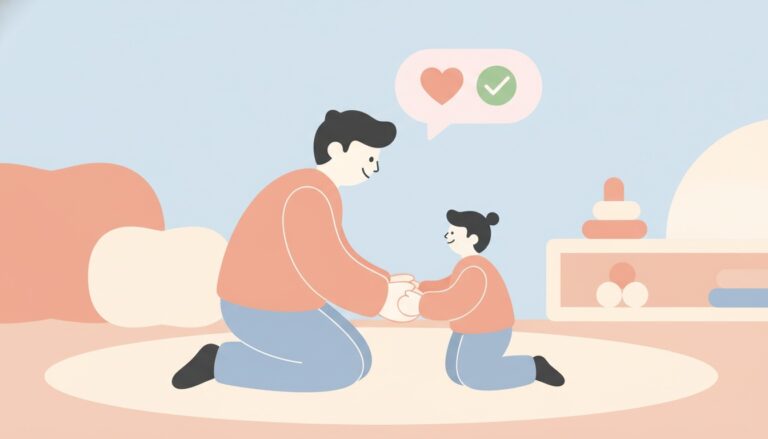
Raising Kids in Korea? How to Discipline with Love, Not Misunderstanding!
Introduction
“Hello, this is Daily Hangul!”
Are you raising a child in Korea, or perhaps teaching students? The line between discipline and scolding can be blurry, especially when navigating a different culture.
We often see composite examples from our community: A foreign parent at a playground sees a Korean parent speaking sternly to a child and wonders, “Is that angry scolding? Or just firm discipline?” Conversely, you might worry, “How do I tell my child ‘No’ in public without seeming aggressive to Korean onlookers?”
In Korea, the parenting trend has shifted massively towards ‘Positive Discipline’ (훈육, Hun-yuk), thanks to popular TV shows involving child experts. The days of ‘strict obedience’ are fading, replaced by ‘empathy first, correction second.’ Today, we will learn how to set boundaries firmly but warmly—C1 level phrases that show you are a thoughtful, modern parent/guardian.
Summary at a Glance
- Today’s Expressions: Phrases for setting boundaries, showing empathy, and ensuring safety.
- Safety Level: 100% Safe. These are polite, educational, and socially approved by modern Korean parenting standards.
- Difficulty (C1): Why C1? Because nuances matter in parenting. Saying “Don’t!” (하지 마!) is easy, but explaining why and acknowledging feelings (empathy) requires advanced sentence structures.
Table of Contents
- Today’s Key Expressions: Deep Dive
- Textbook vs. Real Korean
- Unique Analysis: The Tone Thermometer
- Real-Life Role Play: The Playground Incident
- Shadowing Challenge
- FAQ: Cultural Context
- Conclusion & Quiz
Today’s Key Expressions: Deep Dive
1. 안 되는 건 안 되는 거야 (An doe-neun geon an doe-neun geo-ya)
- Meaning (English): What is not allowed is not allowed / No means no.
- Usage & Register:
- To whom: Children (typically own children or students).
- Tone: Firm, calm, low voice. Not shouting.
- Tutor’s Secret Note: This is a famous catchphrase popularized by Korean child experts. It means you are keeping a consistent boundary without getting angry. If you scream this, you lose the point. Say it like a judge delivering a verdict—calm and unshakeable.
- Warning: Do not smile when saying this. Your face must match the seriousness of the message.
- Pronunciation Clinic:
- [Geo-ya]: Make sure to pronounce ‘geo’ clearly. Don’t slur it into ‘gya’.
- Examples:
- Situation 1 (Store): 장난감 사달라고 떼써도 안 돼. 안 되는 건 안 되는 거야. (Jang-nan-gam sa-dal-la-go tte-sseo-do an dwae. An doe-neun geon an doe-neun geo-ya.)
- Translation: Even if you throw a tantrum for a toy, no. No means no.
- Situation 2 (Safety): 친구를 때리면 안 돼. 안 되는 건 안 되는 거야. (Chin-gu-reul ttae-ri-myeon an dwae. An doe-neun geon an doe-neun geo-ya.)
- Translation: You cannot hit your friend. What’s not allowed is not allowed.
- Situation 3 (Public): 신발 신고 올라가지 마. 안 되는 건 안 되는 거야. (Sin-bal sin-go ol-la-ga-ji ma. An doe-neun geon an doe-neun geo-ya.)
- Translation: Don’t go up there with shoes on. No means no.
- Situation 1 (Store): 장난감 사달라고 떼써도 안 돼. 안 되는 건 안 되는 거야. (Jang-nan-gam sa-dal-la-go tte-sseo-do an dwae. An doe-neun geon an doe-neun geo-ya.)
2. 많이 속상했구나 (Ma-ni sok-sang-haet-gu-na)
- Meaning (English): You must have been very upset / I see that you are sad/frustrated.
- Usage & Register:
- To whom: A crying or angry child.
- Tone: Empathetic, ‘Haeyo-che’ or ‘Hae-che’ depending on closeness.
- Tutor’s Secret Note: This is the magic phrase of Korean Emotion Coaching. Before correcting behavior, you acknowledge the feeling. Koreans call this “reading the heart” (마음 읽어주기). Using this phrase instantly makes you sound like a pro parent.
- Pronunciation Clinic:
- [Haet-gu-na]: The ‘ss’ (ㅆ) in ‘haet’ acts like a ‘t’ stop sound. [속상핻꾸나].
- Examples:
- Situation 1 (Crying): 장난감을 뺏겨서 많이 속상했구나. (Jang-nan-gam-eul ppaet-gyeo-seo ma-ni sok-sang-haet-gu-na.)
- Translation: You must be very upset because your toy was taken away.
- Situation 2 (Falling): 넘어져서 아팠지? 많이 속상했구나. (Neo-meo-jyeo-seo a-pat-ji? Ma-ni sok-sang-haet-gu-na.)
- Translation: It hurt when you fell, right? You must be so upset.
- Situation 3 (Sibling Fight): 오빠가 놀려서 많이 속상했구나. (O-ppa-ga nol-lyeo-seo ma-ni sok-sang-haet-gu-na.)
- Translation: You’re upset because your big brother teased you.
- Situation 1 (Crying): 장난감을 뺏겨서 많이 속상했구나. (Jang-nan-gam-eul ppaet-gyeo-seo ma-ni sok-sang-haet-gu-na.)
3. 기다려 줄래? (Gi-da-ryeo jul-lae?)
- Meaning (English): Could you wait for me? / Can you wait?
- Usage & Register:
- To whom: A child rushing or demanding attention.
- Tone: Gentle persuasion (Cheong-yu-hyeong).
- Tutor’s Secret Note: Instead of commanding “기다려!” (Wait! – like training a dog), adding “~줄래?” gives the child a choice and respects them as a person. It builds cooperation rather than obedience.
- Pronunciation Clinic:
- [Jul-lae]: Use a rising intonation at the end to sound like a question, not a command.
- Examples:
- Situation 1 (Phone call): 엄마 통화 중이야. 조금만 기다려 줄래? (Eom-ma tong-hwa jung-i-ya. Jo-geum-man gi-da-ryeo jul-lae?)
- Translation: Mom is on the phone. Could you wait a little bit?
- Situation 2 (Traffic): 초록 불이 될 때까지 기다려 줄래? (Cho-rok bu-ri doel ttae-kka-ji gi-da-ryeo jul-lae?)
- Translation: Can you wait until the light turns green?
- Situation 3 (Line): 차례가 올 때까지 기다려 줄래? (Cha-rye-ga ol ttae-kka-ji gi-da-ryeo jul-lae?)
- Translation: Can you wait until it’s your turn?
- Situation 1 (Phone call): 엄마 통화 중이야. 조금만 기다려 줄래? (Eom-ma tong-hwa jung-i-ya. Jo-geum-man gi-da-ryeo jul-lae?)
Mini Quiz: Fill in the blank (Click to see answer)
Q: Your child is crying because ice cream fell. You want to show empathy first.
“아이스크림이 떨어져서 ______?” (You must be upset because the ice cream fell?)
A: 속상했구나 (Sok-sang-haet-gu-na)
Textbook vs. Real Korean
| Situation | Textbook / Old School | Real Modern Korean (Recommended) | Check |
|---|---|---|---|
| Stop that! | 하지 마십시오 (Ha-ji ma-sip-si-o) – Too formal 하지 마! (Ha-ji ma!) – Too blunt |
멈추세요 / 그만. (Meom-chu-se-yo / Geu-man) – Firm but polite | ✅ |
| Scolding | 너 나쁜 아이야! (Neo na-ppeun a-i-ya!) – You are a bad child | 그건 위험한 행동이야. (Geu-geon wi-heom-han haeng-dong-i-ya.) – Behavior focus | ✅ |
Context Comparison:
In the past, labeling a child (“You act like a baby,” “Bad boy”) was common. Modern Korean parents focus on the behavior, not the person. Instead of “Don’t run!” (뛰지 마!), they prefer suggesting the correct action: “Walk slowly” (천천히 걸어요).
Unique Analysis: The Parenting Tone Thermometer
How loud should you be? In Korea, public etiquette is huge. Screaming parents are frowned upon just as much as screaming kids.
| Level | Tone | Expression | Impression |
|---|---|---|---|
| 1 (Cool) | Soft & Whispering | “~해 줄래?” (Can you~?) | Gentle, respectful. Good for first requests. |
| 2 (Warm) | Normal Speaking | “~하자.” (Let’s~) | Encouraging. Standard parenting mode. |
| 3 (Firm) | Low & Serious | “안 돼.” (No.) | Boundary setting. Best for discipline. |
| 4 (Hot) | Loud Voice | “야!” (Hey!) | Startles the child. People might stare. |
| 5 (Boiling) | Shouting/Insulting | “너 왜 그래!” (What’s wrong with you!) | Avoid. Considered emotional abuse or lack of control. |
Tip: The most scary/effective Korean parents don’t yell. They drop their voice to a low bass tone and maintain eye contact.
Real-Life Scenario: Role Play (The Playground)
Situation: A public playground (놀이터) in an apartment complex. 4 PM. Your child (Min-jun) pushes another friend to get the slide.
Mom: (Running over quickly, grabbing Min-jun’s hand gently but firmly)
민준: (Crying) 내가 먼저 탈 거야! (Nae-ga meon-jeo tal geo-ya!) – I’m going to ride first!
Mom: (Level 3 Tone – Low voice) 민준아, 멈춰. 친구를 밀면 안 돼. (Min-jun-a, meom-chwo. Chin-gu-reul mil-myeon an dwae.)
Translation: Min-jun, stop. You cannot push your friend.
민준: 비키라고 했단 말이야… (Bi-ki-ra-go haet-dan ma-ri-ya…) – I told him to move…
Mom: (Level 1 Tone – Softening) 빨리 타고 싶어서 마음이 급했구나? 그래도 미는 건 안 되는 거야. (Ppal-li ta-go si-peo-seo ma-eum-i geup-haet-gu-na? Geu-rae-do mi-neun geon an doe-neun geo-ya.)
Translation: You were in a rush because you wanted to ride fast? Still, pushing is not allowed.
Mom: (Turning to the other child) 놀랐지? 미안해. (Nol-lat-ji? Mi-an-hae.)
Translation: You were surprised, right? Sorry.
Mom: 민준아, 친구한테 사과해. (Min-jun-a, chin-gu-han-te sa-gwa-hae.)
Translation: Min-jun, apologize to your friend.
Culture Tip: In Korea, if your child causes trouble, it is crucial for the parent to apologize to the other child/parent first. This shows you are taking responsibility.
Shadowing Challenge
Scenario: Your child is running in a restaurant. Calm them down.
Script (Read aloud 3 times):
1. 여기서는 뛰면 안 돼요. (Yeo-gi-seo-neun ttwi-myeon an dwae-yo.) – You shouldn’t run here.
2. 다른 사람들이 식사하고 있잖아. (Da-reun sa-ram-deu-ri sik-sa-ha-go it-ja-na.) – Other people are eating.
3. 자리에 앉아서 그림 그릴까? (Ja-ri-e an-ja-seo geu-rim geu-ril-kka?) – Shall we sit and draw?
[ ] Attempt 1 (Focus on Pronunciation)
[ ] Attempt 2 (Focus on Intonation/Emotion)
[ ] Attempt 3 (Speed of a native speaker)
FAQ: Questions from Foreign Parents
Q1: Can I physically discipline my child (spanking) in Korea?
A: Absolutely NO. South Korea legally abolished the “right to disciplinary action” (punishment) by parents in 2021. Spanking or physical punishment can be reported as child abuse. Use verbal warnings and “thinking chairs” (time-outs) instead.
Q2: Older people sometimes touch my child or offer candy. How do I stop them politely?
A: It’s often affection (Jeong), but if you are uncomfortable, say: “마음은 감사하지만, 아이가 알러지가 있어요.” (Ma-eum-eun gam-sa-ha-ji-man, a-i-ga al-leo-ji-ga i-sseo-yo. – Thank you for the thought, but the child has allergies.) This is the safest “white lie” to refuse food without offending.
Conclusion & Mission
Summary: Today we learned how to discipline with the “Empathy First (속상했구나), Boundary Second (안 되는 건 안 되는 거야)” method.
Today’s Mission: Next time you need to refuse a request from a child (or even a friend jokingly!), try saying “안 되는 건 안 되는 거야” calmly instead of just saying “No!”
Comment Question: What is the hardest situation to control your child in Korea? (Restaurants? Subways?) Share your story!
Final Quiz
1. Which tone is best for firm discipline (Hun-yuk) in Korea?
a) High pitched shouting
b) Low, serious voice
c) Laughing and joking
2. How do you say “You must have been upset” in Korean?
a) 너 화났어? (Neo hwa-nas-seo?)
b) 많이 속상했구나 (Ma-ni sok-sang-haet-gu-na)
c) 그만 뚝! (Geu-man ttuk!)
3. Fill in the blank: “What is not allowed is not allowed.”
“______ 건 안 되는 거야.”
Check Answers
- b) Low, serious voice
- b) 많이 속상했구나
- 안 되는 (An doe-neun)







