

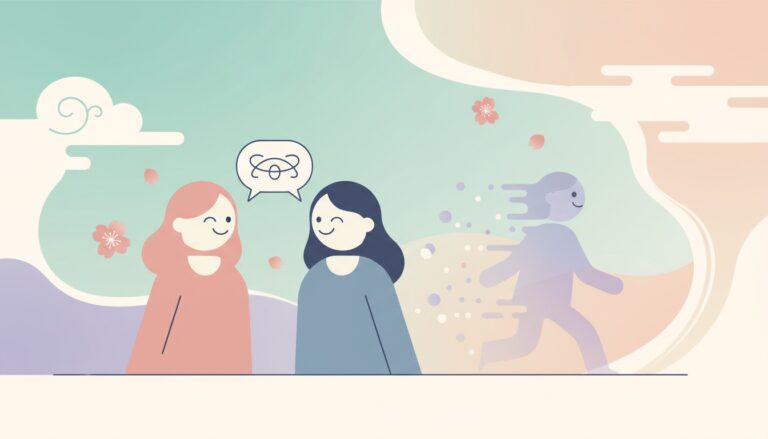
Don’t Be That Person! The #1 Korean Slang to Save Your Social Life (Kkil-Kki-Ppa-Ppa)
Introduction
Hello, this is Daily Hangul!
Have you ever found yourself in a situation where two friends started arguing, and you didn’t know whether to stay or leave? or perhaps you kept making jokes at a dinner party, only to realize later that everyone else was serious?
Synthetic Case: We often receive questions from learners who say, “I thought I was being friendly, but suddenly the atmosphere became cold.” In many of these cases, the issue isn’t grammar—it’s Nunchi (눈치).
Today, we will learn a famous acronym that encapsulates the art of social timing. Textbooks teach you how to speak, but this word teaches you when to speak and when to disappear. It is the golden rule of Korean social life.
At a Glance
- Today’s Expression: 낄끼빠빠 (Kkil-Kki-Ppa-Ppa)
- When to use: Casual conversations with friends, or self-deprecation to show you have social sense. Never use this to a superior or an elder directly.
- Level (B1): This is essential for understanding Korean humor, variety shows, and maintaining good relationships without being awkward.
Table of Contents
- Today’s Key Expression: Deep Dive
- Textbook vs. Real Korean
- Nunchi Translator: Decoding the Vibe
- Real-Life Scenario: The “Third Wheel”
- Shadowing Challenge
- FAQ
- Wrap-up & Quiz
Today’s Key Expression: Deep Dive
1. 낄끼빠빠 (Kkil-Kki-Ppa-Ppa)
- Meaning: Read the room / Know when to join in and when to leave.
- It is an acronym for: 낄 때 끼고 빠질 때 빠져라 (Kkil ttae kki-go ppa-jil ttae ppa-jyeo-ra)
- Literal Translation: “Join when it’s time to join, leave when it’s time to leave.”
2. Usage & Register
- Who: Close friends, peers, or internet slang.
- Tone: Highly casual. Can be humorous or sharp depending on context.
3. Tutor’s Secret Note 🤫
This word is a double-edged sword.
* Good Usage: When you use it about yourself (e.g., “I’ll kkil-kki-ppa-ppa and go home now”), you sound smart and socially aware.
* Bad Usage: If you say this to someone else (e.g., “Hey, kkil-kki-ppa-ppa, okay?”), it is very rude. It implies, “You are annoying/clueless. Go away.”
⚠️ Warning: Do not use this to your boss, teacher, or strangers. It creates a very cold atmosphere (ssah-hae-jinda / 싸해진다).
4. Pronunciation Clinic
- Point: The Double Consonants (ㄲ, ㅃ) are crucial. You must tense your throat strings.
- Mistake: Don’t say it soft like “Kil-ki-pa-pa.”
- Fix: It sounds like a sharp bird chirp or popping sound. KKil-KKi-PPa-PPa.
5. Examples
(1) The “Third Wheel” Situation (Friend/Romance)
A: 너네 둘이 할 얘기 많아 보이네. 난 낄끼빠빠 할게.
(Neone dur-i hal yaegi mana boine. Nan kkil-kki-ppa-ppa halge.)
Meaning: You two seem to have a lot to talk about. I’ll read the room and leave you alone.
(2) Fan Culture (K-Pop/Internet)
A: 아이돌 사생활은 좀 지켜주자. 낄끼빠빠 못 하니?
(Aidol sasaenghwar-eun jom jikyeojuja. Kkil-kki-ppa-ppa mot hani?)
Meaning: Let’s respect the idol’s privacy. Can’t you read the room (and back off)?
(3) Work Dinner (Casual Colleagues)
A: 부장님 가셨으니까 우리도 낄끼빠빠 하자.
(Bujangnim gasyeosseunikka urido kkil-kki-ppa-ppa haja.)
Meaning: Since the manager left, let’s also find the right timing to slip away.
6. Alternative Expressions
- More Aggressive: 눈치 좀 챙겨 (Nunchi jom chaenggye) – “Get a clue.”
- More Formal: 분위기 파악 좀 하세요 (Bunwigi pa-ak jom haseyo) – “Please understand the atmosphere.”
7. Mini Quiz
Click to see the question!
Q. Which situation is the BEST time to use “Kkil-Kki-Ppa-Ppa” about yourself?
A) When receiving an award.
B) When you realize you are interrupting a couple’s date.
C) When you are ordering coffee.
Answer: B). It is the perfect time to excuse yourself gracefully.
Textbook vs. Real Korean
Let’s look at how to excuse yourself when you feel you are interrupting.
| Type | Expression | Nuance |
|---|---|---|
| Book Korean 📘 | 자리를 비켜 드릴까요? (Jarireul bikyeo deurilkkayo?) |
Very formal. Sounds like a polite drama scene or a business meeting. |
| Real Korean 🗣️ | 나 눈치껏 빠질게. (Na nunchikkeot ppajilge.) |
Natural. “I’ll use my nunchi and slip out.” Commonly used among friends. |
Checklist:
* Meeting your friend’s parents? Use Book Korean.
* Hanging out with friends at a Pojangmacha (street bar)? Use Real Korean or Kkil-Kki-Ppa-Ppa.
Unique Analysis: The Nunchi Translator 🤖
What are Koreans really thinking when they use these phrases? Let’s decode the inner thoughts.
| What they say | Direct Translation | The Hidden Meaning (Nunchi) |
|---|---|---|
| “너 참 낄끼빠빠 잘한다.” | “You are good at Kkil-Kki-Ppa-Ppa.” | High Praise: You are socially smart, charming, and pleasant to be around. |
| “아… 분위기 좋네요.” | “Ah… the atmosphere is good.” | Warning: (If said awkwardly) “Why am I here? I feel out of place. I want to leave.” |
| “눈치 없게 왜 그래?” | “Why are you being so clueless?” | Attack: You just ruined the mood. Stop talking immediately. |
Real-Life Scenario: Role Play
Situation: A cafe in Hongdae. Min-su introduced his friend Ji-hoon to Su-jin. Min-su notices sparks flying between Ji-hoon and Su-jin.
Min-su: (Checking his watch exaggeratedly) 아, 나 갑자기 급한 일이 생각났어.
(Ah, na gapjagi geupan iri saenggangnasseo.)
(Ah, I suddenly remembered I have urgent work.)
Ji-hoon: 벌써 가게? 커피 아직 남았잖아.
(Beolsseo gage? Keopi ajik namatjana.)
(You’re going already? You still have coffee left.)
Min-su: (Winking at Ji-hoon) 야, 이럴 때 낄끼빠빠 해야지. 둘이 재밌게 놀아!
(Ya, ireol ttae kkil-kki-ppa-ppa haeyaji. Duri jaemitge nora!)
(Hey, this is when I should read the room and leave. You two have fun!)
Su-jin: (Laughing) 뭐야~ 민수 씨 센스 있네요.
(Mwoya~ Minsu ssi senseu inneyo.)
(What was that~ Min-su, you have good sense/nunchi.)
💡 Culture Tip: In Korea, if a friend suddenly makes a fake excuse to leave you alone with your crush, they are being a “Wingman” by doing Kkil-Kki-Ppa-Ppa. You should thank them later!
Shadowing Challenge 🗣️
Let’s practice saying the phrase naturally so you don’t stumble on the double consonants.
Script: “Don’t worry, I know when to join in and when to leave.”
걱정 마, 나 낄끼빠빠 할 줄 알아.
(Geok-jeong ma, na kkil-kki-ppa-ppa hal jul ara.)
Practice Checklist:
* [ ] Did you pronounce ‘낄’ (Kkil) strongly?
* [ ] Did you pronounce ‘빠’ (Ppa) strongly?
* [ ] Did you say it with a confident rhythm? (Kkil-Kki / Ppa-Ppa)
FAQ (Frequently Asked Questions)
Q1: Can I use this in a business email?
Absolutely not. This is slang. Using this in an email to a client would be unprofessional. Use “상황을 보고 말씀드리겠습니다” (I will assess the situation and tell you) instead.
Q2: Is it a swear word?
No, it’s not a swear word. However, saying it to someone implies they are stupid or socially inept, so it can be offensive. Use it mostly about yourself or in a joking manner with close friends.
Wrap-up & Action Item
Today we learned 낄끼빠빠 (Kkil-Kki-Ppa-Ppa), the ultimate survival skill in Korean social life.
Today’s Mission:
Next time you watch a K-Drama (like Squid Game or a Rom-Com), try to spot a character who is BAD at Kkil-Kki-Ppa-Ppa. (There is always one!) Shout “Kkil-Kki-Ppa-Ppa!” at the screen.
Tell me in the comments:
Have you ever been in a situation where you wished someone would leave? 😅
Final Quiz
Click to reveal the answers
1. What does ‘Ppa’ (빠) stand for in this acronym?
A) Bballi (Fast)
B) Ppajida (To leave/withdraw)
C) Ppallae (Laundry)
2. Who should you NEVER say this to directly?
A) Your best friend
B) Yourself
C) Your angry boss
3. Fill in the blank:
“Wow, you have no
unchi. Please _____.”
A) Kkil-Kki-Ppa-Ppa
B) Saranghae
C) Annyeong
Answers: 1. (B), 2. (C), 3. (A)
Frequently Asked Questions (FAQ)
Q: What does "낄끼빠빠 (Kkil-Kki-Ppa-Ppa)" mean in Korean and how do you pronounce it?
A: In Korean, "낄끼빠빠 (Kkil-Kki-Ppa-Ppa)" is pronounced [see lesson guide] and means: Read the room / Know when to join in and when to leave.







