

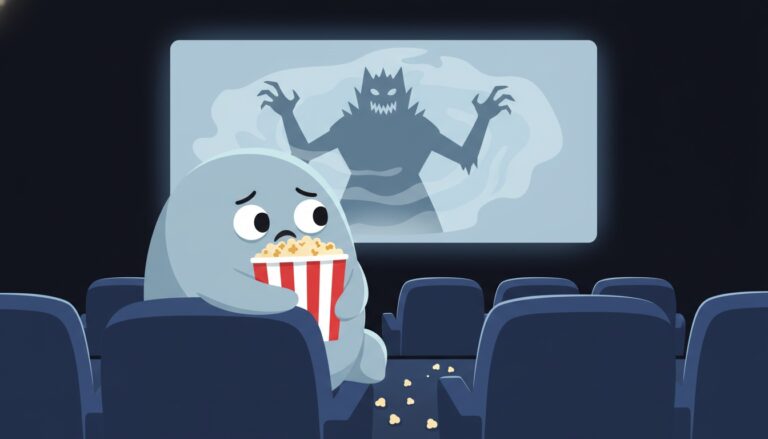
Too Scary to Watch? How to Talk About Horror Movies in Korean Without Screaming!
🎬 Introduction
Hello, this is Daily Hangul!
Summer in Korea is traditionally the season for horror movies (called “Horror Specials” or 납량특집). Whether you are on a date or hanging out with friends, someone might suggest watching the latest scary movie. But what if you hate ghosts? Or what if you love the thrill but hate the gore?
[Synthesized Case Study]
I’ve combined stories from several students (let’s call this persona “Alex”). Alex went on a date in Seoul. His date asked, “Do you like movies?” and Alex just said “Yes!” enthusiastically. The date bought tickets for a zombie movie. Alex hates blood and couldn’t sleep for two days. If Alex had known how to say, “I’m not good with scary things,” this tragedy could have been avoided!
Textbooks teach you the word “Horror Movie,” but they don’t teach you the nuance of refusal or how to express specific fears (ghosts vs. blood). Today, let’s learn how to survive the movie theater.
📝 At a Glance (Summary)
- Key Expressions: 무서워요 (It’s scary), 잘 못 봐요 (I can’t watch it well), 깜짝 놀랐어요 (I was startled).
- Safe Zone: Use these with friends, dates, or coworkers when discussing movie preferences.
- Level (A2): Essential for expressing preferences and limitations, not just simple descriptions.
📚 Table of Contents
- Deep Dive: Core Expressions
- Textbook vs. Real Korean
- Analysis: The Refusal Thermometer
- Real-Life Role Play
- Shadowing Challenge
- FAQ & Quiz
💡 Deep Dive: Core Expressions
1. 무서워요 (It’s scary / I’m scared)
- Korean: 무서워요
- Romanization: [Museowoyo]
- Meaning: It is scary / I feel afraid.
Usage & Register:
* Who: Friends, dates, acquaintances.
* Style: 해요체 (Polite informal) is most common in casual conversation.
Tutor’s Secret Note:
This word covers everything from “That ghost is scary” to “I am scared of you.” Context is key. If you say this with a smile during a movie, it’s flirting or enjoying the thrill. If you say it with a pale face, it’s a plea for help!
Pronunciation Clinic:
* Link the sounds naturally: [Mu-seo-wo-yo]. Don’t chop it up.
Examples:
1. (Reaction) 이 영화 진짜 무서워요! (I yeonghwa jinjja museowoyo!) – This movie is really scary!
2. (Preference) 저는 무서운 거 싫어해요. (Jeoneun museoun geo sireohaeyo.) – I dislike scary things.
3. (Context) 소리가 너무 무서워요. (Soriga neomu museowoyo.) – The sound is too scary.
Alternatives:
* More Casual: 무서워 (Museowo) – To close friends.
* More Formal: 무섭습니다 (Museopseumnida) – Rarely used in movie chats unless reporting news.
👉 Mini Quiz (Click to see)
Q: Fill in the blank.
“I don’t like horror movies because they are too ________.”
공포 영화는 너무 ( ) 싫어요.
Answer: 무서워서 (museowoseo – because it is scary)
2. 잘 못 봐요 (I’m not good at watching)
- Korean: 잘 못 봐요
- Romanization: [Jal mot bwayo]
- Meaning: I can’t watch it well / I struggle with watching it.
Usage & Register:
* Who: Anyone suggesting a movie.
* Style: Soft refusal.
Tutor’s Secret Note:
This is a Magic Phrase. Saying “I hate it” (싫어요) can sound too strong or childish. “잘 못 봐요” implies you want to join in, but your ability to handle fear is low. It makes you sound humble and polite.
Pronunciation Clinic:
* 못 봐요 sounds like [Mop-bwayo]. The ‘ㅅ’ in 못 changes to a ‘p/ㅂ’ sound before the ‘ㅂ’ in 봐.
Examples:
1. (Refusal) 저는 공포 영화 잘 못 봐요. (Jeoneun gongpo yeonghwa jal mot bwayo.) – I’m not good at watching horror movies.
2. (Specific) 잔인한 장면은 잘 못 봐요. (Janinhan jangmyeoneun jal mot bwayo.) – I can’t handle gory scenes well.
3. (Modesty) 무서운 거 잘 못 보지만 노력해 볼게요. (Museoun geo jal mot bojiman noryeokhae bolgeyo.) – I’m bad at scary stuff, but I’ll try.
Alternatives:
* Strong Refusal: 절대 안 봐요 (Jeoldae an bwayo) – I absolutely never watch.
* Casual: 못 봐 (Mot bwa) – I can’t watch.
3. 깜짝 놀랐어요 (I was startled / It made me jump)
- Korean: 깜짝 놀랐어요
- Romanization: [Kkamjjak nollasseoyo]
- Meaning: I was surprised / I was shocked (physically).
Usage & Register:
* Who: Everyone.
* Situation: After a “Jump Scare” scene.
Tutor’s Secret Note:
Koreans often use the slang 갑툭튀 (Gap-tuk-twi) for jump scares, but in a sentence, you describe your feeling with this phrase. Use this when your popcorn flies into the air!
Pronunciation Clinic:
* 깜 (Kkam) and 짝 (Jjak) require “Tense Sounds” (Double consonants). Pitch your voice slightly higher and tighter.
Examples:
1. (After a scream) 아, 깜짝 놀랐어요! (Ah, kkamjjak nollasseoyo!) – Ah, you scared me!
2. (Description) 갑자기 귀신이 나와서 깜짝 놀랐어요. (Gapjagi gwisini nawaseo kkamjjak nollasseoyo.) – A ghost came out suddenly, so I was startled.
3. (Exaggeration) 심장 떨어질 뻔했어요. (Simjang tteoreojil ppeonhaesseoyo.) – I almost dropped my heart (My heart almost skipped a beat).
🆚 Textbook vs. Real Korean
| Context | 📘 Book Korean (Standard) | 🗣️ Real Korean (Native Vibe) |
|---|---|---|
| Subject | 공포 영화 (Gongpo yeonghwa) _Horror Movie_ |
무서운 거 (Museoun geo) _Scary things/stuff_ |
| The Villain | 유령 / 귀신 (Yuryeong / Gwisin) _Ghost_ |
귀신 is used 90% of the time for Korean ghosts. 좀비 (Zombie) is distinct. |
| Too much blood | 잔혹해요 (Janhokhaeyo) _It is cruel_ |
징그러워요 / 잔인해요 (Jinggeureowoyo / Janinhaeyo) _It’s gross / It’s gory_ |
✅ Situation Checklist:
* Formal Presentation: Use “공포 영화”.
* Chatting with friends: Use “무서운 거”. (e.g., “무서운 거 좋아해?” – Do you like scary stuff?)
🌡️ Analysis: The “Refusal Thermometer”
How do you say “No” without killing the vibe? Here is the temperature of refusal.
| Level | Expression | Nuance | Korean Vibe |
|---|---|---|---|
| Level 1 (Soft) | 별로 안 좋아해요 (Byeollo an joahaeyo) |
I don’t particularly like it. | Leaves room for persuasion. “But this one is good!” |
| Level 2 (Polite) | 잘 못 봐요 (Jal mot bwayo) |
I lack the ability to watch it comfortably. | Best for dates/coworkers. Shows weakness, not stubbornness. |
| Level 3 (Firm) | 딱 질색이에요 (Ttak jilsaegieyo) |
I loathe it / It’s my least favorite thing. | Use with caution. Stops the conversation immediately. |
💡 Tutor’s Tip: If you are on a date, use Level 2. It makes the other person feel protective of you! “I can’t watch well… can I hide behind you?” (Just kidding, but it works!)
🎭 Real-Life Role Play: At the Ticket Kiosk
Situation: Friday night at a CGV movie theater. Min-su wants to see the new horror hit, but Sarah is hesitant.
Min-su: 이번에 나온 ‘엑소시스트’ 볼까요? 평점이 진짜 높아요.
(Ibeone naon ‘Exorcist’ bolkkayo? Pyeongjeomi jinjja nopayo.)
Shall we watch the ‘Exorcist’ that just came out? The ratings are really high.
Sarah: 아… 그거 공포 영화죠?
(Ah… geugeo gongpo yeonghwajyo?)
Ah… that’s a horror movie, right?
Min-su: 네, 무서운 거 좋아하세요?
(Ne, museoun geo joahaseyo?)
Yes, do you like scary stuff?
Sarah: 사실 저는 무서운 거 **잘 못 봐요. 밤에 잠을 못 자거든요.**
(Sasil jeoneun museoun geo jal mot bwayo. Bame jameul mot jageodeunyo.)
Actually, I can’t watch scary stuff well. I won’t be able to sleep at night.
Min-su: 아, 진짜요? 그럼 우리 그냥 코미디 영화 봐요!
(Ah, jinjja-yo? Geureom uri geunyang komidi yeonghwa bwayo!)
Oh, really? Then let’s just watch a comedy movie!
🧠 Culture Tip:
In Korea, admitting you “can’t” do something (drink alcohol, eat spicy food, watch horror movies) is often better received than simply saying you “don’t want to.” It sounds less like a rejection of the person.
🗣️ Shadowing Challenge
Repeat these 3 sentences out loud to train your “scared” intonation!
- I can’t watch scary things well. (Polite Refusal)
- 저는 무서운 거 잘 못 봐요.
- [Jeoneun museoun geo jal mot bwayo.]
- It was so scary I almost cried. (Reaction)
- 너무 무서워서 울 뻔했어요.
- [Neomu museowoseo ul ppeonhaesseoyo.]
- Is it very gory? (Checking safety)
- 그거 많이 잔인해요?
- [Geugeo mani janinhaeyo?]
Checklist:
* [ ] Said it slowly (Focus on pronunciation)
* [ ] Said it at normal speed
* [ ] Said it with emotion (Act scared!)
❓ FAQ (Frequently Asked Questions)
Q1: Can I use “Scary” (무섭다) for a strict boss?
* Yes! You can say “우리 팀장님 너무 무서워요” (My team leader is too scary/strict). It implies they are stern and fierce, not that they are a ghost.
Q2: What is the difference between ‘Horror’ and ‘Thriller’ in Korea?
* Horror (공포): Supernatural elements (Ghosts, spirits). Phrase: “귀신 나와요?” (Do ghosts appear?)
* Thriller (스릴러): Suspense, criminals, mysteries. Phrase: “심장이 쫄깃해요” (My heart is chewy/tight = intense suspense).
Q3: How do I say “It gave me goosebumps”?
* 소름 돋았어요 [Soreum dodasseoyo]. Use this for both creepy moments and amazing acting moments.
🎁 Wrap-up & Mission
Today we learned how to protect our mental peace at the movie theater. Remember, “잘 못 봐요” (I can’t watch it well) is your shield!
🚀 Today’s Mission:
Go to a Korean movie trailer on YouTube (search “한국 공포 영화 예고편”). Watch 10 seconds. If it’s scary, comment below: “너무 무서워요!”
🧩 Final Quiz
Click to start the Quiz!
- Which phrase is the most polite way to refuse a horror movie?
A) 싫어 (Sireo)
B) 잘 못 봐요 (Jal mot bwayo)
C) 너나 봐 (Neona bwa – You watch it) -
What does “깜짝 놀랐어요” mean?
A) It’s boring.
B) I’m hungry.
C) I was startled/shocked. -
Fill in the blank:
“That scene was too ____ (gory/cruel).”
저 장면 너무 ( )해요.Answers: 1. (B), 2. (C), 3. 잔인 (Janin)
Frequently Asked Questions (FAQ)
Q: What does "무서워요 (It's scary / I'm scared)" mean in Korean and how do you pronounce it?
A: In Korean, "무서워요 (It's scary / I'm scared)" is pronounced [see lesson guide] and means: It is scary / I feel afraid.
Q: What does "잘 못 봐요 (I'm not good at watching)" mean in Korean and how do you pronounce it?
A: In Korean, "잘 못 봐요 (I'm not good at watching)" is pronounced [see lesson guide] and means: I can't watch it well / I struggle with watching it.
Q: What does "깜짝 놀랐어요 (I was startled / It made me jump)" mean in Korean and how do you pronounce it?
A: In Korean, "깜짝 놀랐어요 (I was startled / It made me jump)" is pronounced [see lesson guide] and means: I was surprised / I was shocked (physically).







